
How to starch laundry in a washing machine
 Today, you can count on one hand the number of housewives for whom starching laundry remains a mandatory step in the laundry process. Various specialized detergents, fabric softeners, and rinse aids already add freshness and a pleasant scent to laundry. Modern detergents, combined with smart automatic washing machines, do their job, eliminating the need to spend a lot of time and effort cleaning laundry.
Still, relaxing on crisp, clean sheets and wearing crisp, fresh-smelling shirts is much more enjoyable. And personal satisfaction isn't the only benefit achieved through starching. Let's explore how to starch linens properly, the purpose of this treatment, and what products to use when machine washing to achieve this effect.
Refreshing in the CM drum
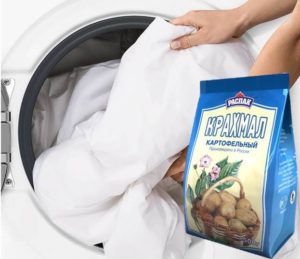
Is it possible to treat items in this way during machine washing? It is very easy to starch bedding and other items in an automatic washing machine. This procedure is performed when the "Rinse" mode is activated. The sequence of actions is as follows:
- Prepare the starch solution. The solution is diluted according to the general rules used for manual starching;
- Pour the resulting starch solution into the fabric softener tray section;
- start the desired washing program;
- at the end of the cycle, remove the laundry from the drum and shake it well;
- Dry in the fresh air or in a well-ventilated area;
- Wipe the detergent drawer, the surface of the drum and the inside of the door with a wet cloth, then wipe dry;
- Leave the washing machine open to allow it to air out.
When starching items in an automatic washing machine, it is prohibited to use any other rinsing agents.
Today, you can find laundry detergents with starching properties in specialty stores. This makes the process even easier, as you won't need to prepare a starch solution.
We starch in the traditional way
You can give your linens incredible freshness and squeaky cleanliness using the classic starching method our grandmothers told us about. To perform the process manually at home, follow these steps:
- Place washed items in a basin with a cool starch solution (not hotter than 35°C);
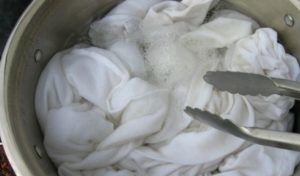
- Leave the items in the container for 15-20 minutes. If you don't have that much time, you can simply rinse the clothing or bedding thoroughly in the solution;
- lightly squeeze the laundry and shake it to prevent creasing of the fabric;
- Dry the items.
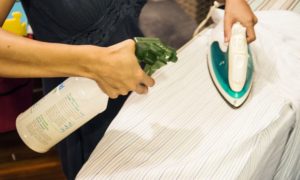
Ironing starched clothes or bedding is done when the linen is slightly dampIt's important to set the iron soleplate to the lowest temperature setting possible to prevent fabric from sticking to the iron.
If traditional starching seems too complicated, you can try another method. Prepare a weak paste, pour the liquid into a spray bottle, and spray it on your cleaned and ironed linens. This method is much less time-consuming and makes starching larger items easier.
What is this for?
The starching process involves immersing or rinsing items in a starch solution. By absorbing into the fabric fibers, the starch forms a very thin protective film on the surface of the garment.
Fabric impregnated with starch paste becomes more durable, less prone to wrinkling, and retains its shape perfectly. The protective layer also prevents clothing from becoming soiled. If you regularly starch your laundry, you'll notice it becomes less soiled. The improved washing quality is also noticeable: the starch film, when in contact with soapy water, instantly dissolves, removing all stains along with it.
Starching white linens can achieve an ideal whitening effect. It also adds exceptional freshness and a pleasant scent.
Helpful tips
It is important to know that not all fabrics can be treated with adhesive. Only items made from natural materials are allowed to be starched: linen, cotton, chintz, calico, satin, and cambric. Silk and synthetic underwear cannot be starched.
We'll show you how to prepare a starch solution, which can be used for both machine and hand washing. Here's a step-by-step guide.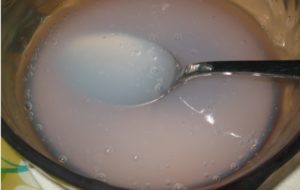
- Dissolve the starch in cool water. Use a quarter teaspoon of powder per 1 liter of liquid.
- In another saucepan, bring water to a boil, then carefully pour the starch milk into the boiling water in a thin stream, stirring constantly.
- Reduce the heat and simmer the paste for 5 minutes. The solution should be clear, similar in consistency to regular jelly.
- Cool the starch paste.
- If there are lumps in the mixture, strain the sticky liquid using a sieve.
Before starching linens, dilute the paste with cool water to the desired consistency. If you want to give your linens an interesting blue tint, you can add a little blueing to the paste solution.
Adding a spoonful of salt to the paste will give your ironing accessories a glossy shine after ironing. Table salt will also help prevent items from freezing when air-drying in the open air in winter. Another helpful tip: to prevent starched items from sticking to the soleplate of the iron, add 3 drops of turpentine or 0.5 capfuls of liquid laundry detergent to the paste.
What is the best way to starch?
Starch can be made from either potato or corn starch. There's no significant difference in which type you choose. So, just choose what you have in your kitchen.
 Potato powder dissolves well in water, is easily infused with boiling water, quickly reaches the desired consistency, and has a snow-white hue. In some cases, the adhesive solution may have a sky-blue tint. However, improperly prepared paste can result in an unpleasant yellow tint to the fabric being treated, and this is perhaps the only drawback of potato polysaccharide.
Corn starch powder will prevent yellowish stains from appearing on your items. To create a high-quality starch paste, simmer the mixture over low heat for about 7 minutes.
If you don't want to prepare the solution at home, you can purchase specialized synthetic products. They are available for sale at many retailers. The range of store-bought starches is incredibly wide: from liquid formulations to various sprays and aerosols. These products are either added to the rinse water or applied to items after washing, before ironing. To avoid errors, please read the instructions carefully before use.
As you can see, starching linens is quite simple. The process doesn't require much effort, and the products used are affordable. And the fresh, crisp linens that stay clean for a long time are certainly worth the few minutes spent.
Interesting:


1 reader comment
Add a comment
Headings
Washing machine repair




For buyers




For users


Dishwasher




What symbol indicates the starch section in a washing machine?