
Starch bed linen in the washing machine
 Relaxing on starched bed linens, squeaky clean and smelling pleasantly cool—what could be better? Besides the pleasure, this treatment of bedding has other benefits, too. Let's explore what starching is, how it works, whether it can be done in the washing machine, and what you'll need.
We use an automatic machine
Many people wonder if it's possible to properly starch bed linens in a washing machine. Yes, it can be done during a standard machine wash. Starching occurs during the rinsing stage. You should act in accordance with the recommendations.
- Prepare the starch paste. Stir a quarter teaspoon of starch into a mug of cold water until there are no lumps. Then boil another 500 ml of water and pour in the "milk" you prepared earlier.
- Wait until the prepared mixture cools down.
- Add regular cleaning agent to the powder compartment and starch solution to the conditioner compartment (up to the mark).
- Load a batch of laundry into the drum.
- Turn on the machine, select the desired mode according to the type of fabric.
- At the end of the cycle, remove the sheets and pillowcases and shake them well.
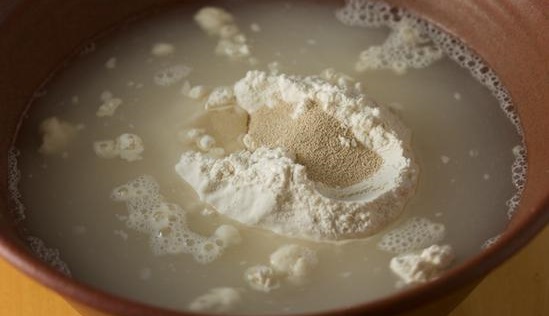
- Dry your bedding in the fresh air or in a room with open windows.
After finishing the wash with starch, be sure to rinse the powder compartment, wipe the walls of the drum and the inside of the door glass with a damp cloth.
When starching items in a washing machine, don't use any additional rinse aids. Otherwise, the desired effect won't be achieved. Nowadays, you can find special starch-enhancing detergents on supermarket shelves. This makes things simpler—no need to mix up the starch paste yourself; simply pour the starch into the dispenser and start the wash.
Classic starching method
In the past, our grandmothers and mothers starched their bed linens by hand. This process gave sheets, pillowcases, and duvet covers a sparkling, squeaky clean finish. Surely many of you remember how sweet it was to fall asleep on a fresh-smelling pillow. The steps for hand starching linens are as follows:
- soak clean, washed sets in a basin with starch mixture (the paste should be cooled to a temperature of 25-35°C);
- leave the bed in this position for 20 minutes;
- Gently wring out the laundry and shake it well – this will prevent creases and folds from appearing on the fabric;
- Dry your bedding.
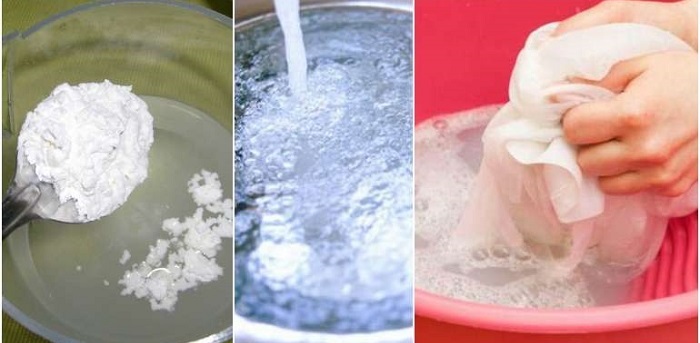
Starched items should be ironed when they're slightly damp. Use the lowest heat setting on the iron. This will prevent the soleplate from sticking to the fabric.
If you don't have time to soak your bedding in paste, you can try another approach. Prepare a diluted starch solution and pour it into a spray bottle. Use the spray bottle to spray the bedding before ironing. This method doesn't take much time and allows you to quickly treat large duvet covers and sheets.
The practical meaning of starching
What else, besides the pleasant sensations, does starching your laundry provide? Starch, penetrating into the fabric fibers, creates an invisible, thin, protective film on the surface. Therefore, products soaked in paste become stronger and almost do not wrinkle.
A protective "starch" layer prevents bedding from becoming soiled quickly. If you regularly starch your bedding, you'll notice that sheets and pillowcases will become soiled much more slowly.
It's also worth mentioning the improved washing quality of starched items. The protective film instantly dissolves upon contact with water, washing away all stains from the fabric along with the film.
Starching also provides a whitening effect, which is especially important for light-colored bed linen sets.
Tips from experienced housewives
Before starching bedding in a washing machine or by hand, it's important to know which fabrics can and cannot be soaked in starch paste. Silk or synthetic fabrics should never be starched. Only natural linen, cotton, chintz, as well as items made from calico and satin are allowed to be starched.
The ideal starch paste, which can be used for both manual processing and machine washing, is prepared according to the following rules:
- Dissolve half a teaspoon of starch in a liter of cold water. Stir to avoid lumps;
- In another saucepan, bring clean water to a boil and pour in the starch “milk” in a thin stream, stirring the solution;
- Reduce the heat on the stove and simmer the paste for another 5-10 minutes. The starch solution will have a jelly-like consistency;
- wait until the paste cools down;
- If you find lumps in the solution, strain it using cheesecloth or a sieve.
Before starching, the paste should be diluted with clean water to the desired consistency. If you want to give your bed linens a soft blue tint, you can mix a little blueing into the starch solution.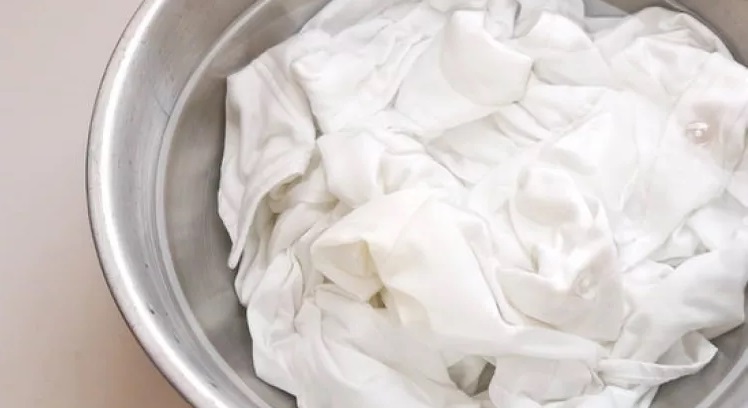
A spoonful of salt mixed into a starch solution will give your bedding a glossy shine. This will guarantee a shiny bed linen. And to prevent the soleplate from sticking to starched sheets, add three drops of turpentine to the paste beforehand.
Starch
It doesn't matter which starch you use when preparing the treatment solution; either cornstarch or potato starch will work. The paste cooks equally well in either case. Here, you should be guided by what you have in your kitchen.
Potato starch dissolves quickly in cool water, thickens immediately when steeped in boiling water, and has a crystal-white hue. Sometimes the boiled paste takes on a soft blue hue. Unfortunately, if you make a mistake when preparing the solution, it can yellow the fabric, and this is the only drawback of potato powder.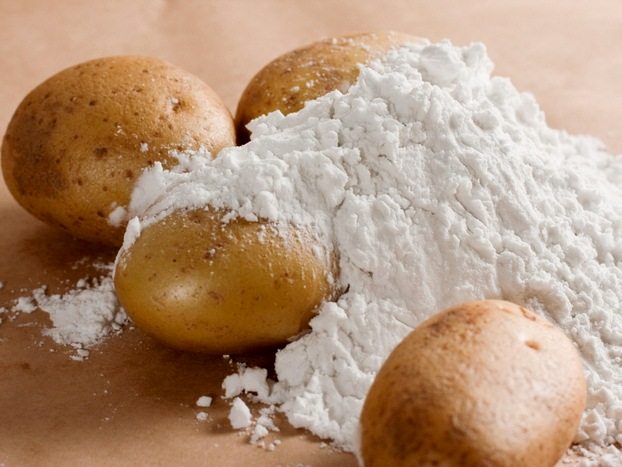
When using corn polysaccharide, there's no need to worry about yellow stains appearing on the material. To create a high-quality paste, be sure to simmer the solution over low heat for 5-10 minutes.
If you don't have time to make your own starch paste, you can buy a store-bought product with a similar principle of action.
The range of chemicals is quite wide, ranging from laundry gels, fabric softeners with a starching effect, and fabric treatment aerosols. Some chemicals are poured into the washing machine's tray, others are diluted in the basin for an additional rinse, and still others are used specifically before ironing. Instructions for use should be found on the product packaging.
Starching bed linens doesn't require a lot of effort; any homemaker can make their own paste. However, your sheets, duvet covers, and pillowcases will stay fresh longer and literally "squeak" with cleanliness. This effect is definitely worth the 10-15 minutes spent on the process.
Reviews from housewives
Alena, Novosibirsk
Starch certainly makes bedding stiffer, but I also find it has a cooling, soothing, and smoothing effect on the skin. That's why many people enjoy falling asleep on it.
I don't know how to starch sheets. I try to use a laundromat. But I think girls who like to do housework would have no trouble starching their bedding.
Lyudmila, Orenburg
I don't understand the rave reviews about starched linens. Ever since I was a child, I've hated those hard sheets and pillowcases, those pajamas that feel so uncomfortable. Even then, I decided I'd never suffer like my grandmother. First, she boiled the bed linen in a huge pot, then washed it with a huge amount of powder, soaked it in a solution of blueing and rinsed the sets in starch paste.
That's how it was done when I was a child, and women couldn't understand how it could be any other way. I certainly won't waste my time on such manipulation.
Svetlana, Saratov
I remember my mother starching bed linens. She'd soak them first, then boil them on the stove for about an hour, then wash them in the washing machine—an old one with a spin cycle. Then came the starch rinse, and then the spin cycle again.
I take it a little easier: I buy starch at the store and sometimes, when I'm feeling up to it, I pour it into the washing machine. The result is the same as when I was a kid. But at least I don't have to spend two or three hours doing laundry, like my mom used to.
Interesting:


Readers' comments
Headings
Washing machine repair




For buyers




For users


Dishwasher




Add a comment