While using a washing machine, some homeowners experience an unpleasant tingling sensation when touching the machine's body. This is nothing more than a small electric shock. This occurs when there is voltage on the washing machine's body. Let's figure out what to do in this situation to reduce the risk of electric shock.
Connecting to a two-wire network
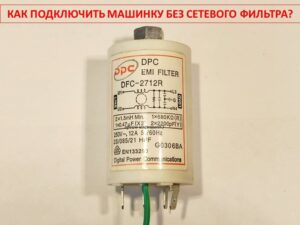
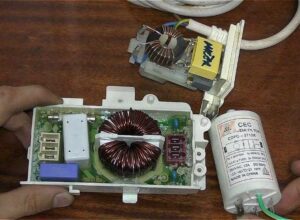
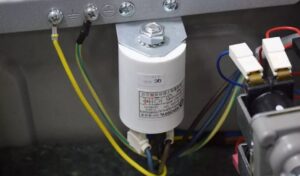
If your washing machine is connected to a two-wire power supply, even if the equipment is in good working order, voltage may leak into the machine's housing. This is due to a specific operating characteristic of the surge protector included with every washing machine. The network element is a pair of interconnected capacitors, one of which connects the machine shell and the phase, and the second - the housing and the neutral cable.
Washing machine manufacturers typically produce appliances designed for connection to a three-wire network with a separate protective conductor. In this situation, the surge protector will operate at full capacity, performing its function perfectly. Thus, the common cable handles the 110V potential, but the charge is completely drained from the washing machine body.
But in reality, such washing machines are often connected to ungrounded power outlets due to ignorance. In this case, 110V voltage builds up on the machine's body. Using such a washing machine can easily cause an electric shock, which is usually brief but extremely painful.
For connection to a two-wire line, you should not buy washing equipment that was assembled in Europe and was originally oriented towards the European market; this is not entirely safe.
Frayed wiring
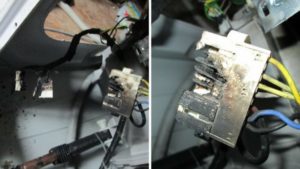
Exposed power wires inside a washing machine are far from uncommon. Experienced technicians have often encountered situations where the insulation has simply worn away over time due to constant vibration. Exposed cables can also be found in nearly new machines; mice or rats can easily chew through them.
In this case, the presence of a phase on the housing is noted. Initially, the voltage may be low, but later, it's easy to get a 220-volt shock. The machine is often installed in the bathroom, and high humidity increases the risk of electric shock.
Frayed wires are a serious problem that poses a risk to the health and lives of users.
While a poorly functioning surge protector can only cause discomfort, worn-out insulation can cause significant harm to the user, so the cause must be addressed as quickly as possible.
It's crucial to establish a potential equalization system in the bathroom. All equipment located here—the pipes, shower stall, ventilation duct, and the washing machine itself—must be securely connected to each other using an equipotential bonding connection.
However, equipotential bonding systems are not enough to ensure complete safety for family members. One circuit remains unprotected. This is the system between the washing machine body, the human body, and the room's flooring. What can be done in this case for greater protection? Two options are available:
include a residual current device in the electrical circuit;
ground the "body" of the machine.
An RCD in a two-phase network will operate slightly differently. It will not trip if the wire is faulty. The protection is activated the moment the user touches the washing machine's casing. While it's not entirely pleasant to have the RCD trip only after touching the casing, the risk of electric shock will be minimized.
Since the current when touching the housing will be minimal, a residual-current device (RCD) with a rating of up to 30 mA can be selected. Owners of houses and apartments with older two-wire electrical systems are advised to purchase outlets with a built-in RCD, as this will significantly reduce the risk of false tripping.
Arrange for grounding of the machine
Grounding household appliances is the most reliable way to protect yourself and your family from electric shock. In the event of a breakdown in the supply wiring, the current will simply be redirected to the grounding conductor and will be completely safe for humans.
Various problems can arise when establishing protective grounding. Water and sewer pipes cannot be used as grounding elements. Regulations also strictly prohibit connecting neutral and active cables without using a grounding assessment device. So, if your home has a two-wire system, you'll have to hope the entryway electrical panel is grounded; otherwise, you won't be able to protect your washing machines.
To resolve the grounding issue in your multi-story building, you need to contact the organization that services the building: the management company, the homeowners' association, the utility billing center, etc.
If you own a private home built on a plot of land, you can install a grounding circuit yourself. However, keep in mind that this work will require considerable effort and time, but in the end, you'll be guaranteed complete safety for yourself and your family when using the washing machine.
First, it's necessary to determine the location where the grounding loop will be installed. In the event of a power outage, the voltage will flow to the grounding rods, so the likelihood of human presence there should be minimized. A living creature being present in the area where the current drains into the ground can be fatal. It's crucial to locate the grounding rods in a location that is not frequented. It is preferable to organize the grounding circuit behind the house, no further than 1 meter from the foundation of the building.
It is better to erect a small fence around the place where the electricity is being discharged, enclosing the dangerous area.
Once the placement location has been selected, you can begin creating the structure. The process will be as follows:
using a shovel, dig an equilateral triangle (each edge is about 1.2 meters long and the furrow depth is from 0.5 to 0.7 meters);
Dig a similar trench towards the porch of the building;
Take the prepared rebar and drive a metal rod 2 meters into the ground at each vertex of the triangle, leaving only the top ends exposed. These will act as electrodes;
Fold the metal corners, at least 3.5 mm thick, into a triangle. The corners of the triangle should touch the electrodes. Once the structure is assembled, begin welding the tops.
Place a metal plate in the trench leading to the porch, one end of which should be welded to the top of the resulting triangle;
connect the ground wire to the plate using a bolt;
Fill all trenches with soil.
It's important to pay attention to the quality of the site's soil. If the area is predominantly sandy, it's essential to increase the soil's electrical conductivity with a saline solution. This special liquid should be poured into the base of the electrodes.
After all this, you'll need to measure the resistance of the resulting grounding system in your home. A dedicated device is best for this purpose, but it's prohibitively expensive. What if you can't afford a multimeter?
You can check the system's functionality using a simple lamp consuming at least 100 watts. Connect the first contact to the ground wire and the second contact to the live wire. A brightly lit lamp will indicate proper installation. If the light is dim, the connection is weak and the joints need to be redone. A lamp that does not light up at all indicates a design error, which will require a complete overhaul of the entire grounding circuit. What conclusions should be drawn from this material?
If your home has a three-wire circuit and the washing machine is flashing to the frame, ensure the ground connection is intact. To do this, use a tester to check the voltage between the washing machine and the live contact;
If your apartment has a two-wire electrical network, try to provide a separate ground for the washing machine and arrange for potential equalization;
If it is not possible to create a separate ground, equalize the potentials in the room where the washing equipment is installed and include a residual current device of at least 30 mA in the machine circuit.
If there is voltage on the washing machine housing, it is necessary to take measures to eliminate it. This situation is extremely dangerous and can lead to electric shock to users.

 While using a washing machine, some homeowners experience an unpleasant tingling sensation when touching the machine's body. This is nothing more than a small electric shock. This occurs when there is voltage on the washing machine's body. Let's figure out what to do in this situation to reduce the risk of electric shock.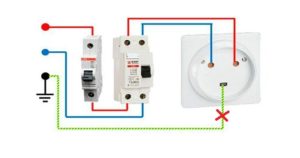
 While a poorly functioning surge protector can only cause discomfort, worn-out insulation can cause significant harm to the user, so the cause must be addressed as quickly as possible.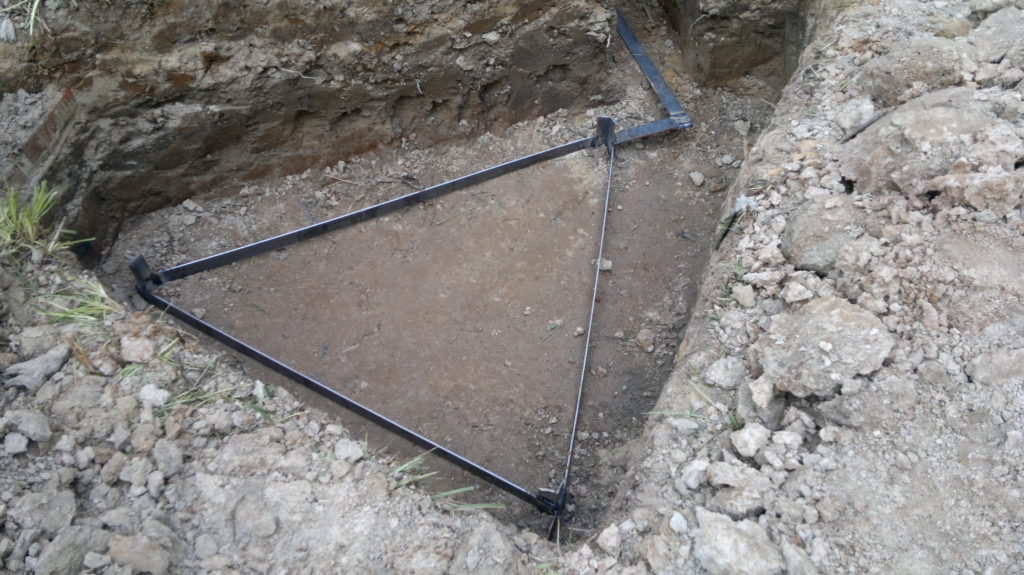
















Add a comment