
Garden watering pump made from a washing machine
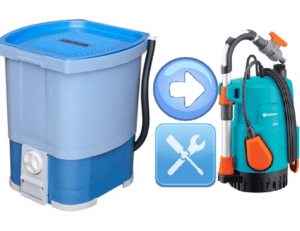 A working pump from an old washing machine is a great part that can serve you well even after the washing machine itself has stopped performing its primary function.
If installed and connected correctly, such a pump can reliably pump water, which can then be used for anything from watering a summer house to irrigating a garden plot. This is precisely the use of a pump from an old washing machine that we'll be interested in today.
Why is this necessary?
Watering your garden or vegetable patch during the summer heat is essential, otherwise you won't get a harvest. But surprisingly, powerful and expensive electric pumps aren't necessary for proper irrigation. In some cases, you can make a homemade pump from washing machine parts; in particular, a pump from an old washing machine will do.
In general, the same electric motor from a washing machine can be used in many homemade projects, for example, from such an engine, you can make an excellent sharpening machineOther washing machine parts are used less frequently, but they still come in handy, sometimes at the most unexpected moments.
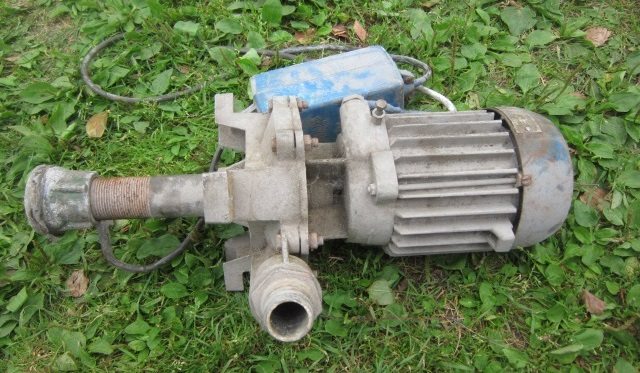
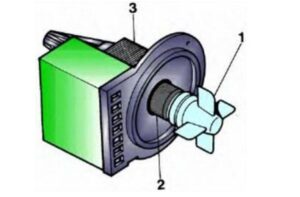
Modern automatic washing machines are equipped with very weak electric pumps, which are of no use in the difficult task of watering a garden plot; they're simply not designed for heavy loads. A pump from an old Soviet washing machine, for example, the ENSM-1U4, is a different story. It's a perfect unit: 50 Hz, 220 V, and 30 l/min. While the specifications aren't ideal, they're quite sufficient for a small garden or allotment. And best of all, you can make the device yourself, spending mere pennies.
The future pump's capacity will allow it to draw water from a depth of no more than 2 meters, so you can forget about extracting water from an underground well.
A homemade pump made from washing machine parts will help us pump water from a reservoir (tank or barrel) directly to the beds through a hose. In this case, it will not be possible to provide strong pressure, but it will be sufficient for successful watering. You can use a homemade pump as a backup in case something happens to the main one, because watering is necessary constantly, and you don’t want to get calluses on your hands carrying buckets.
What do you need for this?
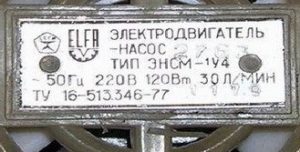 First, you need to find a good pump. We had a fully functional ENSM-1U4 electric pump from a Soviet-made Rusalka washing machine, so it would be a shame not to use it. Using other types of pumps is theoretically possible, but we haven't tried it. The washing machine pump is the most important component, but not the only one. You also need:
- a short and a long hose, one to be used for collecting water, the other to deliver it from the pump to the garden bed;
- a plastic case for electrical wiring, for example, a plastic putty jar with a lid will do;
- a 24 volt relay from some old electrical appliance;
- power cord from the washing machine;
- thin copper wires in colored insulation;
- ¾ inch pass-through tee;
- rubber cambric, plastic and metal clamps, electrical tape and other small items.
You'll need the following tools: pliers, wire cutters, a soldering iron, a multimeter, a knife, a screwdriver, wrenches, and an adjustable wrench. Once you've got everything out of your toolbox, you're ready to begin the project.
Manufacturing process
We connect the wires in sequence to the relay contacts and to the washing machine pump contacts with our own hands. First, you need to check the purpose of each contact using a multimeter.
Old washing machines always came with detailed wiring diagrams. If you find one, it will make your electrical wiring task easier, even though it seems simple enough.
We punch holes in the jar lid for the wires. We close our relay jar, connect the wires, and close the lid. This way, our relay is now encased in a waterproof plastic case. We plug the power cord into a power outlet and test the pump. Next, we screw a union tee to the pump outlet, and manually screw the hoses to the remaining outlets of the tee, making sure to secure them with metal clamps.
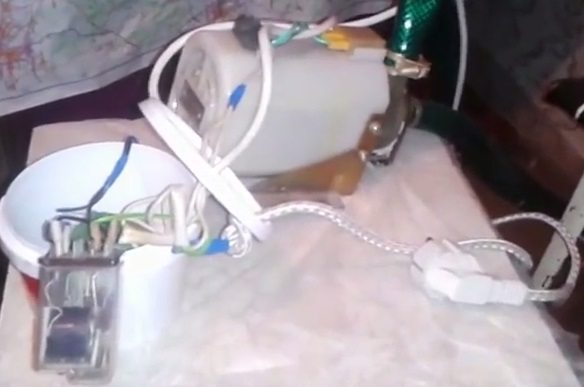
Now we can begin testing. We insert the short hose into any above-ground container, such as an iron barrel, and the long one into the same barrel. Next, we connect the pump and observe how it pumps water. If all is well, we can begin "field testing," specifically in your wonderful garden.
In conclusion, using a washing machine pump to water your garden plants is a great way to use up a long-forgotten spare part that's been lying around in your garage. You shouldn't expect miracles from such a device, but such a pump is quite capable of pumping water from a tank to the beds. Good luck with your DIY projects, and remember the safety precautions when working with electricity!
Interesting:
1 reader comment
Add a comment
Headings
Washing machine repair




For buyers




For users


Dishwasher




120 watts is not bad power for watering.
Today I used a drain pump from an ALTAI AUTOMATIC car for watering. The pump of the same brand is only 16 watts. The speed and capacity are not indicated on the nameplate. The pump design is also slightly different, allowing me to connect it directly to the water tank, thereby forcing water into the pump, and plug it into a power outlet.
Watering was done through a homemade sprinkler and a 20-meter hose. Using a bucket as a stand, the spray diameter was about 3 meters.
I liked this watering system better than, say, Kama. It's a shame such a cool gadget lay unused for almost 30 years!
By the way, 16 watts is a power higher than the average person's power, which is only 10 watts.