
How to set water hardness in a Bosch dishwasher
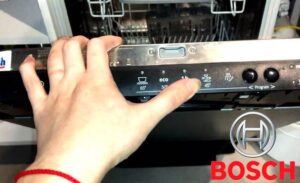 Bosch dishwasher owners often believe that setting the water hardness level once is enough, and then forgetting about it forever. But in reality, to optimize salt consumption, adjusting the water hardness just once isn't enough; it needs to be done several times a year. This is because water hardness varies significantly depending on the season, so the settings need to be adjusted regularly. So how do you do this yourself?
How to determine water hardness?
Inexperienced owners of Bosch "home helpers" may think that adjusting the water hardness is difficult and time-consuming, but that's not the case. To do it correctly and quickly, follow our instructions.
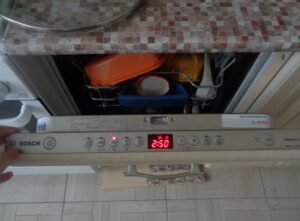
- Turn on the machine.
- Press and hold the "Start" and "Auto" buttons for a few seconds. The display will show the currently set water hardness level, for example, "H:07."
- Use the Plus and Minus buttons to set the desired level, and then press the Start button again.
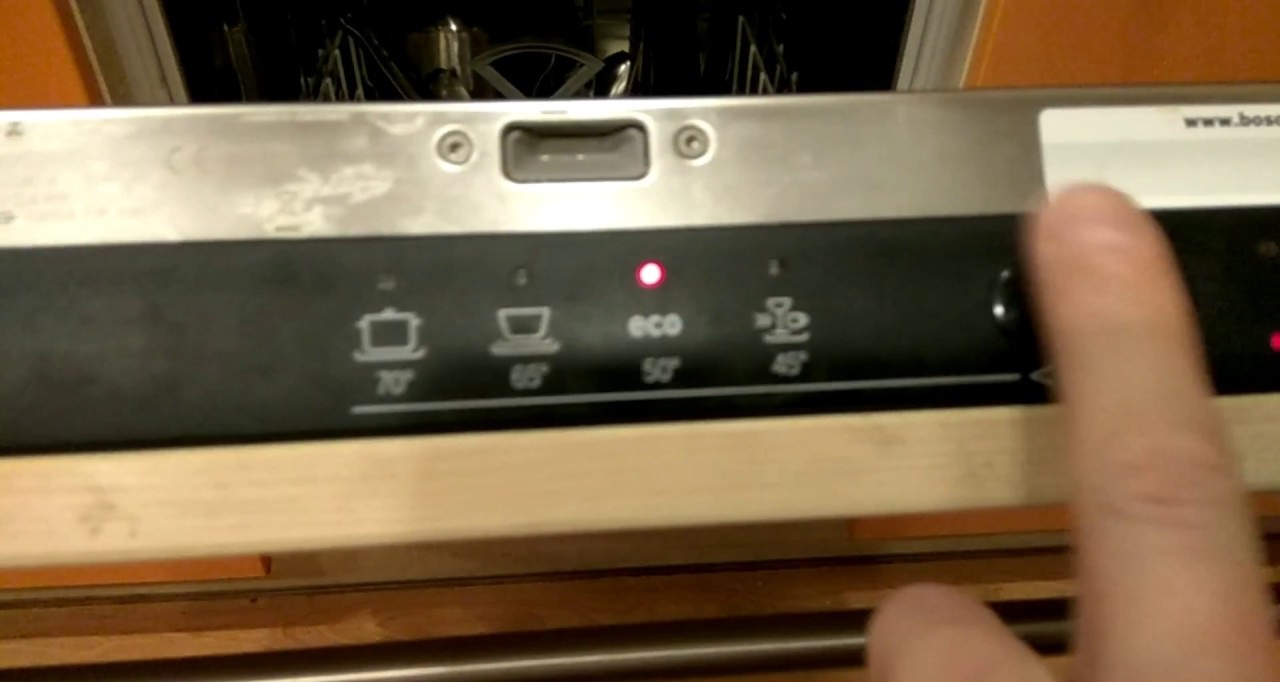
Just three steps and less than a minute, and the water hardness is adjusted. So, don't be lazy and use your Bosch dishwasher year-round with just one setting. If the question isn't how to set it, but rather what level to use, the manufacturer's official instructions and our cheat sheet will help you.
- If the water hardness is between 0 and 6 dH, set the value “H:00” on the machine.
- If the hardness is 7-8, then the value “H:01” is needed.
- When the hardness is 9-10, use “H:02”.
- 11-12 hardness requires level “H:03”.
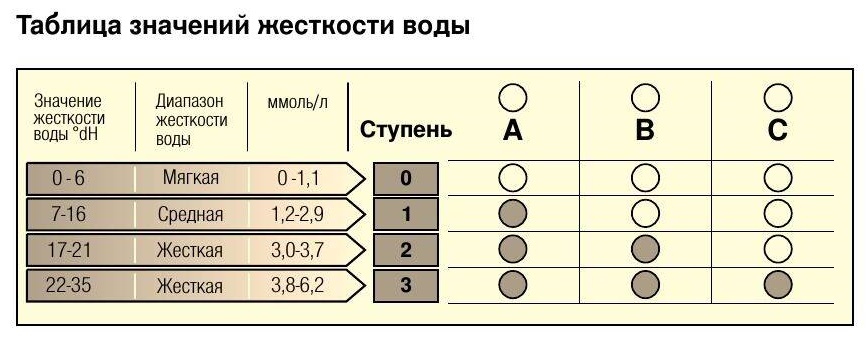
- 13-16 hardness can be eliminated with the level "H:04" on the Bosch dishwasher.
- For a hardness of 17-21 you will need “H:05”.
- For a hard surface from 22 to 30, set the level to “H:06”.
- Finally, for hardness above 31, choose the maximum level “H:07”.
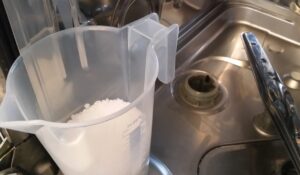
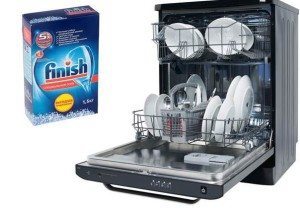
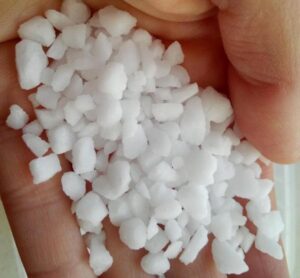
If you have hard water at home, be sure to add a special salt, such as Finish, to the bottom of the dishwasher, which can reduce the negative impact of hard water on your dishwasher.
Therefore, the high water hardness level in your Bosch dishwasher, along with special salt, can protect your appliance from breakdowns and improve the quality of your dishwashing. Don't forget to fill the machine's hopper with salt, which, at the maximum hardness setting "H:07", can be used up in about a month.
Find out the hardness of your tap water
If you live in a large city, finding out the hardness level of your tap water isn't difficult, as you have access to official sources where data can be updated monthly. The city water utility's website can be helpful. If you live in a small town or village, you'll have to check the water hardness yourself. There are many such methods, so we'll list the most common ones.
- Mass comparison. The idea is to compare the mass of liquid from several sources. To do this, fill several identical containers with different amounts of water and then weigh them. The greater the mass of the water, the harder it is. This method will give you a rough estimate of the hardness, but it doesn't provide the specific answer you need to use a Bosch dishwasher.
- Determining soapiness. For this method, you'll need regular laundry soap, which you soak in water and then lather your hands with. Because the soap is too hard, it will have a hard time lathering, while in soft water, it will lather quickly but rinse off slowly.

- Scale buildup. The rate at which scale and sediment accumulate in your kettle can be used to determine the water hardness. If this happens frequently, the water quality is poor; if it doesn't happen very quickly, the water is soft.
- Turbidity. The final subjective method allows you to determine the water hardness itself, but not the exact values. To do this, fill a clear bottle with water, place it in a dark place for two days, and then check. If a film or cloudiness appears on the walls of the bottle, the hardness level is too high.
- Test strips. These devices help determine accurate water hardness readings.
Test strips are worth a special mention, as they are an objective assessment method and are best used. Test strips also come in several types. The most common are those impregnated with a special compound. These testers, often supplied with Bosch and Miele dishwashers, need to be dipped into the liquid for just 1 second, and then the result can be compared with a table that lists all the stripe colours and what they mean.
There are also strips from Biosensor Aqua, which work on a similar, yet slightly different principle. You hold them in water for a few seconds and then wait about a minute for the strip to change color. Only then can you find the result in the test results table.
Finally, there are test strips that require special reagents. To use them, first fill a container with water, dip the tester into it, and then slowly pour the reagent into the liquid. Once the color appears, use the chart to determine the water hardness level.
If you don't want to use disposable strips, you can purchase a TDS meter, which accurately determines water hardness, but this device is much more expensive than test strips.
When you need to quickly and affordably determine the hardness of your tap water, there's simply no better way than test strips. They're much cheaper than water testers, and their accuracy is significantly better than subjective methods, which only confirm the hardness or softness of your water, but don't provide a specific number.
Interesting:

Readers' comments
Headings
Washing machine repair




For buyers




For users


Dishwasher




Add a comment