
How to set up a Bosch dishwasher
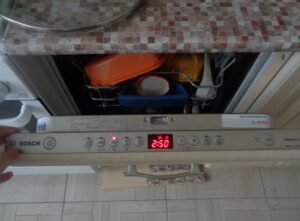 Setting up a Bosch dishwasher involves a whole series of steps that can be difficult to manage on your own after purchasing the appliance. Don't skip a single step on the settings list, as properly preparing your "home helper" for use is key to ensuring a long-lasting service. We'll cover every step you need to take immediately after purchasing your new automatic dishwasher.
Don't forget about the "idle" start of the dishwasher
First, you should run a test cycle to ensure the equipment is working properly. The manufacturer recommends performing the first run without loading any dirty dishes into the wash chamber. This procedure may seem like a waste of the machine's resources, energy, and water, but it will:
- Make sure that the dishwasher is installed correctly - that it does not leak and that it fills and drains water without any problems;
- Clean the device of dust, dirt, and factory grease that may have remained either during assembly at the factory or during storage in the store warehouse.
A test run without dishes will not take up extra time and effort in the event that a malfunction needs to be urgently fixed, meaning you won't have to unload the dishes from the machine.
Idle running should definitely not be skipped due to questionable resource savings, as this work cycle gives the user more than it takes away. Even though the dishwasher is washed without dishes, household chemicals are still needed in the washing chamber, as it is the detergent that will wash away dirt from the internal components of the dishwasher. You also need to add special salt to the dishwasher before the working cycle.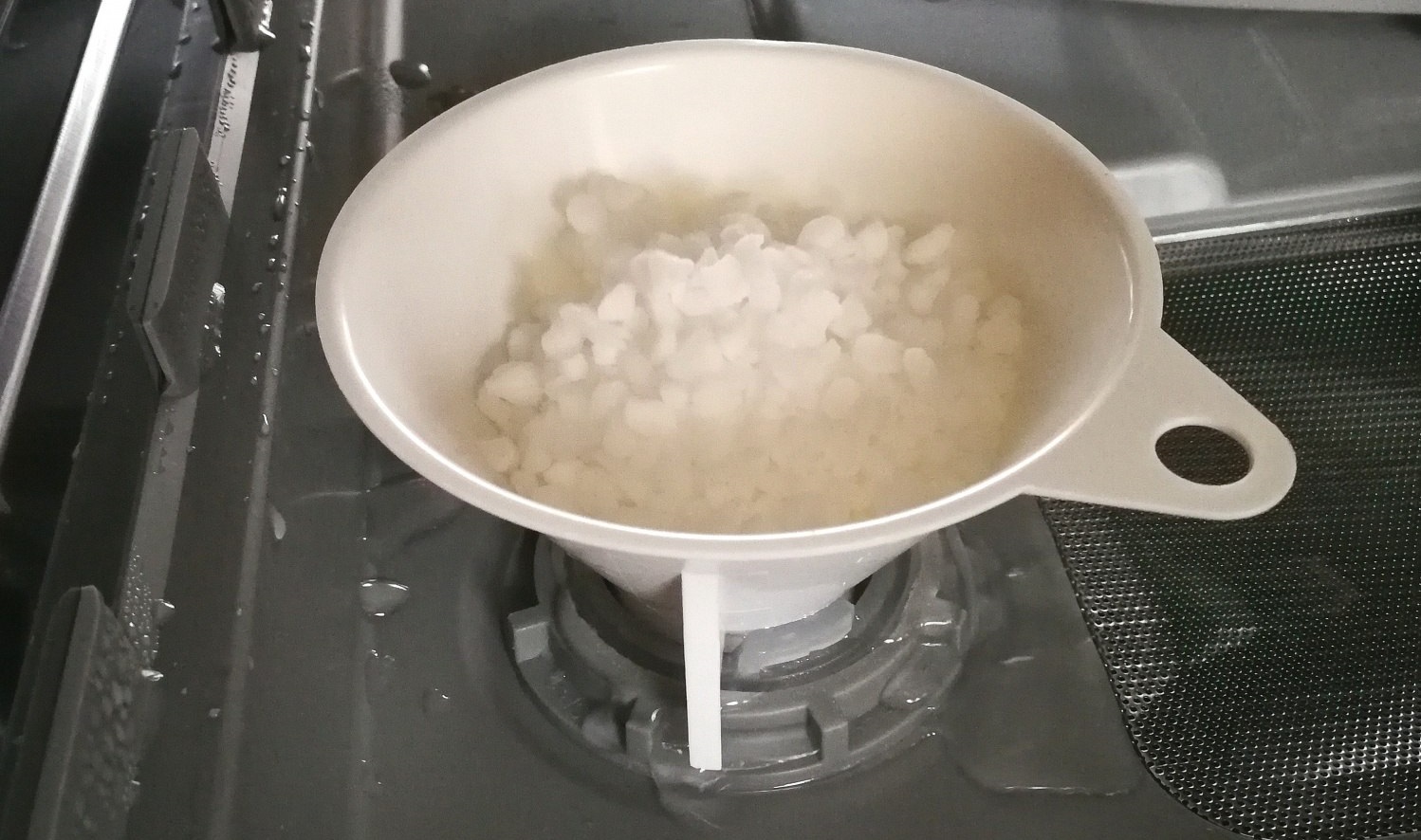
Regenerating salt is sold in any supermarket, so finding it shouldn't be a problem. In some cases, salt granules may be included with the dishwasher; in this case, they'll be included in the starter kit for initial setup of your Bosch dishwasher. How do I add salt to my machine?
- Open the appliance door.
- Remove the lower dish rack.
- Find the brine tank cap at the bottom and unscrew it.
- Add about a liter of water to the container.
- Pour about a kilogram of special salt granules for dishwashers into the compartment.
- Close the compartment tightly.
- Wipe up any salt water that may have spilled out of the brine tank.
In the future, you won't need to worry about the salt reservoir, as water is only added once. The only thing you need to remember is to refill the salt granules when the reservoir runs low. Modern appliances will automatically notify you when it's time to add salt using a special indicator.
Never use regular table salt on expensive appliances, as it is not as effective in combating hard water as specialized salt granules for dishwashers.
The easiest way to load the detergent into the hopper is with a special funnel, which is often included with your Bosch dishwasher. If you don't have such a plastic device, a regular cup will do just fine. Typically, the salt compartment in washing machines is designed to hold 1-1.5 kilograms of salt, that is, an average whole pack. After the salt granules, all that remains is to open the water supply tap, connect the machine to the power supply, and begin a test wash.
Is the water in the tap hard?
On average, special salt is used up in a dishwasher within a few months, but consumption is directly affected by the quality of your tap water and how you set up your dishwasher. This is because water hardness varies in different areas, which is important to know for proper dishwasher settings. Your dishwasher usually comes with special test strips to help determine the water hardness.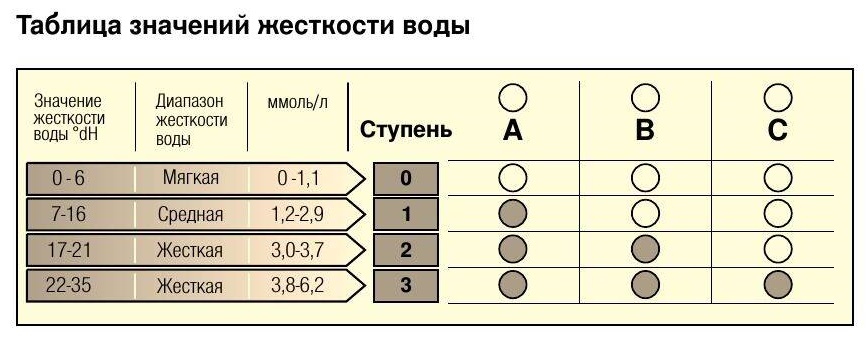
These strips should be dipped in water for a few seconds, which will cause the strip to change color. The color that appears on the tester should be compared with the chart in the test strip instructions to determine the quality of the water supply in your area. The higher the hardness, the higher the salt consumption should be set so that hard water does not damage the ion exchanger, which is responsible for softening the liquid in the machine.
If test strips weren't included in the kit, you can either purchase them yourself or find out the water quality information on the official website of your local water utility.
Set the required position of the handle responsible for salt consumption and proceed to the next step.
What are we going to wash the dishes with?
Bosch appliances can wash dishes with all currently available detergents. This includes:
- pills;
- powders;
- gels.
The only requirement that must not be violated is to use only household chemicals designed specifically for dishwashers. Therefore, don't even think about using regular detergents that you bought for hand washing dishes before purchasing a dishwasher. As for household chemicals for dishwashers, housewives always have a wide range of options. There are three groups of detergents on the market, divided by composition: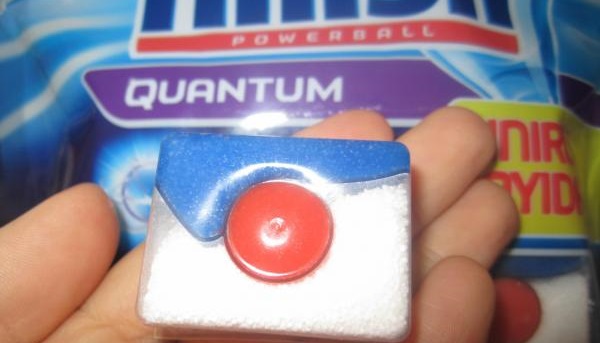
- chemistry with chlorine and phosphates;
- products containing phosphates, but without chlorine-containing elements;
- products are both chlorine-free and phosphate-free.
Each user must make the choice of product themselves, since the washing result depends on it. Chemicals without chlorine will not whiten dishes, so if you need to frequently wash dishes after tea or coffee, it is better to buy products containing chlorine.
If you buy phosphate-free products, expect a white residue to form on your dishes and the walls of the wash chamber. To prevent this, either use more household cleaning products at once or switch to a different product.
About using mouthwash
Dishwasher owners often don't understand why they need to add rinse aid in addition to salt and detergent. This rinse aid comes into play at the last stage of the cycle, creating an invisible protective film on dishes, preventing streaks, and speeding up the drying process.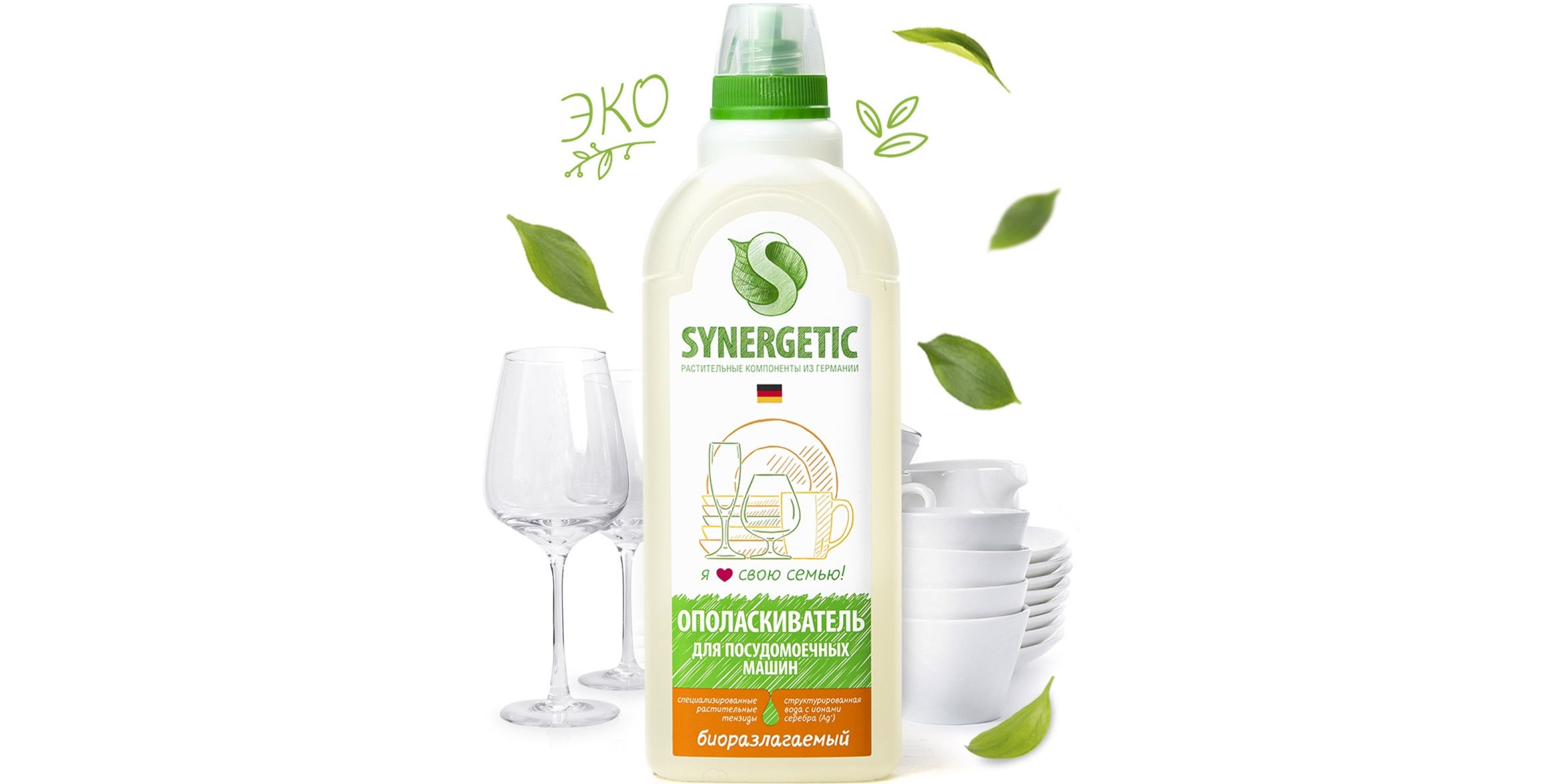
If you wash dishes without rinse aid, all your glass and crystal dishes will be covered in unsightly stains afterward, and your cutlery will lack that beautiful shine. Therefore, don't skimp on rinse aid, especially since it's relatively inexpensive.
This cleaning agent should be placed in a separate container next to the detergent compartment. Run the dishwasher for the first time using the manufacturer's default settings and check whether a white residue remains on the dishes. If you're not satisfied with the cleaning results, simply increase the rinse aid dosage. If, instead of a film, rainbow-colored streaks remain on the dishes, and the utensils themselves have become a little sticky, then the consumption of household chemicals should be reduced.
Putting away dirty dishes
The quality of dishwashing directly depends on whether the dishes are properly arranged within the washing chamber. Therefore, it's crucial to spend as much time as possible arranging them to ensure everything is in its proper place.
This is also due to the fact that the device has special spray arms installed inside it that must move freely throughout the washing chamber to ensure water reaches all dirty dishes. In addition to the spray arms, which ensure water circulation within the system, it is prohibited to block the detergent dispenser with dishes, otherwise the household chemicals simply won't be used during the wash cycle.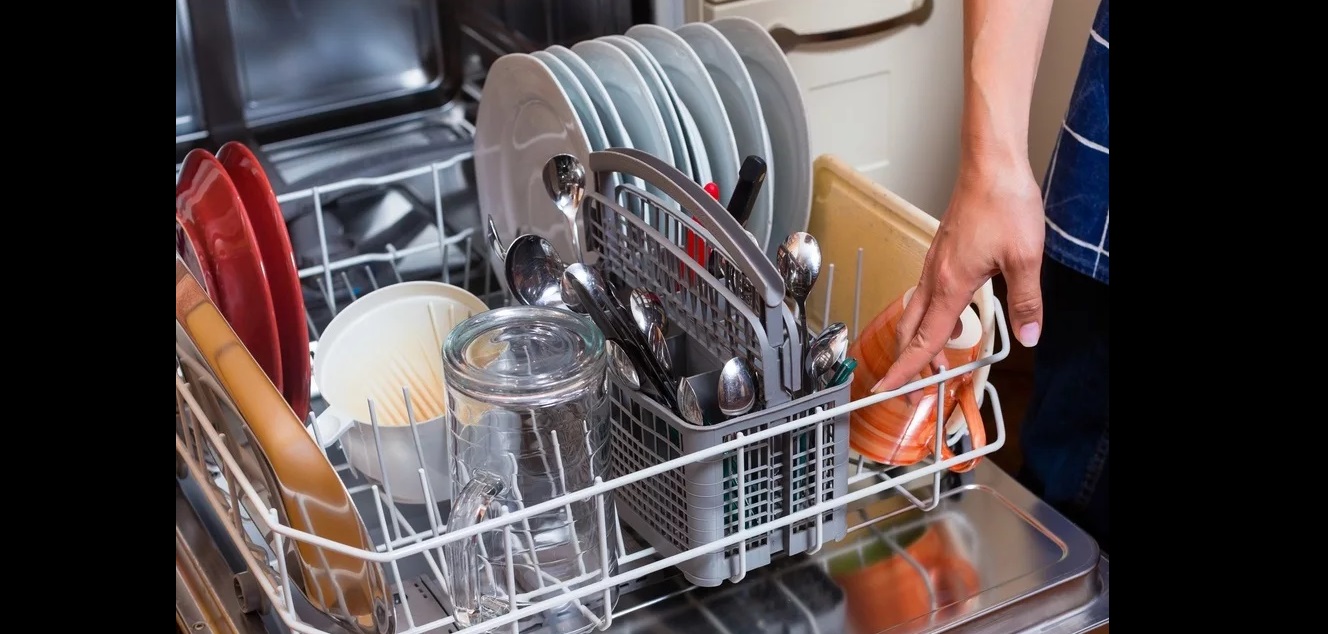
These are the most basic rules for arranging dishes. Besides arranging them correctly, make sure you only wash dishes that won't be damaged by the dishwasher. The following items should not be washed in a dishwasher because they don't handle prolonged contact with liquid well:
- cookware made of wood or cast iron;
- products made of plastic that cannot withstand high temperatures;
- appliances with mother-of-pearl handles;
- items made of copper, aluminum or bronze.
Also, avoid loading dishes with food particles, fruit pits, tea bags, napkins, and other debris on them.
Depending on the model of your "home helper," it may have an additional soaking mode that allows you to pre-treat pots, pans, and baking sheets. If your appliance doesn't have this feature, you'll have to manually scrub away grease and burnt-on food using a special brush. Another way to improve the quality of washing is to pre-rinse the dishes under a strong stream of hot water in the sink. This will help loosen stubborn grease, making it easier for the machine to clean dirty dishes.
Bosch dishwashers offer two racks for storing dishes—an upper rack and a lower rack. They contain three types of baskets:
- Vario;
- Vario Flex;
- Vario Flex Plus.
Baskets vary in the number of mobile and folding elements. The main difference between the baskets is the additional protection for fragile cutlery, which is provided by the Vario Flex and Vario Flex Plus baskets. The number of baskets depends solely on the dishwasher model; some dishwashers offer two baskets, while others offer three. The third basket is needed for cutlery and odd-sized items.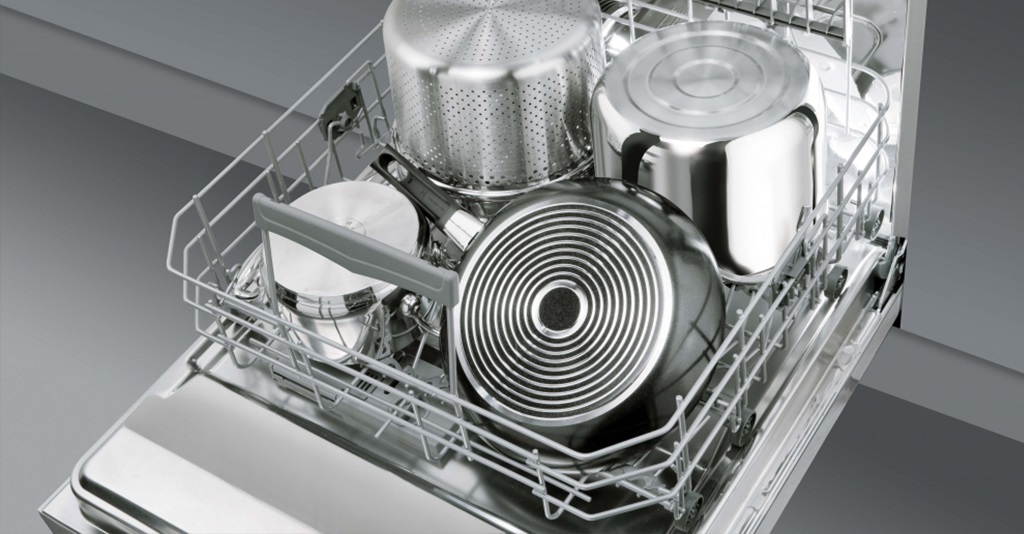
Bosch dishwashers also boast the Rackmatic system, designed for conveniently adjusting the basket positions. This allows you to place any items, even the largest, inside the machine, which might otherwise be too large for other brands, and also conveniently secure stemware and glasses with special clips.
As for the rules for arranging dishes, they are detailed in the user manual. If you don't have the manufacturer's instructions at hand, an abridged version will help.
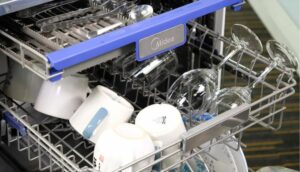
- The upper basket in the washing chamber is designed for: mugs, cups, glasses, saucers, small saucers, wine glasses, spatulas and other small items.
- The lower basket is needed for: plates, pots, saucepans, baking sheets, frying pans, lids, and other large items.
Remember to place all deep utensils upside down to ensure water doesn't accumulate inside, but rather drains freely. Avoid piling up dishes or stacking them on top of each other, and ensure there's at least a small gap between each piece of cutlery to ensure water can wash the entire surface.
Select the program and start the equipment
The final step is to figure out the washing modes. The following is considered a classic set:
- Auto;
- Fast;
- Delicate;
- Economical;
- Intensive;
- Pre-rinse.
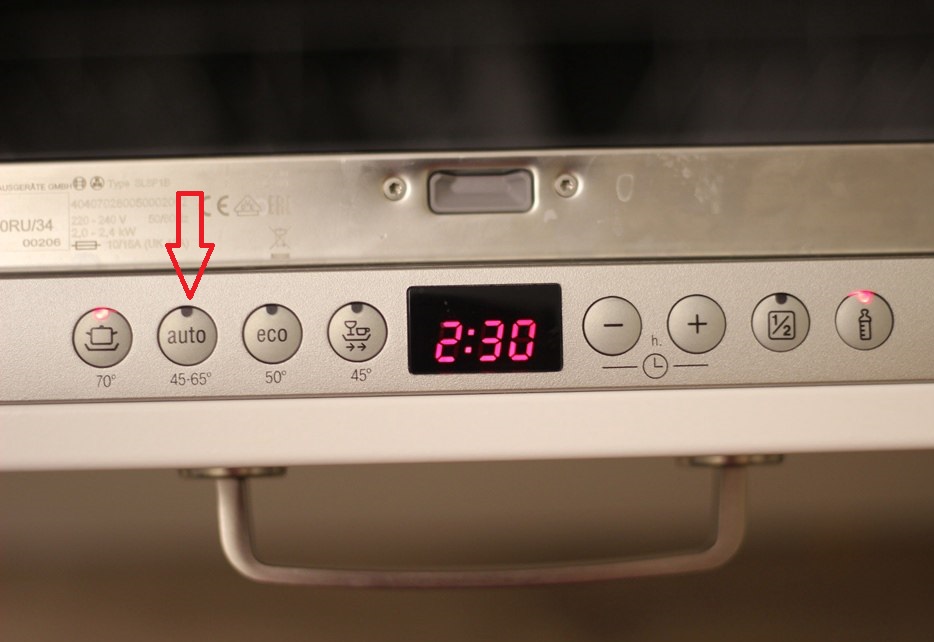
All of them are designed for different types of dishes, different materials, and varying degrees of soiling. Therefore, for each program, you can select the following additional parameters:
- water temperature;
- working hours;
- water consumption;
- type of detergent;
- mechanical action method.
Now you know how to set up your dishwasher, all that's left is to run a full cycle. To do this, turn on the appliance, select the appropriate operating mode and settings, press the "Start" button, and close the wash chamber door.
Interesting:





Readers' comments
Headings
Washing machine repair




For buyers




For users


Dishwasher




Add a comment