
How to set water hardness in a Midea dishwasher
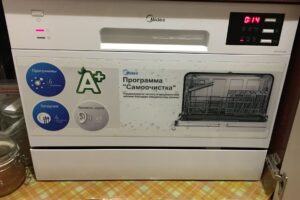 Dishwasher owners often believe they can set the water hardness settings once after purchasing their appliance and never have to adjust them again. However, this is a misconception, as tap water hardness is variable and fluctuates from time to time, which affects salt consumption, either increasing or decreasing it. In this article, we'll take a detailed look at the water hardness setting for a Midea dishwasher, when to change it, and how.
What should I click to set the correct parameters?
New dishwasher buyers often find it difficult to set the water hardness level in their dishwasher for the first time, as they've never done it before. However, setting the water hardness level is quite simple if you know the steps. Our instructions will help you with this.
- Open the washing chamber door and activate the dishwasher using the power button.
- Press and hold the operating cycle selection button for five seconds, which will activate the hardness setting mode at which the ion exchanger should operate.
You will know that the water softener setting mode is activated when the rinse aid indicator starts flashing actively.
- Now you need to press the button to select the setting, which will switch between hardness modes in order from H1 to H6, where the first indicator is calculated for water with a hardness of up to 5 dH and with zero salt consumption, and the last one is for water with a hardness of more than 35 dH and with a consumption of 60 grams of salt per working cycle.
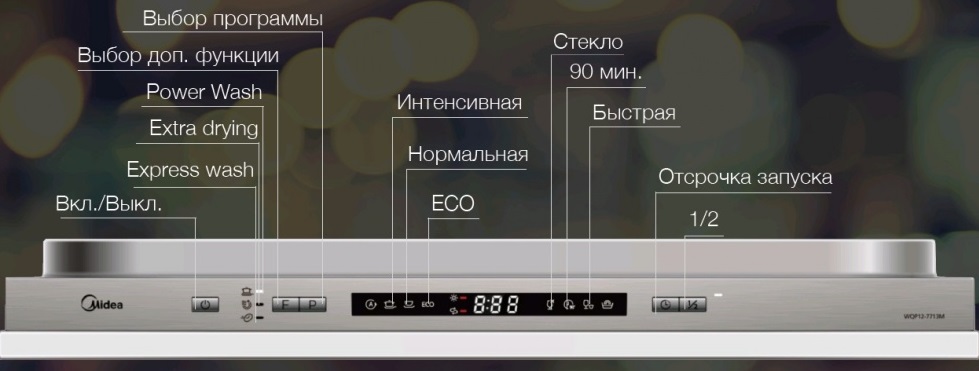
- Now all that remains is to press the power button to complete the setup and the machine to remember the selected value.
The hardness level should always be chosen in accordance with the actual water hardness in your water supply. If you overdo it with the settings, the salt will be wasted, which will force you to buy this product more often. If you try to save money, there may not be enough salt to regenerate the ion-exchange resin in the ion exchanger, which can even cause the part to fail.
How to determine the condition of water yourself?
It's very easy to check the water quality if you live in a large city. In this case, you can simply visit the official website of your local water utility, which is required to regularly publish up-to-date water quality data, and adjust the water hardness settings if they change seasonally. If you live in a small town or village, you'll have to obtain water quality information yourself. Here are the most popular and accessible methods for testing water hardness.
- Mass measurement involves comparing the mass of liquids taken from different sources. You need to fill several identical containers with different types of water and then weigh the liquids. The greater the mass of the water, the harder it is. This is far from the most accurate method for determining hardness, but it is reliable, providing at least minimal data in situations where no information on water supply quality is available.
- To determine soapiness, wet regular laundry soap and then lather your hands with it. If your tap water is hard, it will be difficult to lather the laundry soap. Conversely, if your water is high-quality and soft, it will produce a lot of lather and rinse off slowly.
- The formation of scale is another indicator of the quality of tap water. If scale and sediment frequently form in your kettle and limescale appears on your faucets, it means you have poor-quality hard water, which will need to be addressed.
- Turbidity is another indicator of hard water, but it doesn't provide the specific information needed to fine-tune your dishwasher. Fill a clear bottle with water, store it in a dark place for two days, and then carefully examine the container. If a film or cloudiness forms on the walls of the bottle, this indicates high water hardness.
- Finally, test strips are the most accurate way to determine hardness, which is worth discussing separately.
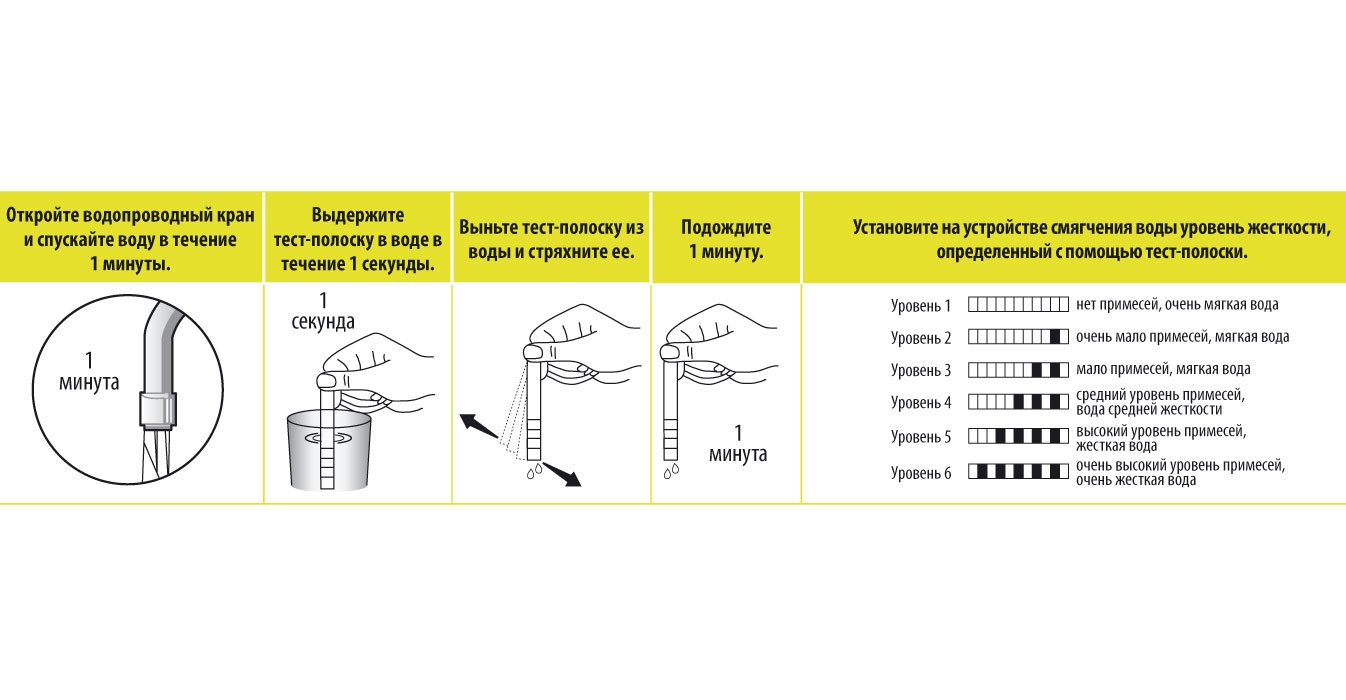
These disposable strips are an objective way to test water quality, so experts recommend using them. The strips most commonly found on the market are those impregnated with a special solution. Dip the strip in water for one second, then compare the resulting color with the instructions, which list all the possible strip colors and their respective hardness levels.
Slightly more reliable are the Biosensor Aqua strips. They need to be dipped in water for a few seconds and then wait about a minute for the strip to change color. After this procedure, you should also compare the color with all the possible results described in the table.
The most difficult ones are the strips that require special reagents. In this case, you fill a glass of water, place the test strip in it, and then slowly add the reagent. When the color appears on the test strip, compare it with the instructions to determine the water hardness.
The most reliable testing method is a TDS meter, which is more expensive than test strips, but it is not disposable and is also more accurate.
Therefore, test strips remain the best option for quickly checking tap water quality. Subjective assessment methods won't provide the necessary data for adjusting your dishwasher, and an expensive electronic tester is unnecessary if you only need to test your water a few times a year. However, disposable test strips are almost as accurate as a TDS meter but are much less expensive.
Interesting:



Readers' comments
Headings
Washing machine repair




For buyers




For users


Dishwasher




Add a comment