
How to tighten the belt on a Bosch washing machine?
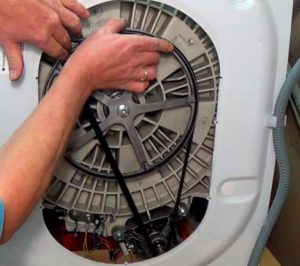 German-made Bosch washing machines are quite reliable, although they are still prone to minor malfunctions. Owners of these machines occasionally encounter problems with the drive belt stretching and breaking. This problem is not considered serious, and you can repair the machine yourself without calling a technician. Let's discuss how to tighten the drive belt on a Bosch washing machine and what symptoms indicate that the belt has come loose.
Is this a belt?
It's difficult to immediately tell if the belt has come off—it's located behind the rear panel of the machine. To confirm this, you'll have to remove the bolts and the panel. However, the washing machine itself can also hint at problems with the drive. How can you tell if a broken belt is the cause of the machine's malfunction?
Modern Bosch automatic machines are equipped with a self-diagnostic system that alerts the user to any malfunctions or failures.
If the machine detects a drive belt failure, it will immediately alert the user. Machines with a display will display an error code on the control panel. All you need to do is consult the manual and decipher the code. Washing machines without a display will alert you to the problem by flashing the indicator lights on the control panel.
In some cases, the washing machine's "brain" doesn't detect a broken belt. Then, the user must guess the cause of the machine's failure based on indirect symptoms. Drive system problems should be considered if: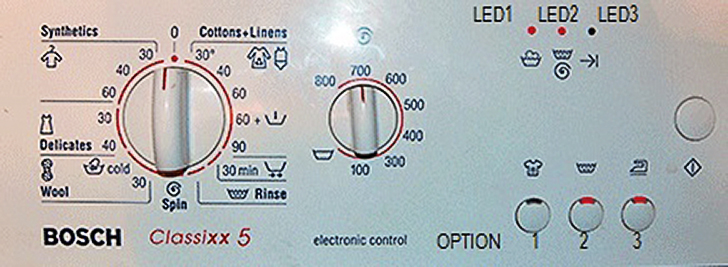
- the washing machine has started the program, the tank is filled with water, the motor is running, but the drum is not even thinking about rotating;
- The washing machine's motor hums, then suddenly "silences" and stops working. This change in engine state occurs at regular intervals;
- The wash cycle starts, the electric motor runs continuously, but the machine “freezes” and does not “respond” to the user’s commands;
- The drum rotates well manually, but the electric motor does not start working.
If you detect one of these “symptoms”, you should immediately check the drive system of your Bosch washing machine. Operating a machine with a broken drive belt is dangerous, as it will cause the engine to overheat and fail. To check if the rubber seal is in place, you'll need a screwdriver. We'll describe the basic diagnostic procedure.
What are our actions?
If the belt has become loose and has actually come off the pulley, you don't necessarily need professional help. You can reinstall the rubber band yourself. Retightening the drive belt will require patience and concentration, but if you follow the instructions, the job is definitely doable.
If the rubber band has broken for the first time, you don't need to buy a new one; simply replace it. If it breaks regularly, you'll need to replace the drive belt. To remove the component from the housing and assess its condition, follow these steps: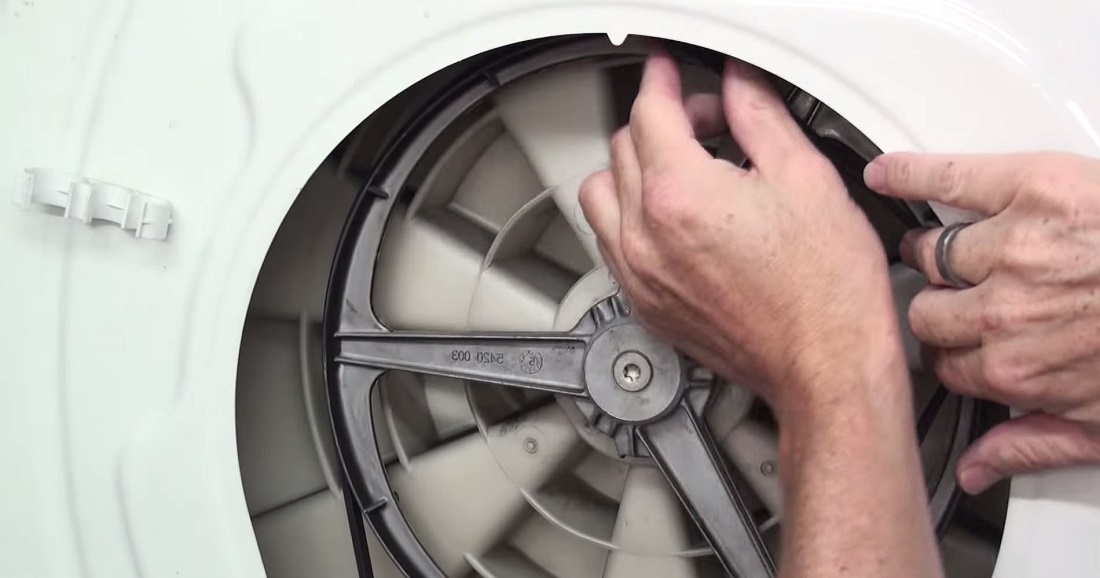
- de-energize the automatic machine;
- disconnect the washing machine from the sewer and water supply;
- disconnect the drain hose and water intake tube;
- move the machine so as to gain access to the rear wall of the case;
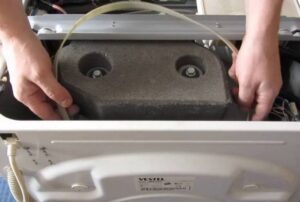
- Unscrew the bolts holding the rear panel and remove it. Some models may require removing the top cover of the washing machine first;
- find the drive belt;
- pull out the rubber band and assess its condition.
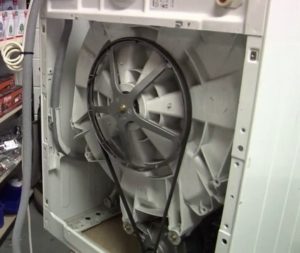
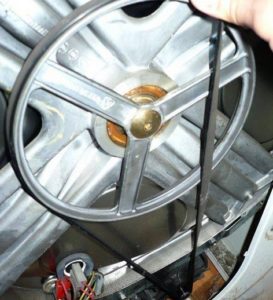
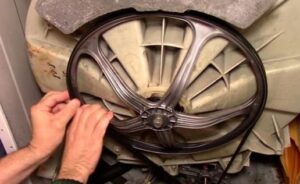
The drive belt location is the same on all Bosch collector-type machines. It's located directly behind the rear panel, between the drum pulley and the motor. If it's not visible, the component has come loose and is lying underneath the washing machine.
To determine the condition of the belt, you need to find the factory markings on it. The first four digits indicate the initial diameter of the rubber band in millimeters. Then, measure the circumference yourself and compare the values.
If the difference between the current and initial diameter of the drive belt exceeds 2 cm, then the rubber band needs to be changed; it is not suitable for further use.
You can purchase a replacement belt at a specialized store. Tell the seller the make and model of your washing machine. Once you've purchased a similar belt, you can begin repairs. To replace the part, follow these steps:
- put the belt on the motor pulley;
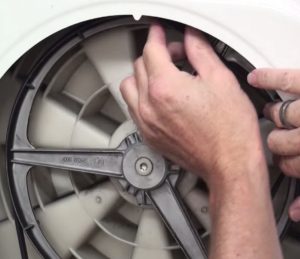
- Pull the rubber band onto the drum wheel, slowly turning the pulley counterclockwise.
It's important to strictly follow the sequence of steps, starting from the bottom and working your way up to the top drum pulley. If you can't install the drive belt alone, try asking for a helper. The task is easier with two people. Some Bosch models have very tight elastic bands, so tightening them will require patience and a fair amount of force.
Once the element is in place, check to see if it's seated properly. Rotate the drum pulley; if it's tight, the drive belt is properly tensioned.. Next, you can assemble the washing machine body:
- Use self-tapping screws to secure the back wall in place;
- install and secure the top cover.
The machine then moves forward and connects to the house utilities and power grid. Be sure to run a test cycle to check the machine. If the wash cycle runs as normal, the job is complete.
The belt "jumped off" again
If the belt falls off regularly, even after installing a new one, it's time to take a closer look. There's likely a problem with your washing machine. Diagnostics of the Bosch automatic washing machine is necessary if the drive rubber comes off more than twice in 6 months. A constant “breakdown” of an element can occur for the following reasons: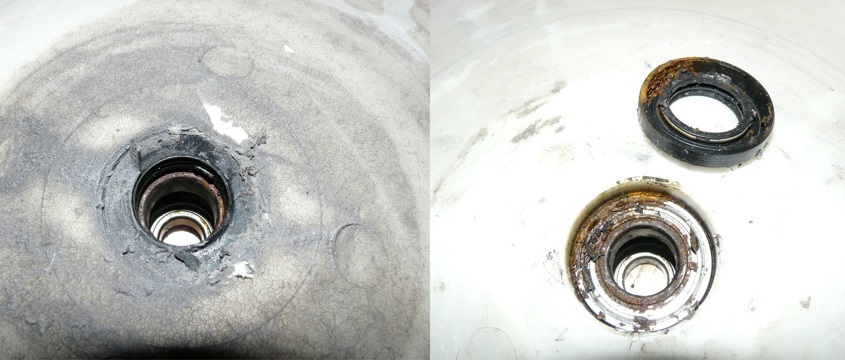
- Part wear. The drive belt is subject to stretching. If you notice wear marks, creases, cracks, or an increase in diameter of more than 2 cm on its surface, you should purchase a new belt. The old one has completely exhausted its lifespan and can no longer perform its intended functions.
- Drum pulley play. In this situation, the belt is far from the issue. Tightening the drum wheel mounting screw can solve the problem. In rare cases, the pulley may need to be replaced.
- Poor motor mounting. Initially, during assembly, the motor is securely fastened to the housing. Over time, with prolonged use, the motor can become loose. Due to constant vibration, the bolts can become loose, leading to drive system failure. Tighten the screws, and the rubber seal will stop coming loose.
- Deformation of the shaft or "wheel." This may be the result of a poor repair. You may encounter mechanics who manage to damage other parts while replacing some. If the drum pulley is bent, you can try straightening it, but the best solution is still to replace the wheel.
- Defective spider. Although rare, Bosch washing machine owners may still encounter this problem. This part must be replaced; it cannot be repaired. Failure to install a new spider can lead to drum imbalance, which will lead to additional repair costs.
- Bearing damage. Deformed components can cause the system to become distorted, which will result in the drive belt falling off. In this case, replacing the bearings and seal will be necessary to restore the washing machine's operation.
The drive belt may break again if it is installed incorrectly – when the rubber band is not fully secured in the grooves.
Belt slippage can also occur if it's not compatible with your washing machine, meaning it has different characteristics from the factory part. Therefore, when purchasing a new belt, it's important to select the correct replacement for your specific Bosch model.
Therefore, if the belt has become loose and come off, there's no need to panic or call a service center (unless the washing machine is still under warranty). Even a housewife can reinstall the belt; the key is to follow the instructions carefully and be patient.
If the belt drive fails again after a short period of time, you'll need to conduct a thorough diagnosis of your Bosch washing machine. Tightening the drum pulley or motor mounts may resolve the issue. In some cases, more extensive repairs may be necessary, such as replacing the bearings or drum wheel.
Interesting:
Readers' comments
Headings
Washing machine repair




For buyers




For users


Dishwasher




Add a comment