
The drum of the Whirlpool washing machine does not spin.
 It's frustrating when your Whirlpool washer stops working with a full drum. The laundry is loaded, the detergent is poured in, the water is filled, but the wash doesn't start—the drum won't spin. Ignoring the situation is unavoidable, otherwise the laundry will remain stuck in the machine forever. But calling a technician isn't necessary—you can fix the problem yourself. We suggest finding out where the problem might be and how to fix it with minimal risk.
Which element failed?
It's important to immediately assess the symptoms of a Whirlpool washing machine malfunction. This is the only way to understand the cause of the problem and pinpoint the fault. Most often, only the drum slows down, while the rest of the system functions without problems: the board reads the selected program, the tank fills, and the pump pumps out the waste water. The only thing that raises suspicion is the engine, which produces a barely perceptible cracking sound. This means that the motor is either running but not transmitting power to the shaft, or has failed and is stationary.
If the drum of a Whirlpool washing machine does not rotate, it cannot be used – the motor may burn out or the tank may be damaged.
Several failures lead to this situation:
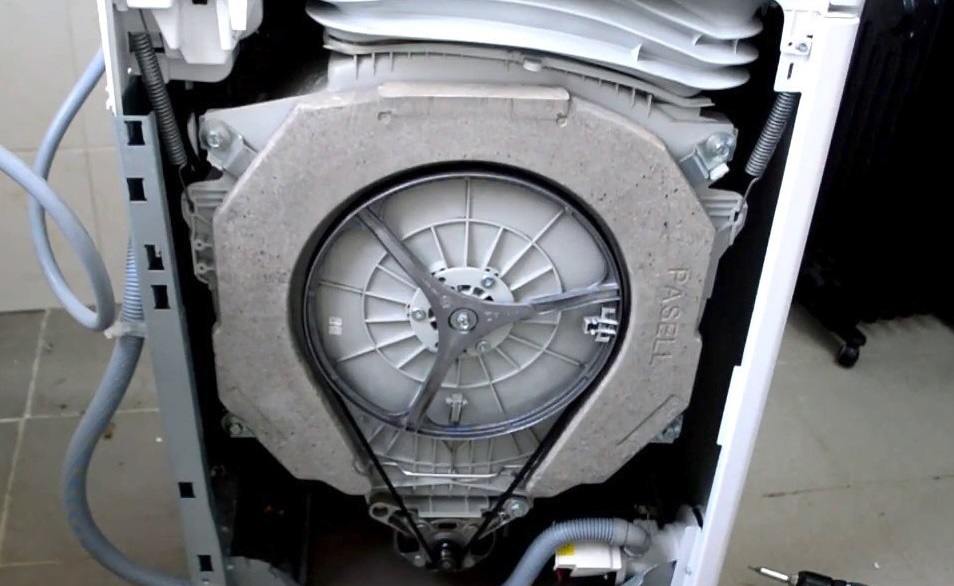
- the drive belt has come off the pulley or broken;
- the electric brushes are worn out;
- the lamellas on the motor shaft have peeled off;
- the tachogenerator (Hall sensor) is out of order;
- the engine broke down;
- The drum is jammed by a foreign object.
This applies to situations where the drum doesn't rotate at all. If the drum spins even with difficulty, the potential for malfunctions is much greater.
The motor does not perform its function
The drum remains stationary when the motor doesn't have enough power to spin it. This conclusion is logical, but in practice, it's more complicated: the motor may not accelerate sufficiently or may not start at all. If the motor hums and the shaft rotates, but the mechanism stops when the drive belt is engaged, the problem lies with the brushes. They need to be replaced. To check and replace the brushes, follow these steps:
- Unscrew the back panel from the Whirlpool and set it aside;
- tighten the drive belt;
- find the engine and remove the wiring from it;
- loosen the engine retaining bolts and remove the motor from its mounting location;
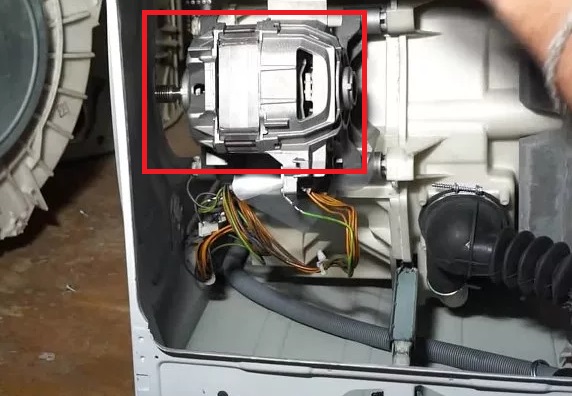
- try to spin the shaft and assess its serviceability;
- unscrew the fasteners that secure the brushes to the engine body;
- unhook the electric brushes.
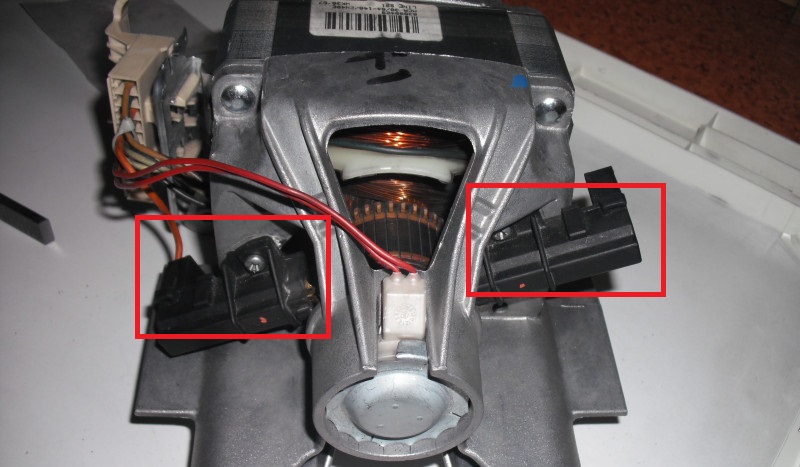
The electric brush holder is unscrewed, the spring is compressed, and the rod with the carbon tip is pulled out. If the carbon tip is less than 1-1.5 cm, it needs to be replaced. Important: Replace the elements only in pairs, even if the second one is completely intact.
If the brushes are long enough, there's a good chance the drum isn't rotating due to a faulty tachogenerator. This sensor is attached to the motor housing and monitors its rotation. If it fails, the device stops measuring the motor's RPM, and the circuit board aborts the cycle for safety. To check the device, you'll need a multimeter, set to ohmmeter mode, and connected to the contacts.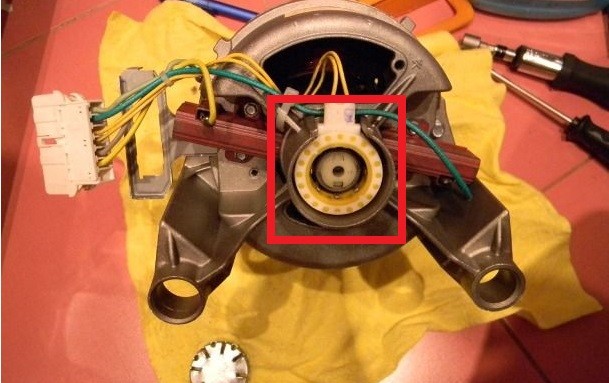
The fins—collector plates—often cause the drum of a Whirlpool washing machine to stop working. They are glued to the shaft and transmit current through the mechanism. When they peel off, contact is lost, and the motor stops working. It's necessary to disassemble the motor and assess the condition of the fins.
After inspecting the fins, check the winding. It may be damaged or broken. To diagnose this, apply the ohmmeter probes to the commutator fins and evaluate the result. A reading of 0.1-0.4 ohms indicates no problem. Otherwise, the motor needs to be replaced.
The drive mechanism is damaged
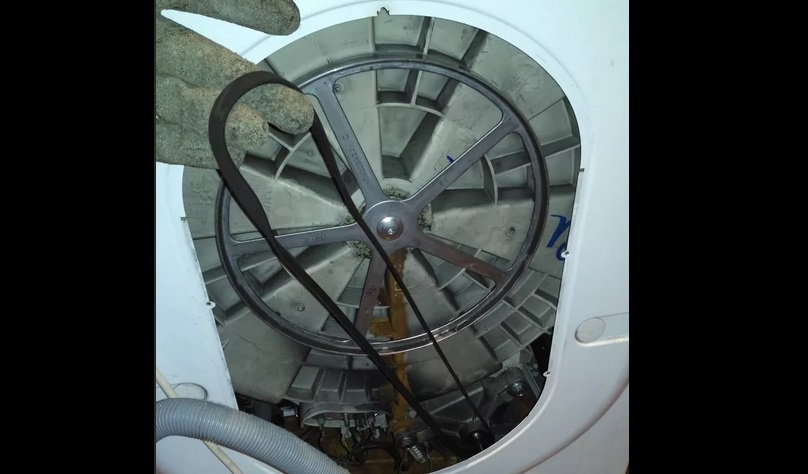
If the drive mechanism is damaged, the repair will not take long. First, we rotate the drum by hand. Excessively free rotation will confirm the guess: the belt has slipped off the pulley, stretched, or broken. Typically, the rubber band needs to be replaced.
The drive belt is selected according to the serial number of the Whirlpool washing machine or according to the markings applied to the rubber band!
Changing the belt is easy. Simply unscrew the back panel from the housing, remove the old rubber band, place the new one on the small wheel, and pull it over the drum pulley while rotating it. This is a bit of a pain, as Whirlpool washing machines use tight cuffs.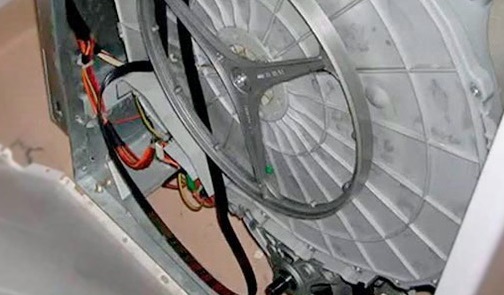
Something inside the tank is in the way
If you can't spin the drum even by hand, the problem isn't with the machine's components or mechanisms, but with a foreign object. A foreign object, such as a bra underwire, coin, or keys, has gotten caught in the drum, jamming it. There's only one solution: remove the "lost object." On a Whirlpool, you remove the stuck object through the heating element opening. Follow these steps:
- we disconnect the back panel from the case;
- pay attention to the heating element located under the tank;
- disconnect the wiring from the heater connector;
- loosen the central retaining bolt;
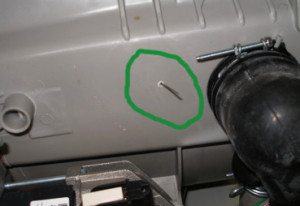
- we loosen the element and remove it from the grooves;
- we look into the vacated hole with a flashlight;
- we find the stuck object;
- We try to get the “lost one” with our hand or with a thick wire bent into a hook.
If you can't get the item out through the heating element, you'll have to take a more complex approach. You'll need to disassemble the washing machine almost completely, access the tub, remove it and the drum, separate the tanks, and remove the "lost item." Figuring out why the drum isn't spinning yourself is entirely possible. You just need to consistently check all possible “pain points”, starting with the simple and ending with the complex. If the reason for the stop remains unknown, you will have to contact the service center.
Interesting:

Readers' comments
Headings
Washing machine repair




For buyers




For users


Dishwasher




Add a comment