
My Whirlpool washing machine won't spin the laundry.
 There are several reasons why a Whirlpool washing machine won't spin clean and rinsed items. These include a faulty drainage system, a malfunctioning motor, a burnt-out water level sensor, or a faulty control module. The only way to assess the extent of the necessary repairs is by calling a technician or performing a diagnostic yourself. For those who choose the latter option, we've provided our instructions.
What could have broken?
You can suspect the lack of a full cycle by the obvious signs a faulty machine gives off. The most telling signs are water remaining in the drum and completely wet laundry, even after the spin cycle has finished. Other warning signs include an unusually noisy or excessively slow drain, interruptions in program change signal transmission, and a humming sound from the washer without spinning or vibrating. If any of these symptoms are present, we begin to investigate the problem.
There are several possible causes of a spin cycle not working at full capacity, all of them technical in nature. One example is a problem with the drainage system. If the washing machine stops working after the wash and rinse cycle, it's time to check the drainage. Most likely, the water simply cannot drain due to a blockage in the hose, insufficient pump power, or loose contacts. This is not the only possible problem.
- A faulty level sensor. It's responsible for sending information about the water level in the drum to the control board. If the machine doesn't detect the full drum signal, the system won't drain the water.
- A broken module. It consists of triacs that control certain components and processes in the system. Once it burns out, the board stops controlling and switching modes.
- Electric motor problems. A significant decrease in power and RPM is noticeable. This is caused by the motor running rough due to burnt wiring, faulty contacts, or worn brushes. If the problem isn't corrected soon, the machine will stop working.
- A faulty tachogenerator. This sensor monitors the motor's RPM. If it's not working properly, the drum will slow down during the cycle and rotate insufficiently at the end.
Each type of malfunction is serious and requires immediate repair. However, before beginning inspection and diagnostics, it's important to confirm the problem and narrow the scope of the troubleshooting. We'll explain what to do first below.
Priority actions
Don't immediately disassemble the machine and repair the motor and pump. First, we recommend running a few simple tests to confirm that the spin cycle isn't working. Let's proceed in an orderly manner.
- Check the control panel and note the selected cycle. If a program with no spin, soak, or delicate wash is selected, the alarm was false. Switch to express or spin cycle, set the maximum speed, and start the cycle.
- Let's take a look inside the drum. Whirlpool machines with a vertical loading type automatically slow down the rotation intensity due to overload or imbalance. This is the washing machine's protection against overheating and excessive spinning, and it's easy to bypass. Simply remove some of the items or evenly distribute the clumps.
Important! Most modern models have an "Imbalance Protection" feature, so this problem may only occur in older models.
If the spin button is lit, there's no imbalance, but the machine still won't spin, troubleshooting is inevitable. In this case, unplug the machine, turn off the water supply, and empty the tank. Ensure easy access to the machine and begin testing.
There might be a problem with the pump.
Most often, a Whirlpool machine stops before a cycle is complete and displays a full tank of water due to problems with the drainage system. Firstly, the liquid simply can't exit the drum and start the next wash cycle. Secondly, even with vigorous spinning, clothes don't dry while submerged in water, so we start by checking the pump: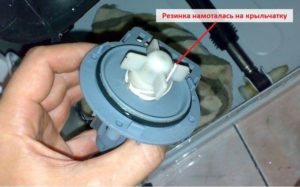
- we find the drain hatch, which is located in the lower right corner of the body;
- we release the clamps and open;
- we place the container under the hole;
- we take out the filter;
- We check the impeller by starting the spin cycle or draining (afterwards we observe the part; if it rotates, everything is fine; if it doesn’t rotate, we disassemble the pump);
- Next, we inspect the drain pipe: we turn the machine on its side, loosen the clamps through the bottom and check if there is any debris in the hose;
- we disconnect the pump from the connected conductors and fasteners;
- We clean all elements from accumulated debris and foreign objects.
It is precisely blockages that are the main source of problems with a faulty drainage system. Therefore, it is important to regularly clean hoses and tubes and test them for flow capacity. After completing all steps and reassembling, run the spin cycle and observe the drainage. If the stagnation occurs again, the entire pump will need to be replaced.
Let's check the motor and the Hall sensor
The electric motor and tachogenerator are next to be checked. If they malfunction, the drum stops or rotates slowly, making a high-quality spin impossible. So, let's inspect the motor according to the following diagram: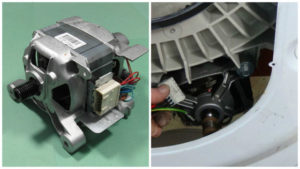
- unscrew the back cover of the SM case;
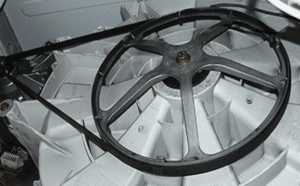
- carefully remove the drive belt by pulling it towards you while simultaneously rotating the pulley;
- we take out the engine by unscrewing the holding screws or bolts;
- We remove the brushes from both sides of the motor and measure the length of the carbon tip (more than 1.5 cm is normal, less means it needs to be replaced).
- we take a closer look at the wires, the insulation of which should not have any fractures, burnt areas, or cracks;
- We test the winding for short circuits.
Caution! If the multimeter indicates a shorted winding, do not attempt to replace it yourself—the entire motor must be replaced.
Connected to the motor is a Hall sensor, which monitors the motor's performance and ensures smooth operation. If it fails, the drum won't spin up to the required speed and won't spin the clothes. It cannot be repaired, only a complete replacement is possible. To do this, we take out the electric motor according to the previously mentioned diagram, find the tachometer coil on its body, dismantle it and install a new one.
Is the pressure switch working?
If your Whirlpool washing machine has stopped spinning, but the Hall sensor and pump are functioning properly, it's time to check the pressure switch. Its job is to inform the control board of the water level in the tank, and based on this data, the system signals the machine to drain. A faulty pressure switch won't indicate stagnation, and the machine won't empty or open. The solution is quite simple.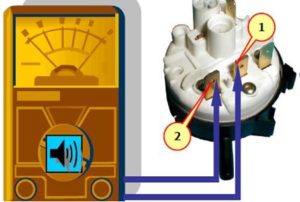
- We drain the water through the waste filter.
- We wait for the lock to unlock automatically and open the door.
- We find the pressure switch, which is located under the top cover of the machine.
- We prepare a tube with a diameter identical to the sensor fitting.
- We loosen the retaining clamps and remove the hose.
- We install the tube on the level gauge and blow on it (if you hear 1-3 clicks, it means the contacts have worked, otherwise the sensor is faulty).
- We inspect the surface of the part for scratches and cracks.
- We clear the blockages under a strong stream of water.
- We test the element with a multimeter in resistance mode, and when the values on the display change, we make sure that everything is fine.
If there's no clicking sound, there's damage, persistent blockages, or the multimeter display remains the same, the pressure switch needs to be replaced. It's best to contact a service center for this type of problem. To repair it yourself, simply purchase a similar device from a specialist store and install it in its original location.
Let's check the electronic components
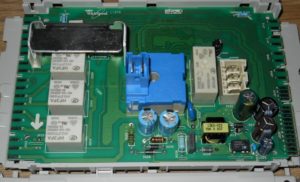 When individual components of a washing machine function normally, but the spin cycle still fails, there's a high probability that the electronics are damaged. In this scenario, problems occur not only with drying but also with other washing cycles. For example, the following situations indicate problems with the machine's "brains":
- the drum does not stop and rotation stops only after the cycle is forced to end;
- the machine does not wash, it only rinses and spins;
- The washing machine does not rinse, but only performs the initial wash.
Important! Only a professional can perform an accurate diagnosis of the control module.
You can only visually inspect the circuit board yourself. To do this, unplug the machine, remove the top cover, and take out the detergent drawer. Next, remove the screws and plastic clips from the dashboard. After that, disconnect the wires and inspect the part for external damage.
Don't forget about prevention
To avoid having semi-dry laundry and residual water in the drum, follow the operating instructions for your Whirlpool washing machine. This will prevent breakdowns and avoid the hassle of trying to figure out the source of the problem. These are the simplest recommendations for using your machine.
- Do not allow foreign objects or debris to enter the drum, carefully checking all pockets and folds of clothing.
- Install household appliances in rooms with low humidity, provide a separate outlet and do not use extension cords.
- Unplug the appliance if the washing machine is not used for a long period of time.
- Wash items with metallic decoration and hard inserts only in special bags.
- Do not exceed the maximum loading weight.
- Use voltage stabilizerto protect electronics from power surges and sudden shutdowns.
- Use only suitable powders of excellent quality.
- Clean filters, powder container and drain hoses regularly (once every two months).
- Run "empty" mode after the last cycle to clean the drum.
- Dry the inside surfaces of the machine, leaving the door open after use.
Without a spin cycle, washing becomes a headache, so at the first sign of a slowdown or drainage problems, you should sound the alarm. You can independently assess the extent and source of the problem if you follow the instructions above and take your time. Feeling overwhelmed? Contact a professional service center for help.
Interesting:

Readers' comments
Headings
Washing machine repair




For buyers




For users


Dishwasher




Add a comment