
The pump in my LG washing machine isn't working.
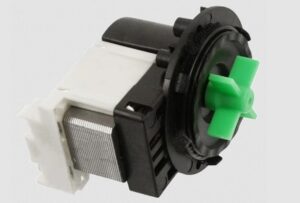 It's quite easy to tell if the drain pump in your LG washing machine isn't working. The symptoms are so obvious that they're impossible to miss. The machine may either not pump out any water at all and stop with the tank full, or it may spin poorly, leaving items wet. In either case, washing quality deteriorates. Let's look at how to diagnose your washing machine and where to start.
Is the pump really broken?
An automatic washing machine may stop with a full tank of water for several reasons; the pump module is not always to blame. You can talk about problems with the pump if the washing machine “freezes” at the stage when the waste liquid should be removed from the system, and the pump is “silent”. The following “symptoms” also indicate that the drain is not functioning:
- The corresponding error code appears on the display (the self-diagnostic system of modern LG washing machines detects the malfunction and notifies the user. By decoding the code, you can determine which part has failed);
- stopping the machine before spinning;
- water is drained from the tank “every other time”;
- the pump does not turn on at all, or operates without stopping;
- The water leaves the tank very slowly, not 2-3 minutes as it should, but all 10-15 minutes.
Diagnosis is complicated by the fact that many problems have similar symptoms. Some malfunctions manifest themselves in the same way: water drains too slowly from the system. To identify the cause of a malfunction in your "home assistant," it's best to work from the simple to the complex, eliminating one possible cause after another.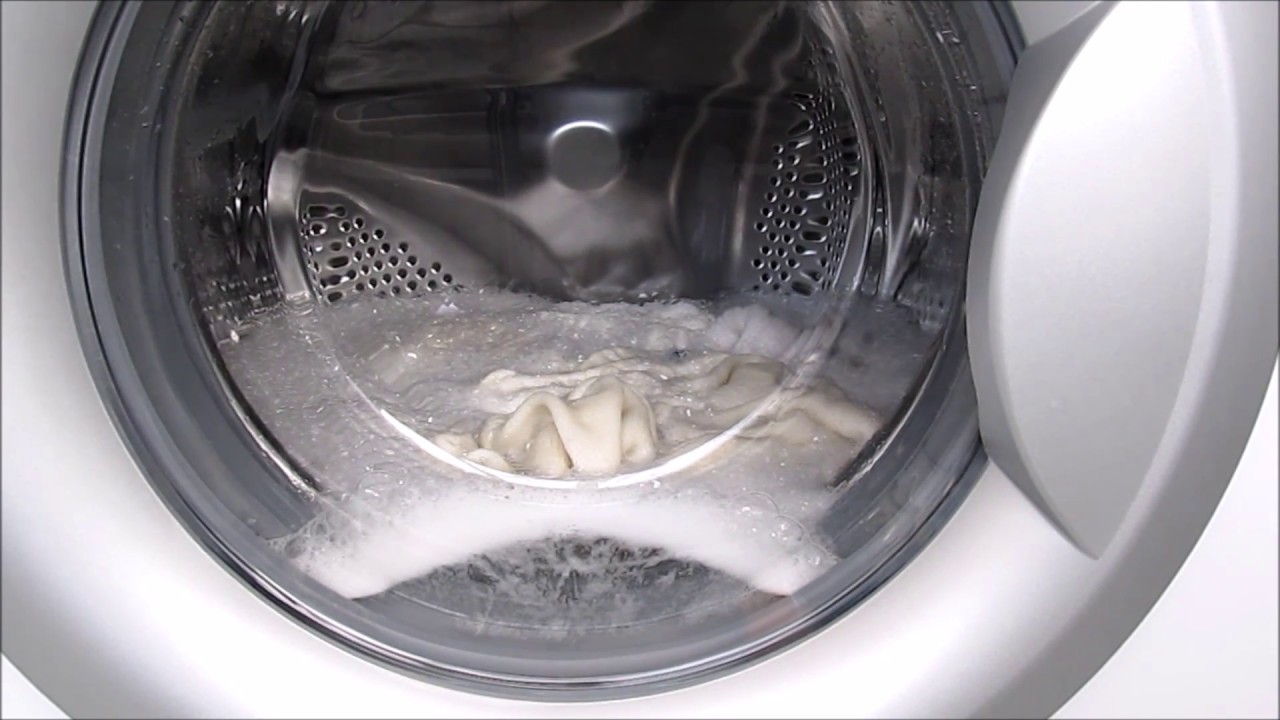
The actions must be performed in the following order:
- Make sure the drain and spin cycles have been started. You may have selected a program that doesn't include these functions, or the options may have been disabled by mistake.
- Check the drum speed setting during the spin cycle. It's likely the speed was reduced to the minimum.
- inspect the drain hose, it should not be pinched or kinked;
- feel the hose to make sure there is no blockage;
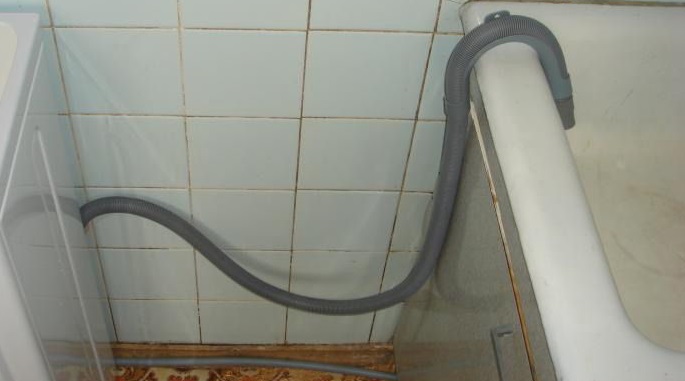
- Disconnect the drain hose from the trap or drain pipe, direct the free end into the bathtub, and run the spin cycle again. The drain pipe may be clogged, preventing water from draining from the machine.
- Check the dust filter. To do this, unscrew it and clean it of any debris and dirt;
- Check the impeller through the dustbin opening, shine a flashlight inside, and inspect the blades. Remove any hair, lint, or threads that may be tangled around them.
You should also check the impeller's movement. It should move intermittently but freely. Therefore, without reassembling the housing, run the spin cycle and observe the part. If the blades remain motionless, the pump may be faulty. Repairs will require pump replacement.
We get to the “motor”
To check the pump more thoroughly, you need to get to it. The drain pump is located on washing machines. LG below, under the tank. Therefore, you can “get to” the part through the bottom of the machine.
Before disassembling the washing machine, be sure to de-energize it and disconnect it from the utilities.
Next, you need to proceed as follows: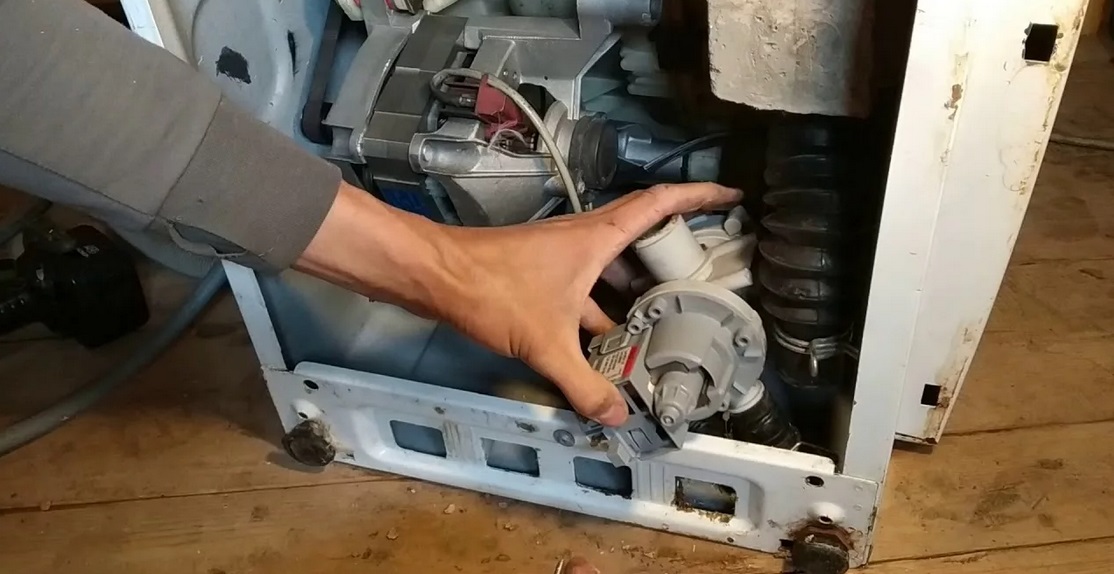
- drain the water from the machine by unscrewing the waste filter;
- remove the laundry from the drum if the machine did not open the door due to water remaining in the drum;
- remove the detergent drawer;
- cover the floor with a soft blanket or towel;
- Place the washing machine on its side.
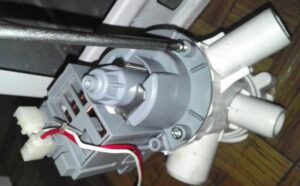
If your automatic washing machine doesn't have a drain pan, you'll immediately see the pump. For further diagnostics, you'll need to remove the part from the housing. Disconnect the hoses and wires from the pump, unscrew the retaining bolt, and remove the component.
Problems with the coil
LG washing machine pumps often burn out due to water droplets getting on the coil, causing a short circuit. The control module almost always detects this fault and displays a corresponding error code (OE) on the display.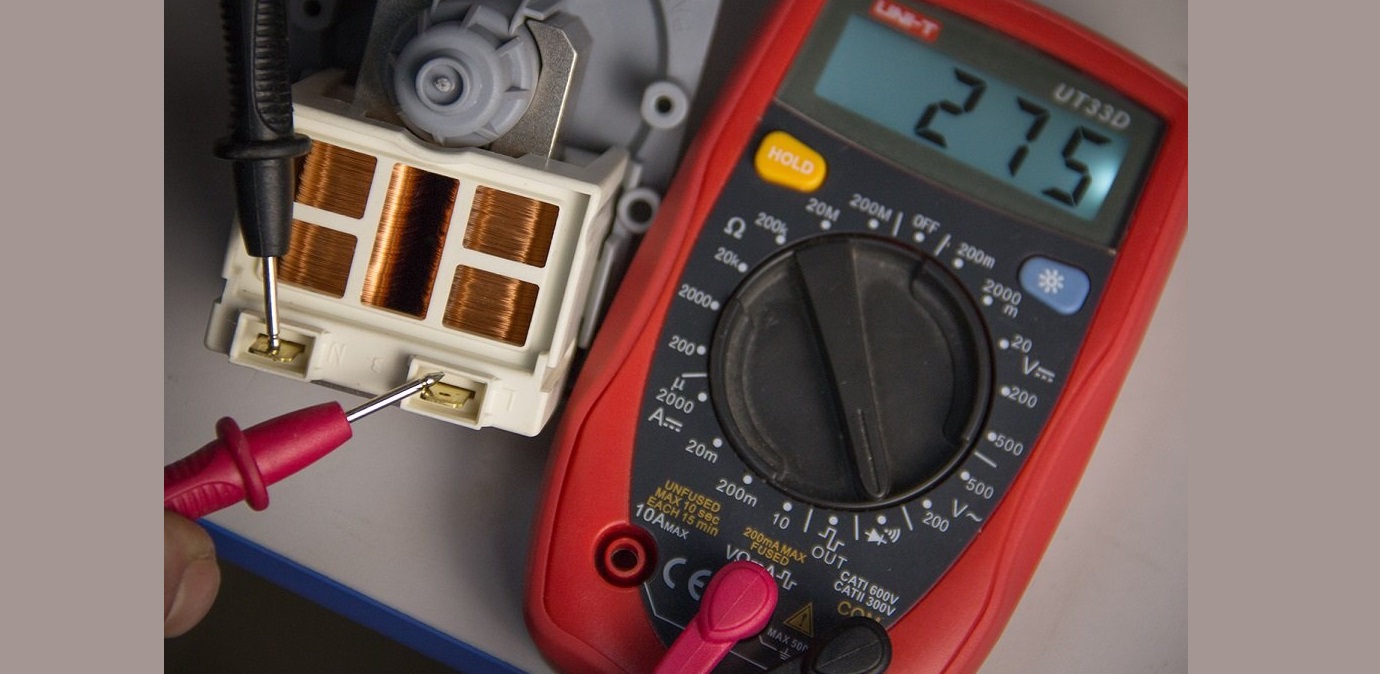
You can tell if a coil is burned out by its external signs. Traces of carbon deposits will remain on the coil body. In some cases, the plastic casing will melt. If the problem isn't visible, you'll need to test the part with a multimeter.
It is not possible to repair a burnt-out drain pump; the pump will need to be replaced.
The impeller is broken
You can detect a broken impeller without even disassembling the machine. Simply look into the opening in the volute that appears after removing the dust filter. Shine a flashlight inside to pinpoint the problem.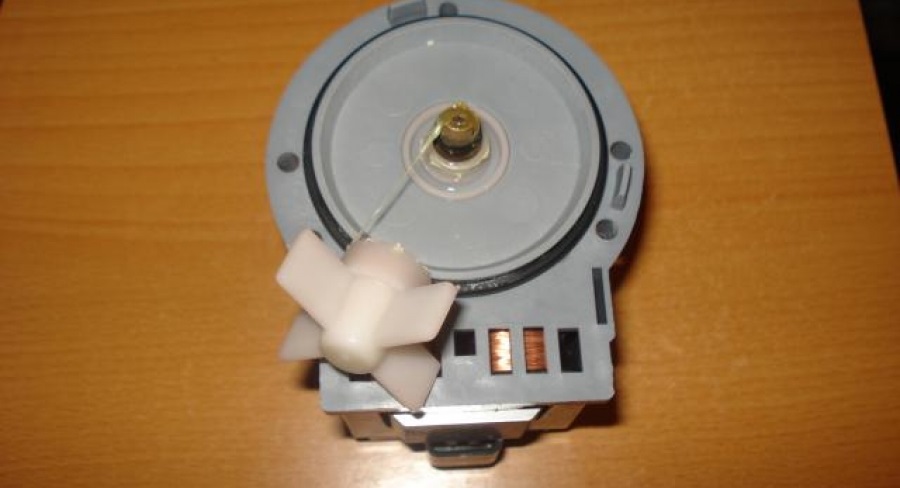
The main symptom of this type of malfunction is a loud, humming drain pump that makes intermittent clicking sounds. The pump will make noise but not pump water out of the tank, or it will pump the liquid too slowly. It's possible to glue the broken impeller blades back into place, but this isn't a reliable repair—they could fall off again over time. The best option is to replace the unit.
The snail of the LG SM is leaking
During diagnostics, it may be discovered that the machine is also leaking from below. First, inspect the drain hose connecting the tank and the pump. Check that the connections are secure, there are no water drips in those areas, and there are no cracks in the corrugated hose. If a defect is detected, the hose will need to be replaced.
The further algorithm of actions is as follows: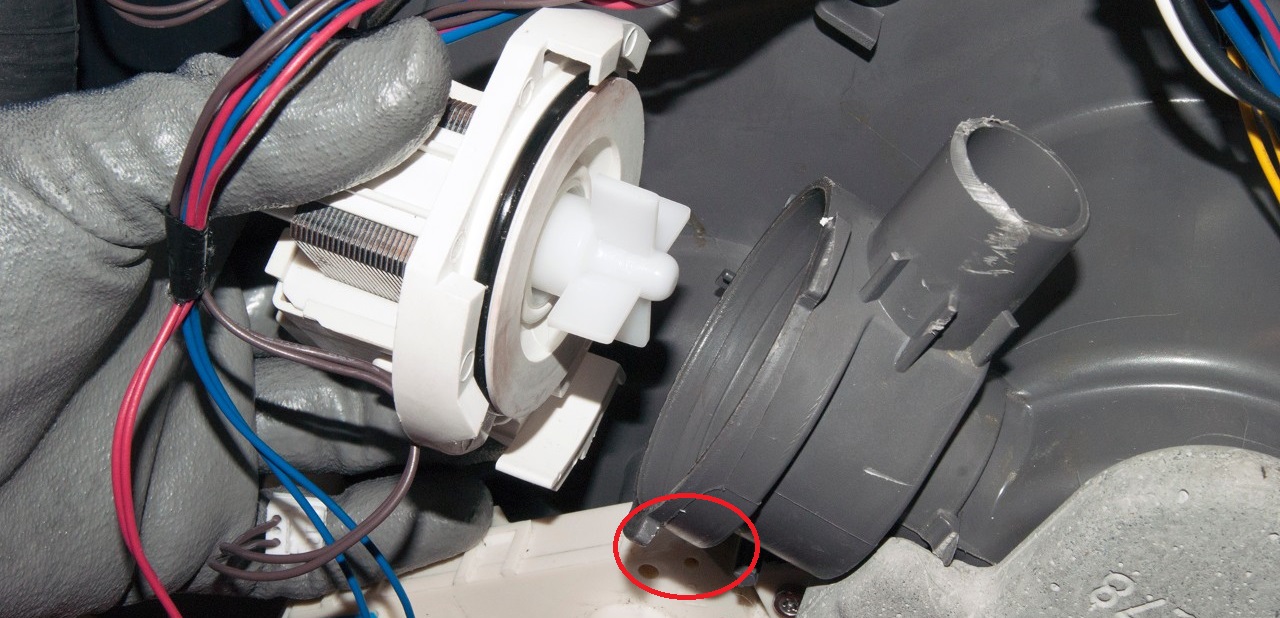
- reset the wiring connected to the drain pump;
- handle the fasteners;
- remove the pump from the washing machine;
- inspect the pump impeller;
- remove the pump housing cover;
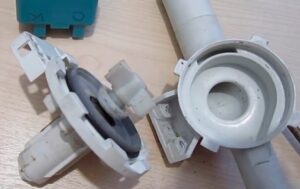
- take out the snail;
- clean the part from the inside.
Pump diagnostics are performed using a multimeter. The tester is set to resistance measurement mode, then its probes are applied to the element's contacts. If the fault is identified, replace the pump.
Why does the pump run continuously?
Sometimes the drain pump can run constantly. Usually, the control module is the culprit. The microcontroller doesn't give the command to shut off. This results in the washing machine pumping water endlessly. You shouldn't try to mess with the machine's "brain" without the necessary knowledge and experience; it's better to entrust such work to specialists.
Continuous operation of the pump may be observed if the water level sensor is broken.
A malfunctioning pressure switch can transmit false information to the control module, reporting that the tank is full (when it's actually empty). This causes the pump to pump out air while running idle.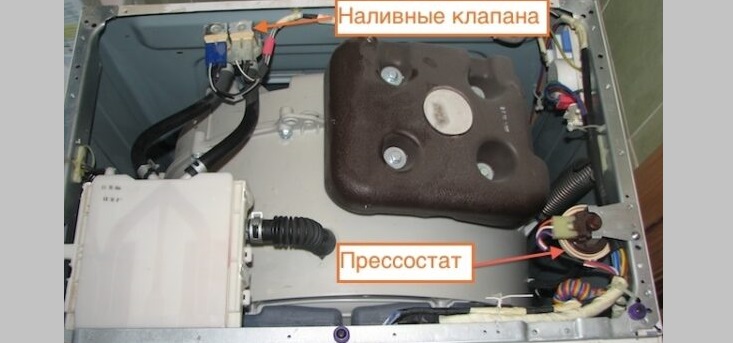
What should you do in this case? You'll need to check the pressure switch. Look under the housing cover, find the level sensor, disconnect its tube, and clean it. If the device appears burned out, it will need to be replaced.
How to avoid damaging the pump?
While replacing the drain pump on an LG washing machine is easy, preventing it from breaking is even easier. Pump failure is rare, and is usually due to owners violating the washing machine's operating instructions. When using the machine, follow these guidelines:
- Do not overload the machine. If you systematically exceed the maximum load capacity, all parts of the washing machine will wear out;
- Check pockets before loading items into the drum. Forgotten papers, coins, and nails can get caught in the drain system, impeding water drainage.
- descale your washing machine approximately once every 2-3 months;
- Install a filter in front of your washing machine. Hard water, which contains many impurities, significantly reduces the lifespan of your equipment.
You can clean the drainage system yourself, and if necessary, replace the pump. The main thing is to follow all safety precautions and follow the instructions.
Interesting:

Readers' comments
Headings
Washing machine repair




For buyers




For users


Dishwasher




Add a comment