
The tablet won't dissolve in the dishwasher - what should I do?
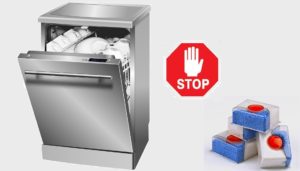 Tablets are gradually replacing powders and gels, and this is not surprising. A modern tablet contains everything you need for washing dishes, eliminating the hassle of purchasing multiple products. However, using tablets can cause problems.
Dishwasher users begin to realize this when dishwashing performance deteriorates sharply and the tablet refuses to dissolve. Why does the tablet refuse to dissolve? We'll try to answer this question in this article.
Why doesn't the machine accept pills well?
Without further ado, let's get right to the point: why a dishwasher doesn't dissolve tablets well. We're not just talking about almost complete or partial dissolution, but also cases where the tablet remains dry, even when the shell doesn't dissolve, despite completing a full wash cycle. So, what are the reasons a dishwasher doesn't dissolve tablets well, and why does this happen?
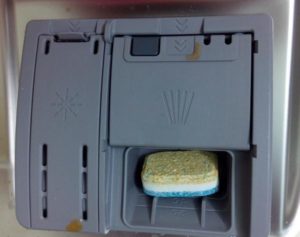
- The dispenser isn't working. Modern dishwashers have a rather complex detergent drawer, with compartments for powder, gel, rinse aid, and, of course, tablets. The tablet compartment has a special valve that can become clogged and not work, or not work due to incorrectly placed containers. In this case, the tablet will barely get wet.
- Low-quality tablets. The tablet contains several components, so the manufacturer placed it in special packaging. If the packaging is damaged and it's stored in a damp place, the detergent will deteriorate over time, absorb moisture, and harden. The same thing can happen if the seller stored the tablets improperly and then decided to sell them at a special price.
- Tablets are not dishwasher-safe. This can also happen, for example, if you use state-of-the-art detergent tablets in an older dishwasher. In such a machine, the washing program simply cannot properly dissolve the tablets, and some of the detergent remains in the dishwasher drawer.
- User error. It's not uncommon for a dishwasher user to set the wrong wash program and then blame the machine for being faulty. It's important to read the instructions for use of the pills carefully. You may simply be misplacing them, although it's quite difficult to make a mistake in such a matter, but it's worth checking. In general, any medication should be selected and used correctly, as detailed in the article. Natural and safe dishwashing detergents.
- Water pressure issues. This doesn't necessarily mean something as silly as "you forgot to turn on the tap, which is why the tablet isn't dissolving." It could be something as simple and trivial as the flow-through filter, which is installed after the shut-off hose, becoming clogged over time, preventing the machine from filling properly. However, the machine may not display an error message and continue the wash cycle with insufficient water. This is what causes the tablet to fail to dissolve.
Here's a basic list of reasons why a dishwasher won't dissolve its detergent tablet. If we consider all the known optional causes (depending on the dishwasher model), we could come up with another 5-7 possible causes. But in general, the above situations should be addressed first; in 95% of cases, one of them applies to you.
Important! Before trying a new automatic dishwashing detergent, carefully read the dishwasher instructions!
What are tablets made of, what types are there, and what are their functions?
A modern dishwashing tablet is a versatile product designed to ensure high-quality dishwashing without the use of any additional chemicals. Once the tablet dissolves completely, you'll have perfectly clean dishes. The tasks and functions of a dishwashing tablet will depend on its type and composition, so let's focus on this first.
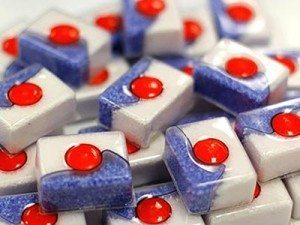
What types of modern cleaning tablets are there? The first dishwashing tablets, which are still very popular today, contained only one component – washing powder. Such a tablet is a powder pressed into a brick. New tablets are now becoming more common:
- 3 in 1;
- 4 in 1;
- 5 in 1;
- 6 in 1;
- 7 in 1;
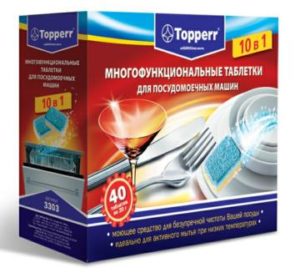
- 10 in 1;
- all in one.
A 3-in-1 tablet combines detergent, special salt, and rinse aid, which should dissolve last. 4-in-1 tablets, in addition to the basic ingredients, also contain a glass and ceramic cookware protector. 5-in-1 tablets contain scale removers for dishwasher parts. 6-in-1 tablets also contain highly effective ingredients that gently remove even the most stubborn deposits from metal pans, pots, and other cookware.
Multi-component capsules 7 in 1, 10 in 1, all in one also contain fragrances, antiseptics, and agents that remove specific stains, such as old stains from food coloring, coffee, egg whites, and the like. So, if a tablet contains three components, it accomplishes three tasks: washing dishes, maintaining the ion exchanger, and rinsing the dishes to prevent streaks. If a tablet contains four components, it accomplishes four tasks, and so on.
Please note! As a rule, the more ingredients a detergent tablet contains, the more expensive it is, but there are exceptions to this rule.
If the dishwasher correctly recognizes the tablet, it should gradually dissolve it completely throughout the wash cycle. The more components the tablet contains, the more complex the dissolution process. For example, the most popular 3-in-1 tablets dissolve in the dishwasher like this:
- First, the tablet packaging dissolves (if it is self-dissolving);
- then the salt gradually begins to dissolve and it dissolves throughout the entire washing cycle;
- then the detergent begins to dissolve, which also dissolves throughout the entire cycle;
- During the rinsing stage, the middle of the tablet dissolves, removing powder stains and streaks from dishes.
What can I do to make the tablets dissolve?
One question remains unanswered: how can we ensure that the tablets dissolve properly in the dishwasher? To answer this, experts have provided us with a whole list of recommendations. If you follow these recommendations, in most cases, there will be no problems with the tablets.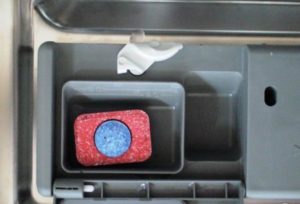
- Read your dishwasher's instructions carefully to determine exactly what detergents it can recognize.
- Also, carefully read the instructions for specific tablets. They may contain valuable information from the manufacturer about the nuances of loading the tablets into the dishwasher drawer.
- Regularly clean your dishwasher to remove limescale and other build-up. Pay special attention to the detergent drawer. It should be cleaned, rinsed, and wiped dry or allowed to air dry. Do not place tablets in a wet drawer.
- Don't forget to clean the flow filter and generally make sure that water flows freely into the dishwasher.
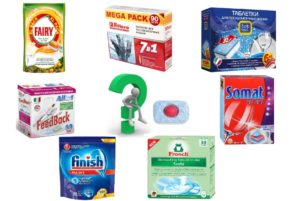
- Use only high-quality tablets. Don't buy tablets with damaged packaging or expired ones. Also, avoid products from untrusted manufacturers—you'll save money on tablets and end up buying a new dishwasher.
- Arrange the dishes correctly, choose the right washing program and everything will be fine.
In conclusion, modern multi-component tablets were specifically designed to make our lives easier. They're quite expensive, so it's very frustrating to discover that a good half of the tablet hasn't dissolved and remains in the container. We need to immediately find the cause of the problem and fix it, and specialists can help us with that.
Interesting:


3 reader comments
Add a comment
Headings
Washing machine repair




For buyers




For users


Dishwasher




The tablets don't dissolve well. The bottom filter is clogged with fatty deposits.
Thank you. Brief and to the point.
At the end of the wash cycle, the tablet just sits at the bottom of the dishwasher. Can anyone explain why this happens? Previous tablets from the same package dissolved just fine.