
Electrolux washing machine does not wash
 No one is immune to sudden appliance failures. If your Electrolux washing machine suddenly stops washing after filling with water, don't panic and call a technician immediately. You can determine the nature of the problem and fix it yourself. You just need to identify the range of common faults, delve into the machine's operation, and remember safety precautions. We'll explain how and in what order to fix the problem.
Common culprits of such breakdowns
If the washing machine obediently fills with water, but still doesn’t start washing, then it’s too early to write off the appliance. In most cases, these are minor faults that can be easily fixed at home. But first, we will have to conduct a diagnosis and more accurately determine the scale of the problem.
The following malfunctions may cause the machine to stop after successfully drawing water: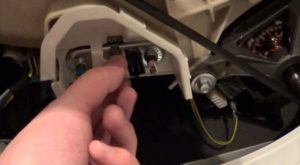
- a slipped drive belt (for Electrolux models with a belt drive);
- a failed electric motor (the winding, lamellas, brushes, capacitor, temperature sensor or tachogenerator are suspected);
- non-functioning heating element (when selecting a high-temperature cycle, the machine cannot heat the water and malfunctions);
- broken control board (or other electronic element).
The display can help pinpoint the cause of the malfunction. The self-diagnostic system displays an error code corresponding to the malfunction. Simply memorize the combination and decipher it according to the instructions.
An Electrolux washing machine stops after filling with water due to problems with the drive, motor, heating element, or electronics.
Without a display, you'll have to troubleshoot manually. It's essential to check each potential "sore spot" one by one. It's best to start with something simple and common—a slipped drive belt—and leave the complex and rarely failing control board for last. More precisely, after unsuccessful troubleshooting, if you suspect the control module, you should contact a service center. Messing with electronics yourself is very risky.
Element of the drive mechanism
The inspection begins with the drive belt. A slipped rubber band often results in the machine filling with water in normal mode, but not being able to spin the drum. It's simple: the engine's speed isn't transmitted to the drum shaft due to a faulty drive. This happens when the equipment is improperly transported, installed incorrectly, or not repaired in a timely manner.
Checking the drive's functionality is easy: just look at the belt. On Electrolux front-loading machines, it's located at the back, while on top-loading machines, it's on the side. In either case, remove the panel concealing the pulley by unscrewing the bolts and inspect the machine.
It's impossible not to notice a loose rubber band. It will be hanging from the pulley or lying on the undercarriage. But don't just put the belt back in place. First, carefully inspect the rim. The rubber may be torn, cracked, or stretched. In this case, it's best to replace it with a new, undamaged one.
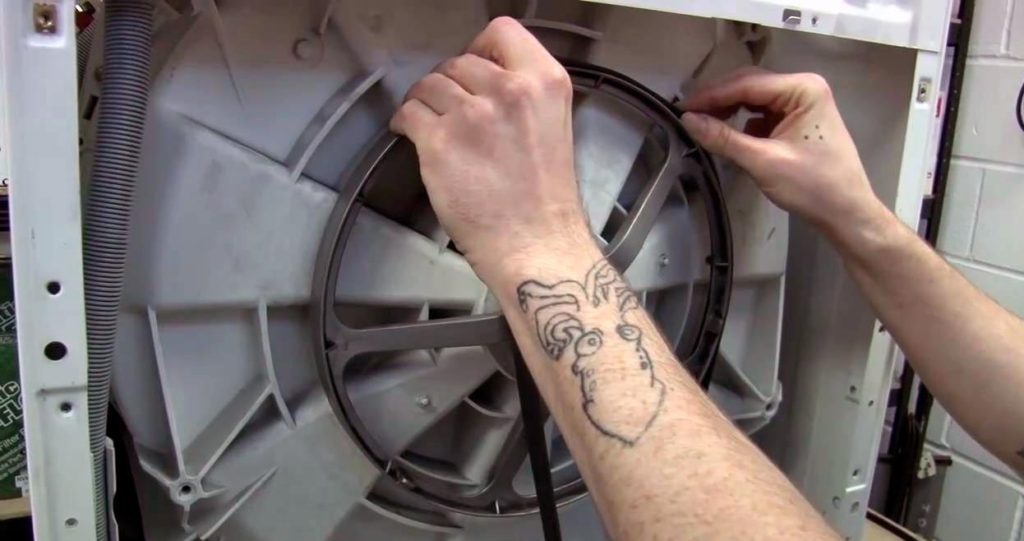
The belt is returned to the pulley as follows:
- straighten the elastic band;
- put it on the small pulley wheel;
- Pulling with your hand, we attach the rim to the large wheel;
- At the same time, we turn the pulley counterclockwise until the rubber band fits into the provided grooves.
If the belt breaks only once, you can avoid replacing it. However, if the rubber band breaks frequently, it's best not to delay the procedure and buy a new one right away, especially since the rim is inexpensive. It's important to run a test wash after performing these procedures to check the Electrolux's functionality.
Engine test
The washing machine stops after filling with water or if the electric motor is broken. Most often, the brushes are to blame for the slowdown, as they wear out and fail over time. Asynchronous motors often fail to accelerate if the starting capacitor is faulty. Motors also fail to start if they overheat, which occurs when several high-temperature cycles are activated in a row. In the latter case, it's important to let the machine "rest" for 50-60 minutes.
Do not run more than 2 high-temperature cycles in a row - the engine will overheat and stop working!
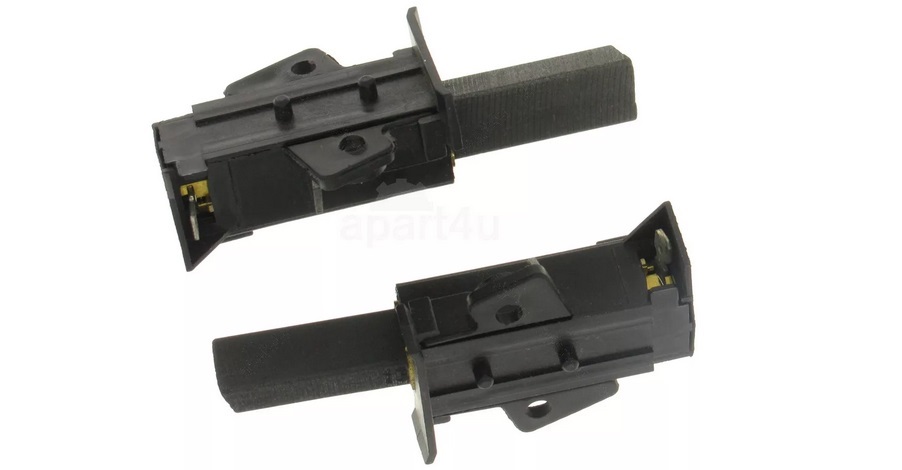
In most cases, the motor is slowed down by the brushes, which need to be replaced regularly. The procedure is simple and quick: unscrew the back panel, free the motor from the wires and retaining bolts, remove the component, and place it on a table. Next, locate the two protective sleeves on the housing, pry them out with a flat-head screwdriver, and press the provided locking tabs. Next, install the new brushes and secure them to the motor. Finally, don't forget to clean off any graphite dust from the metal and run a test cycle.
The control board element burned out
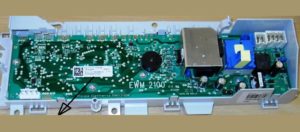 Even if water is successfully drawn in, the cycle won't begin if the control board is unable to signal the program to start. Simply put, the electronics have failed—either the module itself, a specific triac, track, or wire. Conducting a comprehensive diagnosis and repairing the faulty element in such a case is extremely difficult and risky. We remind you that it is better to immediately contact a service center with such suspicions.
But DIY electronic repair is theoretically possible. First, it's important to thoroughly check the electrical system: inspect all conductors, terminals, and contacts. There may be a current leak, broken insulation, disconnection, or corrosion. This will require cleaning the phases and tightening the fasteners.
Another cause is a faulty electronic unit. The board is responsible for initiating the cycle and coordinating the entire machine's operation. After the tank is filled, the pressure switch should trigger, signaling the module that the filling is complete and the machine is ready for washing. If the sensor track or the triac are faulty, the information doesn't reach its destination, and the machine becomes silent and inactive.
Dealing with the electronic unit is much more difficult. The control board is a panel with hundreds of contacts, microcircuits, and components, making it impossible to understand without experience and equipment. It's best to avoid risks and seek professional help.
Interesting:


Readers' comments
Headings
Washing machine repair




For buyers




For users


Dishwasher




Add a comment