
Siemens washing machine won't turn on
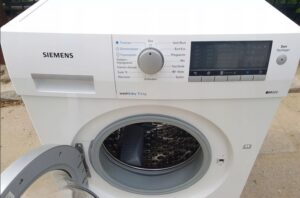 It's frustrating when your Siemens washing machine won't turn on after being set up for washing. The machine is plugged in, the detergent is loaded, the laundry is loaded, the door is closed, but the "Start" button won't press. The control panel isn't lit, and the machine doesn't respond to user commands. You can figure out why your Siemens washing machine won't turn on without calling a repairman. Just check a few things using our instructions.
The most likely problems
It's logical that a dim dashboard light indicates a power supply problem. Simply put, the washing machine isn't receiving power, and the system can't start. Several reasons could cause this behavior in Siemens:
- there is no electricity in the room;
- the electricity supplied to the equipment is unstable, the voltage reaches critically low or high values;
- the Siemens power socket is broken or de-energized;
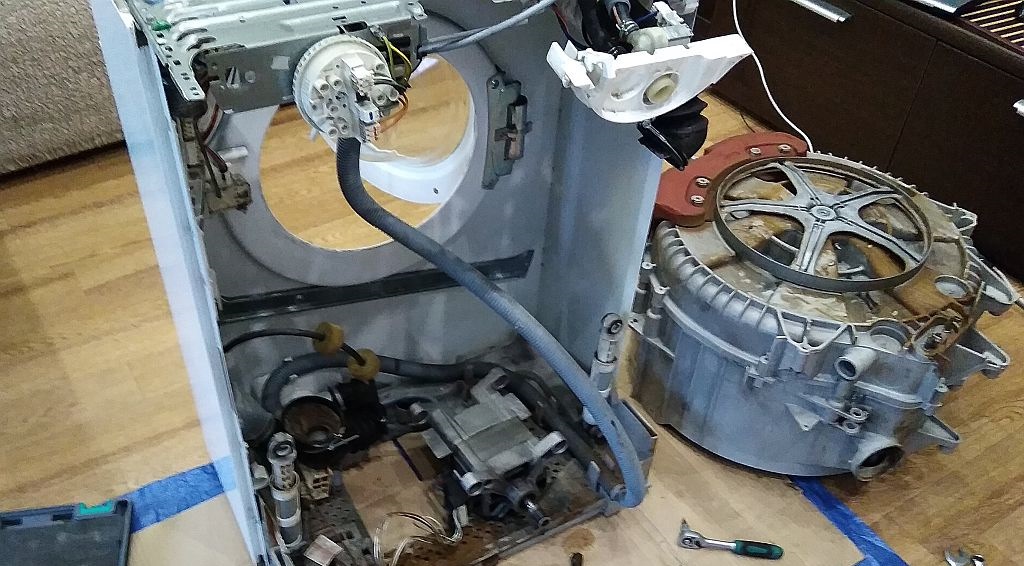
- the power cord is damaged (the plug is melted, the insulation is damaged);
- knocked out the network interference filter (NIF);
- there are problems with the "Start" button (burned out or stuck);
- The control board is out of order.
If your Siemens washing machine does not turn on, there are problems with the power supply.
To restore the equipment to working order, it is necessary to check the electronics and electrics. There was probably a break in the circuit somewhere inside or outside Siemens. The instructions for what to do are quite simple: inspect all possible faults one by one. It's best to start with the simplest – the central power supply.
Power grid
Most often, the reason for a power outage is simple: there's no power in the room or the entire apartment. This is especially true if the washing machine is located in a country house or a sparsely populated area where power outages are common. Therefore, the first thing we do is flick the switch to check if there's power in the room.
If there's no power, check the electrical panel to see if the circuit breakers are activated or if the fuses are blown. It's possible that the residual current device (RCD) has tripped due to an overload, causing the power line to be automatically shut off for safety. It's best to recalculate the voltage consumed by your appliances and adjust the load on the network by temporarily turning off several devices.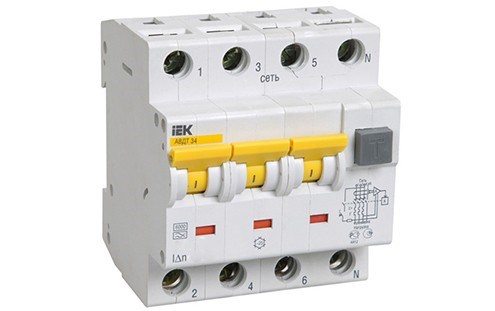
The next step is to check the socket's functionality. The following signs indicate problems with the outlet:
- smoke;
- the smell of burning;
- melted plastic;
- dark spots around the rosette.
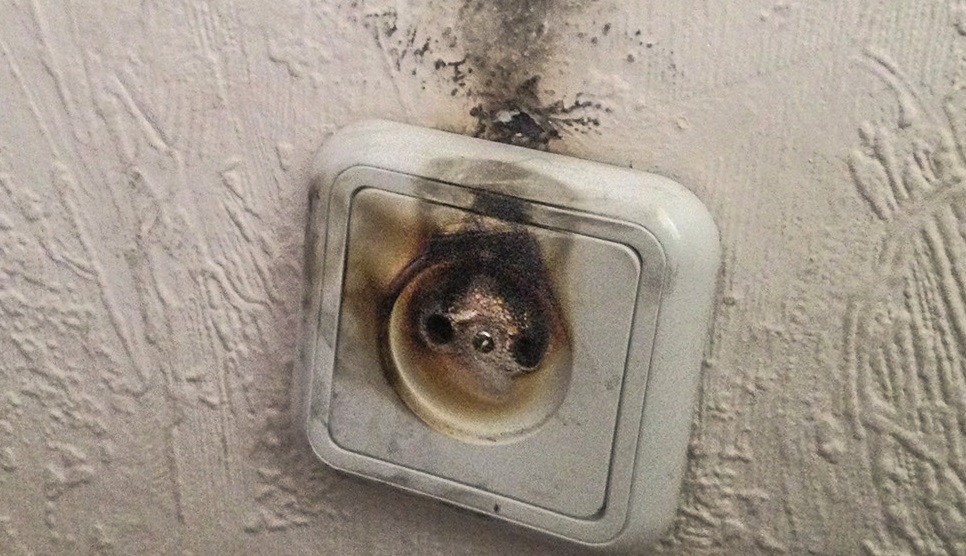
If the outlet appears to be intact, we can proceed to an internal inspection. Simply plug in a working appliance, such as a hair dryer or a phone charger. Is there contact? Then the problem is elsewhere.
If you notice signs of fire, melting, a burning smell, or dark spots, you must immediately turn off the power and call an electrician!
A faulty socket requires repair and adjustment of the load supplied to it. It is necessary to eliminate the possibility of a repeated short circuit by no longer turning on overly powerful devices and by securely connecting the terminals. It's not difficult to replace an electrical outlet yourself, but if you don't have any experience, it's best to contact a specialist.
FPS
If there are no problems with the power supply externally on the Siemens washing machine, you'll need to perform an internal diagnostic. This involves three components: the power cord, the interference filter, and the electronic board. We check the first two first. On Siemens washing machines, the power cord and the power supply are connected together, so they are checked simultaneously. Here's how:
- we disconnect the equipment from utilities (sewage, water supply and electricity);
- we turn Siemens with the back panel forward;
- unscrew the top cover of the machine;
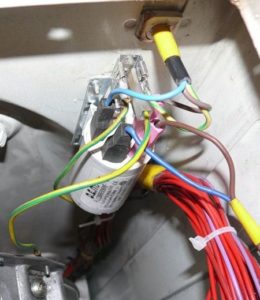
- at the back wall we find a capacitor located in the lower left corner;
- loosen the bolts holding the FPS;
- Remove the filter from the housing together with the power cord, freeing it from its fasteners.
First, inspect the plug for melting and other signs of fire. Next, test the cord for continuity by connecting the multimeter probes to it in buzzer mode. It's important to first check the device itself by short-circuiting the probes. If the display shows "0," it's working.
When testing electronics, remember safety precautions! Do not touch live wires!
A damaged cable must be replaced with a new one. Do-it-yourself repairs using electrical tape or twisting are unacceptable – it's dangerous. There's a high risk of repeated current leakage, followed by a fire or short circuit. Next, test the interference filter with a multimeter in buzzer mode. Immediately measure the resistance. If the value displayed is significantly off, the capacitor has burned out. The replacement procedure is simple: purchase a new FPS, based on the Siemens serial number, and install it in the old one's place.
Electronic "brain"
Although rare, it can happen that a washing machine won't turn on due to a broken control board. The electronic unit on a Siemens washer is a fairly complex mechanism, containing numerous microchips, circuits, pins, and sensors. Only a professional technician can accurately determine where the problem occurred. However, some problems can be easily spotted at home by carefully inspecting the module. To assess the condition of the board, it must be disconnected from the case. Here are the instructions:
- disconnect the washing machine from the utilities;
- remove the dispenser;
- in the “nest” freed from the powder receiver, find and unscrew two screws;
- loosen four more screws holding the instrument panel;
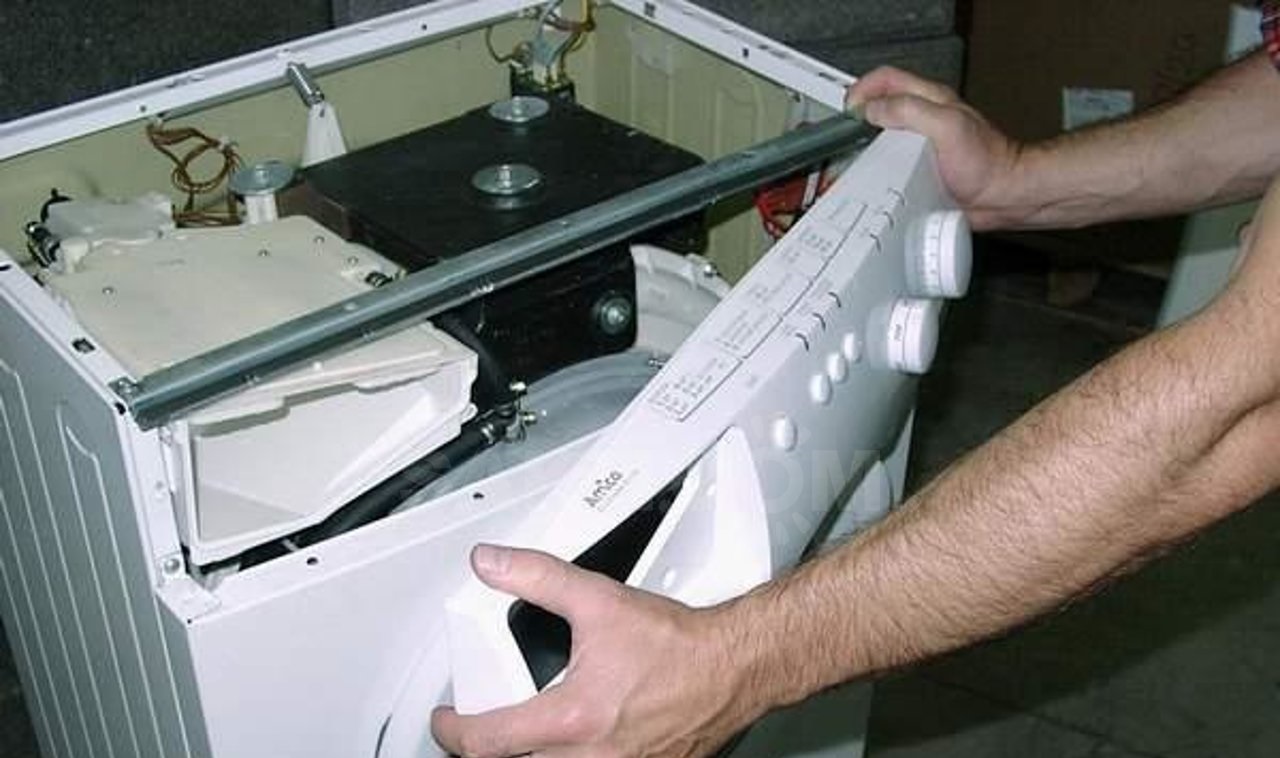
- grab the panel, lift it up, unfastening the plastic latches, and disconnect it from the body;
- using a screwdriver, disassemble the panel;
- remove the board.
It's best not to disconnect the wires! Reconnecting the terminals will be problematic. There are many wires, the markings are only understandable to professionals, and the cost of error is too high. You can only inspect the board yourself. If everything looks fine, then contact a service center. There are likely hidden faults that only a professional can fix.
Interesting:



Readers' comments
Headings
Washing machine repair




For buyers




For users


Dishwasher




Add a comment