
The lower impeller in the dishwasher does not spin.
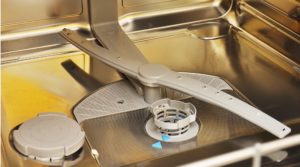
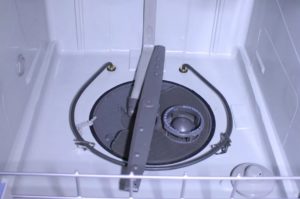 Dishwasher spray arms aren't activated by motors; they spin under water pressure. The circulation pump creates the necessary pressure, which then acts on the impellers, causing the nozzles to clean the dishes. If water doesn't start flowing into the dishwasher after you start it, it's likely that the lower impeller isn't rotating. We'll explain in detail below what to do in this situation.
Preliminary actions
There are several reasons why the rocker arm does not turn: from a serious breakdown to a banal blockage or problems with water circulation. To accurately determine the source of the problem, you will have to get inside the machine and carry out a detailed diagnosis.You can do this yourself, but you'll need a modest set of tools:
- screwdrivers, Phillips and slotted (these are used to unscrew panels and the bolts that hold the parts);
- pliers (necessary for loosening the clamps);
- multimeter (used to “ring” dishwasher parts to check their functionality).
Once you've found all the tools, it's time to prepare the dishwasher itself. A few simple steps are required.
- We disconnect the equipment from the power supply.
- We disconnect the machine from the rest of the communications (remove the drain and inlet hoses, turn off the water supply).
Be prepared for any remaining water to leak out after disconnecting the hoses.
- We move the machine to the center of the room, ensuring free access to all sides of the unit.
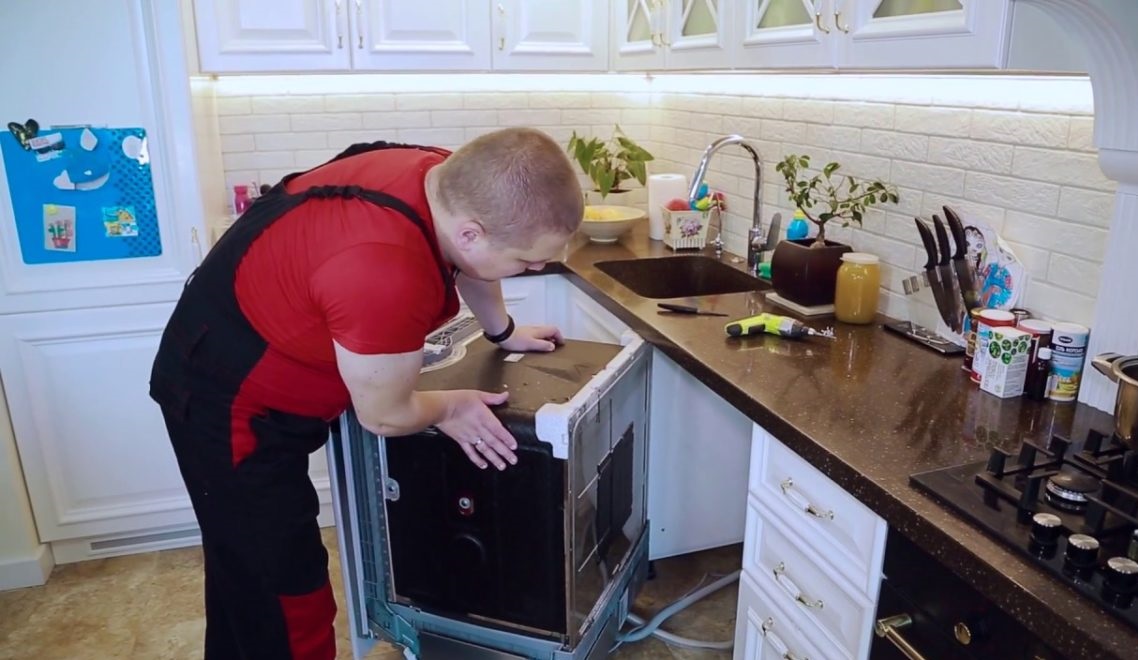
Now the dishwasher is ready for inspection and diagnostics. We can begin troubleshooting. Typically, two issues prevent the impellers from rotating properly: a clog or insufficient water circulation. Let's look at each problem in more detail.
Dirt has accumulated
Most often, the lower spray arm in a dishwasher stops spinning due to a simple clog. Debris blocks the drain and prevents the pump from spinning fully. Therefore, it's important to pay attention to the pump impeller, which is often damaged by accumulated food debris.
It is necessary to clean the drain carefully and with protective gloves, as it is possible that the blockage was formed from broken glass fragments.
The work algorithm is not at all complicated.
- Make sure there's no water left in the cooking chamber. If the liquid isn't completely removed, remove it through the drain hose.
- We remove all components, baskets, containers, trays and holders from the tank.
- Unscrew the dust filter located at the bottom of the machine. If there's dirt on the plastic, wash the nozzle with soap.
- Next, remove the protective mesh. It is recommended to rinse it under the tap.
- We wipe off excess water with a sponge.
- We remove the special cover by pulling it towards ourselves.
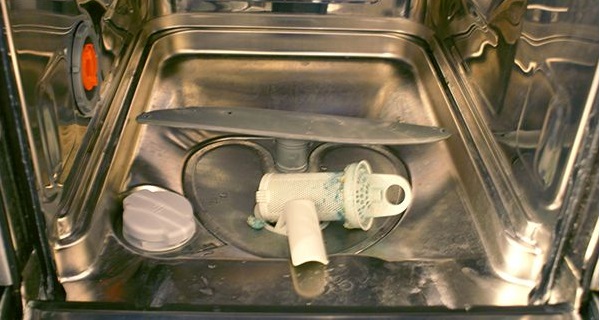
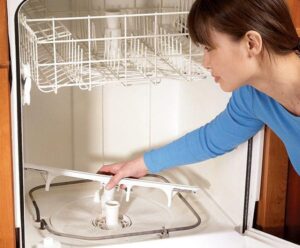
Now that the pump impeller is accessible, you can begin cleaning. Carefully insert your hand into the newly cleared hole and carefully remove any accumulated debris. Also inspect the nozzles located here and clean them if necessary. Don't forget to check the impeller's performance by spinning it with your finger.
Problems with water circulation
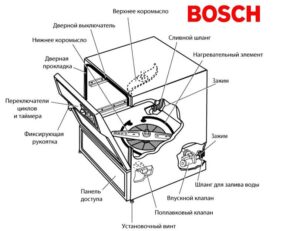
If cleaning the nozzle and impeller does not help, we move on. Most likely, there is a problem with the proper circulation of water, which is why the water does not enter the working chamber. We'll need to check the functionality of the pump responsible for pressure and flow, as well as the drain pump. First, let's look at the drain pump:
- we find the sprayer and remove it;
- take a screwdriver and unscrew all the bolts around the perimeter of the bottom;
- we spread out some unnecessary rags nearby and turn the machine on its side;
- remove the bottom of the machine;
- If your dishwasher has full leak protection, don't forget to remove the float sensor attached to the tray;
- We pull out the contacts from the wires leading to the electric motor.
This is where the drain pump is located. Simply unclip it and clean the mounting surface of any accumulated dirt. Next, connect the multimeter probes to the pump contacts and test the unit for proper operation. If the tester indicates a faulty component, replace it with a similar one. Reassembly is performed in reverse order.
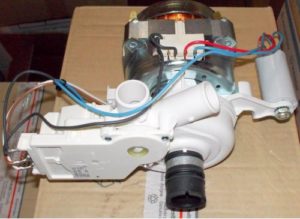
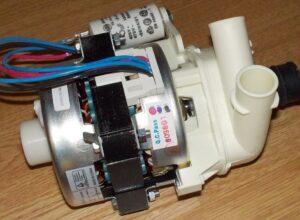
If the pump is fine, the circulating pump is the culprit. In this situation, the electric motor hums after startup, the cycle doesn't start, the impellers don't rotate, and the sprinklers don't spin. Despite the apparent scale of the repair, anyone can handle it. The main thing is to follow the simple instructions.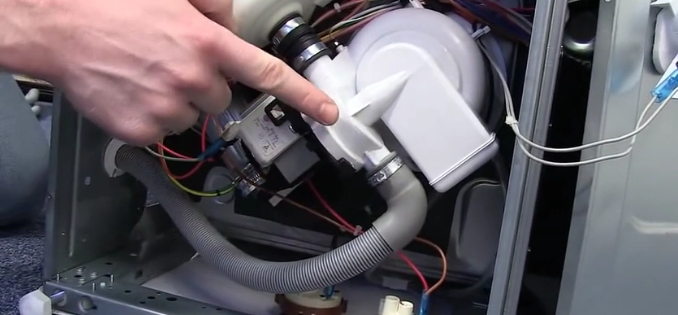
- First, loosen the clamps on the pipes connected to the pump.
- We disconnect all the wires connected to the part.
- We release the latches.
- We unscrew the screw holding the device.
- We release other pipes.
- We remove the engine from its mounting location and test it using the multimeter probes.
- We replace the faulty engine, not forgetting to monitor the precise fit of all bushings.
Repairing non-spinning spray arms is not difficult—service technicians classify such work as moderately difficult. However, it's best to avoid impeller problems by cleaning the hoses regularly and avoiding overloading the dishwasher.
Interesting:

Readers' comments
Headings
Washing machine repair




For buyers




For users


Dishwasher




Add a comment