
Bosch dishwasher won't turn off
 Sometimes, after starting their dishwasher, they notice that it runs much longer than the set time and refuses to stop. The only way to solve this problem is to unplug the power cord. What should you do if your Bosch dishwasher won't turn off? What faulty parts are causing this? Let's explore the details.
Possible causes of the problem
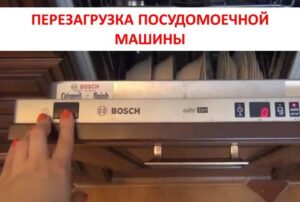
If you notice that your dishwasher won't turn off, don't rush to call a technician. Often the cause of the problem is a software glitch. This occurs due to a sudden power surge or a sudden power outage in the home. In this case, rebooting the dishwasher will help.
To reset your dishwasher, you must:
- disconnect the dishwasher from the power supply;
- wait 15-20 minutes;
- turn on the machine and start the cycle.
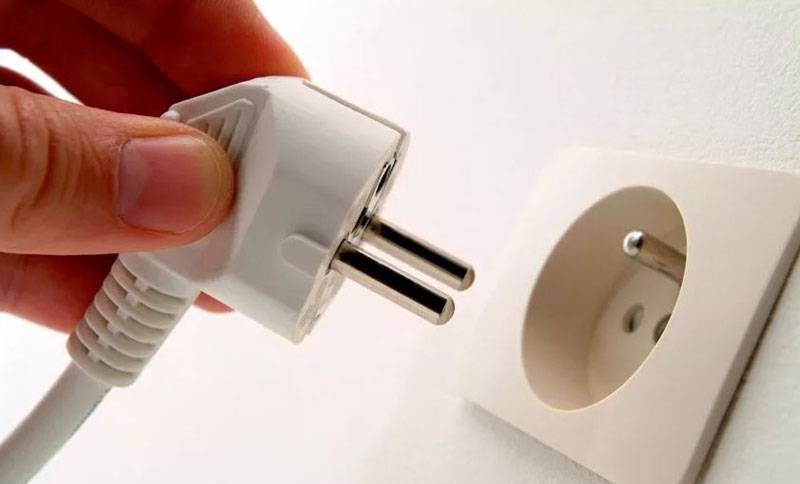
If restarting doesn't help, there's a malfunction. Let's look at the typical problems that can cause this kind of dishwasher behavior.
- Pump failure. The pump is likely not receiving a command from the control module and is not draining water into the sewer. This is why the dishwasher continues to run.
- Problems with the control module or wiring. The triac that controls the drain pump may have failed. A damaged cable could also be the cause, preventing the components from receiving commands from the unit.
- Pressure switch malfunction. The level sensor may be transmitting incorrect information to the "brain" regarding the amount of water in the working chamber. Therefore, the module does not issue a command to drain the waste liquid.
- Installation errors during dishwasher installation. Some Bosch models are sensitive to cabinet tilt. If they are not level, they may not function properly.
- Improper drain connection. Probably due to improper installation of the dishwasher, a "siphon effect" is observed. Wastewater, before it reaches the drain, is forced back into the dishwasher chamber. This causes the pump to continuously pump water.
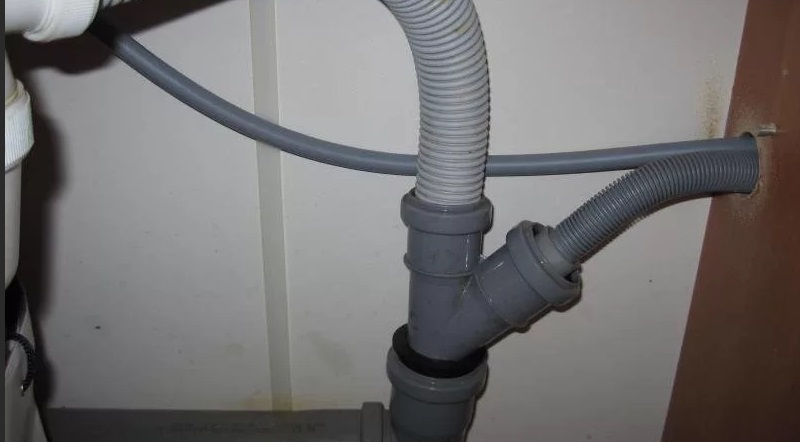
- A clogged drain system. The pump will attempt to pump water into the drain despite the clogged debris. This can significantly increase the cycle time.
- Aquastop system activation. If a leak is detected, the dishwasher may react by displaying the E15 error code. Sometimes, the machine will simply automatically activate the pump, which will begin pumping out water.
Problems with the dashboard shouldn't be discounted. In this situation, the car wash won't stop, and the buttons on the dashboard don't respond to user input. What should you do in this case? You'll need to check whether the contacts are corroded and whether the triacs on the controller are working properly.
Incorrect connection to communications or blockage
It's crucial to follow the manufacturer's installation recommendations. Some Bosch models are susceptible to cabinet tilt. Therefore, the appliance should be placed on a level, solid floor. If necessary, adjust the dishwasher's position by tightening its feet.
Next, check that the dishwasher is properly connected to the drain. The drain hose should be 50 cm above the floor, otherwise wastewater may back up into the dishwasher bin. In this situation: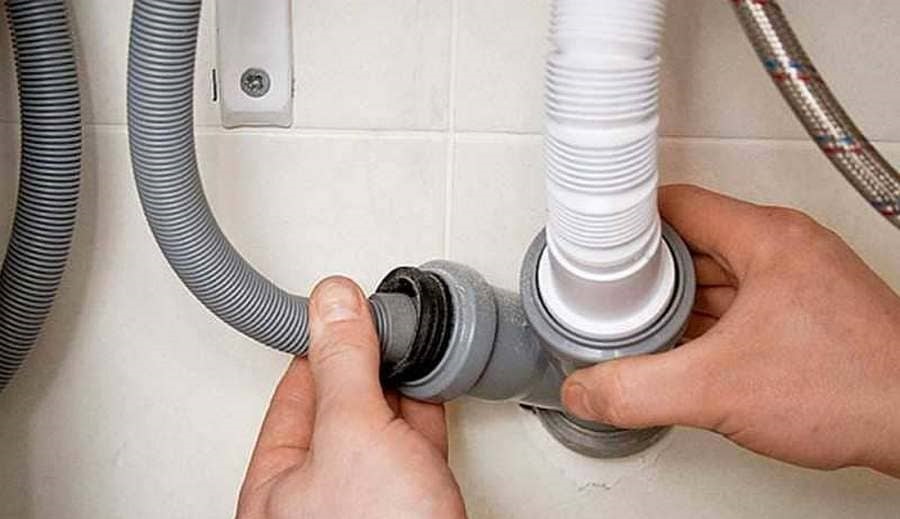
- disconnect the drain hose from the dishwasher body;
- check the corrugated pipe for blockages;
- Reconnect the drain hose, positioning it at the required height and with a bend.
The length of the dishwasher drain hose should not exceed two meters, otherwise the pump will operate under increased load.
This behavior of your dishwasher may be caused by an internal blockage. Cleaning it yourself is easy. To do this:
- unplug the dishwasher;
- open the machine door;
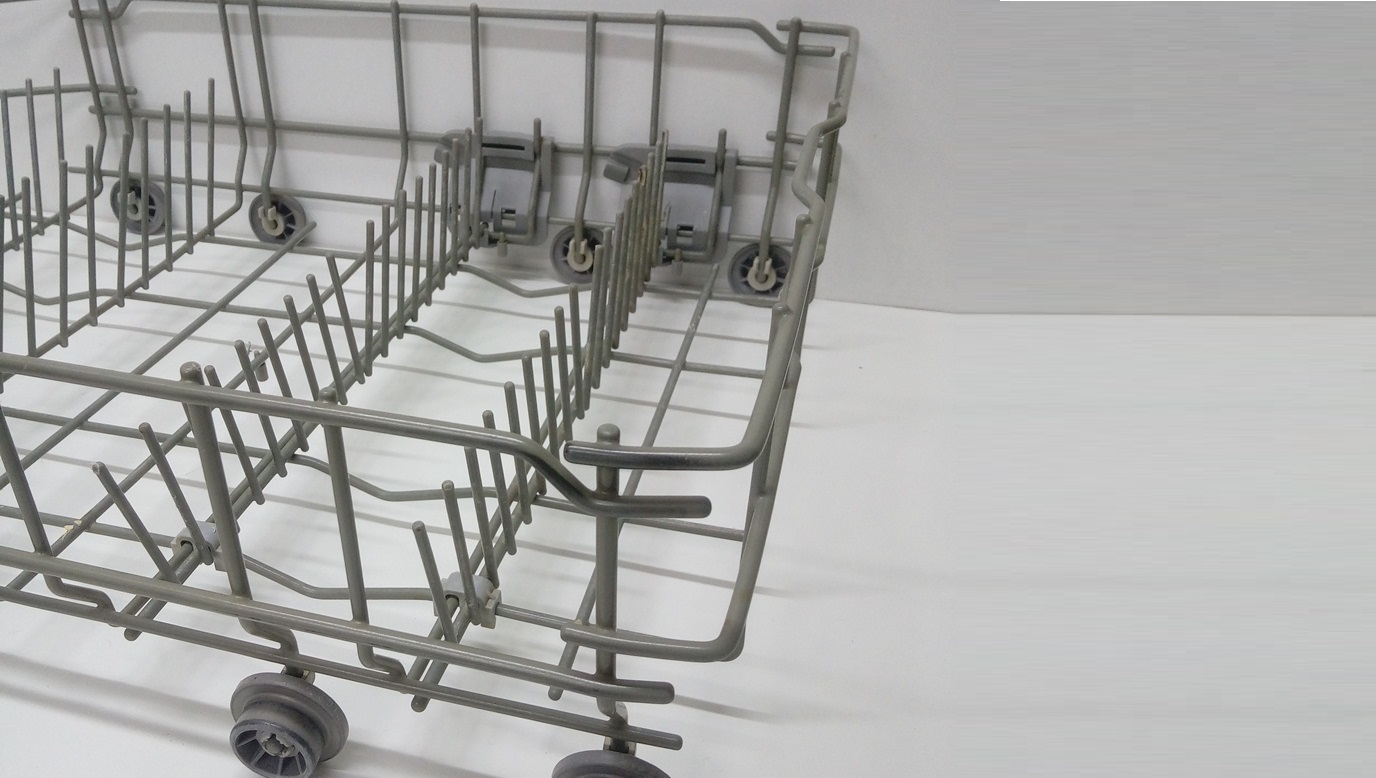
- take out the baskets;
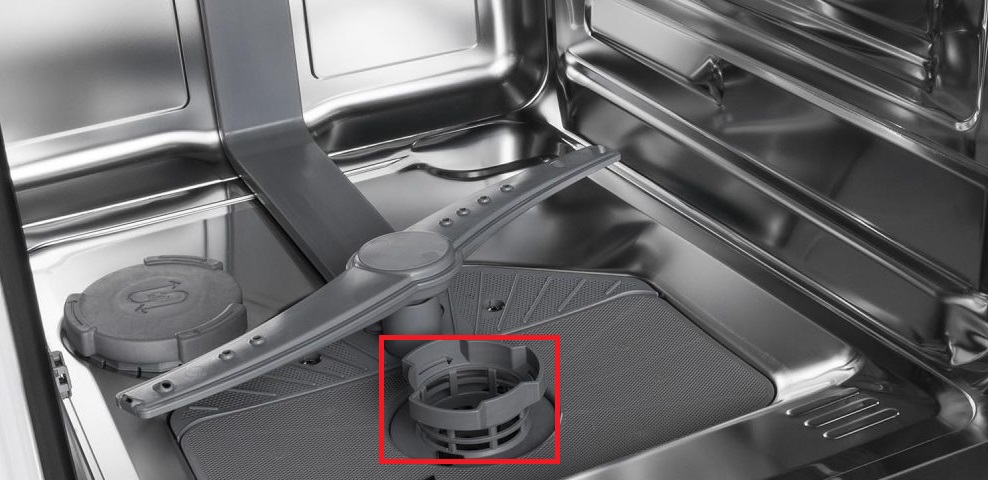
- find the drain filter (it is located at the bottom of the washing chamber);
- clean the filter unit from debris and dirt;
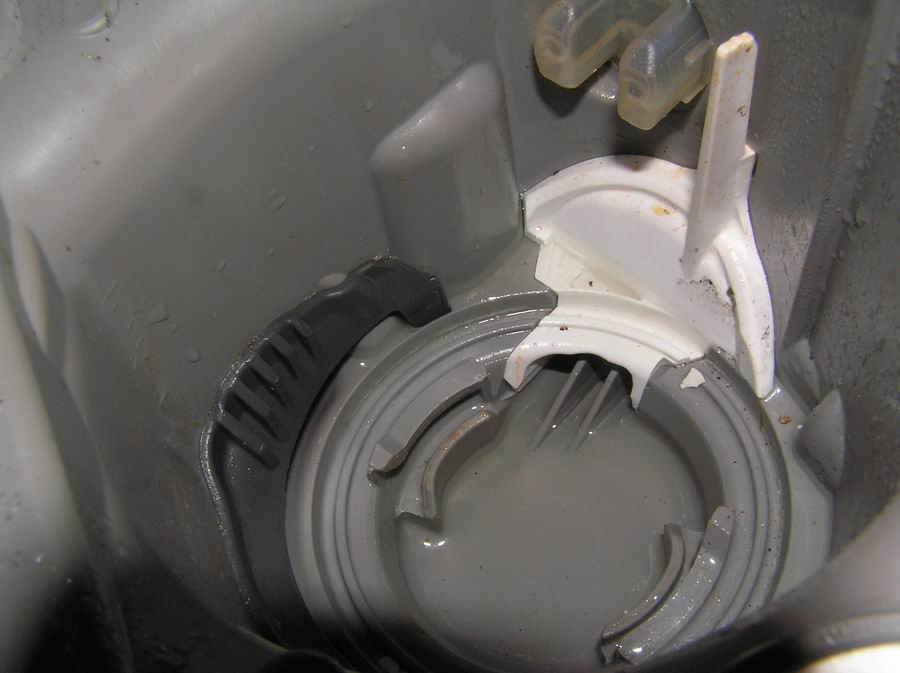
- There is a hole behind the filter – remove the water that has accumulated in it using a sponge;
- remove the protective cover;
- clean the impeller from debris (sometimes a foreign object that gets inside blocks its operation);
- put the filter unit back in place.
If the machine still can't complete the program after this, you'll need to check the pump. To diagnose the drain pump:
- unplug the dishwasher;
- close the shut-off valve;
- disconnect the inlet and drain hoses from the machine;
- lay the dishwasher on its side;
- remove the bottom of the case by unscrewing the bolts;
- loosen the clamps of the drain pipe and unhook it from the pump;
- remove the bolts securing the pump;
- remove the pump from the dishwasher body.
Inspect the pump for defects. Disassemble the housing and clean out any debris. A faulty pump cannot be repaired and will need to be replaced.
The pressure switch is clogged with dirt
The most common cause of a level sensor giving unreliable readings is a clogged pressure switch. The pressure switch is a round part containing a membrane and contacts. The pressure switch runs from the relay to the tank.
The pressure switch nipple reacts to pressure changes in the washing chamber, measuring the volume of water in the hopper.
When the sensor tube becomes clogged, measurement errors occur. The fitting is easy to clean by hand. Simply blow it out or rinse it under running water. The pressure switch is located in a plastic box near the circulation pump.
Repair of the control board
The typical symptoms of this problem are slightly different from those discussed above. In this case, the dishwasher starts and freezes. After this, the buttons on the control panel become unresponsive, and it's impossible to turn off the machine without unplugging it.
Each button pressed by the user presses a specific area of the module. If the machine doesn't respond to commands, it means either the tracks are damaged, the triacs on the control board are oxidized, or the keys are stuck. In this case, the dishwasher will need repair.
The dishwasher control module is a fairly expensive part. You should not attempt to repair the dishwasher controller yourself unless you have experience working with electronics. In this case, it is recommended to seek help from specialists to avoid further damage to the machine.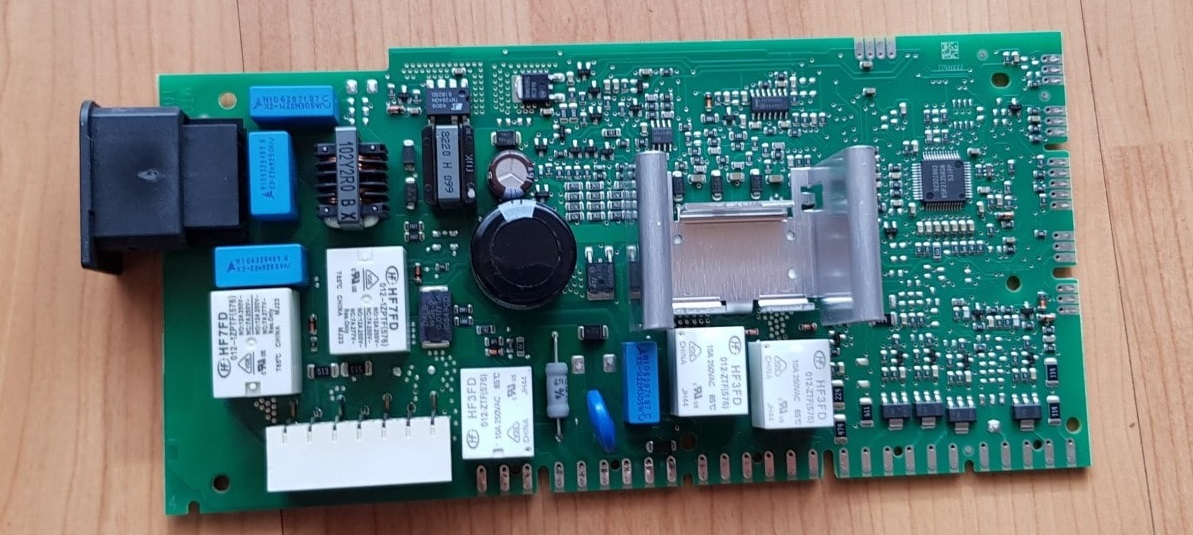
In general, the algorithm of actions in case of repair of the dishwasher control module will be as follows:
- unplug the dishwasher;
- open the dishwasher door wide;
- unscrew the bolts at the ends of the door;
- remove the inner part of the dishwasher door;
- disconnect the wires from the controller, remove the fasteners that secure the board;
- remove the module, test its triacs with a multimeter;
- Having identified the fault, unsolder the damaged semiconductor and install a new one.
To diagnose the control module, you'll need a multimeter, and to repair it, you'll need a soldering iron and new parts. After replacing the damaged semiconductors, reinstall the unit, reassemble the dishwasher, and run a test cycle.
We fix leaks without disassembling the dishwasher
If your Bosch dishwasher displays the E15 error code on its display, it's likely due to a leak. The dishwasher's float rises when water enters the dishwasher tray, signaling the module. A damaged seal is often the cause.
You can install a new rubber band yourself by purchasing a special repair kit 12005744, produced by the manufacturer Bosch.
In this situation, it's not necessary to lay the dishwasher on its side and disassemble the housing. The work can be completed without even moving the dishwasher. The procedure is as follows:
- buy a repair kit from Bosch (it includes bolts, a new rubber band, a special wire for pulling and installation instructions);
- unplug the dishwasher;
- remove the dish baskets from the washing chamber;
- remove the filter element located at the bottom of the hopper;
- Unscrew the 4 bolts located at the bottom of the washing chamber;
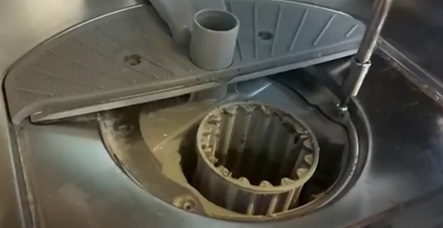
- lift and move the water supply to the side;
- take the wire from the repair kit, intended for installing the rubber band;
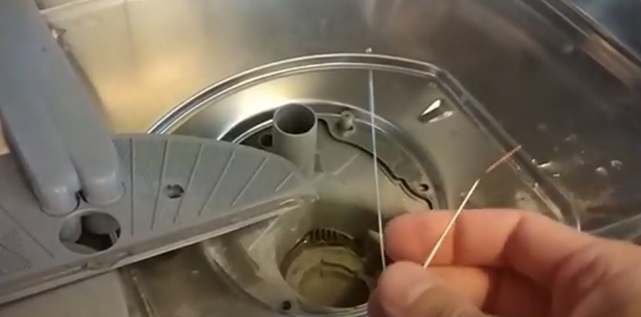
- slide the wire together with the rubber band under the first fastener (how to do this is described in the instructions included in the repair kit);
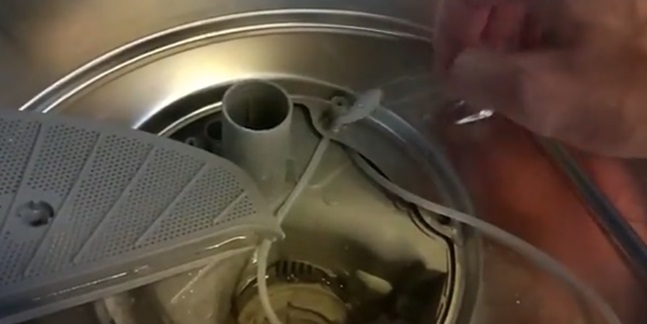
- lubricate the protruding end of the rubber band with a drop of liquid detergent (to make it slide into place more easily);
- pull the elastic through the second fastening;
- straighten the rubber gasket in a circle;
- Install the water supply in place and secure the tray removed at the beginning of the work with bolts.
It's important not to pull the rubber band too hard, otherwise it could break. The entire procedure is described in detail in the instructions included in the repair kit. This repair method is very convenient because it doesn't require disassembling the dishwasher body.
Interesting:


Readers' comments
Headings
Washing machine repair




For buyers




For users


Dishwasher




Add a comment