
The tablet won't come out in the dishwasher.
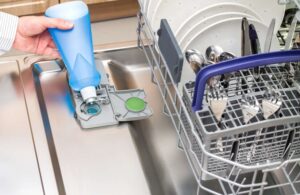
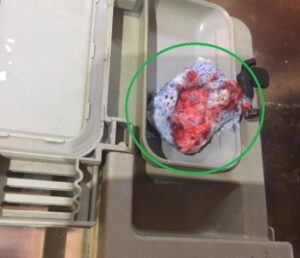 Every dishwasher has a detergent dispenser, which requires adding household chemicals before the cycle. When using dishwasher tablets, the detergent is completely used during the wash cycle. The dispenser lid opens, the tablet is filled with water, and dissolves in the liquid to create a cleaning solution. However, if the dispenser lid doesn't open, the tablet will remain dry and won't dissolve in water, so the dishes will be cleaned without any detergents and will likely remain dirty. We'll explain what to do if your dishwasher tablet won't pop out.
Be careful with the arrangement of dishes
The main cause of this problem is considered to be a simple error in the arrangement of dishes. Experts note that improper arrangement of cutlery inside the washing chamber often prevents the detergent drawer from opening. To prevent this, ensure all dishes are properly arranged.
- The bottom basket should be used for the largest items, such as pans, pots, baking sheets, lids, large plates, and so on.
Be careful when placing large items - they should not block the free movement of the spray arms, otherwise some dishes may simply not be washed during the cycle.
- Place plates, small bowls, glasses, mugs and the smallest pans in the top basket.
- A small tray is needed for the smallest cutlery, such as spoons, forks, knives, spatulas, etc.
- Each item must stand securely in its place so that it is not knocked over by a powerful stream of water during washing.
- The gap between the tablet compartment and the dirty dishes must be at least 3 centimeters, otherwise the dispenser lid simply will not open.
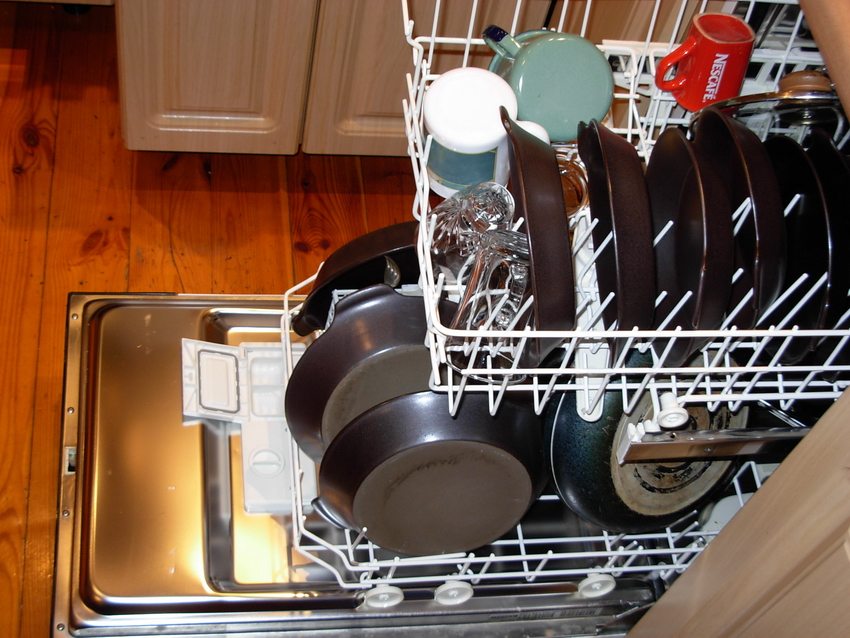
- Turn deep dishes upside down to prevent water from accumulating during washing and to allow them to dry completely at the final stage of the machine's operation.
- Knives and other sharp objects should be stored horizontally to prevent them from damaging you or other cutlery. If your dishwasher has a vertical cutlery drawer, it's safer to store knives in the top rack.
- All items made of glass, crystal and other fragile materials should not come into contact with other tableware.
- It's best not to wash glasses and other small, fragile items in the dishwasher, as there's a high risk that they'll simply fall out of the baskets during the cycle and break.
Finally, the most important rule is careful consumption. In other words, don't overload the dishwasher in an attempt to wash as many dishes as possible at once. An overloaded cycle will not only reduce the quality of dishwashing, but also increase energy consumption, so it is always better to split the washing into several runs.
Incorrect tablet or broken dispenser
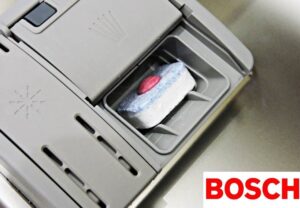
Most dishwashers have a tablet compartment designed to hold the tablet horizontally. However, if the tablet is accidentally placed vertically or even on its edge, the detergent can clog the compartment lid, preventing it from opening during operation.
If a dishwasher tablet isn't dispensing, but you're absolutely certain the detergent is high-quality and you've added it correctly, inspecting the dispenser mechanism will help. To do this:
- First of all, you need to remove all the retaining screws located around the perimeter of the dishwasher door to gain access to the detergent compartment;
- Having unscrewed all the screws, we remove the front panel of the dishwasher, for which it needs to be lowered down so that the fasteners come out of the grooves;
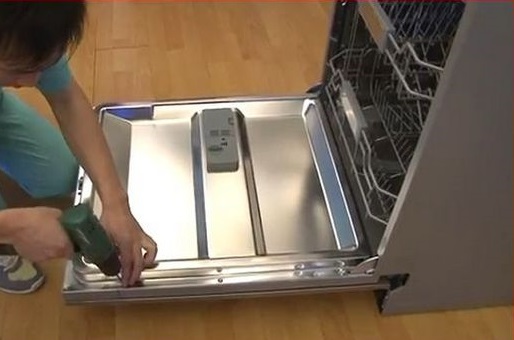
- we unscrew the screws holding the metal cover of the dishwasher and remove it too;
Before proceeding further, please double check that you have disconnected the power supply to ensure that working with the internal electronic components is safe.
- At this stage, you can see an electromagnet, which should be triggered during the operation of the machine and open the cover of the tablet compartment;
- Check the two red wires that should be connected to the solenoid. The problem is that very often at the factory they are not fully inserted into the terminal, so due to intensive use of the dishwasher, the wires fall out, and the electromagnet stops performing its main function. There is also a risk of damage to the terminal, due to which the wire will not be securely fixed and will eventually disconnect from the unit;
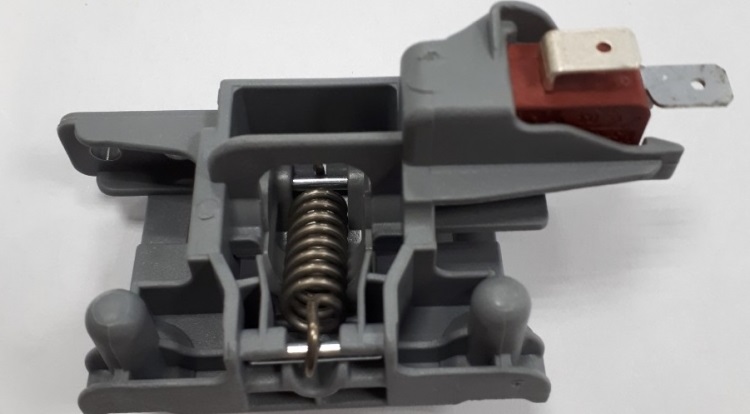
- To reconnect the wires, we need to pull out the white terminal, insert two red wires into it, secure them with a latch, and then connect the terminal to the magnet's electro-coupling until we hear a characteristic click;
- For increased reliability, carefully secure the two red wires to the other wires leading to the electromagnet. Regular electrical tape or a small zip tie will do. This will prevent the wires from being strained, reducing the risk of them coming loose again.
- Now all that remains is to reinstall the protective and decorative panels of the dishwasher.
Here's how you can restore your dishwasher's detergent supply in just 8 steps and less than an hour. Be sure to check the dispenser's functionality by running a test wash to ensure the tablet inside the dispenser dissolves during the cycle.
Interesting:

Readers' comments
Headings
Washing machine repair




For buyers




For users


Dishwasher




Add a comment