
The door of the Ariston washing machine does not close.
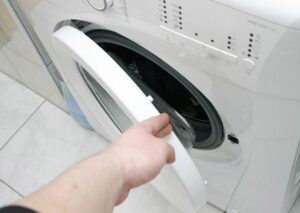 There are many reasons why the door of an Ariston washing machine won't close. Sometimes the problem is a lock that doesn't engage, sometimes it's a faulty electronic lock. In any case, the wash cycle will have to be postponed: the circuit board won't start the cycle due to a leaky drum. Ignoring the door won't work—you'll have to troubleshoot the issue first. Let's take a closer look at how and what to look for.
The internal door mechanism is not in order.
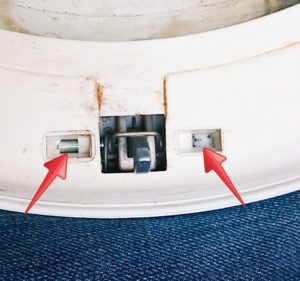
Most often, the door of an Ariston washing machine fails to close due to mechanical faults and damage. The cause of failure is careless operation of the machine, such as hitting the body, slamming the door hard, or hanging heavy items on it. Due to excessive load, door hinges sag and locking elements shift and break.
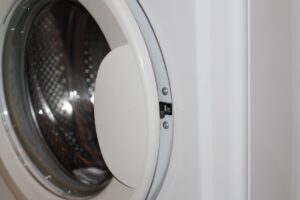
The lock and door hinges are responsible for "gripping" the door with the housing. If they break, the locking tongue cannot engage in the groove, resulting in no engagement. To remedy this, adjust the door position and tighten the side hinges, ensuring a tight seal between the glass and the machine.
If adjusting the door and tightening the hinges doesn't help, you'll have to replace the damaged components. Here's the instruction:
- disconnect the machine from the power supply;
- loosen the hinges that secure the door to the washing machine body;
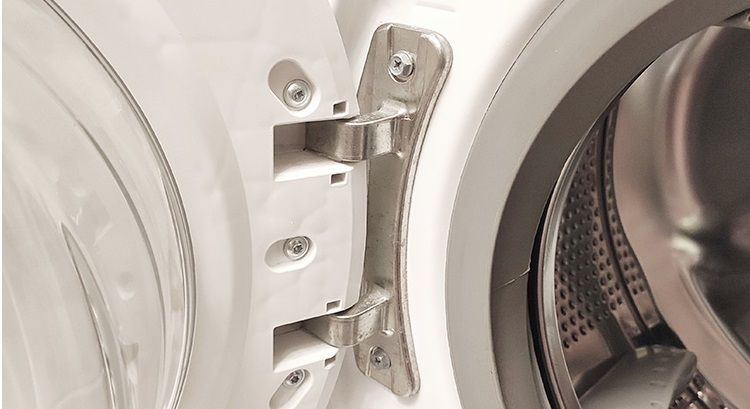
- lift the door and remove it from the grooves;
- unscrew the bolts around the perimeter of the inner side of the hatch;
- split the door in half (it is important to “snap” the structure in several places at once so as not to break the plastic);
- unscrew the hinges;
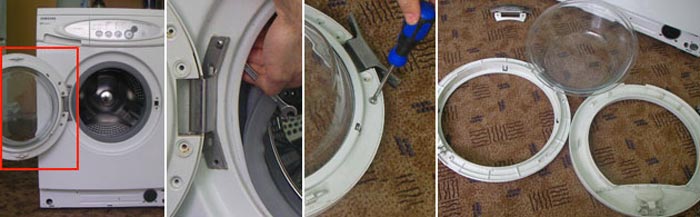
- install new hinges;
- assemble the door;
- secure the door to the machine body.
In addition to hinges, the locking tabs often break. In this case, replacing them is also recommended: you'll need to disassemble the door, remove the old "hook," and install a new one. Then, reassemble and test the assembly.
The door of the Ariston washing machine does not close due to distortion, sagging or breakage.
It's a different story if the door on an Ariston won't open. This happens when trying to open the drum abruptly after a wash results in the handle breaking. To fix the machine, you'll first have to break the lock and then unlock the machine. The procedure is as follows:
- Press the power button three times to activate the emergency opening function of the hatch;
- empty the drum;
- remove the door from its hinges;
- split the door in half by unscrewing the bolts holding it together;
- remove the glass;
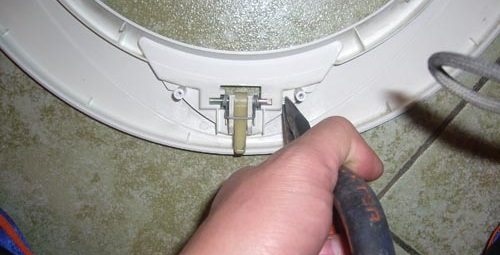
- find and remove the rod holding the handle (it is enough to push a long wire or nail into the bolt, prying it up and sliding the lock from the groove);
- remove the handle;
- install a new handle into the “nest”;
- assemble the door and return it to its place.
We recommend using only genuine parts for repairs. Replacement parts are selected based on the serial number of your Ariston washing machine.
Foreign object in the lock
The machine also fails to lock due to a blockage in the door locking system. The door locking system works in tandem with a heating resistor: its resistance increases as the temperature rises. When the wash cycle stops, the temperature inside the machine drops, causing the locking elements and contacts to return to their initial position. If the sensor is clogged, everything malfunctions—the levers don't engage, and the system doesn't lock.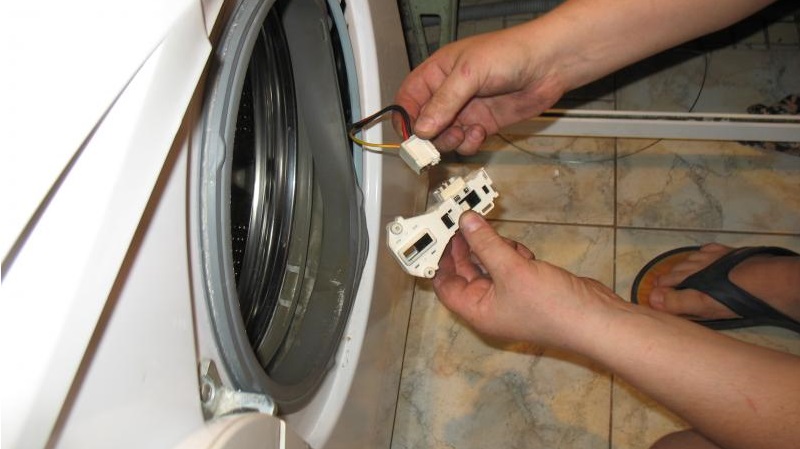
The repair in this case looks like this:
- the washing machine is disconnected from communications;
- The UBL is removed from the car;
- the device is inspected and cleaned of debris and dust;
- the blocker returns to its place.
The door lock is located inside the machine, behind the housing opposite the door handle. Accessing it requires partial disassembly of the washing machine. Step-by-step instructions are provided below.
The lock is faulty
In addition to the mechanical lock, all washing machines, including Ariston, feature an electronic locking device (ULD). When a cycle starts, the circuit board supplies current to it. The voltage causes one of the elements to heat up, the internal temperature rises, and the key plate bends, clicks, and locks the door. When the wash cycle is complete, the process reverses: the mechanism cools, the plate straightens, and the lock releases. If the locking device fails, the program will not start for safety reasons.
UBL breaks for a number of reasons. Most often, the bimetallic plate is to blame; over time, it wears out, breaks, and stops responding to temperature changes. Factory defects, blockages and short circuits can also cause failure.
The UBL is not repairable – if it breaks, the blocker is replaced with a new one.
Repairing the door lock isn't practical—it's cheaper to buy a new one. Here's the instruction for replacing the door lock:
- the washing machine is disconnected from the power supply;
- the drum opens;
- the clamp on the cuff is pried up with a screwdriver, loosened and removed (first the outer one, then the inner one);
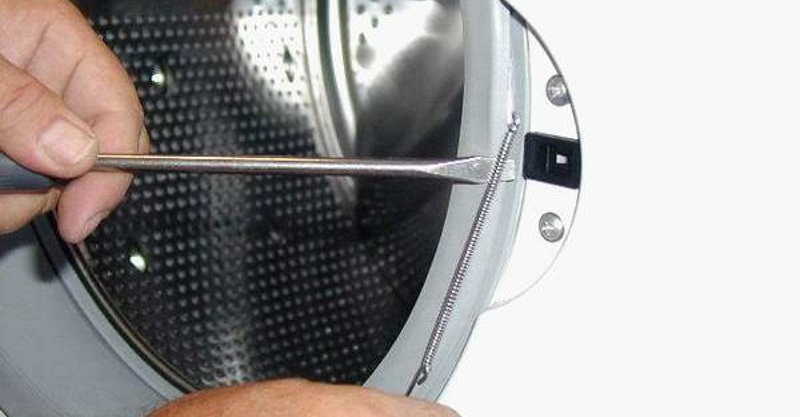
- the cuff is tightened;
- the bolts holding the lock on both sides are unscrewed;
- the lock is removed from the housing (through the hole between the drum and the front wall);
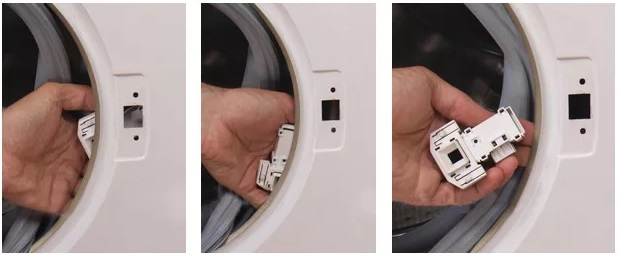
- the wiring connected to the UBL is disconnected;
- the new blocker is inserted into the socket;
- The UBL is connected and secured with bolts;
- the cuff is pulled over the edge of the drum and secured with clamps;
- The test wash starts.
If you can't access the locking mechanism through the opening between the drum and the housing, try accessing it through the top cover. Remove the panel and tilt the machine backward. Insert your hand through the resulting gap and remove the locking mechanism.
Something happened to the wiring.
If you're having trouble locking the door, you should also check the wiring. The power supply to the washing machine may be interrupted. Consequently, the main electrical components, sensors, circuit board, selector, and door lock are not functioning.
There are several reasons why wiring can become damaged:
- the machine drum is clogged with debris;
- the drainage filter is clogged (water cannot be collected and pumped out of the tank);
- the drive belt has come off or broken;
- the pump jammed.
If there's a wiring problem, the washing machine won't be locked by the door lock—it simply won't operate without power. The power outage also affects the dashboard: the LEDs and display won't light up, and the machine won't respond to commands.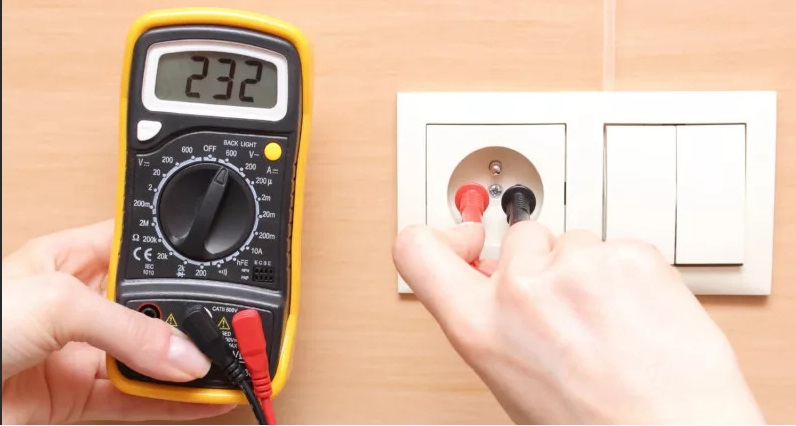
To understand the electronics, a comprehensive diagnostic is required. Each element of the circuit is checked:
- socket (the electrical outlet often burns out, so you need to disassemble it and test it with a multimeter);
- power cord (check that the plug and cable are intact);
- FPS (the interference filter burns out during voltage surges);
- control board;
- dashboard buttons.
We make sure to check that there is light in the apartment. Perhaps the central power supply is out and you just need to wait.
The control module does not give a command to the UBL
Modern control boards are very sensitive to voltage surges. A sudden increase or decrease in voltage can cause firmware failure and burnout of microcircuits, after which the module will stop functioning correctly. On Ariston machines, this problem often manifests itself as a missing interlock. The unit doesn't signal the door to close, the washing machine remains open, and the cycle won't start.
The board burns out due to power surges.
We strongly advise against testing or repairing the control board yourself. At most, you can inspect the module and look for signs of burning or mechanical damage. For a comprehensive diagnosis, firmware update, and repair of the electronic unit, please contact a service center.
Interesting:

Readers' comments
Headings
Washing machine repair




For buyers




For users


Dishwasher




Add a comment