
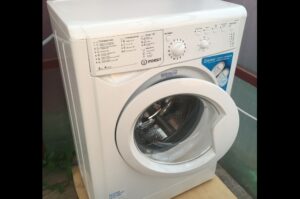
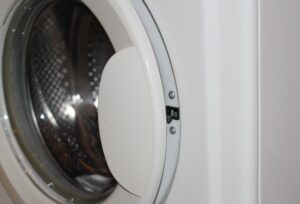
The door of the Beko washing machine does not close.
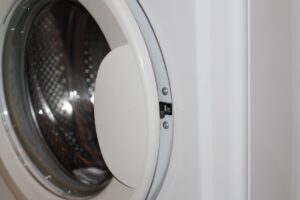 It's frustrating when the drum is full, the detergent is poured in, and the wash fails because the door of your Beko washing machine won't close. But don't panic: you can fix the door yourself. The key is to correctly identify the problem and fix it quickly. The door can fail to close for both mechanical and electronic reasons. Let's look at all the possible scenarios and figure out what to do in each case.
The door mechanism is malfunctioning
If there's a mechanical problem with the door, your Beko washing machine won't close at all. The door won't lock into place or will even push away from the body. In the latter case, it will feel as if something is interfering with the lock, preventing the mechanism from engaging. In either case, the characteristic clicking sound won't be heard, and the drum will remain open.
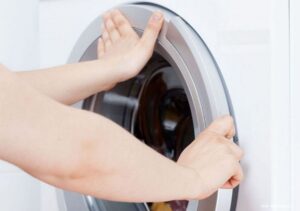
Most often, door mechanics malfunction due to excessive load on the door. Slamming it hard or hanging wet laundry on it is enough. Children's attempts to "ride" on the hatch also have a negative impact on the door hinges. As a result, various structural elements become distorted or break.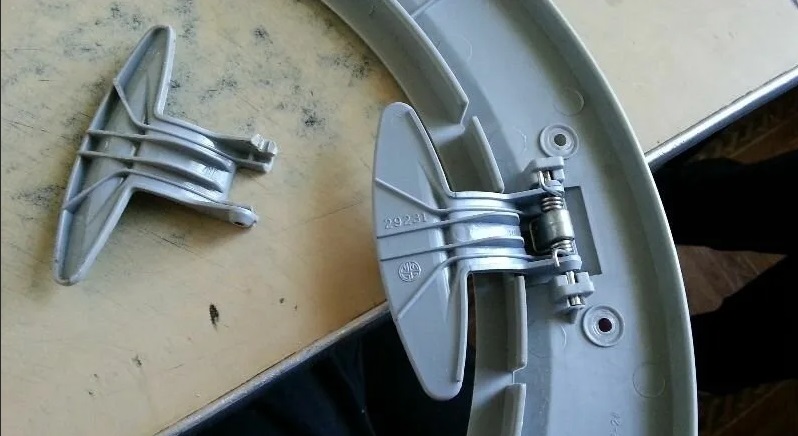
- Door misalignment. Over time, door hinges can become loose, especially if heavy laundry is constantly hung on the glass or the door is slammed hard. To restore balance, adjust the door and then tighten the fasteners. If the fasteners are broken, they will need to be replaced: remove the old ones and install new ones.
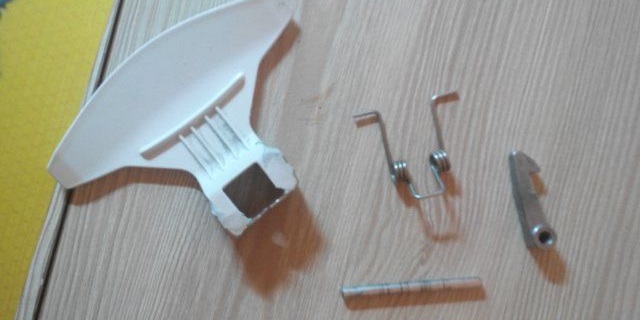
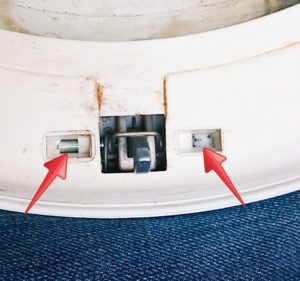
- Misalignment of the strike plate. The strike plate is the "hook" inside the lock that holds the door closed. It is assisted by a special metal rod. This rod often falls out, causing the entire lock to become misaligned. To return the elements to their original position, it is necessary to disassemble the door, locate, open, and repair the locking mechanism.
Slamming your Beko washing machine shut can damage the lock or door handle.
- A broken door handle. A broken door handle can prevent the door from engaging properly. Repair is not an option; replacement is the only solution.
- The guide rail is faulty. This is a plastic plate that bends and clicks into place when the lock is engaged. Over time, it wears out and breaks, causing the hook to no longer engage and the hatch to fail to close.
It's impossible to immediately determine why the washing machine won't close. It's necessary to check each component responsible for the locking mechanism one by one. Here's what to do:
- de-energize the washing machine;
- open the hatch;
- inspect the castle;
- unscrew the fasteners that secure the door to the machine body (use a star screwdriver);
- lift the door and remove it from the fasteners;
- assess the condition of the loops and tighten if necessary;
- loosen the screws holding the two halves of the door together;
- “split” the door by prying the top part with a flat screwdriver and pulling it towards you;
- examine the locking mechanism on the handle.
Finding new components for the lock or door handle for a Beko washing machine is extremely difficult, so repairing the mechanisms is impossible—they must be replaced entirely. Only minor misalignments of the latch, pin, or hinge can be corrected without a trip to the store. The key is to proceed with extreme caution to avoid damaging other system components. Otherwise, the situation will worsen, and you'll need to call a technician.
The lock does not perform its function
If the mechanical lock engages but the wash cycle still doesn't start, there's a problem with the door locking system. The door locking system is activated automatically at the start of each cycle, providing additional protection against accidental opening of the drum while the machine is running. If the locking system fails, the Beko board detects the lack of a signal and cancels the program for safety reasons.
Problems with UBL arise for a number of reasons:
- device clogging;
- blocker failure;
- manufacturing defect;
- Loss of connection with the control board.
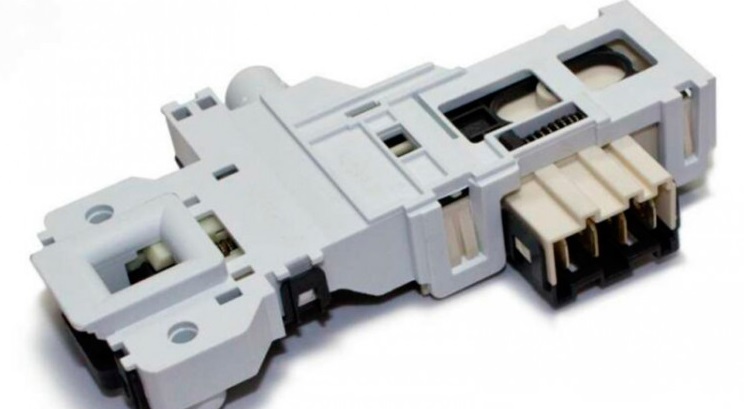
A clogged door lock is easy to restore. Simply remove the door lock, disassemble it, and clean out any accumulated lint and dust. If the bimetallic plate in the mechanism breaks or a short circuit occurs, then replacement is essential.
The electronic lock on a Beko washing machine will not activate if the door locking system is faulty or the control board is broken.
Worse, if the control board is broken. A software glitch, burned-out microcircuits, or damaged tracks and contacts will prevent the door lock from transmitting a lock signal, leaving the washing machine open. This can be caused by power surges, random key presses on the control panel, or a one-time technical glitch. To determine the cause and fix the problem, you'll need to thoroughly inspect the module, reprogram it, and repair it. It's not recommended to attempt to repair the electronic unit yourself—diagnosing the "brains" of the unit should only be performed by professionals.
Let's figure out the lock ourselves
You can fix a broken door lock yourself at home. Replacing the door lock right away isn't practical – first, make sure it's faulty. Use a multimeter to check the lock's functionality.
To diagnose the door lock, you need to remove it from the washing machine. The lock is located inside the machine, behind the front panel next to the door lock. To access the device, you need to:
- de-energize the washing machine;
- open the hatch door;
- find the outer clamp on the cuff and loosen it with a screwdriver or pliers;
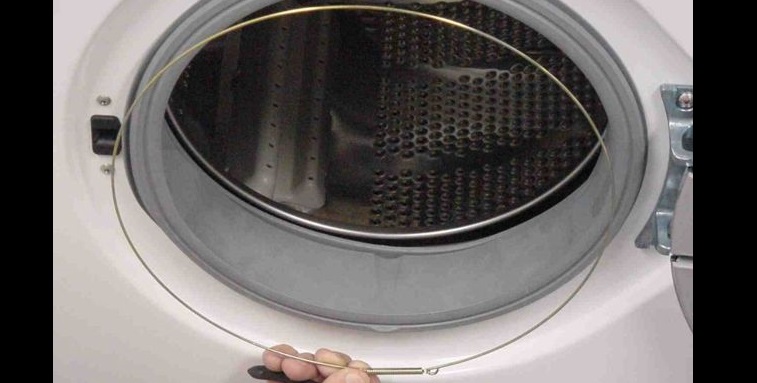
- tuck the cuff into the drum;
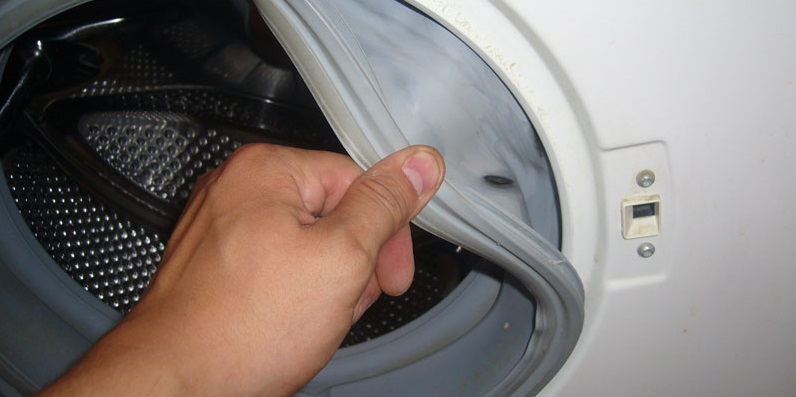
- find the UBL (it is located in the place where the door closes);
- unscrew the two screws where the lock hook touches the UBL;
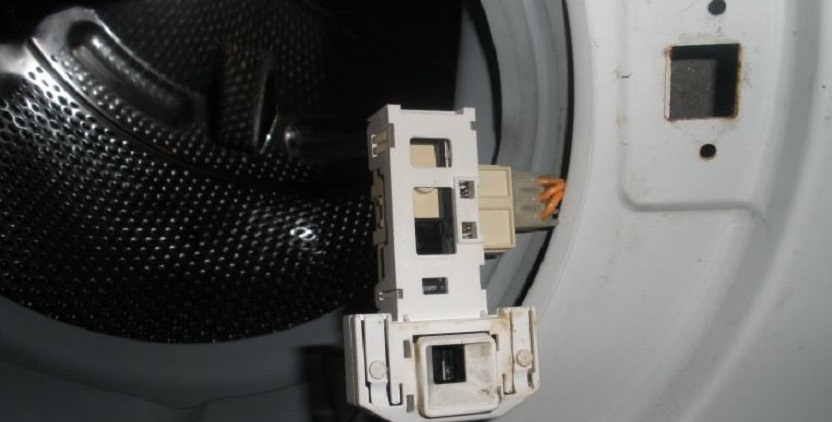
- disconnect the wiring connected to the device;
- remove the UBL from the machine body.
All of the above steps should be performed through the gap between the edge of the drum and the front wall of the washing machine. If the opening is too small, you can try accessing the locking mechanism from above. Remove the top cover and tilt the machine back. This will release the drum from the end wall, allowing your hand to reach the locking mechanism through the 1.5-2 cm of space that's been cleared.
The next step is testing the device. Turn on the multimeter and measure the resistance at the UBL contacts. The main thing is to first study the electrical circuit of the blocker and find out where its phase, zero and common relay are located.Then we proceed as follows:
- turn on the tester to the “Resistance” mode;
- we connect the multimeter clamps to neutral and phase;
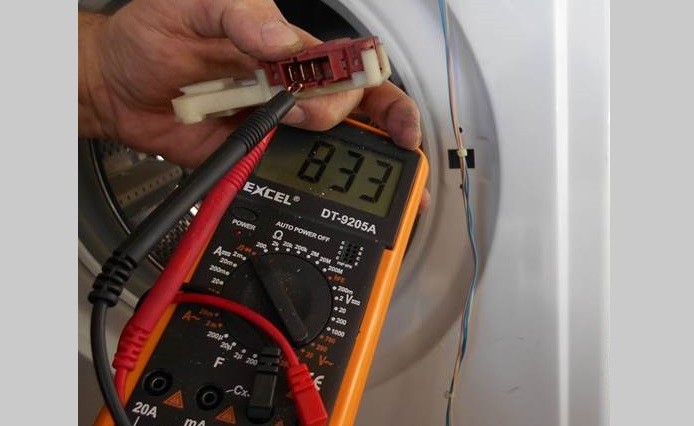
- we measure the resistance (the norm is any three-digit number);
- move one of the probes from the phase to the common relay;
- look at the multimeter’s response (values “1” and “0” will indicate a malfunction of the UBL).
It is impossible to repair the UBL; it can only be replaced with a new one.
If your washing machine's door won't close, the problem lies with the lock, hinges, door lock, or circuit board. To identify and fix the problem, you'll need to check everything on this list.
Interesting:
Readers' comments
Headings
Washing machine repair




For buyers




For users


Dishwasher




Add a comment