
Dishwasher malfunctions
 Any appliance can break down after a certain amount of use. Dishwasher problems that seem serious to homeowners aren't always that serious. Most problems can be repaired at home, without calling a technician. We'll explore common dishwasher problems and discuss how to fix them yourself.
We're looking for what's broken
If a dishwasher that's been in use for more than 5-7 years breaks down, it's possible that wear and tear on the machine's parts is the cause. If a recently purchased "home helper" is malfunctioning, the cause could be:
- Poor build quality of equipment and components. To avoid this, purchase equipment from reputable and reliable manufacturers;
- Constant filter clogging. This is caused by improperly preparing dishes before placing them in the chamber. Food residue left on plates and pots, if not rinsed off, leads to clogging of the filter element;
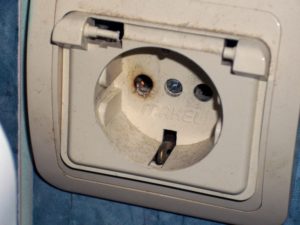
- A faulty electrical outlet. The likelihood of this happening is low, but it's best to check the machine's power supply;
- The dishwasher is incorrectly connected to the utilities. For example, the drain hose is too long, or the inlet hose is poorly attached to the machine;
- an ineffective detergent with a poor composition that cannot cope with dirt and does not rinse completely off the dishes;
- Incorrect loading of kitchen utensils. The user manual contains clear recommendations on the correct placement of dishes in the chamber. If you don't arrange your plates, mugs, and pots properly, you run the risk of ending up with unwashed utensils.
In some cases, dishwasher problems are caused by a defective door or a loose door. The appliance won't operate until all latches are engaged. Therefore, make sure the door is closed tightly, and if the problem is a manufacturing defect, don't hesitate to take the dishwasher to a service center.
If the factors described above clearly don't apply to you, the underlying cause of the problem is likely wear or failure of machine parts. Let's discuss which components, if worn, cause frequent equipment failures.
What if the machine doesn't start washing?
Let's look at the first situation. If, when you turn on the cleaning mode, the indicator on the control panel lights up, you can clearly hear the sound of water being drawn in, the liquid heats up, and the machine doesn't start washing, there are a variety of possible malfunctions.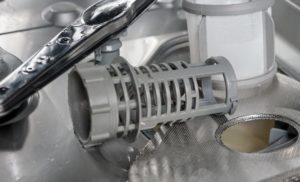
- The filter element located at the bottom of the chamber is clogged. Remove the filter from the housing, rinse it, and reinstall it.
- Clogged spray arms. The spray arms are not spraying water properly inside the dishwasher. To fix this, use a toothpick to clean the spray arms. Clogged spray arms can lead to reduced pressure in the system and poor cleaning results. Looking ahead, it's worth mentioning that if the rocker arm isn't rotating, it's recommended to first check the circulation pump.
- The circulation pump is broken. This is the one responsible for supplying water to the spray arms. This type of malfunction is more difficult to fix; the faulty part will need to be replaced. The pump is located at the bottom of the dishwasher chamber. Access it, remove the component, and replace it with a working one.
The absence of a characteristic sound from its operation will help determine that the circulation pump is faulty.
If no further noise is heard after the system has filled with water, the pump is likely broken. Another possible cause of a dishwasher not washing is damage to the motor winding. You can check the serviceability of the electric motor using a multimeter, examining the motor for short circuits and open circuits.
The machine takes in too much water.
In some cases, the dishwasher may continue to fill with water even after being turned off, or may fill with too much liquid before the wash cycle begins. If the machine is filling with too much water before the wash cycle begins, the water level sensor is likely faulty. It is located at the bottom of the unit. Before beginning repairs, place the dishwasher on the floor and replace the water level sensor.
If the dishwasher continues to fill with water even after the power is turned off, you can check the solenoid valve that shuts off the water supply. Repairing this yourself is very easy. Locate the valve; it's located where the inlet hose attaches to the dishwasher body. Disconnect the dishwasher from the power supply, remove the broken part, and install the new valve in its original location.
The water is cold or too hot
Let's look at dishwasher malfunctions closely related to water heating. In some cases, the water doesn't heat up to the set temperature, while in others, it becomes too hot. A faulty temperature sensor is the culprit for overheating. If we're looking at underheating, there could be several possible causes:
- thermostat failure;
- insufficient water pressure in the system;
- heating element defect.
The heating element is checked with a special device – a multimeter.
Diagnosing the problem is easy at home. Check the serviceability of the parts described and replace them if necessary.
The waste water is not removed
Another common breakdown is the improper functioning of the drain. Waste water may not be removed from the dishwasher due to a blockage in the drainage system or a broken pump.
First, diagnose the pump. Check for debris and measure the resistance of its winding. In some cases, the drain may not start due to low pressure in the system. If the pump is working properly, it's necessary to inspect the entire drainage system, particularly the siphon. The hose or filter element located inside the chamber may be clogged. A DIY repair won't take long: simply rinse the hose or filter under running water.
Sometimes, this problem doesn't require any repairs at all. The drain hose may be raised above a certain level, preventing the machine from being able to discharge the wastewater into the sewer. Be sure to check the hose connection and repair it if necessary.
The car got an electric shock
If you feel an unpleasant tingling sensation or a strong electric shock when touching the dishwasher's body, there's a 100% chance the heating element has failed. To fix the problem, unplug the machine, remove the heating element, and inspect it for cracks or other defects. If the heating element is confirmed to be faulty, you'll need to install a new one. Heating element failure can be caused by:
- poor quality of tap water;
- failure of the heating element starting relay;
- manufacturer's defect.
It is strictly forbidden to operate the dishwasher if you feel tension on the body, as this can be life-threatening.
Do not delay equipment repair, diagnose and replace the heating element as soon as possible.
The tablet did not dissolve
Another possible problem with your dishwasher is that the detergent doesn't dissolve in the water. This can occur due to clogged nozzles or low water pressure, preventing liquid from reaching the detergent drawer. Remove the spray arms and thoroughly clean the components.
To clean the injectors better, pre-soak them in a special soap solution.
 The problem may also be related to a malfunction in the dispenser opening mechanism, from which the detergent is flushed. If the valve fails to open or stops completely, the dishwasher tablet does not dissolve completely in the water. The solution is to adjust the valve or replace it completely.
The equipment does not turn on
Sometimes, your dishwasher may not respond to the power button. If you're trying to clean another load of dishes and can't turn it on, the problem could be one of the following:
- non-working electrical outlet;
- failure of the door locking device;
- the door does not close tightly;
- network key malfunction;
- failure of the network filter.
You need to take a multimeter and check every element of the electrical circuit. By process of elimination, you can find out why the equipment isn't turning on. If in your situation the appliance does not complete the wash cycle or does not switch cleaning programs, it makes sense to check the functioning of the programmer and control module. Repairing the main unit is a complex job and is best left to a specialist.
Makes loud, unnatural sounds
One day, a user may hear an unpleasant noise while the dishwasher is running. This indicates that the pump or motor bearings are failing. Damage occurs when water, which shouldn't be there, gets inside. When the seal is cracked, fluid leaks onto the bearings, eventually causing them to fail. This results in an unnatural humming sound when the machine is running.
Do-it-yourself repairs will include sequential steps to replace both the seal and bearings.
If the pump is the issue, the underlying cause of the noise may not necessarily be the bearings, but rather debris lodged in the impeller or spray area. Clean the contaminated areas and inspect the impeller for cracks or damage to its blades.
Items remain wet
One of the functions of any dishwasher is to dry washed dishes. If the dishes remain wet at the end of the cycle, it's likely the dishwasher is broken.
The drying system operates on a fairly simple principle. A special fan is installed inside the washing chamber, which removes moisture from the surface of items. If your dishwasher is generally functioning properly but isn't drying your dishes completely, it's likely the fan that's broken.
The procedure is as follows: check the element's winding and all power contacts using a multimeter. If any defects are detected, a new fan will need to be installed.
The machine is leaking
A certain list of dishwasher malfunctions is related to water leaks in the system. In this case, the appliance may simply stop working during the cycle and not respond to user commands. An error code will also appear on the display, which will vary depending on the manufacturer.
However, the sign of a leak is standard: during operation, the dishwasher simply stops and does not respond to attempts to resume the cycle.
Sometimes the device can be restarted, but after turning it back on, it stops again. Why does this happen?
Every dishwasher has a float in the tray, which acts as a leak protection device. If water accumulates below, the sensor rises, closing a contact and sending a leak alarm signal to the control unit. If water appears in the tray, the system will stop the machine to prevent flooding of the room.
Before repairing your dishwasher, you should understand the cause of the problem. Here are some factors that can cause leaks:
- The appliance is not installed level. Uneven placement may cause water to overflow the container;
- prolonged use of a detergent not intended for dishwashers;
- "overdose" of detergent, leading to excessive foam formation in the chamber;
- Overfilling the system with water. Excessive liquid in the dishwasher can cause a leak. Be sure to inspect the level sensor and install a new one if necessary.
- A defective rubber seal around the door perimeter. This type of damage is easily identified by condensation appearing under the countertop. Another sign is steam escaping from the chamber during washing. To resolve the issue, replace the seal or adjust the door hinges.
- The leak sensor is faulty. The float itself may be malfunctioning and closing the contact unnecessarily. You can try lowering it yourself; this will help weaken the return spring. If this is the case, replace the polystyrene float.
Rarely, a dishwasher leak is caused by a leak in one of the machine's components: hoses, pipes, etc. To ensure the connections are tight, remove the back panel of the housing and inspect all internal components.
Now that you've confirmed your dishwasher is broken, you can figure out the cause yourself. Most problems are easy to fix yourself, without having to call in a professional.
Interesting:

Readers' comments
Headings
Washing machine repair




For buyers




For users


Dishwasher




Add a comment