
AEG washing machine malfunctions
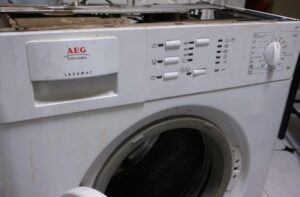 European assembly gives AEG washing machines a distinct advantage – they rarely break down. This is primarily due to the low rate of manufacturing defects and durable components. However, if adverse external conditions, power surges, hard water, or improper operation interfere, malfunctions are inevitable. It's best to prepare in advance and learn about common AEG washing machine problems. We'll take a detailed look at how to identify and fix them.
What breaks most often?
It's worth noting that AEG machines assembled in Europe refer to those manufactured in Poland and Italy. German-made machines are high-quality and virtually indestructible, but are extremely rare on the Russian market. Our stores actively sell Italian and Polish models, which are significantly inferior to German ones in terms of strength and reliability. It is interesting that both the “Poles” and the “Italians” have the same weak points.
Of course, anything can break down in a dishwasher. However, there are certain malfunctions that are more common for specific manufacturers, and AEG is no exception. According to service center statistics, the most common problems with these models are:
- there is no water heating (it works incorrectly or turns off completely);
- the self-diagnostic system is triggered spontaneously (the machine freezes, constantly displaying error codes);
- the door lock system is not functioning properly (the hatch does not close or open);
- problems with water drainage occur (the tank remains full).
AEG's weak points are the heating element, the locking device, the self-diagnostic system and the drain system.
The above-mentioned malfunctions are the result of the poor design of AEG washing machines assembled in Poland and Italy. These machines are equipped with low-quality door locks and heating elements, which, in Russian conditions, cannot withstand increased loads, power surges, and hard water. The control board often fails, as its software has not been sufficiently tested. To extend the lifespan of AEG machines and avoid costly repairs, it is important to know how to prevent and troubleshoot these problems. Let's look at what to do, point by point.
The heating element is malfunctioning
AEG washing machine owners often complain about problems with water heating, which fails even on high-temperature cycles. In 90% of cases, the heating element is to blame. Italian and Polish machines are equipped with low-quality heating elements that have a short lifespan. These elements typically last an average of 5 years. By comparison, German equivalents typically last 10-12 years.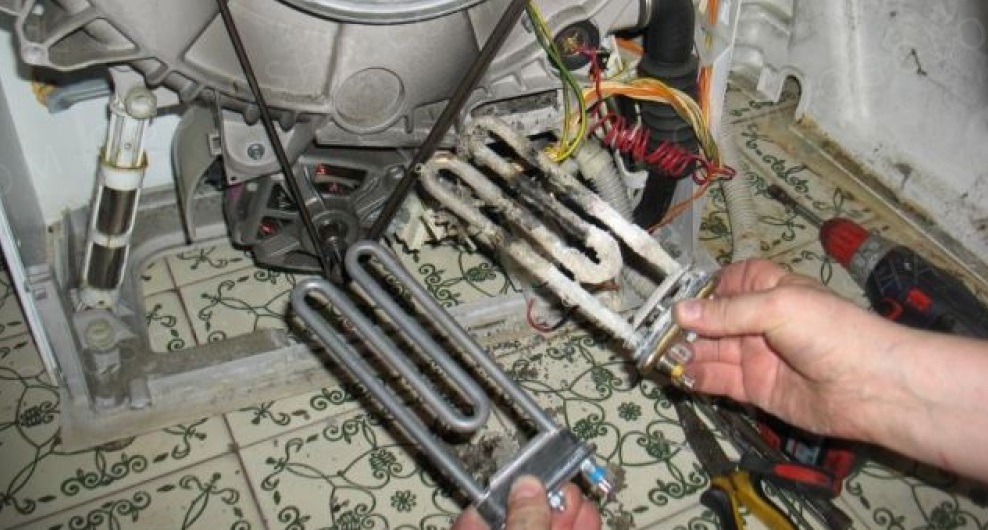
The only exception would be older AEG models manufactured in the early 2000s. They are equipped with standard heating elements, which, even after 15-17 years, don't wear out. Modern models are not as reliable. Poor operating conditions also shorten the heating element's lifespan. The following factors negatively impact the heater:
- switching on several high-temperature cycles in a row (the heating element overheats and breaks);
- too hard water (the heater becomes covered with a layer of scale, causing it to overheat);
- lack of regular cleaning of the washing machine.
Troubleshooting begins with diagnosing the device. Remove the front panel and locate the heating element connector under the tank. Disconnect the wires, attach the multimeter probes to the exposed contacts, and test for continuity. If the result is inconsistent, you'll need to remove the broken heater: loosen the bolts, wiggle it, and pull it out of its socket. Replace it with a new element, then return the end face to the housing and run the test cycle.
The self-diagnostic system is making itself known
Another problem with AEG washing machines is the spontaneous activation of the self-diagnostic system. The machine periodically freezes, displays an error code on the display, but after a reboot, it "forgets" the detected error and operates as before. To stop this, run an automatic test of the electronic module:
- turn the programmer to the “OFF” position (on some models – “AUS”), completing the started cycle;
- disconnect the machine from the power supply;
- Press “Start” (Pause) and “Exit” simultaneously and hold for a few seconds;
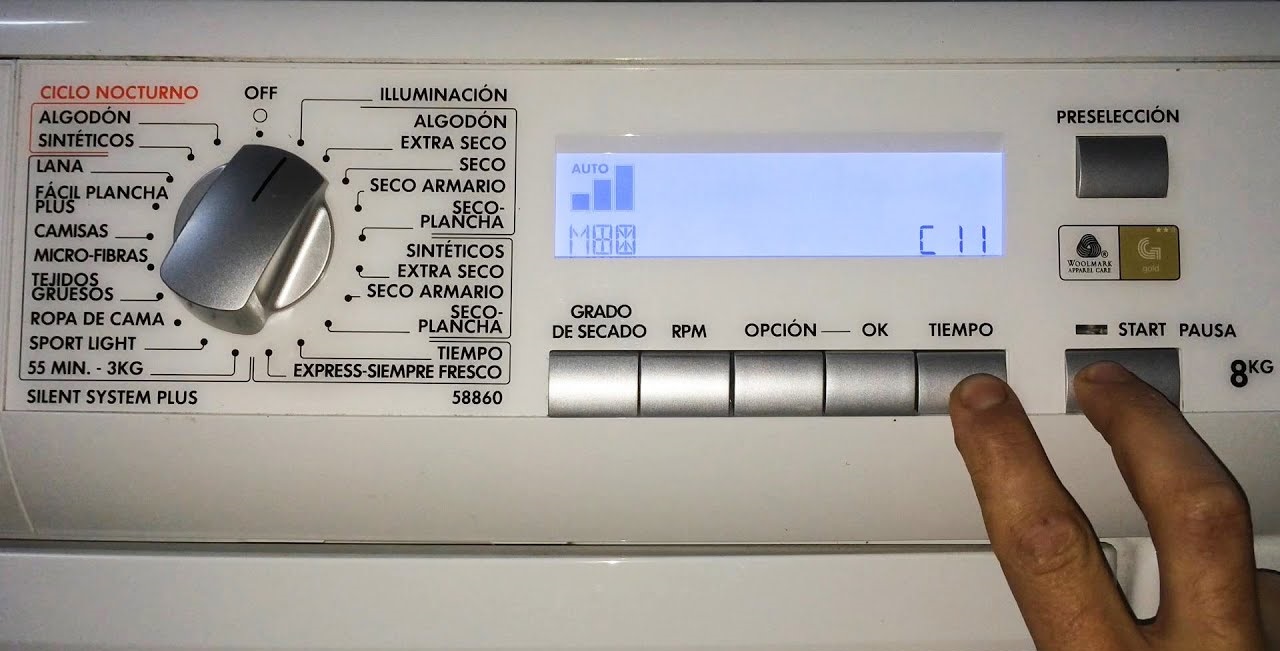
- turn on the washing machine;
- turn the selector one notch to the right;
- Press and hold “Start” and “Exit” again until the error code appears on the display.
The AEG factory manual lists all error codes that are entered into the washing machine's self-diagnostic system.
The code that appears must be remembered, deciphered using the factory instructions, and then the required repairs must be carried out. To exit the test mode, turn on, de-energize and restart the machine.
We're fixing the door
AEG washing machine doors often break. Despite their relatively high price, these models have a rather flimsy locking system. Their door mechanism, with its plastic catches and poorly designed fasteners, resembles budget Indesit machines. Even with careful use, the lock may malfunction: the door will not close or open. Typically, the door interlock is at fault. Its lever becomes chipped and burred, preventing the mechanism from functioning properly. To remedy this, you need to restore the parts to their proper smoothness yourself. Here's how:
- remove the hatch door;
- we find a file or a rasp with the smallest possible notch;
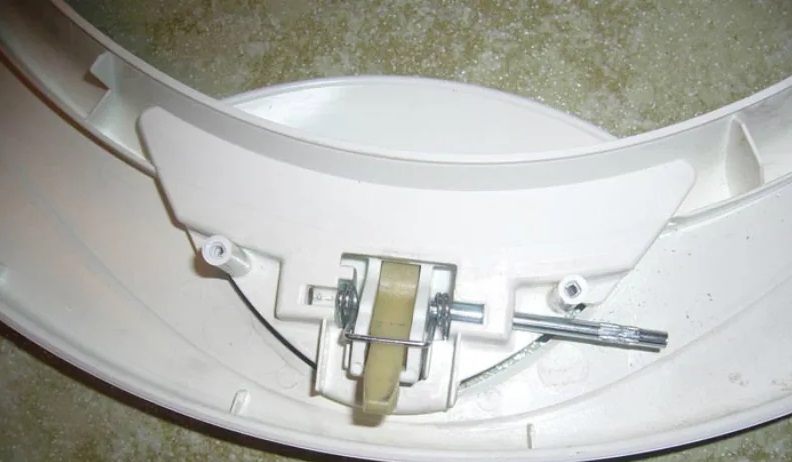
- we place the tool into the keyhole and grind down the uneven areas on the lever;
- After turning, treat the surface with graphite lubricant;
- remove excess graphite;
- we fix the door to the body.
The repair procedure described is suitable for situations where it's impossible to open the door and remove the latch. If possible, it's best to remove the locking mechanism and grind it down in a special vice. This is faster and safer.
Replacing the pump
Drainage problems are also common with AEGs. The pump is usually the culprit, often failing due to poor design. Repairing it is pointless—it's easier to remove and replace the pump. The pump can be accessed through the bottom. Disconnect the appliance from the power supply and begin repairs:
- we disconnect the hatch door from the body;
- unscrew the trash filter;
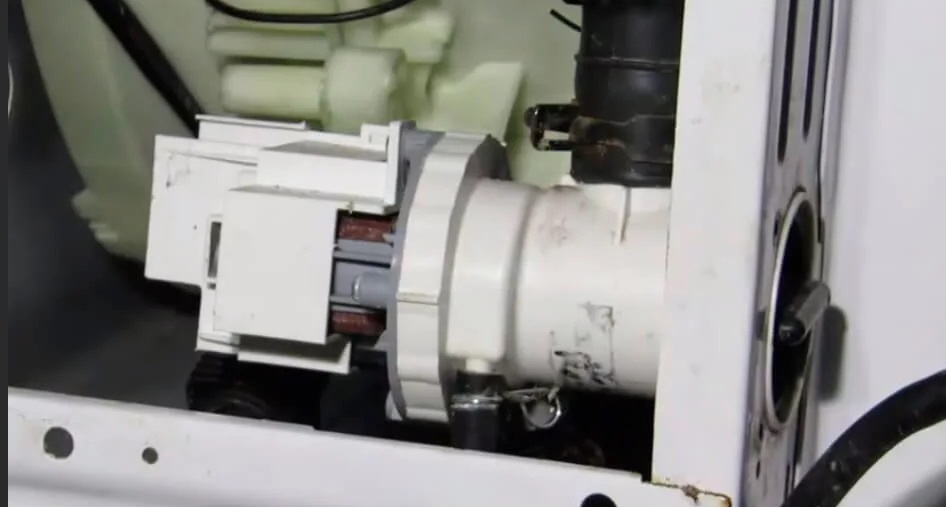
- we free the pump from wires, pipes and bolts;
- We turn the pump counterclockwise and pull it out.
For convenience, you can place the washing machine on its left side. Do not place the AEG on its right side, as any water remaining in the powder compartment may end up on the control board. After removing the pump, it's a good idea to clean its mounting surface of scale and dirt. The new pump is screwed into the grooves, secured with fasteners, and connected to the wiring and drain. Be sure to run a test cycle to check the quality of the repair.
Interesting:

1 reader comment
Add a comment
Headings
Washing machine repair




For buyers




For users


Dishwasher




After washing, items lose their shape, the fabric stretches and sags.