
Hotpoint Ariston washing machine malfunctions
 Hotpoint Ariston produces washing machines distinguished by their stylish design, functionality, high build quality, and ergonomics. Furthermore, these machines boast high performance characteristics. However, even the most reliable appliances aren't immune to breakdowns. Let's look at common problems with Hotpoint Ariston washing machines and see how to fix them.
Learn to "communicate" with your car
Frequent breakdowns are not typical for Ariston washing machines. In most cases, an automatic machine with a service life of no more than five years will operate without problems if the user provides proper care. As for typical malfunctions, the most common complaint is a clogged drainage system. Hair, debris, and threads getting caught in the pipes, pump, and filters cause blockages. As a result, the machine is unable to drain water from the drum after a wash. In rare cases, the machine becomes loud during operation, fails to draw water, or refuses to wash at all.
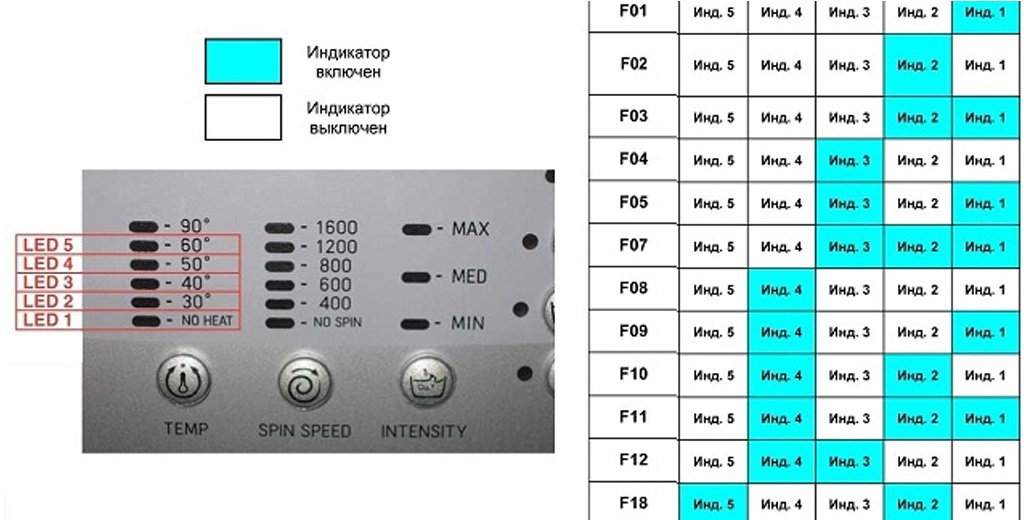
Almost all Ariston washing machine models are equipped with a self-diagnosis system for faults. The automatic machine itself informs the user about the detected malfunction by displaying an error code on the display.After this, all that remains is to decipher the symbol and understand the cause of the failure.
The interpretation of the codes should be sought in the user manual; this information is also freely available on the Internet.
Once the damaged component is identified, a decision is made about whether repairs can be done by hand or whether a technician should be called in. Let's look at the symbols displayed by the self-diagnostic system.
- F1 Indicates a malfunction in the engine drives. The equipment can be repaired by replacing the controllers.
- F2 indicates that the main control module is not receiving a signal. It's best to entrust this repair to a specialist, as the motor will need to be replaced. However, before taking any drastic action, it's important to check the secure connection of all components in the motor-controller chain.
- F3 Indicates a temperature sensor malfunction. The thermostat may need to be replaced.
- F4 appears when the sensor measuring the water level in the system is not working correctly. This code is often displayed on the display due to a poor connection between the controller and the pressure switch.
- F05 indicates a faulty drain pump. The pump may be clogged, in which case cleaning the element will help. A short circuit or open circuit in the winding may also be the cause, which can be checked with a multimeter.
- F06 indicates that the buttons on the control panel are not functioning. In this case, the panel will need to be reinstalled.
- F07 indicates that the washing machine's heating element is not being covered with water. During repair, the connection between the heating element, the main module, and the pressure switch will need to be checked. Parts may need to be replaced.
- F08 indicates a stuck heating element relay or problems with the controllers. Replace any faulty parts with new ones.
- F09 indicates a failure caused by the washing machine's memory non-volatile state. Reflashing the microchips will help in this situation.
- F10 indicates a malfunction in the controller responsible for monitoring the water level in the tank. The element will need to be replaced.
- F11 Displayed on the display when the pump stops sending signals about its operation.
- F12 Indicates a break in the circuit between the sensor and the display module.
- F13 Lights up when the drying mode is violated.
- F14 Informs that drying is not possible after selecting a specific washing program.
- F15 Indicates that drying of items does not stop automatically.
- F16 Indicates that the hatch door is not closed tightly. The locking device may be faulty. The lock needs to be checked.
- F18 Indicates a serious problem – a malfunction in the microprocessor.
- F20 appears on the display a few minutes after the cycle starts. This indicates that the tank is unable to draw water. This could be due to a faulty control unit, no water in the water supply, insufficient pressure, or damaged valves.
Once the cause of the malfunction is identified, the next steps become clear. While some problems can be resolved independently, sometimes you'll need to call a service center for help.
If there is no screen
Ariston automatic washing machines, which do not have a display, signal malfunctions detected by the self-diagnostic system by flashing the indicator lights on the control panel. Most washing machine models have only two indicators: a door lock symbol and a power light. The door lock indicator light is usually shaped like a lock or key and is always illuminated. When selecting the desired wash mode, the selector knob rotates in a circle, making a soft clicking sound.
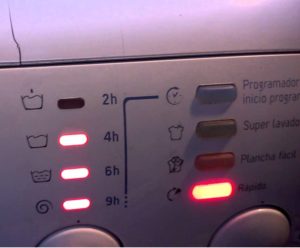
Certain Hotpoint Ariston models indicate malfunctions by flashing the "lock" indicator, the "Spin" light, and the "End of Program" LED. Some machines without a display indicate errors by illuminating the 30°C and 50°C temperature indicators. At the same time, the cool water cycle indicator LED will light up, and indicators 1, 2, and 4 will flash.
Refuses to turn on
A faulty power cord, a broken outlet, or a damaged control module are most often the cause of a circuit breaker not turning on. First, check to see if the power to the house has been turned off. If not, make sure the outlet is working by plugging another appliance into it. Next, inspect the power cord—any defects are visible to the naked eye. Repairing the main control unit is only possible for an experienced technician; trying to tinker with the washing machine's electronics yourself without the necessary knowledge is not recommended.
The Hotpoint Ariston washing machine may not start if:
- The inlet hose is clogged or the water inlet valve is broken. The machine won't work if it can't draw water for washing.
- The motor is faulty. In this case, the cycle also cannot be started.
To determine why your washing machine isn't working, you'll need to run a diagnostic. If the problem is with the power cord, you can replace it yourself. If the control unit is faulty, it's best not to attempt DIY repairs.
The belt doesn't hold, there's no release.
Ariston washing machine users may encounter problems with a broken motor (the drum will not rotate), a faulty Hall sensor (the device that regulates the rotor's speed), or a broken drive belt. Any of these issues will prevent the machine from operating properly.
To check the motor's performance and the integrity of the belt, you should remove the back cover of the washing machine.
Once you've gained access to the components, you can begin diagnosing them. If the cause is a broken tachometer, it's advisable to call a technician for repairs.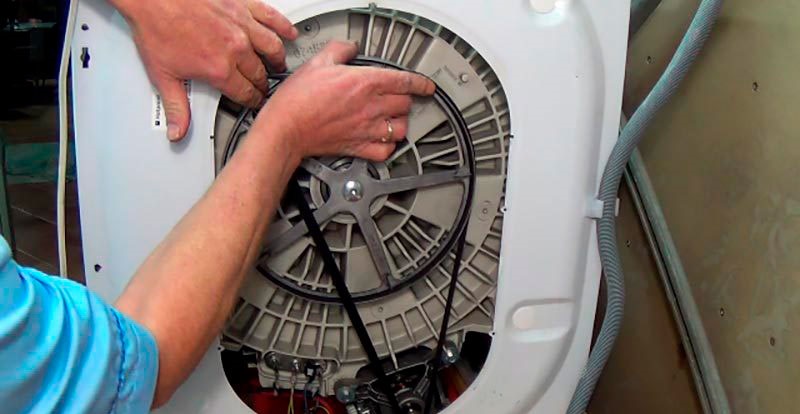
The drive belt stretches and comes off after several years of use with the Ariston. This can also happen earlier if the belt was initially of poor quality. This can also be caused by constantly overloading the machine, which causes the drum to spin and the belt to come off. Furthermore, the belt can also come off if the pulley is loose. If the drive belt is very stretched or has visible defects, it is better to immediately buy and install a new one suitable for your model. Ariston.
The machine may not spin due to a clogged drain system. Wastewater isn't being discharged into the sewer, slowing down the machine. Troubleshooting should begin with cleaning the waste filter, then cleaning and checking the pump.
To diagnose the engine, you'll need a multimeter. The tester measures the motor winding resistance. If there's no resistance, the engine will need to be replaced.
The drum stopped, there is no water
There are several possible causes for the Ariston washing machine's drum not moving. First, a slipped drive belt. If this happens, the wash cycle will start and the motor will hum, but the drum will remain frozen. Replacing the belt can solve this problem.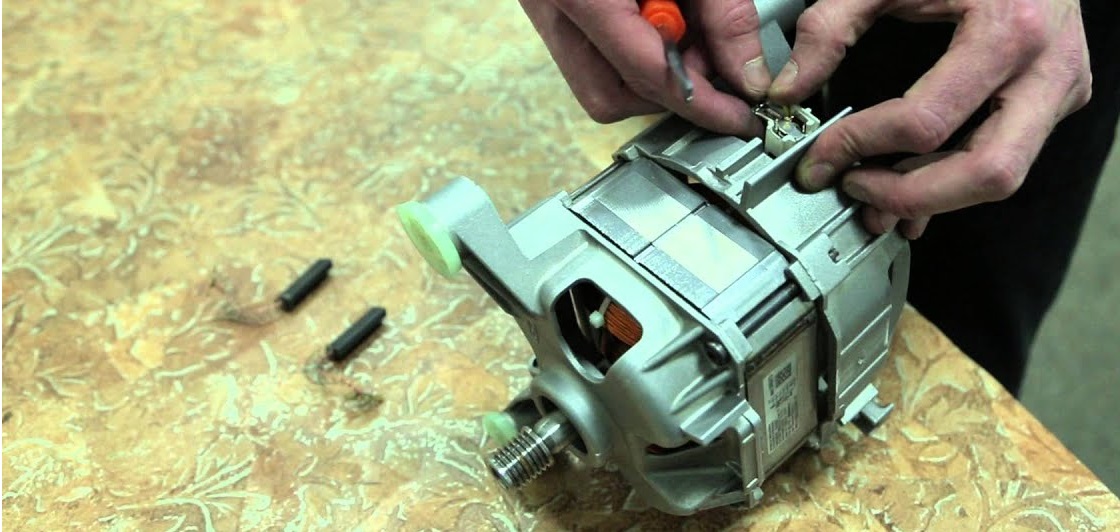
If the washing machine does not pick up speed in spin mode or does not spin at all, it may be worn out engine electric brushes, they need to be replaced immediately. It's also possible that the tachometer, which monitors the drum speed, has failed. The Hall sensor will need to be replaced. It's also possible that the washing machine was making noise and rattling noise beforehand, but then stopped spinning. In this case, the bearings may be damaged. Replacing them is the solution.
Very rarely, this symptom may indicate a faulty electronic module. A signal interruption in the wiring or component contacts is also possible. It's best to call an experienced technician to resolve the issue. A washing machine that doesn't fill is most often caused by a clogged inlet hose, a damaged inlet valve, or a faulty pressure switch. In this case, DIY diagnostics and repairs are acceptable. Much less commonly, the problem lies in a faulty control unit.
Problems with the door, cold water
One day, the user may discover that the hatch won't close. This could be due to mechanical damage (such as deformed plastic latches) or an electronic malfunction, preventing the door from locking. If you use the washing machine for a long time, the hinges on which the door is hung may also sag.
A common problem is a faulty heating element. If the machine isn't heating the water, it's worth inspecting the element. In most cases, it will need to be replaced. The heating element becomes coated with scale, which can cause it to burn out.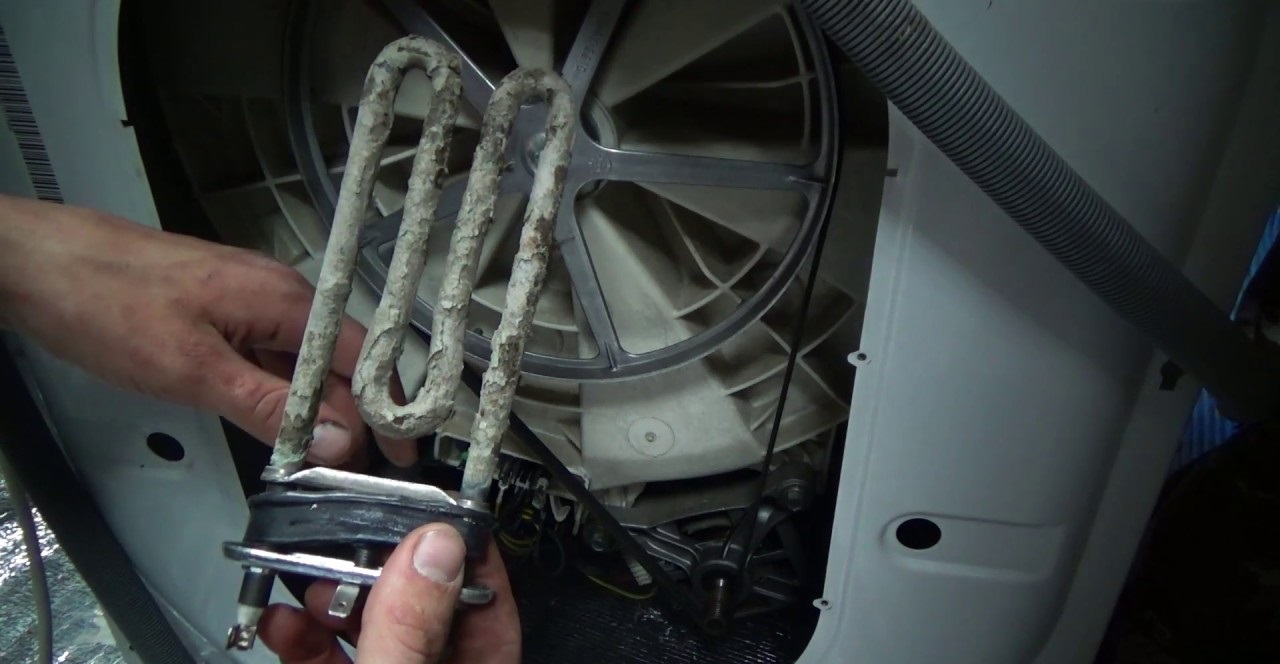
Rare failures
In fact, failure of the main control module is extremely rare. The diagnostic system detects the malfunction and alerts the user. "Noisy problems"—situations where the washing machine makes a loud rumbling or grinding noise—are also rare. In this case, the seal and bearings will most likely need to be replaced. The problem may lie in loose counterweights, which can also cause excessive noise.
If your washing machine is leaking, it's best to call a technician to perform a diagnostic to avoid damaging the appliance's electrical insulation.
What other "symptoms" of malfunction can an Ariston washing machine show?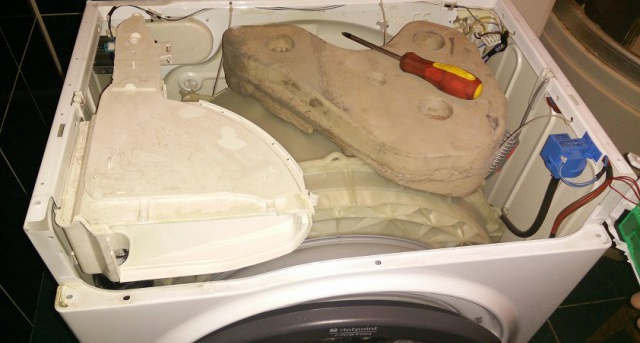
- Stop rinsing the laundry. First, check the heating element. When the element can't heat the water, the next wash cycle won't start. If the heating element is working properly, you'll need to check the thermostat.
- Don't rinse the detergent out of the dispenser. Cleaning the filters can help in this situation. Rarely, the water supply mechanism is disrupted, in which case detergent will remain in the dispenser.
Whatever the problem with your Ariston washing machine, it's important to diagnose the issue as soon as possible. Based on the information obtained, you can determine whether a DIY repair is advisable or whether it's best to contact a professional. Minor repairs can be done at home, but it's best not to mess with the washing machine's electronics unless you have experience and skills.
Interesting:
1 reader comment
Add a comment
Headings
Washing machine repair




For buyers




For users


Dishwasher




My washing machine broke (F 11), so I called a repairman. The repairman started replacing the heating element without any diagnostics (he took the original heating element, by the way). Then he replaced the pump, but after a test connection, the machine didn't work. This time, it was the same (F 01). The water also wouldn't drain. While replacing the pump in the rubber tube leading to the pump, the repairman pulled out and threw away a part—a ball slightly larger than a tennis ball. Ultimately, without fixing the machine, he asked me to pay 4,500 rubles. I feel like I was cheated. I didn't ask for the heating element to be replaced, and the new pump didn't help either... so, no money, the machine doesn't work.