
Miele washing machine malfunctions
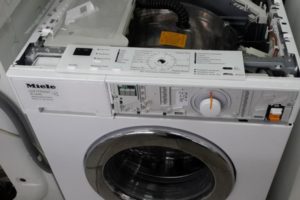 Miele manufacturers claim their machines will last 20-30 years without fail. This is entirely accurate – thanks to their high build quality, these washing machines rarely break down. Repairs are also inexpensive. However, even these machines do break down sooner or later. Moreover, there are some common Miele washing machine problems that are best addressed in advance.
Service statistics
Spare parts for Miele appliances are of high quality: they are manufactured under strict control and using unique technologiesAs a result, the percentage of manufacturing defects leading to serious breakdowns approaches zero. These data are confirmed by statistics from service centers:
- 89% of calls to repairmen occur due to violation of the operating conditions of the washing machine, power surges or excessively hard water;
- 9% of complaints are about poor quality assembly or defects that arose during transportation and storage;
- 2% – due to defective parts and components.
Manufacturing defects and poor assembly are extremely rare in Miele models. In the vast majority of cases, the fault lies with the store or the user. The realities of Russian life also play a role: constant power surges and hard water shorten the trouble-free lifespan. The latter is especially dangerous, as impurities in the water supply lead to scale deposits on components, which ultimately affects even the electronics. However, Miele models also have their weak points—typical malfunctions. We'll explain these issues step by step and how to troubleshoot them.
The most common fault codes
Modern washing machines even break down conveniently. This is due to a built-in self-diagnostic system that significantly simplifies troubleshooting. As soon as the machine detects a malfunction, it analyzes it, and the result is displayed as a corresponding code. Typically, the following combinations are displayed:
- F10 – problems with water intake;
- F15 – the water collected in the tank is too hot;
- F20 – water heating failure;
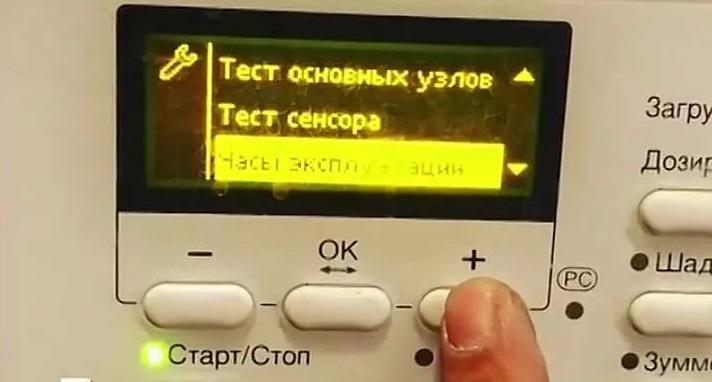
- F34 – the door is not locked tightly, there is no seal;
- F35 – problems with hatch locking.
Most often, Miele machines break down due to user error, power surges, and excessively hard water.
Miele's self-diagnostic system includes many other possible errors, but these codes are the most common. It's a good idea to familiarize yourself with them, learning their causes, consequences, and repair strategies.
Water does not pass through the filter
Common Miele problems include clogged filtration systems, which can cause problems with water intake or drainage. Most often, the intake filter, mounted at the entrance to the machine, “suffers”.
The manufacturer offers the installation of improved inlet filters in machines, which provide both purification and softening of tap water.
The problem is solved by cleaning the filters. There are only two of them: one is for coarse cleaning and is installed in the tap water, and the other is a mesh-like attachment located at the junction of the inlet hose and the Miele body. The latter attachment, which is easily cleaned by hand, is the one that gets dirty most often. Here's how:
- unscrew the screws holding the top cover;
- we remove the “top” by pushing it away from us and lifting it up;
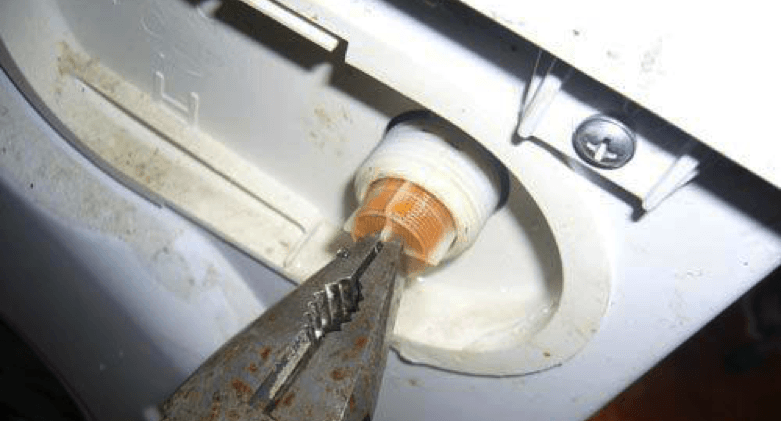
- we determine the place where the inlet hose connects to the body;
- we find the filter mesh;
- We grab the mesh with pliers and pull it out of the grooves;
- clean the nozzle using a brush or a flat object;
- we return the clean mesh to the grooves;
- We screw the removed panel.
On Miele vertical models, the filling strainer can be cleaned manually in the same way. As for the coarse filter, you'll need to disconnect the hose from the water supply, remove the faucet, and let the water flow through the filter. It's important to prevent flooding by placing a container underneath. The drain also often gets clogged. More specifically, the waste filter, which is located behind a false panel at the bottom of the washing machine. This is where wastewater passes, so the nozzle collects not only dirt and water contaminants, but also threads, lint, hair, and other debris that gets into the machine along with the laundry. To prevent the nozzle from clogging, clean it every 2-3 months.
The UBL is not functioning
A faulty door lock is a common problem with Miele appliances. Sometimes a manufacturing defect or a faulty control board is to blame, but more often it's due to improper door closing. The plastic latches that secure the hatch are fragile and break if you press too hard on the hinges.The mechanical lock can withstand the load, but the electronic one becomes unusable.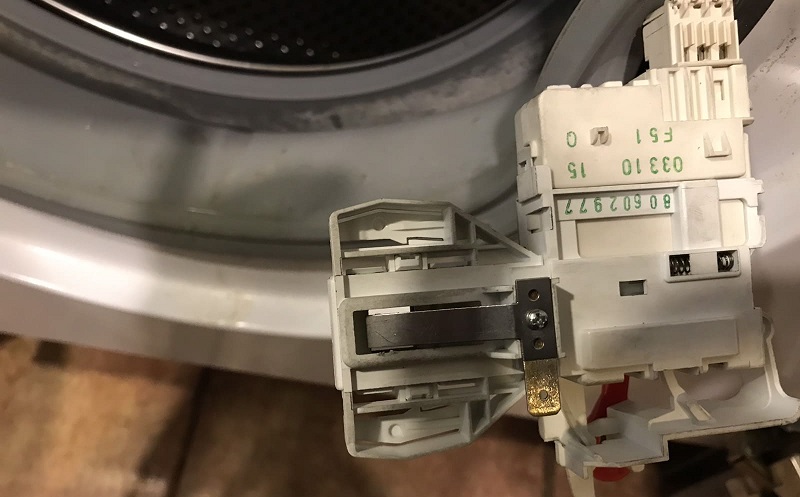
Repairing the locking mechanism is pointless—the sensitive mechanism will fail immediately. You'll have to install a new locking mechanism, which costs around $35–$40 for Miele. But before you go for a replacement, it's worth confirming that the old one is faulty. First, remove the locking mechanism:
- open the door;
- We look for two screws near the lock on which the blocker is held;
- loosen the outer clamp on the cuff and insert the seal inside the drum;
- Through the opened gap we get to the UBL and disconnect the connected wiring;
- We take the blocker out of the housing.
The removed door lock should be inspected and tested with a multimeter. Once the fault is confirmed, we find a replacement and install the new lock according to the instructions provided earlier.
The part responsible for heating water
One of the most vulnerable parts in a Miele is the heating element. The culprit is the coating used on the heating elements, which literally attracts scale. Without cleaning, the element becomes coated with limescale, overheats, and fails. Eventually, the system detects a malfunction and displays the error code "F20" on the display, indicating no water heating. The first step is to diagnose the heating element.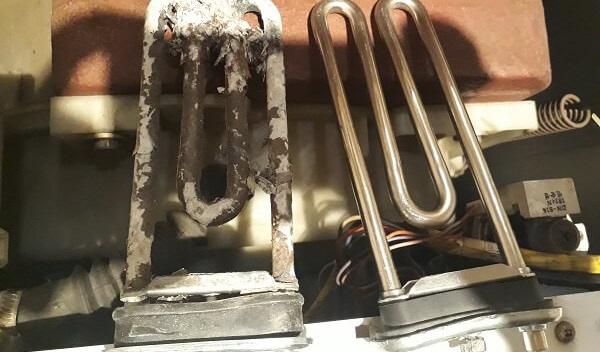
- We turn the machine with the rear panel forward.
- We unscrew the metal wall.
- We find the heating element under the tank – a metal “plate” with wires.
- We attach the probes to the contacts and look at the display.
Normally, the heating element reads 20-40 ohms. If it deviates, repair won't help—only replacement. First, remove the old unit, then purchase the original part from a reputable supplier and install it in the "socket," following the reverse procedure.
Interesting:
Readers' comments
Headings
Washing machine repair




For buyers




For users


Dishwasher




Add a comment