
Malfunctions of a semi-automatic washing machine with a centrifuge
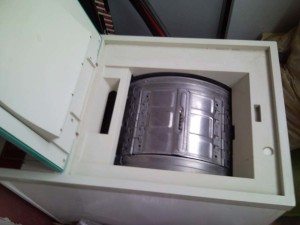 In the age of automatic washing machines, everyone has somehow forgotten about the "good old" semi-automatic machines and how they work. We usually only think about them when we're at the dacha, solving our household problems with these "workhorses." You truly appreciate a washing machine when it breaks down. What should you do in such a situation: call a repairman or do the repairs yourself? It all depends on the nature of the problem and much more.
Description of common breakdowns and their causes
Semi-automatic washing machine has quite an impressive list of malfunctions associated with its specific design. Let's take a look at them.
When the spin cycle is activated, the motor doesn't start—it doesn't run. This is a serious problem, possibly caused by burnt contacts or broken power wires to the electric motor. In this case, immediate repair is required. The mechanical timer, temperature sensor, or motor itself may also be faulty. The capacitor or relay responsible for starting the motor is not working. A burned-out transformer or worn-out motor brushes require disassembly and repair.
The motor started, but did not rotate the centrifuge drum. This problem occurs when too many wet items are loaded into the drum. The second possibility is that the brake that prevents the drum from rotating is not working properly. The centrifuge drum will also not rotate if there is too much water in the tank, and especially if large foreign objects, such as laundry, have gotten into it. Repairs are often not necessary in this case.
When the engine of a Slavda (or other) semiautomatic machine is running, the drum is locked and does not rotate. There are typically two causes for this malfunction:
- First, the laundry in the drum is stacked on one side. This causes the rotor to swing around under centrifugal force and hit the edges of the drum hard, preventing spinning and preventing the machine from working.
- Secondly, if a semi-automatic washing machine with a centrifuge has been in use for some time, its bushings may be damaged. With damaged bushings, the rotor will not rotate normally. If the bushings are damaged, repairs are required.
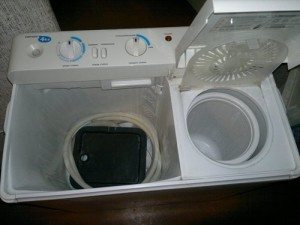 My semi-automatic centrifugal washing machine is leaking water during the spin cycle. There are many possible causes for this problem, so let's list them.
- The tank has become leaky and is leaking water.
- The connecting elements between the hoses and the centrifuge components have broken or become loose. Most often, the hose connection to the pump or tank.
- The diaphragm or its fasteners are broken.
- The drain valve cuff is worn out and does not hold water.
- The drain pump has damage to the housing.
- The drain valve is faulty – the opening/closing mechanism does not work.
- One of the pipes or hoses has become leaky.
- The rubber seals on the drain pump cover have worn out and no longer hold water.
The drain pump isn't draining wastewater from the centrifuge tank, or isn't draining properly. This could be caused by a serious blockage in the drain pump or hose of a Slavda (or other) semi-automatic washing machine. Alternatively, the impeller blades may be broken, causing the pump to turn on and run, but the water will drain extremely slowly. Poor drainage can also occur if laundry gets caught in the centrifuge's drain hole, or if the drain hose is accidentally pinched.
Water flows from tank to tank. If water from the washing machine tank tends to leak into the centrifuge tank, this can only mean one thing - a problem with the bypass hole. More precisely, the problem lies with the valve. If its rubber seal has worn out and can no longer hold water, that's where the problem lies. Repairs are needed.
What if your semi-automatic washing machine with a centrifuge won't turn on at all? A faulty power cord, plug, or relay could be the cause. A similar "symptom" could also occur if the electric motor burns out. Electrical repairs are required.
If the motor is running, but the drum refuses to turn, there's only one problem: the drive belt. It can slip or break, which naturally prevents the drive from working. Repairs are needed.
Please note! In addition to the above-mentioned malfunctions, semi-automatic machines can often experience other issues that aren't strictly considered malfunctions. For example, problems with the water level sensor can be resolved by straightening the drain hose.
What tools and materials are needed for repair work?
It's difficult to list the full list of tools and materials needed to repair a centrifugal washing machine. Everything will depend on the nature of the problem and the model of your semi-automatic washing machine, but the following list can generally be summarized:
- pliers;
- flat and Phillips screwdriver;
- automotive sealant or cold welding;
- multimeter, round-nose pliers;
- set of heads and open-end wrenches (from 6 to 24 mm);
- capacitor, relay of the appropriate type;
- brushes for collector electric motor, transformer;
- washing machine and centrifuge tank;
- suitable clamps, hoses, pipes;
- membranes, cuffs, diaphragms, valves, bushings.
Please note! You don't need to purchase all of the components listed above. Use the specific problem as a guide to selecting the right parts, while also familiarizing yourself with your washing machine's design.
Finding and fixing the problem yourself: the procedure
As we mentioned above, the number of common malfunctions of a Slavda (or other) semi-automatic washing machine is far from small. However, if we classify these malfunctions and suggest troubleshooting steps, it turns out they're not as complicated as they first appear. So, as our first point of classification, we'll focus on electrical problems in semi-automatic washing machines. We'll provide you with a procedure for detecting, identifying, and troubleshooting them.
- We check the power cord and plug for faults.
- We open the control panel of the washing machine (the order of disassembling the panel depends on the model of the washing machine).
- We take a multimeter and check all contacts for breaks or very low voltage.
- We find and test the capacitors and relays with a multimeter. If a faulty part is found, replace it—repairing it is pointless.
- Next, we check the step-down transformer and, in the same way, if a problem is detected, we replace it with a similar one.
- We check all contacts for burns, only after that we climb into the electric motor and inspect the brushes for wear, and replace them if necessary.
We'll call the second point of the classification: problems with water filling, leaking, and draining. Here's a procedure for troubleshooting and fixing such problems.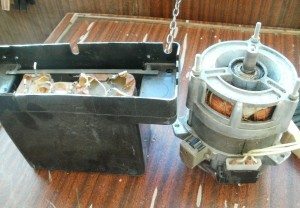
- First, we check all the hoses and pipes that we can reach without disassembling the washing machine for leaks.
- We open the body of the Slavda or any other washing machine and get to the drain pump.
- We check the pump for visible damage, then disconnect it from the housing, clean it, and then screw it back on.
- We check the gaskets, membranes and diaphragm; if we find even the slightest defects, we replace them.
- Remove the washing machine's centrifuge drum and inspect it for holes and cracks. Use automotive sealant or cold welding to seal the hole. Let the sealant dry before reassembling the machine.
And finally, the third point of the classification will be designated as: problems with the moving parts of the Slavda washing machine (or any other). Moving parts include the motor and drive elements that rotate the drum. So, here's the procedure for troubleshooting and fixing such problems.
Important! Before troubleshooting these types of problems, pay attention to how you distribute the laundry in the centrifuge drum. Uneven distribution can create an imbalance that will impede the machine's operation.
First, check the drum for interference with the brake system. If the drum interferes with the brakes while spinning, it prevents it from performing its intended function; in essence, it's not working properly. Next, remove the centrifuge drum and inspect the tank for foreign objects. If any are found, remove them. Also, inspect the bushings of the Slavda semiautomatic washing machine (or any other type). If they show signs of wear, they need to be replaced.
The next step is to check the condition of the drive belt. It should be tight and ensure normal transmission of engine speed. If the belt is torn or cracked, it does not need repair; it should be replaced – no ties or twists are allowed!
In conclusion, a modern semi-automatic washing machine isn't exactly a simple appliance, but its internal structure isn't particularly complex. If you follow the expert advice, take your time, and proceed step by step, you can easily repair such a semi-automatic machine yourself. Good luck!
Interesting:


21 reader comments
Add a comment
Headings
Washing machine repair




For buyers




For users


Dishwasher




The centrifuge isn't working. The spin lid is broken, that's why it's not working. How can I fix it?
The spinner rotates without a drum, but not with a drum, semi-automatic Assol
Check the starting winding capacitor.
Could you please tell me what could be wrong if the centrifuge motor hums but doesn't spin? I can spin it by hand and it spins smoothly. I tried removing the belt, but it still hums. The machine is an old Saturn semiautomatic.
Check the capacitor
One of the two motor windings burned out.
Please help: I have a Renova semi-automatic washing machine, and the centrifuge suddenly started making a terrifying squealing noise during the spin cycle. The brake is fine. Another thing: we can't get it apart properly, except for the cap on the back.
I have a problem with my centifuge: the motor runs, but the drum doesn't spin. Sometimes it starts spinning, only reaches the required speed and then slows down, but the motor keeps running. What's the problem?
The centrifuge isn't working. The spin lid is broken, that's why it's not working. How can I fix it?
I need a lid for my Satyrn centrifuge, the one that sits on top of the laundry. I can't find it anywhere. Maybe it's called something else? Can you help?
Hello. My centrifuge isn't working. During the spin cycle, the paddle (located at the bottom) spins at high speed, but the drum doesn't. The water drains out. What should I do?
The centrifuge motor twitches but does not start.
Where can I buy a centrifuge for Renova 70?
The motor and shaft are spinning, but the drum isn't. What's wrong?
Chaika washing machine. New, never used. When I turn on the timer, the motor doesn't work. What are the possible causes?
In my Krista KR-70 semi-automatic washing machine, the centrifuge motor is running and the spindle rotates easily by hand. The drum is also running, but it doesn't spin up during a wash cycle, even when empty, and the motor gets hot. This is an old problem. It did work occasionally. What could be the problem?
Is it possible to connect it directly to the centrifuge without a timer and how?
The centrifuge runs idle and does not rotate when loaded.
Hello, please tell me how to fix a centrifuge on a semi-automatic machine?
My machine is semi-automatic. The centrifuge isn't pumping out water. What's wrong?
Hello, I have a semi-automatic washing machine, I've been using it for less than a month. The timer is working, but the drum doesn't spin or make any noise when I start it. The drain and centrifuge are working. What could be the cause?