
What items should not be dried in a dryer?
 A tumble dryer has one significant drawback: it can't handle all types of clothing. This becomes a significant problem if there's simply no space for delicate items. Which items can and cannot be tumble dried? Do modern dryers have special programs and features that can reduce the "restricted list" and make life easier for the user? We'll discuss this further.
What fabrics won't survive machine drying and why?
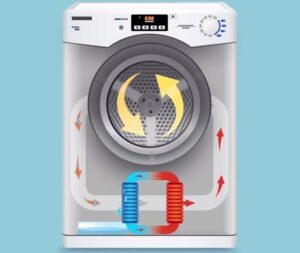
All modern tumble dryers operate on a similar principle. Wet clothes are placed in the drum. As the dryer cycles, the drum rotates and fills with hot air, gradually evaporating the moisture.
Moist exhaust air is removed either through a hose into a vent or by condensation, where the air, after being freed from moisture, then circulates within the housing. The specific liquid removal method used in a particular machine depends on its type.
All a user needs to do after the drying process is empty the container of accumulated liquid and rinse the filter. Without a doubt, this method of drying clothes is not only modern but also extremely convenient.
While drying laundry previously required stretching lines, setting up folding drying racks, hanging the laundry, waiting for it to dry, and then taking it down, those who have purchased these devices are now freed from this chore. All that remains is to simply take the clothes out. But is this really true? Is this drying method suitable for all clothes? Many believe this method is quite aggressive towards the products. And this view is partially justified.
The combination of vigorous mechanical action and high temperatures can negatively impact certain materials. For example, ultra-fine fabrics should not be tumble dried:
- chiffon;
- tulle;
- batiste;
- nylon, etc.
But these are far from all the restrictions. A number of other factors must be taken into account:
- It is not recommended to place tumble dryers or elastic items in the dryer, as they are highly likely to become deformed.
- This method is also not suitable for clothing decorated with decorative elements (embroidery, leather or metal details, appliqués, rhinestones, beads, etc.). If a woman's blouse has glitter, it may peel off and stick to other items. As for printed images, high temperatures can damage them and cause them to stick together.
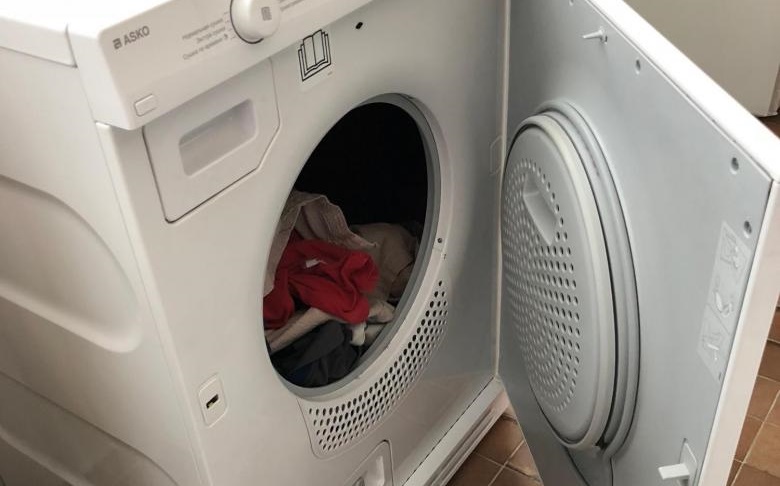
- As a result of such drying, some items of women's wardrobe containing elastic bands, lace inserts, fragile plastic fasteners, etc., may become completely unusable;
- Wool should also be handled with care. Intensive drying can cause a tunic or sweater to shrink several sizes, change the structure of the material, etc. Or, conversely, the sweater may stretch and completely lose its shape;
Important! According to a visitor's experience, described in the comments to this article, it's best not to dry items containing wool. Have you tried drying such garments? Share your thoughts at the bottom of the page.
Particular care should be taken with outerwear containing buttons, zippers, snaps, fasteners, etc. Exposure to high temperatures can cause zippers to twist and buckles to melt.
Not every dryer can handle large, multi-layered items like down jackets, blankets, feather pillows, etc.
Important! Drying garments with oil stains or stains that were immediately treated with chemical solutions in this way is simply dangerous, as the heat could cause a fire.
Use gentle drying
Given all of the above, it's logical to conclude that almost half of your wardrobe items can't be tumble dried. So why bother buying such devices at all? However, most of these facts apply to older models; modern appliances can operate in a variety of modes. You can always choose the right one from among these, even for drying delicate fabrics. The key is to choose the right drying mode.
To avoid disappointment and regrets about damaged products later, it's worth carefully studying the instructions included with the appliance. In addition, it is important to learn to understand the symbols found on the labels of clothing, bags, soft toys, etc. After all, the care label itself contains information on how to properly care for the item: how to wash, iron, and dry it. The label usually contains several symbols related to the care of the garment. Most people are only interested in the recommended washing temperature.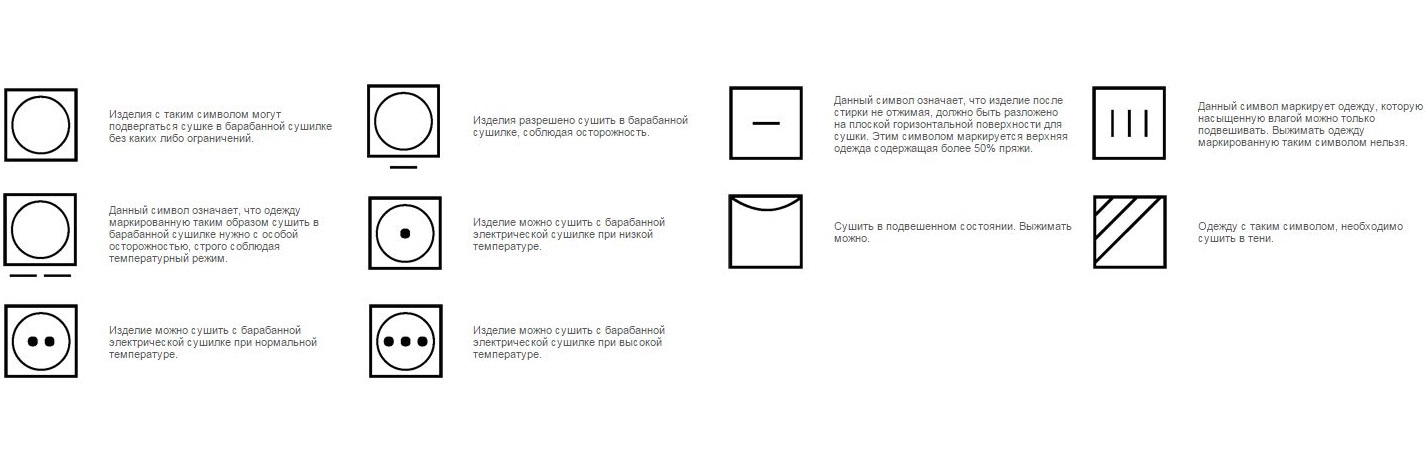
Since we're talking about a dryer, we need to find the corresponding symbol. It's a square with a circle inside (it looks very similar to the device itself). The symbol can have slightly different appearances. Let's look at what each option means:
- The crossed out symbol means that tumble drying is prohibited;
- the presence of one dot in the center of the sign indicates that drying can only be done at low temperatures;
- two dots - drying at moderate temperatures is allowed;
- sign with three dots - high temperature can be used;
- the presence of horizontal lines at the bottom of the symbol is an indicator of the need to use a gentle mode;
- two - the products require delicate spinning and drying.
By remembering these symbols, you can minimize the risk of damaging your favorite sweater or expensive cardigan.
Dryer-safe laundry
Machine drying is permitted for cotton, semi-synthetic, synthetic, and most blended fabrics. This is not only acceptable, but also recommended. The warm air makes the fabric soft to the touch. Most items are smoothed out during the drying process, making them ready for immediate use without the need for ironing. This makes life much easier when it comes to bed linens, bedspreads, robes, pajamas, towels, everyday wear, and more.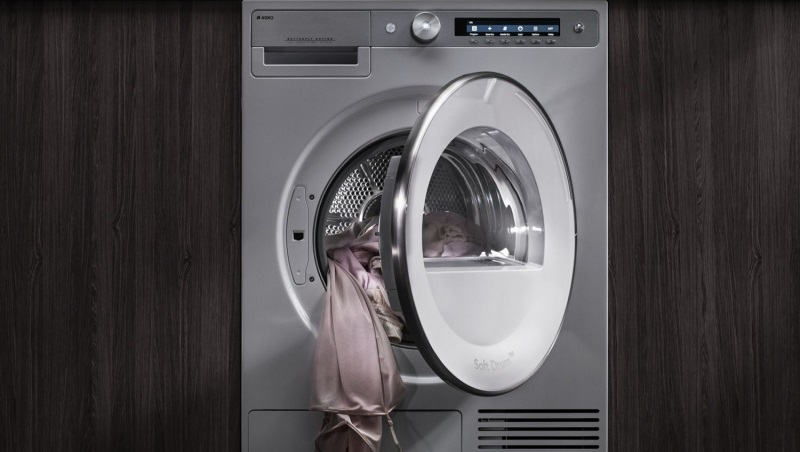
If a person prefers to wear a sports shirt and jeans for everyday wear, this machine is ideal. Some models are equipped with a special metal basket designed for drying soft toys, textile bags, and shoes. Therefore, those planning to dry such items should consider models with such features when purchasing a dryer.
Finally, it is worth emphasizing the fundamental rules for using a tumble dryer. Before placing an item in the drum, you should turn out all pockets, check that there are no items left in them, fasten the belt, clasps, buttons, etc. It's advisable to turn some items inside out. If sharp objects get caught in the drum, this can damage not only the clothes but also the appliance itself. This, in turn, can lead to costly repairs and unnecessary expenses.
Interesting:



2 reader comments
Add a comment
Headings
Washing machine repair




For buyers




For users


Dishwasher




Experience with various premium tumble dryers. It's absolutely forbidden and impossible to dry wool items! Even socks! Any item, even one containing a small amount of wool, should not be machine dried! While silk, chiffon, and cambric can be dried in a mesh bag on a cold setting, some may still be ok. However, with wool, there's no other option—the item will be irreparably damaged!
You can dry wool in a dryer if it has a special removable shelf.