
Is it worth buying a dishwasher?
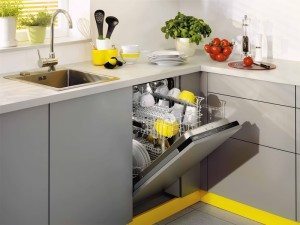 The home appliance market is saturated with all sorts of devices. We can't imagine life without some of them, be it a kettle, a stove, or a washing machine. We buy some devices inspired by good advertising, after seeing something new and interesting, while others are just there to have, just in case we need them.
As a result, the kitchen ends up cluttered with unnecessary items that could have been easily dispensed with. The question arises: is it worth buying a dishwasher? Won't it become yet another useless and unnecessary item in an already tight kitchen? Let's weigh the pros and cons of such a purchase.
Do you need a dishwasher?
A dishwasher is a household appliance that many families can easily live without, and they feel no worse off than those who have one. Dishwashers are more commonly associated with food service establishments, such as restaurants, cafes, and hotels, where a large number of dirty dishes are generated throughout the day.However, as statistics show, people are increasingly buying this household appliance for their homes to make life easier for themselves and their loved ones.
Do you need a dishwasher? We believe it is, but we're not forcing anyone to agree. We simply want to support our position with real facts. You might think a dishwasher is a superfluous household item; why bother with one or two people washing a single plate and wasting water? But don't jump to conclusions. Imagine a simple dinner for two: mashed potatoes with a cutlet, a fresh cabbage salad with cucumber, and a cup of tea.
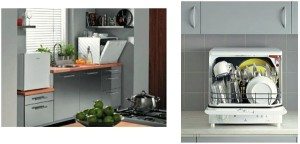 It seems like there aren't many dishes—just a couple of plates, a salad bowl, two mugs, and two forks—that'll take a maximum of 10 minutes to wash. Why load a large dishwasher and wait 2-3 hours for it to finish? It's not like that at all, because don't forget there's also an unwashed pot, a frying pan you used to cook in, and if you also make a separate sauce for the cutlets, that'll be another small pot. Now imagine how much space this will take up in the dishwasher—quite a bit, and that's just the dishes from a dinner for two.
We've looked at just one example of many; such nuances are only considered after purchasing a dishwasher. This means you have to wash some dishes by hand because they don't fit in the dishwasher the salesperson recommended. If you look into it, it becomes clear that the problem isn't the technology at all, but rather an ill-considered choice.
Only someone who truly enjoys washing dishes in a sink can say that a dishwasher is unnecessary, but we think there are few such people.
We analyze the characteristics
Undoubtedly, a dishwasher makes kitchen work easier, and buying one is a personal choice. However, such a pleasure is not cheap, about the same as a washing machine. Therefore, to answer the question of whether it's worth buying, you need to understand its features and evaluate all the pros and cons.
- One of the most important characteristics is the capacity of the dishwasher and its dimensions. The larger the unit, the more dishes can be washed at one time. The smallest dishwashers are designed for 4 place settings, while the largest can hold up to 17. However, the most common models on the market are those with a capacity of 9 to 14 place settings. It's quite simple: the larger your family, the larger your dishwasher should be; otherwise, be prepared to run it after every meal.
Don't delude yourself into thinking that a small machine will fit a lot of dishes, this is a myth. These dishwashers don't fit baking sheets, large frying pans, or large pots. But that doesn't mean they're ineffective at cleaning. They'll clean all small dishes and plates very well.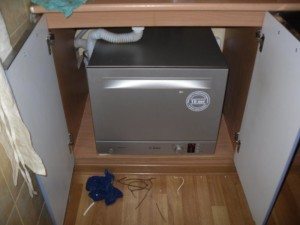
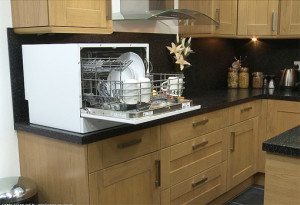
- Dishwasher dimensions are generally standard. Most models are 45 cm (narrow models) or 60 cm wide. It's a mistake to think that a dishwasher isn't suitable for a kitchen of around 6 square meters, and there's no point in even buying one. There is a solution: optimize your kitchenware and food storage, and you'll find you'll find room for a dishwasher. As a last resort, you can buy a countertop model or a small dishwasher and install it under the sink.
- Dishwashing time. On average, a single wash cycle takes 120-160 minutes, which isn't a good idea. But does it really matter how quickly your dishes are in the cupboard? And you can run the dishwasher overnight without waiting for it to finish. You'll spend about 10 minutes loading and unloading the dishes.
- Wash quality is a characteristic of a dishwasher called the washing class, which is the highest for all modern machines, A. This is a plus for a dishwasher, because you can't wash dishes by hand the way a machine can, and most importantly, because your hands can't withstand water temperatures of 50-700C. At this temperature, bacteria will die, which is important. The quality of the wash will also depend on the quality of the detergent and how the dishes are arranged.
Some dishwasher models have a pre-rinse and pre-soak feature, which allows dishes to accumulate inside the dishwasher throughout the day without any problem.
- Every dishwasher is equipped with a drying system, which can be condensation or forced (turbo drying). You won't have to waste time drying dishes, especially since drying glass or crystal without streaks is simply impossible or very difficult. After washing, transparent items, stemware, and wine glasses will simply sparkle.
- Additional functions allow you to not only wash dishes but also, for example, sterilize jars for preserves. Furthermore, this feature allows you to wash children's dishes without worrying about it.
How economical is a dishwasher?
One common misconception is that dishwashers save water. This is certainly true, and the savings are especially noticeable if the dishwasher is connected to a cold water supply. Washing dishes under running water uses much more water than washing them automatically. The spray system uses little water, and the high flow rate and high temperature of the water supply make it more effective at cleaning dishes.
Please note! Most dishwasher models use 12-13 liters of water, while premium models can use around 7-8 liters, while hand washing can use up to 60 liters of water per day.
But don’t think that the smaller the dishwasher, the less water it uses – this is the second myth. Water consumption depends on the machine's design, not its size. Even full-size machines have a half-load function that saves water and energy.
But saving on hot and cold water won't cover your electricity bill. On average, a dishwasher uses about 0.8 kWh, which works out to about 70 kWh per month, but that's a conservative estimate. In addition to your electricity bill, you'll also need to consider the cost of detergents, which include powder, special salt, and rinse aid. There are both inexpensive and expensive options, but that doesn't change the essence of the matter. The cost of maintaining and operating a dishwasher will exceed the cost of hand washing, but on the other hand, this will be the price you pay for free time and peace of mind.
User opinions
The advantages of a dishwasher over hand washing are obvious, but we decided to confirm this further by reading user reviews. Here's what visitors to Babyblog and other forums have to say about whether or not to buy a dishwasher. Almost unanimously, everyone was in favor of buying one, not against it. Even those who found some flaws in their chosen model weren't opposed to the purchase and still said the machine is a significant help in the kitchen, especially when guests come over.
Aurika, Moscow
A dishwasher saves time; over time, once you learn how to arrange the dishes correctly, loading them will take no more than three minutes. As for the dishwasher's efficiency, I'd say the costs are about the same, but your hands and nails will always look well-groomed. And it's also impossible to wash dishes as cleanly as a dishwasher. Even if it takes two hours, what's the problem? I don't care, as long as the results are good. I'm happy with my Bosch.
Inna, Moscow
People, show me the person who would tell me after buying a dishwasher that it's useless—I've never met anyone like that. Since I bought one, I can't imagine living without one. Of course, there are some items that can't be washed in it, like kitchen knives with wooden handles, wooden cutting boards, and Teflon-coated frying pans. And don't try to save money unnecessarily by buying a narrow model; you won't save any money anyway, but you will have problems with placing some large kitchen items.
Alexandra, Moscow
I'm all for a dishwasher. I've noticed the following advantages. First, the cleaning quality is incomparable to hand washing—much better, and it takes at least 40 minutes. Second, the hot water savings are significant, as I'm used to washing dishes under hot running water, which takes a lot of time. The dishwasher connects to cold water, which is a plus. Third, harsh detergents don't come into contact with my hands; I can't wash them with gloves. Fourth, it saves time. I love cooking, so I have a lot of dishes, so I have to load the dishwasher a couple of times. And finally, large five-liter pots clean perfectly, whereas washing them by hand was a real hassle, requiring a lot of scrubbing and soaking. I don't even consider the cons; the pros outweigh them. I think this purchase is worth it and will pay for itself very quickly.
Please note! Some users are so pleased with their purchase that they simply can't imagine living without it, and they're even suggesting erecting a monument to the inventor of such a vital household appliance—the dishwasher.
Let's sum it up: all the pros and cons
To summarize the above, let's briefly highlight all the advantages of a dishwasher that "force" people to make a purchase: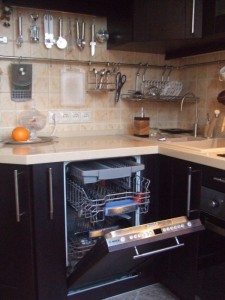
- saving personal time that can be spent on relaxation;
- high-quality dishwashing without much effort;
- fight against germs;
- no negative impact on the skin of the hands;
- no need to dry dishes;
- And most importantly, you won't have to figure out who's going to wash the dishes today; the technology will do it for you.
Let's also note the downsides, we've only highlighted two:
- A good dishwasher from a well-known brand will not be cheap, you will have to pay a lot for it, but the reliability of such a machine will be an order of magnitude higher;
- There are problems with choosing a place in a small apartment for a full-size dishwasher. There is a compromise solution, but you will have to sacrifice something.
So, a dishwasher is a necessary household item, but not everyone can afford it. If you're considering buying one, read the article to find out how to do it right. How to choose a dishwasher for your home.
Interesting:



11 reader comments
Add a comment
Headings
Washing machine repair




For buyers




For users


Dishwasher




This is a miracle! I used to laugh, wondering how a dishwasher could clean dishes with just a jet of water. But now I see, it can! It's unreal! Everything is clean and sparkling. I've been using it for almost a year. I still can't stop loving it!
I completely agree with you, a dishwasher is a wonderful thing! My Hotpoint has been serving me for three years now! I'm as happy as a cat. This invention certainly has more pros than cons.
I also know that people who bought a Kirby vacuum cleaner will never admit they bought a good thing for a fortune. Even though, deep down, they know they did something stupid. There's not a single calculation for the dishwasher's payback, other than general phrases about nails and skin.
We bought an Indesit dishwasher for our home, and I finally stopped seeing that mountain of dishes in the sink! Everything cleans itself discreetly and without my intervention. We turn it on at night when electricity is cheaper.
If you're lazy, then yes, a dishwasher will help.
Most likely, in your family, the wife can do the dishes.
I live in a private home. I get hot water from a boiler, which typically uses a lot of energy. For example, to wash the dishes that accumulate throughout the day, I use up a 50-liter boiler. The dishwasher only uses cold water and heats only 10 liters per cycle. The savings are obvious... and, of course, it gives me a lot more free time. But let's not forget that washing dishes by hand costs us $1-$1.50 per bottle of detergent per month. And dishwasher maintenance is much more expensive. So, the only benefit is essentially that we don't waste our precious time and energy on this chore.
It's absolutely worth it! My Hotpoint saves me a ton of time. Especially after I learned that you can use the dishwasher for more than just dishes!
We lived without a dishwasher and continue to live without one.
We rented an apartment and never used this unit because it only took 2 minutes to wash a couple of dishes, not 1-3 hours, which would require electricity and special detergents for washing and then cleaning.
It doesn't even pay for itself after 10 years. But the consumable costs are high.
What are you even talking about?
That's right, don't buy it, and don't use it in the washing machine either! And cook it over a fire! It's clear you only eat dumplings and ready-made food...
It seems you eat from cafes or processed foods.