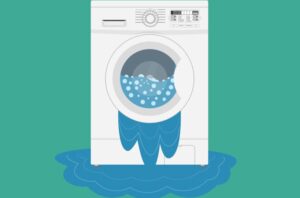
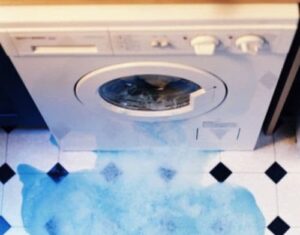
A puddle under a running washing machine is not only unpleasant but also quite dangerous. A leak can lead to a flood, damaging not only your apartment but also your neighbors' property. It's no wonder modern washing machines come with leak-proofing systems. Is complete leak protection really necessary in a washing machine? How effective is such a system? Let's explore this question.
Why did the fluid leak occur?
So, what causes a washing machine to leak? Sometimes it's a malfunction, and in other cases, it's due to the user not following the operating instructions. The most common causes of leaks are:
uneven or not fully screwed in debris filter;
clogging or breakage of the powder receptacle;
damage to pipes (drain, fill and others);
crack in the tank;
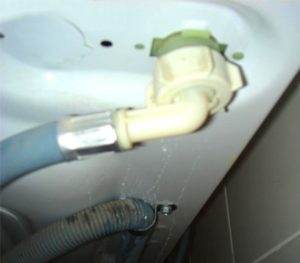
loosening at the point where the drain or inlet hose connects to the body;
too much water pressure in the water supply;
wear of the hatch door cuff;
poorly secured clamps;
leaky drum seal.
To avoid puddles under the washing machine, it is better to think about the safety of the automatic machine when purchasing it. It is advisable to choose models equipped with a leak-blocking device. If the device does not have this option, it is recommended to install the locking elements yourself.
Types of protective equipment
When choosing a washing machine, it's important to consider its leak protection. A safety system is a set of mechanisms that immediately detect leaks and trigger an emergency shutdown. Not all automatic machines have safety locks. Washing machines are generally divided into three groups:
fully protected units;
partially protected equipment;
leak-proof machines.
Machines without protection either have no tray at all or are simply a plastic panel.
Therefore, if the tank cracks or one of the pipes becomes damaged, the water will simply leak out. Modern machines, equipped with a special bottom, will promptly detect any emergency leak and alert the user.
Brands such as Zanussi, Ariston, Bosch, Electrolux, Asko, Siemens, Samsung, and others now produce washing machines that are fully or partially leak-proof. This ensures safe operation.
For example, almost all Bosch washing machines are equipped with a double solenoid valve for increased reliability. It's located on a double-layer flexible hose. The safety mechanism is controlled by an electronic module.
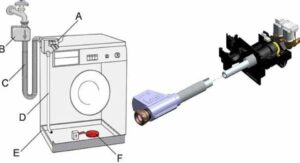
Ariston automatic washing machines are equipped with a special tray with a float. If water accumulates in it, a sensor is triggered. The safety system blocks the water intake and starts the drain.
Asco washing machines are equipped with safety sensors. These sensors are located in 16 of the most vulnerable areas. If a leak is detected, the machine immediately activates the drain and stops drawing water. Similar modules are also present in LG washing machines—their "brains" also activate the pump and close the inlet valve.
Description of protection
Many people, when reading the technical specifications of a washing machine, don't understand what the term "partial leak protection" means. It's actually quite simple. It means the machine is equipped with a small container for collecting liquid. This container is usually made of plastic and contains a float. A sensor that monitors the water level is connected to a switch via a wire.
When a leak occurs, water collects in the tank, the float rises and alerts the “brain” of the danger, and the safety device activates the drain.
Even with partial leak protection, the risk of flooding is still high. If the problem isn't detected promptly, water may overflow the tank. In some cases, the pump simply won't be able to empty the tank before a puddle forms on the floor.
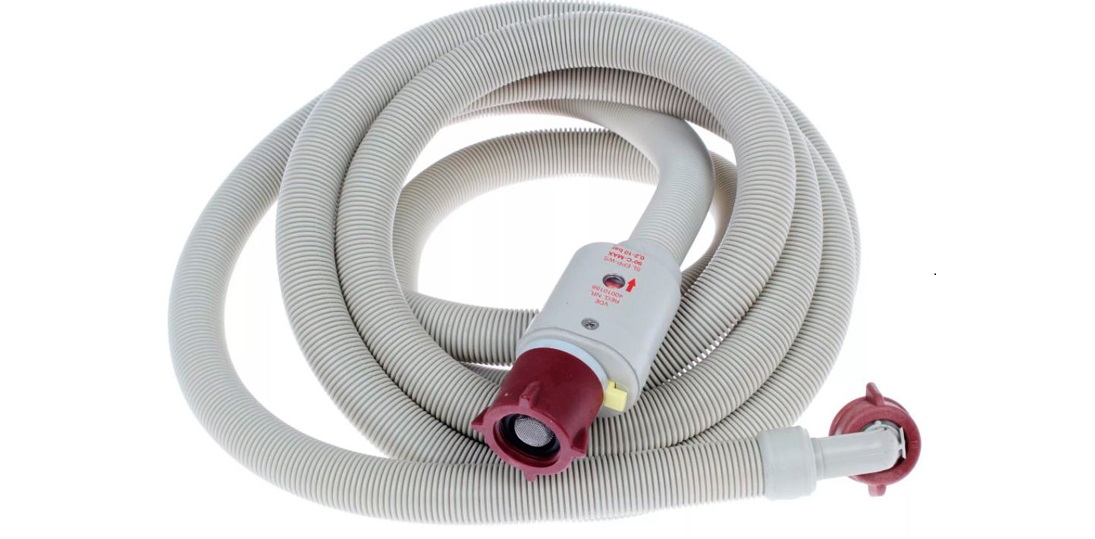
Automatic machines equipped with specially designed inlet hoses are more reliable. These hoses come in three types:
spring;
magnetic;
electromagnetic.
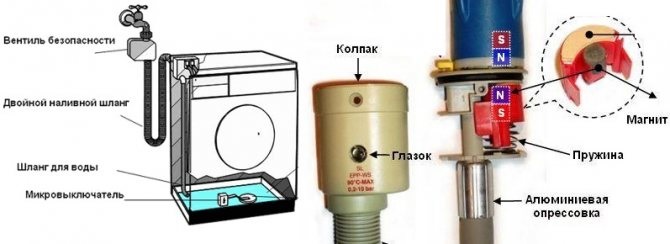
The spring-loaded inlet hose has a special "eye" at one end (the one that connects to the water pipe) containing a plunger held in place by a spring. When the absorbent swells, the "spiral" is activated. The plunger is pushed out, stopping the water inlet.
Solenoid valves operate similarly, but instead of springs, the safety device is equipped with a pair of magnets. Under normal operation, they repel each other, thereby holding the plunger in place. When a leak occurs, the resistance of the poles decreases, activating the locking mechanism. This device must be replaced after each activation.
When the hose is electromagnetic, the plunger opens the valve when the machine is plugged in. If the power goes out, the water supply is automatically shut off. This device can help in the event of a burst water pipe, damaged hoses, or foam leaking from the washing machine.
This incomplete protection system will be ineffective if, for example, the tank leaks. The water supply will stop, but the drain will not start. These washing machines don't have a drip tray, meaning if a puddle spreads across the floor, the machine won't notice.
Automatic washing machines with full leak protection are equipped with a hose with an electromagnetic valve and a special tray with a float.
AquaStop technology is the most reliable available today. The blocking device is activated in the event of a tank leak, foam leaking from the drum, or damage to any internal pipes.
Leak prevention
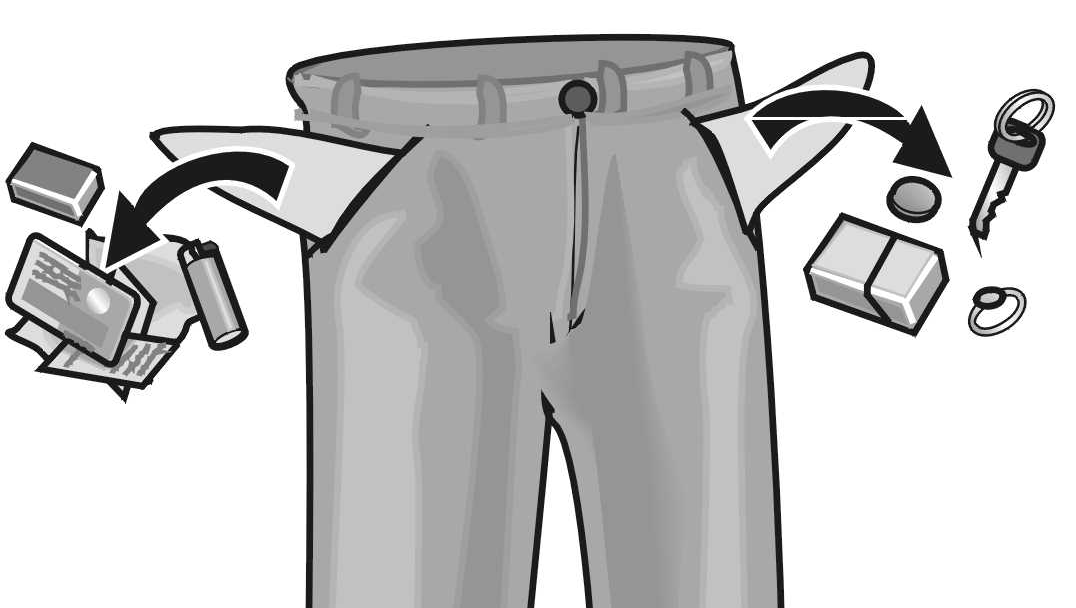
In most cases, it is the constant violation of the operating rules of an automatic washing machine that leads to the equipment starting to leak. Sharp objects left in pockets can damage the hatch seal, puncture the tank, and, consequently, cause a leak. Preventing problems is much easier than repairing your "home helper." To minimize the risk of leaks, you should:
clean the detergent drawer regularly;
check the pockets of your clothes to make sure no foreign objects get into the drum;
clothes containing metal elements, as well as bras with underwire, should be washed in special bags;
Use only high-quality detergents for washing, designed specifically for automatic machines;
strictly adhere to the permissible loading norm and do not exceed the established maximum weight.
If your washing machine's inlet hose isn't equipped with a safety system, be sure to turn off the water supply valve after finishing a wash. Even better, replace the hose with a new one that can block the flow of water if a leak occurs.
It's better to connect a hose with a safety valve to a washing machine with a tray instead of a regular hose—this way, you can achieve complete protection against leaks yourself.
Preventing leaks is crucial. Therefore, when purchasing, it's best to look for washing machines equipped with a safety mechanism. Of course, a model with a comprehensive protection system is ideal. This will ensure the highest possible level of reliability.

 A puddle under a running washing machine is not only unpleasant but also quite dangerous. A leak can lead to a flood, damaging not only your apartment but also your neighbors' property. It's no wonder modern washing machines come with leak-proofing systems. Is complete leak protection really necessary in a washing machine? How effective is such a system? Let's explore this question.
















Add a comment