
Washing machine motor speed?
 When choosing a new washing machine, people typically consider its capacity, load type, dimensions, number of special washing programs, and noise level. Few consider more specific technical specifications, such as motor power. Let's explore the different motors found in modern washing machines.
Types of engines and their speeds
The motor speed of a washing machine should be clarified when purchasing. This determines the effectiveness of washing and spinning. If the motor can reach a maximum speed of 1400-1800 rpm, clothes will be practically dry.
The engine of an automatic machine converts electrical energy into mechanical energy, thereby spinning the drum. There are 3 types: asynchronous, collector and inverter electric motors. The design and operating principle of each engine differs.
- An asynchronous motor can be two- or three-phase. The power of this type of motor ranges from 180 to 360 watts. The speed of these electric motors does not exceed 2800 rpm during the spin cycle and 300 rpm during the main wash cycle. Consequently, the drum rotates even more slowly.
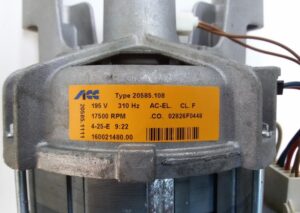
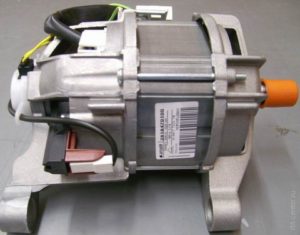
- Brushed motors can operate with both direct current and alternating current. Their distinctive feature is their compact size. The motor speed is controlled electronically. The main drawback of brushed motors is the brushes, which must be replaced every few years. Electric motors of this type can reach 800 W, and the motor armature can rotate at up to 17,000 rpm.
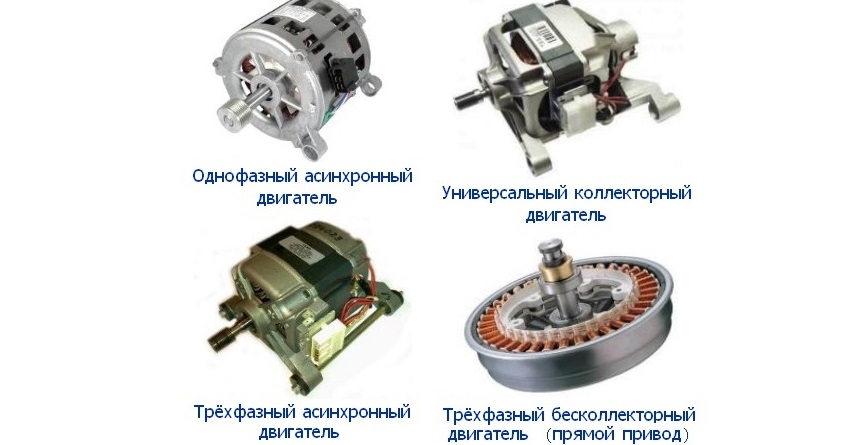
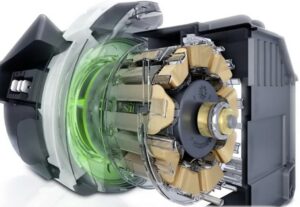
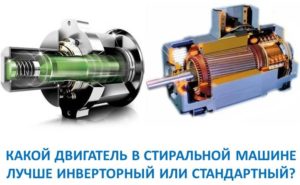
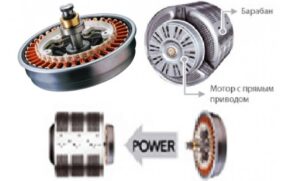
- Inverter motors. The first washing machines equipped with ultra-high-tech motors were released in 2005, based on an innovative development by engineers at the South Korean brand LG. The key difference is that a drive belt is not required to connect the drum and motor. The inverter is compact and has a relatively simple design. The power of these electric motors is comparable to that of collector motors, and they can also accelerate the centrifuge to 1600-2000 rpm.
Washing machines equipped with inverter motors are considered the most reliable and economical.
Inverter motors consume significantly less electricity and require no periodic maintenance (brush or drive belt replacement). The disadvantage is the higher cost of direct-drive washing machines.
Engine power and its energy consumption
People are often concerned about how many kilowatts a washing machine will consume on average per wash cycle. Many want their washing machine to be as energy-efficient as possible. Generally, the energy consumption of a washing machine depends on many factors:
- motor power - and the amount of electricity consumed by the motor will change depending on the washing program running;
- Technical characteristics of the heating element. The amount of kilowatts consumed is also affected by the power of the tubular heater (it varies from 1700 to 2900 W) and the set washing temperature;
- drain pump power, this figure can range from 24 to 40 W;
- The total power of indicators, sensors, electronic modules, and other components. Overall, the output reaches 5-10 watts.
The energy consumption of a washing machine depends on the power of its motor, pump, heating element, and system sensors.
So, what should a buyer look for? How is a washing machine assigned an energy efficiency rating? The manufacturer indicates in the technical specifications the energy consumption of the automatic washing machine when the “Cotton” program is activated. This mode assumes a full drum load and “medium” water heating – up to 60 °C
The motor's power determines the quality of the washing machine's spin cycle. The maximum speed the motor can spin the drum is always specified in the machine's manual. Some models offer speeds as low as 800-100 rpm, while others can reach 1600-2000 rpm.
Motor models and their power
If you want to understand the technical specifications of the washing machine you're buying in detail, you can find out what kind of motor it's equipped with. There are many motor variations, and different manufacturers choose what they consider to be the best motors for their equipment. We'll cover a few models.
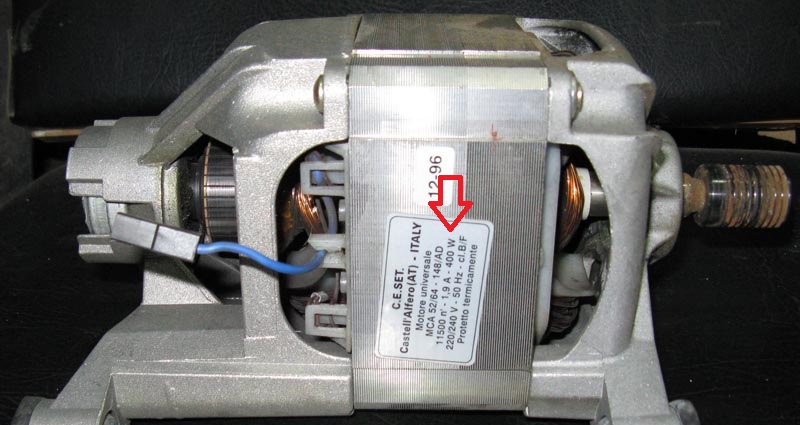
- CESET MCA52/64-148/AD engine. This engine can be found in Indesit and Hotpoint-Ariston automatic washing machines. Its power output is 430 watts, which corresponds to 11,500 rpm.
- CESET MCA38/64-148/CY15 electric motors are used in Candy, Zerovat, and Hoover washing machines. With a power output of 360 watts, they can spin at up to 13,000 rpm.
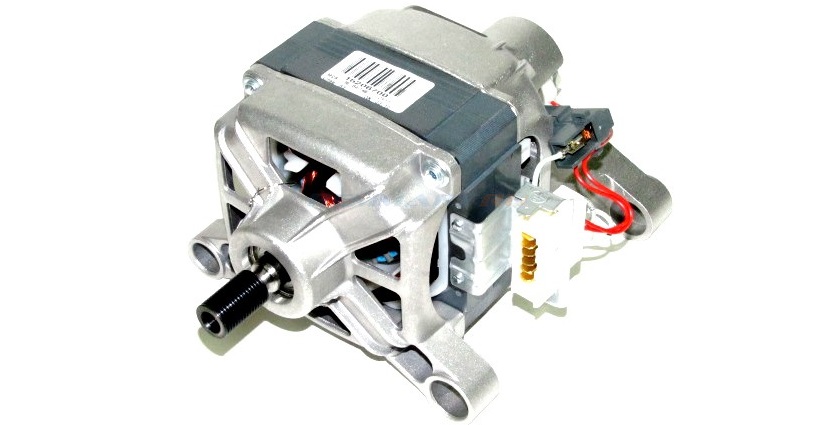
- The CESET CIM2/55-132/WHE1 series motor is used in automatic machines manufactured by Whirlpool and Bauknecht. The motor output reaches 800 watts and speeds up to 17,000 rpm.
- The WELLING HXGP2I.05 WASHING engine is also found in Indesit equipment. These motors can also be found in some Vestel models. The maximum power of these motors does not exceed 300 watts.
- HXGP2I Welling Electronic Control. This electric motor is found in Samsung and Ardo automatic washing machines. Their power rating is 300 watts.
Some modern motors can be adjusted by adjusting the RPM. A tachogenerator is connected to this. The sensor monitors the number of turns and transmits all the information to the main control module.
Today, the vast majority of washing machines are equipped with either brushed or inverter motors. Asynchronous two-phase motors are a thing of the past; they are now found only in older semi-automatic machines from brands like Malutka, Feya, and Vyatka.
Interesting:
Readers' comments
Headings
Washing machine repair




For buyers




For users


Dishwasher




Add a comment