
Bypassing the washing machine locking device
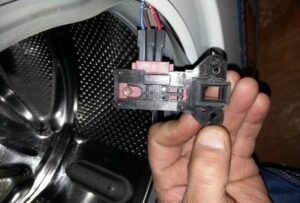 The door lock is a key component in the smooth operation of a washing machine. If the door isn't locked, the wash simply won't start, but what do you do if the door lock fails? Replacing it is time-consuming and expensive, but is it possible to bypass the door lock and wash without it? Experienced users claim it's entirely possible; you just need to learn how.
Removing the locking device
To bypass the locking device, you need to short-circuit its contacts, which requires dismantling the component. There are two ways to remove the door lock: through the top cover of the housing and through the hatch seal. We won't discuss the second method, as if you're not skilled enough, there's a risk of improperly reinstalling the seal, which can lead to leaks. How do you remove the door lock from the top of the housing?
- Open the hatch door as wide as possible.
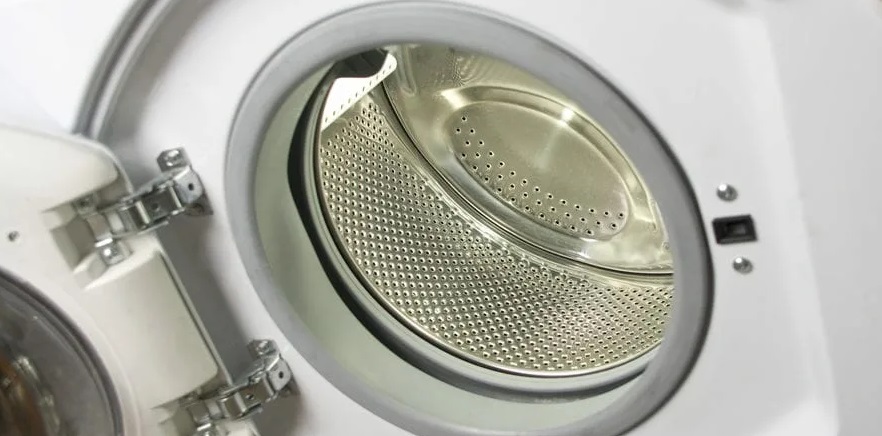
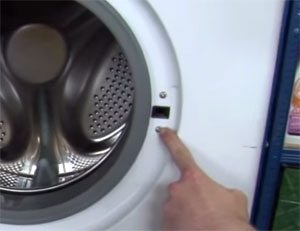
- Look at the side of the washing machine where the door closes with a hook and find the keyhole.
- There are two screws screwed in next to the lock that need to be removed.
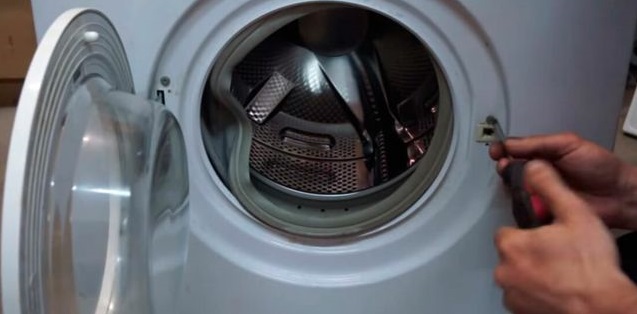
- Now move to the back of the washing machine and unscrew the two bolts holding the top panel in place. Slide the cover toward the back of the machine, and it will come off.
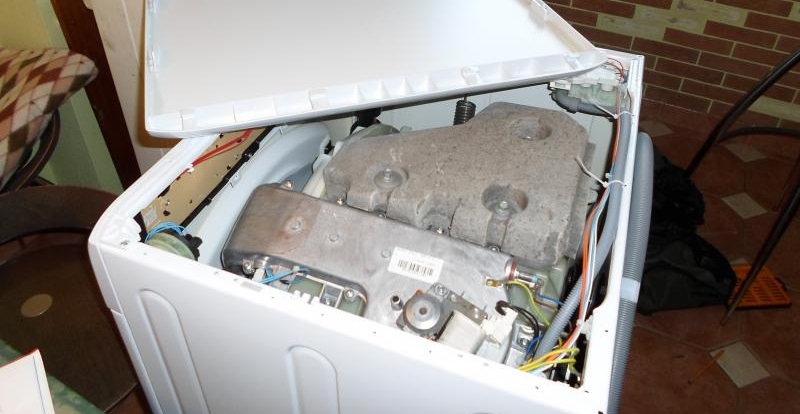
- Reach inside the washing machine (along the back of the front panel) and feel for the locking device with your fingers. Carefully remove the connector with the wires.
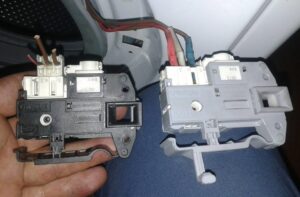
- Now pull slightly and pull out the UBL.
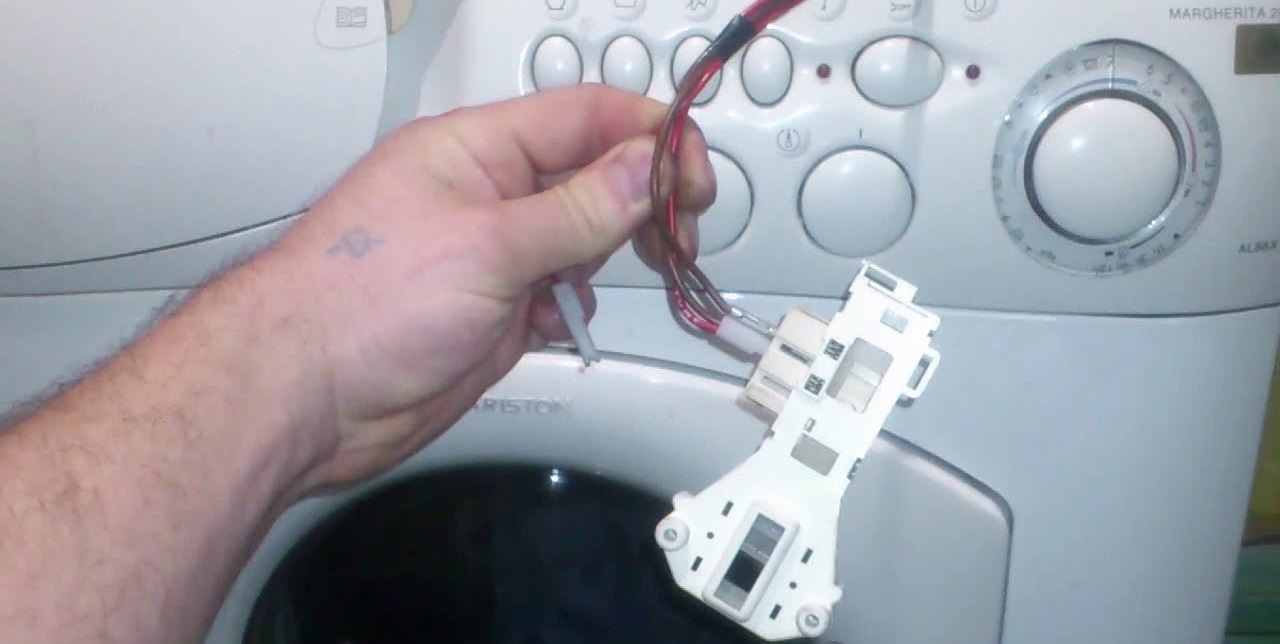
As you can see, dismantling doesn't require any special skills or abilities. The main thing is to follow safety precautions and proceed with extreme caution to avoid harming yourself or the machine.
We close the necessary contacts
To bypass the door lock system, you need to trick the machine into thinking everything is fine and the lock is working. This trick works by shorting some contacts of the inoperative device while it's in the locked position. This can be done easily if you understand the specifics of the element's operation and attempt to simulate it.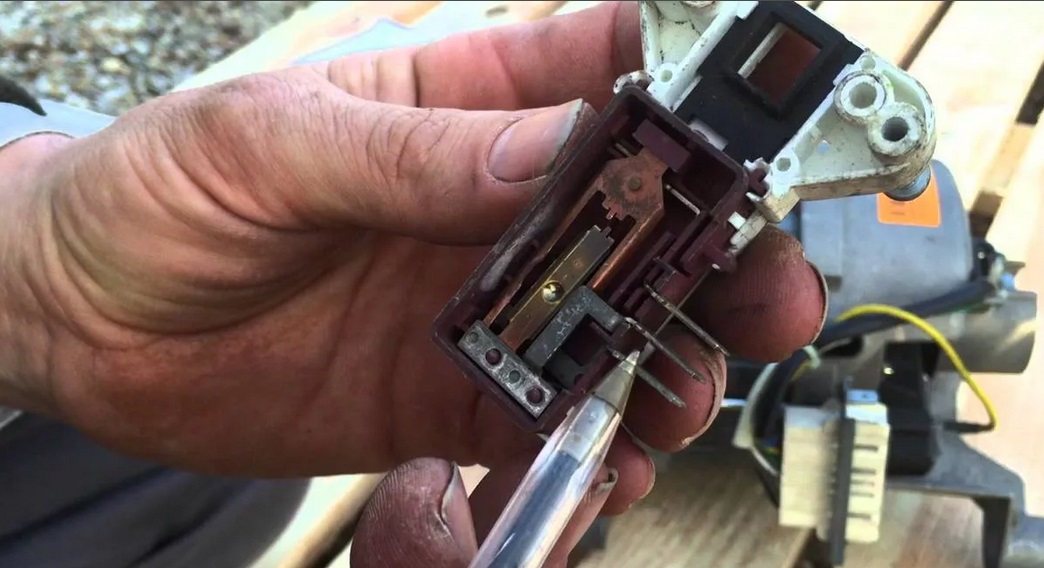
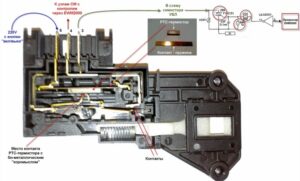
The basic hatch locking device has three contacts. Voltage is applied to the first two contacts, N and L, which heats a special thermal coil. After a few seconds, the thermal coil heats a bimetallic strip connecting contacts L and C (the middle and outer contacts), closing them. The closure of the middle and outer contacts is a signal to the module that the hatch is locked and washing can begin. Therefore, you need to short-circuit contacts L and C with a jumper.
Please note: After manually locking the door, it will take up to several minutes for the machine to start washing, bypassing the door lock.
Owners of modern models have begun to encounter problems with manually closing the door lock. The washing machine simply displays an error code on the display and won't start. This occurs because some manufacturers have developed new protection and diagnostic systems for washing machines. However, this problem is still rare, so it's still worth trying to bypass the door lock.
Interesting:
12 reader comments
Add a comment
Headings
Washing machine repair




For buyers




For users


Dishwasher




I couldn't do it, I short-circuited it, but it still displays this code.
I didn't succeed in Atlanta either.
L and C - does this correspond to 4 and 5????
Everything worked out and works great!
Locks come in all shapes and sizes. The author should have warned people about this. For example, in my case, L and C are the outer contacts, and neutral is the center wire.
Of course, you can bypass it, but it can have serious consequences. If the hatch opens during washing, or if someone accidentally opens it, all the water will end up on the floor. And that's a big deal for the neighbors downstairs and your wallet.
You isolate the black wire, but short-circuit the white and blue wires, which will drive your brain crazy. Match the wires by color, not by connector.
It didn't work for me either.
What if a child opens the door during the spin cycle and sticks their hands or head into the centrifuge? The lock isn't just there to prevent flooding the neighbors.
So next time he won't do that.
First, a reply to Vitaly on August 1st. You know, the car's broken. If you want, stay with it; if not, buy a new one. Andrey on February 22nd. Same here.
Better not do that! One small mistake and your brain is ruined!