
What should you pay attention to when buying an automatic washing machine?
 Buying a washing machine is an expensive proposition, so without prior research and planning, you can get confused and buy the wrong one. Most people prefer to focus solely on price and appearance, although there are more important factors to consider. For example, carefully selecting the power, dimensions, control type, or door location will allow you to choose the best model and avoid overpaying for useless features. All the details are in this article.
Hull size and hatch location
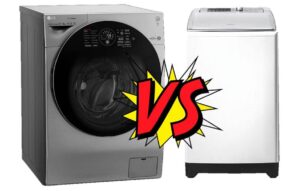
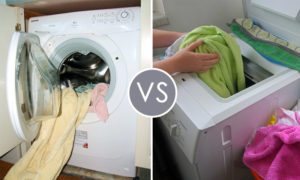
First of all, it is worth finding a place to place the machine in advance and assessing the available space. Depending on the number of available square meters, you need to decide which washing machine is suitable for the allocated space. 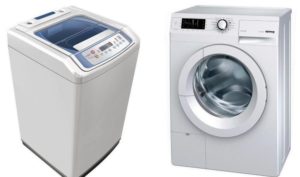 premises: with horizontal or vertical loading. In simple terms, consider where the loading door should be located—at the top or at the front. If a frequently opening door would be a nuisance, horizontal machines are more suitable.
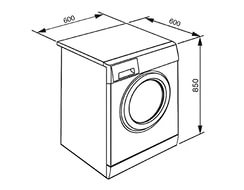
Next, let's look at the dimensions. Depending on their size, washing machines come in three types:
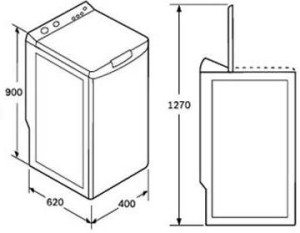
- full-size – 85-90 cm in height, 45-60 cm in depth, 60 cm in width;
- narrow – depth less than 45 cm;
- compact – height, depth and width less than 85, 45 and 60 cm respectively.
Compact and narrow models are more vulnerable and break faster.
First, consider whether the machine will be built-in. If you plan to install it in a kitchen cabinet or under the sink, look for units with a removable top cover or special built-in models. They are more expensive, but they allow you to save significant space and create additional work surfaces in the room.
Drum capacity
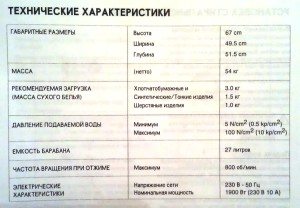
The next point is the permissible load capacity. Each machine is labeled with a capacity number that clearly indicates how many kilograms of dry laundry can be washed in one cycle. The appropriate capacity is calculated based on the number of people planning to use the machine. Approximate figures are as follows:
- for 1-2 people, a washing machine with a capacity of up to 4 kg is enough;
- for 3-5 residents – at least 5-6 kg is required;
- for families of 5 people or more, you will need at least 7-9 kg.
We also take into account the frequency of washing - if you prefer to wash often and in small amounts, then you can limit yourself to 4 kg.
Some people think it's more economical to buy a machine with a maximum load capacity of 8-9 kg. However, this isn't the best option, as larger machines are expensive, large, and consume significant energy and water. Ideally, you should carefully consider your needs and select a washing machine that's tailored to the number of people living in the house.
Machine capabilities
Every washing machine can wash, rinse, and spin. However, some models offer additional features. Some can truly simplify and speed up the washing process, but many simply add to the cost of the machine, leaving little practical use. To avoid wasting your money, let's explore the features offered by manufacturers.
- Leak protection. Complete protection will protect you from leaks and automatically shut off the system if water reaches the bottom of the machine.

- Special modes. These help save time and money by offering special programs for specific fabrics and types of clothing. Useful options include "Children's Mode," "Sports," "Quick Wash," "Shoes," "Bulky Items," and "Economy Wash."
- Delicate wash. This is ideal for lace lingerie, silk, organza, or other lightweight, delicate fabrics. This special program features a generous water intake, cool water, and a slow spin cycle, ensuring gentle care.
- Quiet washing. Models with an inverter motor and direct drive boast a lack of strong vibrations and a running motor. They make much less noise, making them suitable for overnight washing or small apartments.
- Steam wash. Offers enhanced cleaning by injecting hot air. Generally a fairly versatile program, it helps eliminate unpleasant odors from all types of fabric.
- Drying. A very expensive option, but it allows you to dry your clothes immediately after washing. If your machine has this feature, you don't need to hang your washed clothes; you can put them away straight away.
Machines can also feature a delayed start timer, drum lighting, a child lock, and many other additional features. When purchasing a washing machine, the buyer should carefully examine the control panel and realistically evaluate the usefulness of the built-in features.
Features of the control module
One of the main characteristics of a washing machine is its control type. This determines how easy it is to use. Two common options are:
- With a mechanical control module, washing parameters must be adjusted manually by turning special knobs or pressing buttons. This type of control module is typically found in older, cheaper models, which offer relatively limited functionality.
- With electronic control, the user simply selects the mode, after which the washing machine system will automatically set the temperature, spin strength, and cycle duration.
Machines with an electronic module are more convenient to use, but they break down more often than mechanical machines.
Statistics show that complex electronic systems often fail. This is because mechanical controls rely on fewer parts, which last 50-60% longer. However, manufacturers have virtually stopped releasing "simple" low-priced machines to the market, as their popularity has plummeted.
How to evaluate the efficiency of a machine?
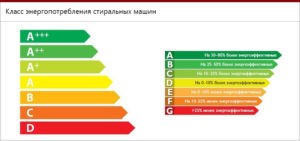 Few people know that you can evaluate a washing machine's washing efficiency, spin quality, and power consumption even before purchasing and using it. For this purpose, a classification system has long been developed, according to which manufacturers test specific models at the factory and assign them specific levels. All these parameters are designated by Latin letters, from A to G.
Therefore, choosing good equipment is simple: just pay attention to the energy consumption class, washing and spinning efficiency. The best machines will have the highest levels from A to A+++, while uneconomical and poorly washing machines will have from D to G.
So that the noise doesn't irritate
The noise level is always listed on the washing machine label. This rating is expressed in dB and allows you to quickly assess the average operating volume of the machine. Typically, an acceptable and non-irritating level ranges from 47 to 68 dB.
A washing machine's noise level depends primarily on the wash drum. If it's made of stainless steel, the machine will be noisier than one with a plastic drum. The motor installed also affects noise levels. Inverter motors and direct-drive motors are significantly quieter.
Some machines offer a quieter washing experience with the "Silent Wash" feature.
Much also depends on the size of the washing machine. Heavier units tend to be less mobile, so they vibrate less and create less noise. The quality of installation is also important – installation on a hard, level surface ensures reduced decibels.
Common faults and how to avoid them
Manufacturers promise 5-7 years of trouble-free operation, but machines often break down much earlier. To prevent a tragic outcome, it is necessary to carefully examine the models offered at the purchasing stage and choose the most stable design.To do this, it's worth keeping in mind the most common causes of washing machine breakdowns:
- heating element failure;
- control module burnout;
- slipping drive belt;
- engine failure;
- wear of the bearing unit;
- tank damage;
- wear of shock absorbers;
- broken hatch door handle;
- unreliable pump.
Most often, these washing machine components fail due to improper use, but many problems can be prevented at the store. For example, it's recommended to trust a waxed dashboard, which is more airtight and durable, or avoid flimsy and easily damaged plastic tanks. Also, before purchasing, it's important to correctly calculate the required load capacity to avoid exceeding the maximum load capacity.
There's no point in skimping. If it's crucial that your laundry be dry, it's better to buy a machine with a drying option. Otherwise, saving money will force you to turn the spin speed to the maximum, which will cause the machine to operate at increased power, exhausting its technical potential.
How to purchase and install?
The selected machine must be carefully examined. There should be no dents, scratches, or chips on the body or internal parts—all of these indicate improper transportation and future problems. Be sure to spin the drum, check the components and open the door and powder compartment several times.
It's best to entrust further installation and connection to professionals. Remember that if any problems are detected, the technician will issue a special certificate for the replacement of the appliance. If you try to do it yourself, you'll have to prove to the store that the breakdown wasn't your fault.
Interesting:

Readers' comments
Headings
Washing machine repair




For buyers




For users


Dishwasher




Add a comment