
Washing Machine Check Valve - Overview
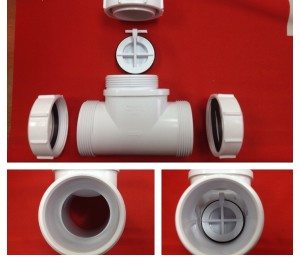 When installing a washing machine, it's important to ensure it's fully protected from various risks, including the so-called "siphon effect." A check valve is designed to protect the washing machine from this unpleasant phenomenon. In this article, we'll discuss what a check valve is, its functions, and how it works. We'll also review the different types of these devices and their manufacturers.
Overview of the device and its functions
A check valve or anti-siphon is designed to prevent wastewater from flowing back into the washing machine's drum. This can and often does happen if the machine is improperly connected to the sewer system. When this happens, dirty water, along with wastewater, flows into the drum, damaging the laundry in the drum, and significantly increasing energy consumption.
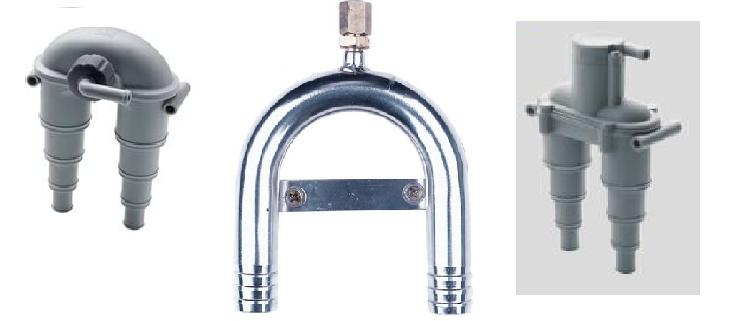
The non-return (anti-siphon) valve does not prevent waste water from flowing out of the tank. Automatic washing machines from LG, Samsung, Siemens, and any other manufacturers. If water from the sewer backs up into the tank, a special flap will immediately block it. To purchase a high-quality drain valve, you need to determine the types of such devices and their manufacturers. There are five types of anti-siphon valves:
- solid;
- segmental;
- wall-mounted;
- mortise;
- under the sink.
There's no fundamental difference between these devices; they all perform the same function—ensuring proper water drainage. However, there are some nuances when connecting a specific washing machine (for example, an LG) to the sewer system. If the tap water quality is poor, a segment valve is installed so that it can be periodically disassembled and cleaned of scale and debris.
If the water in the water supply is normal, you can install a solid anti-siphon valve, but it will still have to be replaced every 2-3 years.
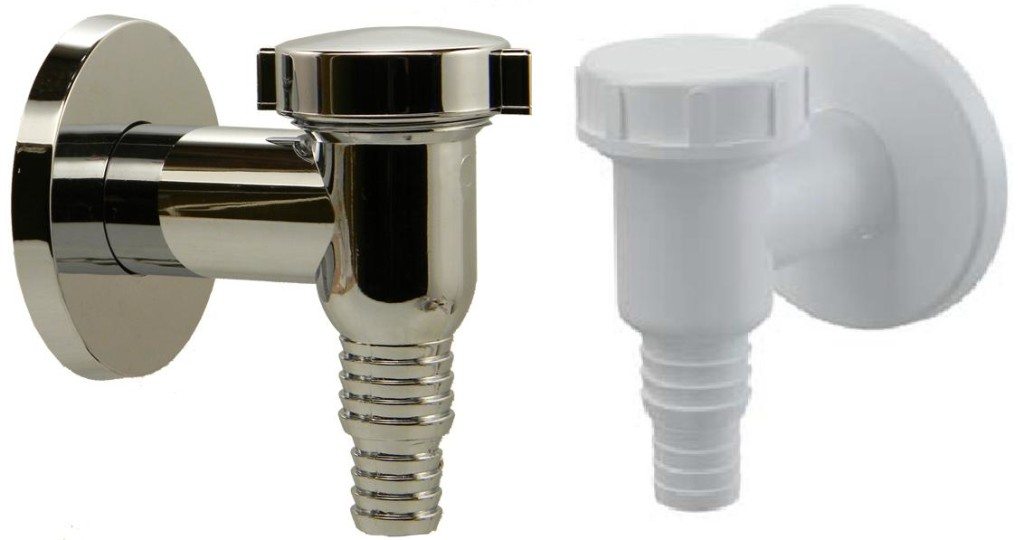
 Wall-mounted valves are quite expensive and are used when drain lines need to be located in the narrow space between the wall and the back of the washing machine. They allow for significant space savings by positioning the unit along the wall, and this design also provides a very aesthetically pleasing appearance.
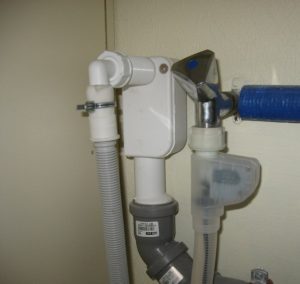
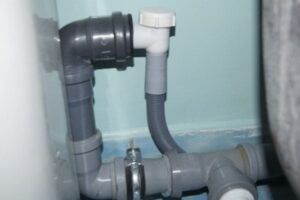
Insert valves are useful if you plan to drain directly into a sewer pipe. This involves cutting a hole into the sewer pipe, and installing an anti-siphon valve into this hole. The under-sink valve has a design that is ideal for installation in a sink siphon, and such a valve can be installed in a siphon of almost any design.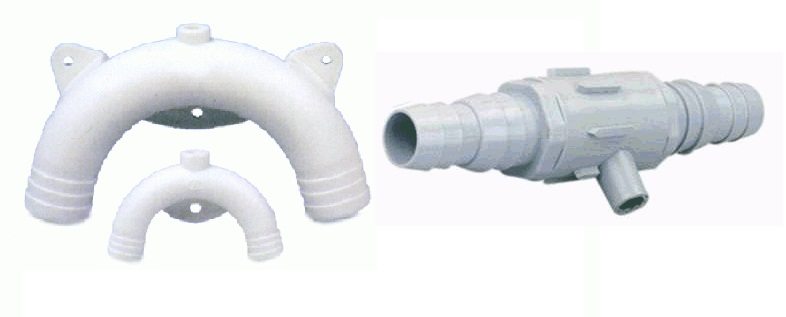
Washing machine installation specialists recommend several models of check valves. Let's take a look.
- A polypropylene wall-mounted anti-siphon valve from the Czech company Alcaplast. This simple, reliable, and relatively inexpensive device fits the drain hoses of all washing machine models. It is designed for end-on connection to the sewer pipe. The check valve is spring-loaded, chrome-plated, and features a reflector that decorates the connection point. Ensures perfect drainage of waste water. Approximate price is 8 USD.
- A polypropylene flush-mounted anti-siphon valve from the Italian company Siroflex. This check valve can be installed by cutting into a sewer pipe or as a drain hose connector. The mechanism consists of a stainless steel spring and a rubber membrane. It ensures efficient drainage. Approximate price: 7 USD.
- A polypropylene segmented anti-siphon valve from the Italian company Merloni. This valve is installed in the sink drain trap and can be disassembled and cleaned if necessary. The valve itself consists of a spring and a rubber membrane. It ensures efficient drainage. Approximate price: $8.50.
How does the device work?
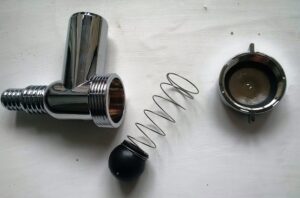
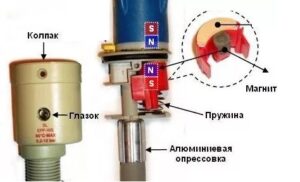
A check valve is quite simple in design, and its operating principle is as follows. A specially shaped tube contains a spring or ball valve, which is installed on a drain hose, trap, or sewer pipe. When an LG washing machine (or any other) begins draining, the water, under pressure, is forced through the valve, opening it, and drains into the sewer. If a "siphon effect" occurs—that is, water from the sewer attempts to return to the washing machine's drum—it will encounter the valve, preventing it from opening inward.
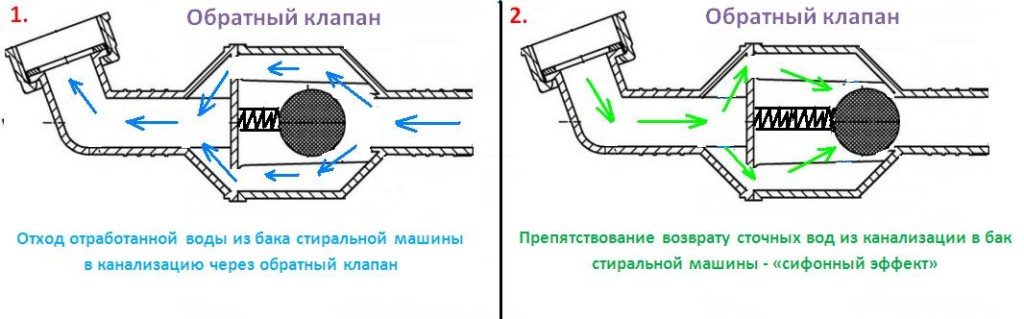
This means that water from the tank flows through the sewer pipe and passes through the valve relatively freely, but cannot flow back out of the sewer. In spring-loaded valves, this effect is achieved by a spring and a rubber membrane that seals the pipe opening from wastewater. In ball valves, the opening is sealed by a special ball made of soft rubber.
How to install and what to replace the device with?
When installing a check valve yourself, you need to take into account the specific design features; however, the general installation principle will be identical in all cases.
The anti-siphon device is a complex tube with outlets of different diameters on both ends. We insert one end into the sewer pipe or connect it to a trap, and the other end is connected to the drain hose of an LG washing machine (or any other). All connections must be carefully sealed by hand. and that's where the work ends.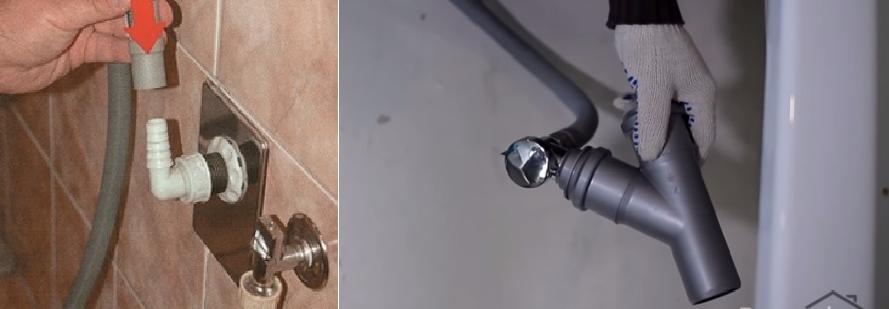
It should be noted that installing an anti-siphon device is not always justified. According to experts, a check valve should be installed when:
- You're connecting the washing machine directly to the sewer pipe, and it's technically impossible to raise the pipe. The connection is located too low, near the floor;
- You connect the drain hose of the washing machine to the siphon located under the sink.
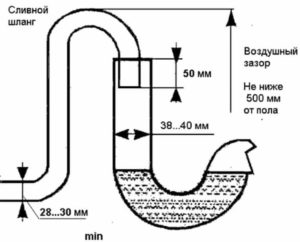
If the washing machine drain hose is properly connected to a sewer pipe raised to the correct height, then there is no need to install an anti-siphon device. For more information on properly connecting a washing machine to a sewer system, read the article about Installing and connecting a washing machine yourself.
But if your LG washing machine (or any other) is emitting an unpleasant odor and your laundry is still dirty after washing, you should purchase and install an anti-siphon yourself. There's no substitute for this device in this case!
Finally, it's important to properly drain wastewater from your washing machine's drum. If you're having trouble returning water from the sewer to the drum, install a check valve. This device operates simply and offers tremendous benefits.
Interesting:
2 reader comments
Add a comment
Headings
Washing machine repair




For buyers




For users


Dishwasher




A check valve and an anti-siphon valve are different devices, don’t be misled.
I agree with anonymous