
How to maintain a dishwasher?
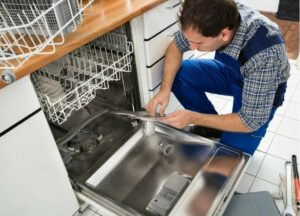 The dishwasher was invented over a hundred years ago, but it has only recently emerged as a popular household appliance, present in almost every home, at least in our country. Like any household appliance, it requires regular maintenance and cleaning. Maintaining a dishwasher isn't particularly time-consuming or labor-intensive, but it does require regular cleaning.
First of all, watch the filters
One of the most important components of a dishwasher, requiring regular and thorough maintenance, is its filter. Its job is to prevent food residue from entering the appliance's water circuit, where water and detergent circulate. Debris that accumulates in the filter prevents water from flowing and draining properly, significantly impacting dishwashing performance.
The filter itself consists of:
- coarse cleaning unit (retains large particles of food products);
- easy cleaning unit (catches small food particles, including drops of fat):
- perforated plate (essentially a fine-mesh net that allows dirty liquid to pass into the filter element itself).
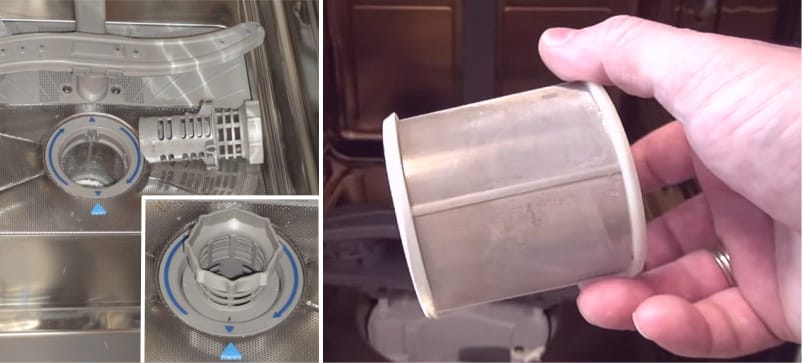
Cleaning the filter yourself isn't particularly difficult. First, remove it from the appliance (the proper procedure is described in detail in the appliance's operating instructions). Then, unscrew it, remove any stuck-on food residue, and rinse. Particular care should be taken when cleaning the perforated plate: it is made of nylon and can easily become deformed due to rough or improper handling. As a result, the water unit's protection from contamination will be compromised, which will reduce the machine's performance.
To wash the filter components, you can use dishwashing detergents, old toothbrushes, or soft sponges.
After assembling and installing the filter in its original place, you should make sure that it is correctly and securely fixed, adequately protects the drain from food residue and does not interfere with the rotation of the circulation pump blades.
We monitor the condition of the circulation pump
Another important component of the machine that requires special attention and regular cleaning is the pump. Its job is to ensure forced circulation of liquid and detergent within the tank throughout the entire cycle. Since the machine uses filtered water for washing, it refills with new liquid only after changing the cycle, thereby conserving water.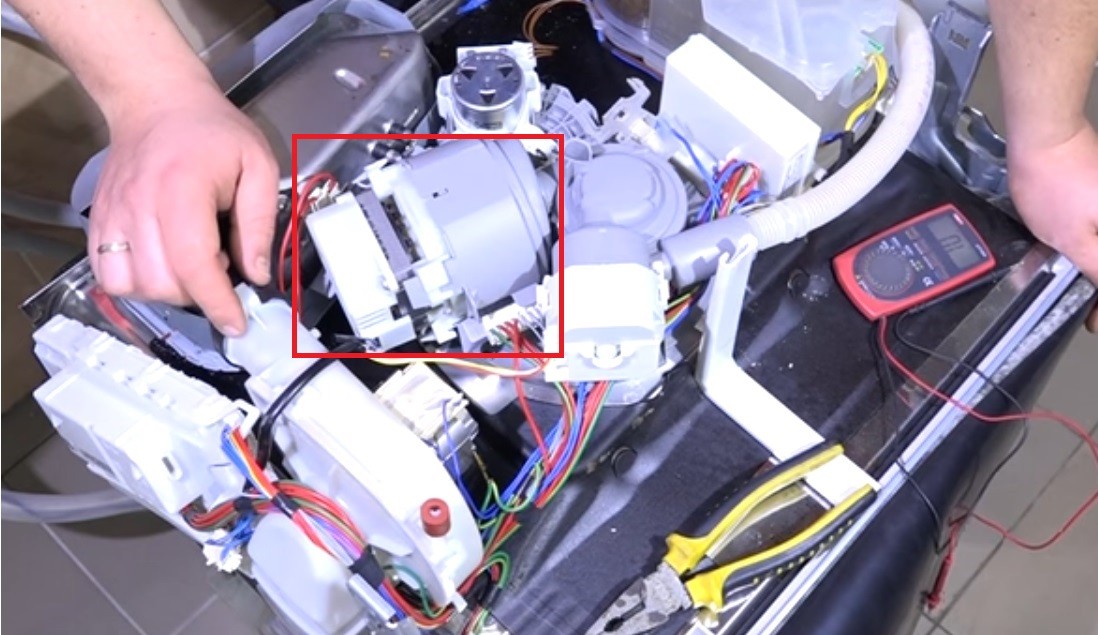
The main pump maintenance procedure is cleaning the water lines of grease particles that accumulate inside. These deposits form and prevent water from moving properly through the pipes. This results in increased pressure inside the pump. This leads to accelerated wear, malfunctions, and breakdowns, the most noticeable of which is a burnt-out pump.
Preventing this from happening is simple: simply clean the appliance every 3-6 months (the frequency depends on how often you use it). A specialized detergent and a couple of hours are required to thoroughly remove grease deposits from the lines. Pour the gel, tablet, or liquid into the appropriate compartment and select the wash cycle with the highest water temperature. Dishes are not loaded into the bin during cleaning, meaning the machine runs "idle."
We clean moving parts
A decrease in dishwashing performance and the presence of streaks and stains on the dishwasher indicate the need for cleaning. This is a clear sign of clogged impellers (water sprayers) located under the baskets for loading kitchen utensils. Each impeller has several nozzles that generate a powerful jet of water, which, in turn, cleans the dishes.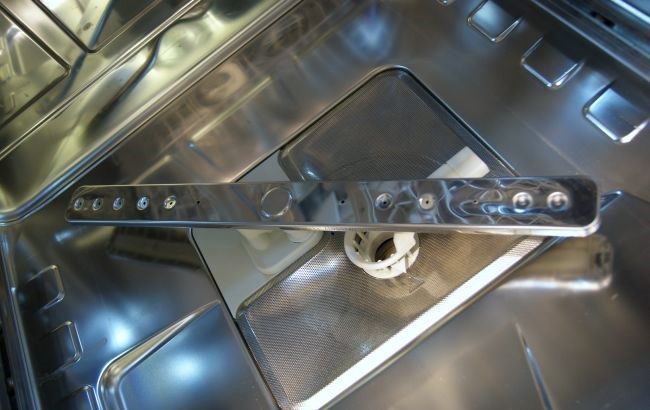
Any homeowner can clean them themselves: the sprinkler arm can be easily removed from its holder. Next, inspect it for blockages and rinse it under running water. If the holes are clogged with thick deposits, remove them with a long, thin object (wire, toothpick, or open paper clip). After cleaning, replace the sprinklers and check that they are positioned correctly and securely fastened.
Wash the case inside and outside
The dishwasher's surfaces, both external and internal, also require regular care. The dishwasher's hopper requires special attention: contamination significantly impacts the appliance's performance, and its stainless steel construction requires more careful cleaning. For example, the following should not be used to clean the hopper:
- coarse polymer sponges;
- abrasive cleaning powders;
- products containing chlorine.
Each of them can damage the surface, leaving behind small and large scratches, traces of oxidation, or various stains that cannot be removed. To clean the inside of your dishwasher, we recommend using a microfiber cloth or other soft material, and a mild dishwashing detergent as a cleaning agent. 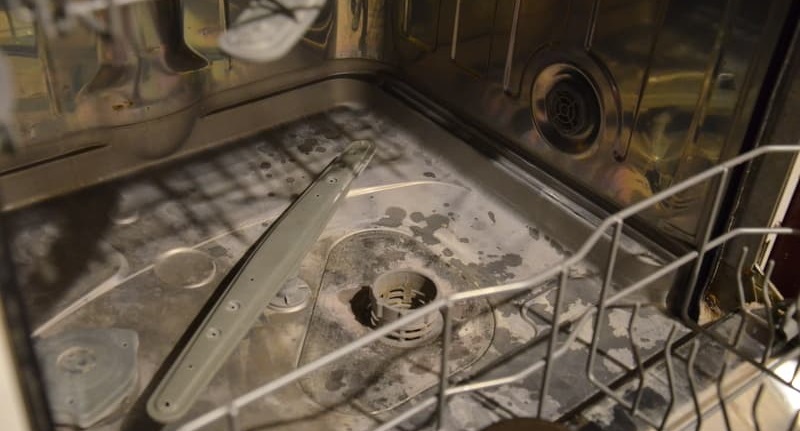
If the housewife uses specialized detergents for daily dishwashing, no additional care of the interior surfaces is required, as cleaning occurs automatically during the standard dishwasher cycles.
Proper internal care requires not only the use of high-quality household chemicals, but also the correct adjustment of the regenerating salt and rinse aid dispensers.
Detailed information on dispenser settings can be found in the appliance's operating instructions. However, these settings directly depend on the quality of the water supplied to the home where the appliance is installed. This varies not only between regions but also between cities and even within neighborhoods. Therefore, homeowners can usually determine the optimal settings through experimentation, evaluating cleaning results and adjusting the settings. If all settings are set correctly, the dishwasher walls will be free of streaks, limescale residue, grease droplets, and other contaminants: after the cycle, the container will be perfectly clean and dry.
If limescale has formed on the walls of the interior chamber and removing it with a simple detergent doesn't work, you can wipe the heavily soiled areas with table vinegar. It's not recommended to scrub too hard; a few swipes with a cloth will suffice. If there's no result, you can try a more aggressive cleaning: place a bowl or pot of vinegar in the basket and run a standard wash cycle. The volume of vinegar should not exceed 200 ml. After finishing using the machine, wipe its walls again with dishwashing liquid.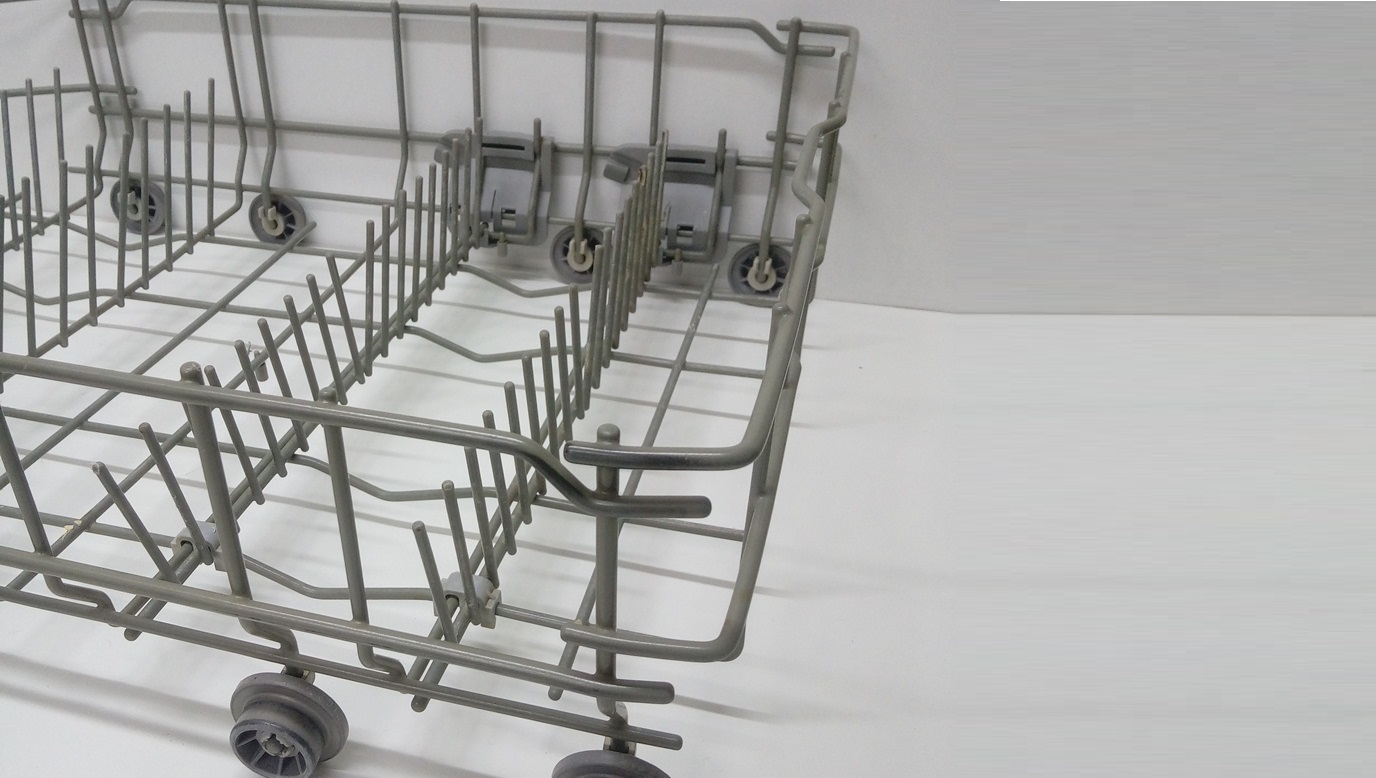
When cleaning your dishwasher, don't forget about the doors, appliances, seals, and mounting hardware. These, like the interior surfaces, can accumulate small particles of limescale, which will affect the door's seal and the machine's performance. Any dirt can be easily removed with a vinegar solution, a cloth, or a fine-pored sponge.
Pay close attention to the baskets where the dishes are stored. They are often made of enamel-coated metal, so it's important to prevent cracks and chips. If any water droplets remain on the baskets after a dishwasher run, remove them with a soft, dry towel. It's also recommended to leave the dishwasher door slightly ajar until it has completely cooled down. This prevents condensation from accumulating inside, which is the main cause of mold in the machine's internal pipes.
You should also remember about external surfaces, which should be regularly treated with the cleaning products that the housewife is accustomed to.
Interesting:





Readers' comments
Headings
Washing machine repair




For buyers




For users


Dishwasher




Add a comment