
Bosch washing machine maintenance
 A Bosch washing machine requires regular maintenance to ensure its longevity. If you don't follow basic rules and the manufacturer's recommendations, it will only last a couple of years without any problems. After that, the appliance will inevitably surprise you with a clogged drain, mold, scale, or a broken part. Maintaining a Bosch washing machine involves several steps. Let's look at the essential preventative measures.
Superficial prevention
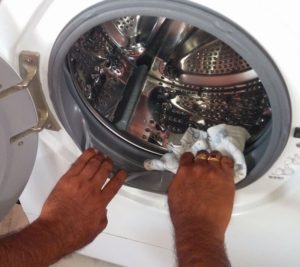
Every housewife knows that the washing machine should be left open to allow it to air out. The door glass, detergent drawer, gasket, and drum surface should also be thoroughly wiped dry. These precautions should be taken after each use.
Every few months, you should give your washing machine a more thorough service. For a superficial maintenance check, you should:
- de-energize the equipment, disconnect it from communications;
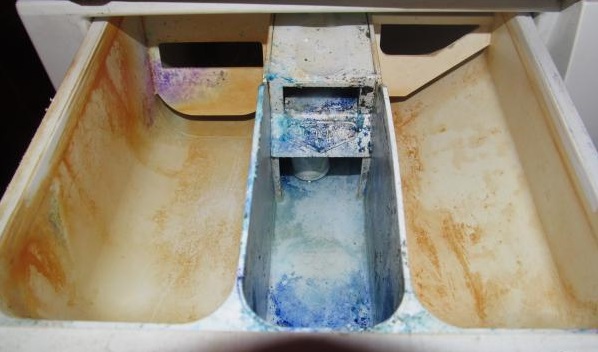
- Remove the detergent drawer. Rinse it thoroughly in warm, soapy water. If there is any residue or mold on the walls of the drawer, perform a more thorough cleaning;
- disconnect the inlet hose from the unit, remove the filter mesh, and rinse it under the tap to remove scale and debris;
- Clean the drain filter. It's located in the lower right corner of the machine, behind a dedicated panel. Place a basin under the washer, cover the floor around it with dry rags, unscrew the drain plug, wait for the water to drain from the system, remove the element, and rinse it. Remove any debris and dirt from the sides of the drain hole.
- Assess the condition of the drum seal. The sealing rubber should be free of cracks, dirt, and mold;
- Manually rotate the drum. The drum should rotate smoothly, with a slight tension. It's important to listen for no creaking or grinding sounds during the process. If any unusual noises are present, a more thorough diagnostic of the machine will be necessary.
- “Unhook” the drain hose from the body, feel the tube and make sure there is no blockage inside.
If you clean your washing machine regularly and perform surface maintenance, the machine's service life without repair will increase.
All of these steps are easy to do yourself. No special knowledge, tools, or equipment are required.
Serious prevention
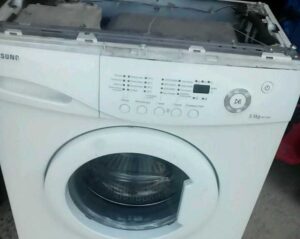
Sometimes a superficial diagnosis is not enough. If the washing machine If your Bosch is making noise, humming, or vibrating heavily while running, a thorough inspection of the equipment will be required. The machine will need to be disassembled to assess the condition of the dampers, bearing assembly, and counterweights. The procedure will be as follows:
- Unplug the machine's power cord from the socket;
- turn off the water supply tap, disconnect the drain and inlet hoses from the communications and the body;
- Move the washing machine to the center of the room to have free access to the side walls and back panel;
- prepare 2-3 dry rags;
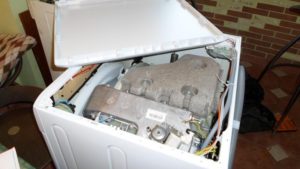
- remove the top cover by unscrewing a couple of bolts that secure it;
- Unscrew the screws holding the back panel of the case and move the panel to the side;
- Locate the counterweights. Inspect the concrete blocks; they should be free of cracks and chips. Press down on the stones to ensure the bolts are tight. If any looseness is detected, tighten them. If any components are damaged, they will need to be replaced.
- Check the drive belt tension. If the rubber seal comes off, you can either replace it with a similar one or wash, dry, and treat the surface with pine rosin;
- Go down and check the shock absorbers. They should be firm. Treat the springs with graphite grease;
- Clean the heating element. To do this, disconnect the wiring, loosen the central nut, and remove the heater. If it is coated with scale, soak the element in a vinegar solution until the scale softens, then wash off the deposits with a toothbrush or a hard sponge.
- Inspect the sensors and wires located on top. If any defects are evident, replace the components;
- Feel the tubes leading from the dispenser to the tank and the fill valve. All components should be intact and dry.
It is better to photograph the wiring diagram for the components to avoid problems during further assembly.
Obvious signs of a faulty bearing can help you recognize when it's time to replace it. For example, a loud grinding noise during operation, looseness in the drum, or a rattling noise during the spin cycle. A full washing machine service every one to two years is sufficient to ensure it lasts longer than the manufacturer's recommended five to seven years.
Interesting:

Readers' comments
Headings
Washing machine repair




For buyers




For users


Dishwasher




Add a comment