
Cleaning the Bosch washing machine pump
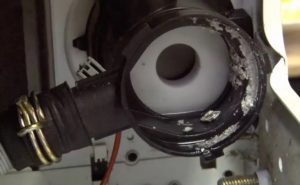 After washing, the wastewater should leave the washing machine's drum and drain into the sewer, thus completing the cycle. However, if the pump is clogged, drainage will be disrupted—the machine will remain with a full drum and display a system error. To restore the machine's functionality, an unscheduled drain cleaning will be necessary. Cleaning the drain pump of a Bosch washing machine is easy for almost anyone. Just follow these simple instructions.
Is this really a drain pump?
A clogged pump isn't always the culprit when a Bosch doesn't drain properly. Difficulty draining the tank can also occur if the pipes, hoses, volute, and filter are clogged. The symptoms are identical in all cases, making it difficult to immediately pinpoint the source of the problem. For an accurate “diagnosis”, it is necessary to check all the “pain points” of the drainage one by one.
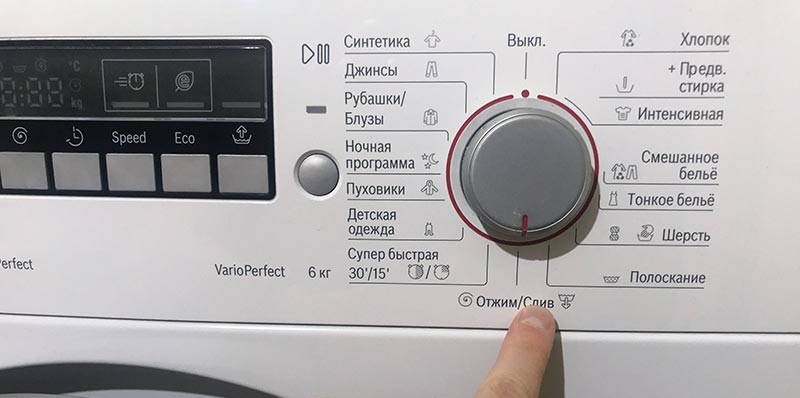
First, we try to "reset" the system by reactivating the "Drain" mode. If the machine doesn't respond, we begin diagnostics. The sequence of actions is as follows:
- remove the service hatch door in the lower right corner of the case (pry it up with a slotted screwdriver and press the latches);
- find the trash filter cover – a black or blue round plug;
- tilt the machine back, place a container to collect water under the filter, and lay rags around it;
- take hold of the protruding part and start twisting (clockwise);
Be prepared! When you unscrew the filter, water will spill out of the machine!
- remove the nozzle;
- inspect the "spiral" and clean it from any stuck debris.
If the debris filter isn't heavily clogged, you need to continue checking the drainage system. Next up is the pump coil. You'll need to shine a flashlight through the newly cleared coil hole and try to detect any clumps of dirt or foreign objects. It's also recommended to clean the entire "tunnel" of any debris.
Next, check the pump impeller. Hair and threads often get caught on its blades, blocking the mechanism. To identify a blockage, insert a screwdriver into the hole and try to turn the wheel. If the screw doesn't budge or, conversely, wobbles freely, the pump needs cleaning. You'll need to remove the device and clean it.
Finding the problematic part
The pump on Bosch washing machines can't be accessed through the bottom. The only way is to remove the front panel and then remove the pump. The procedure is more complicated, but if you follow the instructions, it won't take long. The procedure is as follows:
- detach the technical hatch door from the body;
- remove the powder receptacle (pull the tray towards you until it stops, then press the special “tongue” and pull it out completely);
- unscrew the screws hidden under the tray;
- unscrew all fasteners holding the instrument panel and remove it;
- open the hatch, feel the outer clamp on the cuff, loosen it and remove it;
- tuck the edge of the sealing rubber into the drum (there is no need to completely tighten the cuff – it will be difficult to return it to its place);
- disconnect the door lock from the machine;
- loosen all bolts securing the end panel;
- detach the front wall from the body.
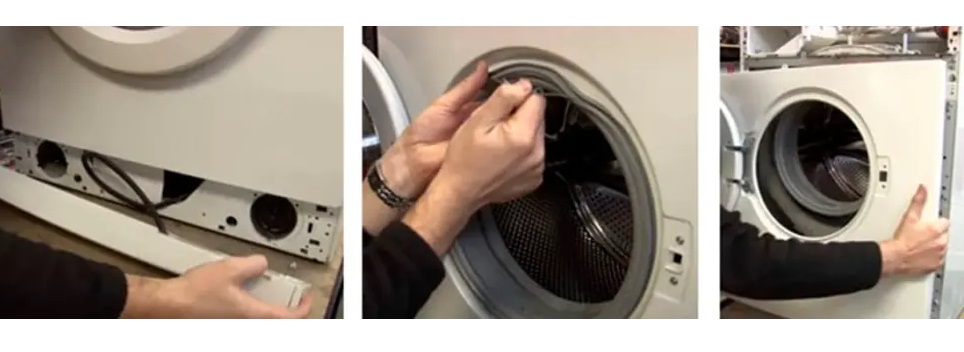
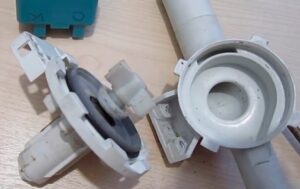
Once the end panel is removed, the machine's internals will be revealed. All that's left to do is locate the pump at the bottom of the housing, under the drum. The pump is a metal "washer" with blades, fixed on a snail-shaped stand. To remove the part completely, simply disconnect the connected wiring and pipes, then unscrew the retaining bolt and pull it out of its seat.
Removing dirt from the part
Experience shows that the pump most often becomes clogged due to a blocked impeller. Hair, lint, and threads constantly become tangled around it, hindering the impeller's movement and causing the mechanism to stop. Therefore, the first step is to clean the pump blades of all accumulated debris.
If the impellers don't rotate freely after cleaning, the pump needs further cleaning. To do this, unscrew all the screws on the housing and disassemble the pump into two halves. Then, clean off any accumulated dirt from both halves and reassemble. Then, check that the impeller rotates freely.
Some Bosch models are equipped with non-removable pumps that cannot be cleaned or repaired.
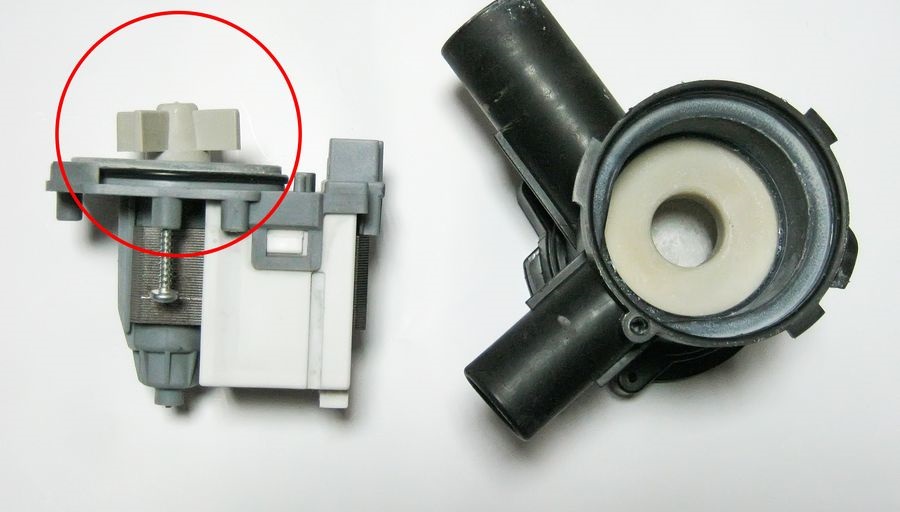
Often, the impeller doesn't block, but rather falls off the shaft or becomes loose. In this case, don't try to "revive" the impeller blades with glue or sealant—it's unreliable and dangerous. It's better to play it safe and replace the entire pump, especially since Bosch washing machine pumps are inexpensive.
Don't forget to take care of your machine.
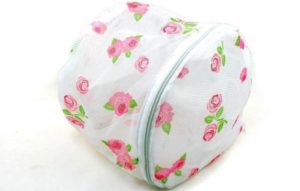 Pump cleaning can be avoided with proper maintenance. Most of the waste that ends up in your washing machine is the fault of the owner, so it's best to rethink your approach to washing. The following recommendations will help prevent clogs:
- use detergents marked "for automatic machines";
- wash out strong stains by hand;
- clothes with decorations should be washed in special bags;
- organize an input filtration system;
- Clean the debris filter regularly.
If you have dogs or cats in your home, it's recommended to clean your washing machine monthly. Otherwise, cleaning it every six months is sufficient.
Features of the drain operation
To understand the causes and consequences of clogs, it is recommended to familiarize yourself with the drainage system in automatic machines. All washing machines have the same drainage system, and Bosch is no exception. Briefly, the process of emptying the tank looks like this:
- the board signals the pump to start draining;
- the pump starts working;
- the impeller starts, creating the correct flow;
- water from the drum gets into the pipes;
- the liquid passes through the filter and moves to the pump;
- the flow enters the hose and goes into the sewer.
Once all the water has drained from the tank, the pressure switch "sees" the drain complete and sends a cancellation signal to the board. The pump stops, and the cycle ends.
Interesting:


Readers' comments
Headings
Washing machine repair




For buyers




For users


Dishwasher




Add a comment