
How to clean the drain pump in a Samsung washing machine?
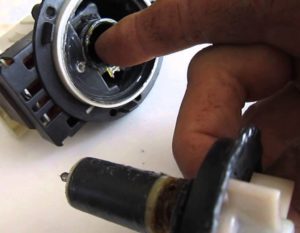 Everyone knows that washing machines require regular maintenance. It's essential to periodically clean the dust filter, rinse the detergent drawer, and wipe down the drum surface. If your "home helper" starts buzzing during a wash cycle and fails to drain, it's in urgent need of cleaning. The pump is likely clogged, or worse, if it's completely broken. Let's figure out how to clean the drain pump in a Samsung washing machine yourself and how to prevent it from clogging.
Search and dismantling of the part
Cleaning the pump requires minimal tools. The pump is located inside the washing machine's housing, at the bottom. You'll need:
- screwdrivers (Phillips and slotted);
- a dry cloth and a container to collect the water remaining in the drainage system;
- spanner.
The pump is easy to access; the manufacturer has anticipated the need for periodic cleaning, so access to the element has been simplified as much as possible.
Before starting work, disconnect the washing machine from the power supply and turn off the water supply tap.
If you're planning to disassemble your washing machine for the first time, it's best to take photos of each step. This will help you avoid mistakes when reassembling the machine. The sequence of steps is as follows: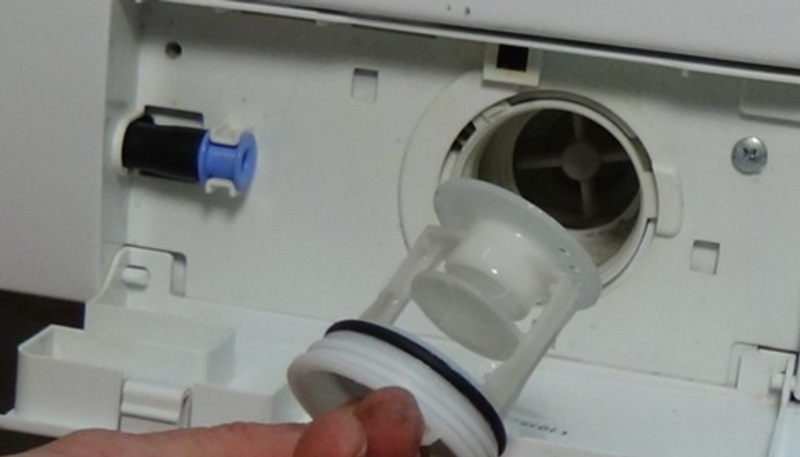
- Open the special hatch located on the bottom of the machine's front panel. You can do this using a flat-head screwdriver;
- unscrew the bolt securing the debris filter;
- Tilt the washing machine slightly backwards, place a container under the body to collect water, and cover the floor with a rag;
- Start unscrewing the drain filter from right to left. Water will begin to drain from the system. Wait until all the waste liquid has drained.
- Place the automatic machine on its side for ease of further work;
- carefully turning the pump from right to left, press it into the machine body and pull it out;
- Disconnect the wires from the pump, loosen the clamps and remove the pipes.
Now you have the part in hand. You can begin cleaning the pump. Let's look at how to properly clear the blockage.
Detail cleaning algorithm
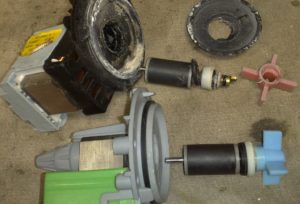
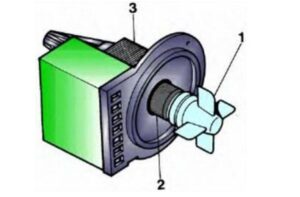
Cleaning the pump primarily involves removing debris from the impeller. Hair and threads get caught on the impeller blades, and small objects can get stuck between them. Therefore, it's important to allow access to the impeller. To disassemble the drain pump, you need to use a screwdriver to unscrew the two bolts connecting the halves of the housing. By separating the parts, you can see the impeller (head).
The next steps will involve removing any debris from the pump head. It's also important to wipe all areas inside the pump volute. Check the impeller's rotation—it should rotate intermittently when operating.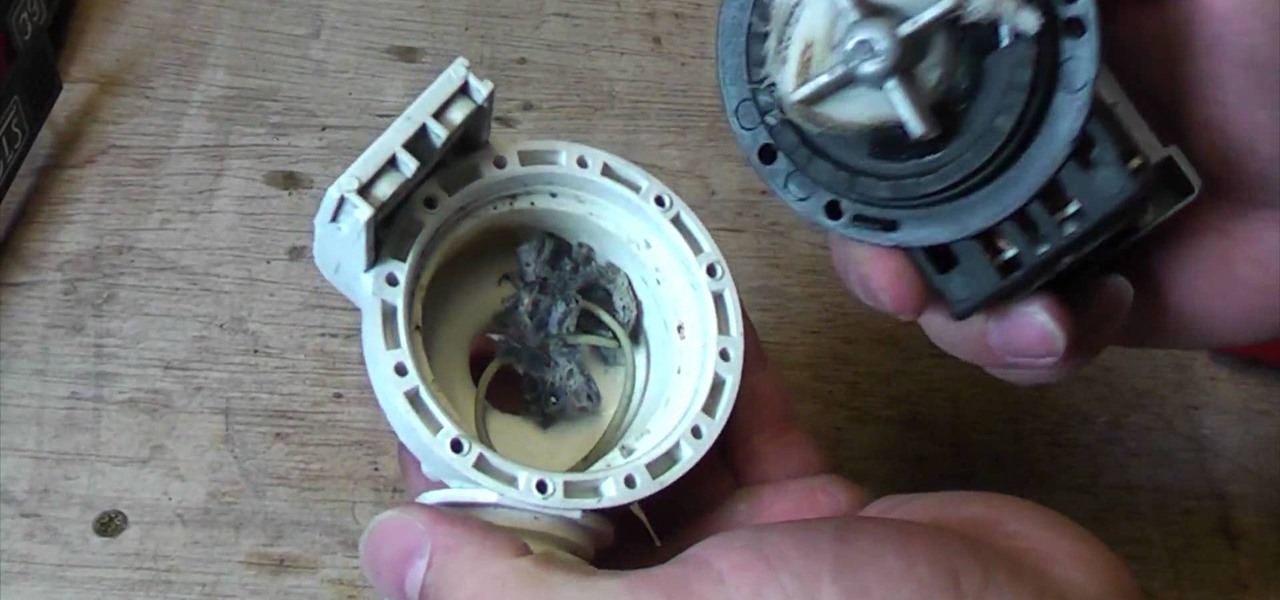
After cleaning is complete, reassemble the unit and return the pump to its original location. Then connect the hoses to the pump, secure them with clamps, and connect the wiring. Next, screw in the debris filter and close the access hatch. Once assembly is complete, check the machine for proper operation. If the cycle completes without leaks, the machine does not hum, and drains smoothly, the pump cleaning has been successful.
If cleaning the element does not solve the problem, you will have to replace the drain pump.
In this case, a replacement part is purchased whose characteristics fully correspond to the standard one.
To prevent the pump from getting dirty
External factors can contribute to clogged drainage system components. These include hard, unpurified tap water and low-quality detergents. Hair, lint, wool, and threads are also washed out of items swirling in the drum. Buttons and snaps can come off and end up in the pump.
To reduce the likelihood of pump contamination, you should:
- use powders exclusively for automatic machines;
- wash clothes in special bags;
- place a filter in front of the water intake hose of the washing machine;
- clean the debris filter periodically.
These simple measures will help prevent debris from getting into the pump. By following these recommendations, users will avoid problems with clogged drain systems and extend the trouble-free life of their washing machine.
Interesting:
Readers' comments
Headings
Washing machine repair




For buyers




For users


Dishwasher




Add a comment