
How to clean mold from a washing machine cuff?
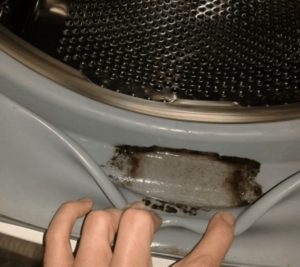 The rubber seal ensures the drum's airtightness thanks to its complex design, with folds and creases. However, it's these folds that trap detergent residue and other debris, which, in high humidity, can lead to mold growth. If the rubber isn't cleaned regularly, the germs will quickly multiply and damage the material. The only solution is to clean the seal of mold. Now, let's figure out how to clean it and what cleaning products to use.
Cleaning products
Removing mold from the cuff is easy: just wet a sponge in bleach or vinegar solution and thoroughly treat the folds. To clean the rubber seal of an automatic washing machine from deeply ingrained mold, you will need more powerful solutions. The following brands have proven themselves to be excellent.
- Mellerud is a chlorine spray. A concentrated, all-purpose product that effectively combats mold and mildew and odors. It destroys all types of mold and is suitable for disinfecting tiles, grout, walls, ceilings, wood, and artificial materials. It has an antibacterial effect and is approved for use on washing machine seals. Easy to use: simply spray from a distance of 5 cm onto the unprepared surface, leave for 20 minutes, and rinse with clean water. Price: $5.18.
- HG is a universal spray based on chlorine and anionic surfactants. It removes mold and odors, preventing the re-growth of fungi. Spray from a distance of 5 cm and kills spores in 10 minutes. Stubborn stains can be treated again, and then rinsed with plenty of water. A bottle costs about $4.
Anti-mold sprays contain chlorine and surfactants.
- Bagi's "Anti-Mold" offers a quick way to get rid of mold. Spray the affected area and leave it on for 10-20 minutes. Its antibacterial formula, containing chlorine and nonionic surfactants, gently kills mold without damaging the seal or other parts of the washing machine. Prices start at $3.49.
- Cillit BANG "Black Mold" is another effective mold killer. Its powerful formula is safe for everyday cleaning, making it ideal for washing machines. It's also suitable for cleaning sinks, showers, and kitchen surfaces. A 750 ml bottle costs between $2.80 and $3.40.
- Sion also has its own mold removal spray. It works instantly and effectively kills mold, removing stains caused by spores. It also eliminates mold odors, leaving previously damaged surfaces clean and shiny. It can be applied directly to contaminated areas without any prep. The results are long-lasting, and no additional cleaning is required.
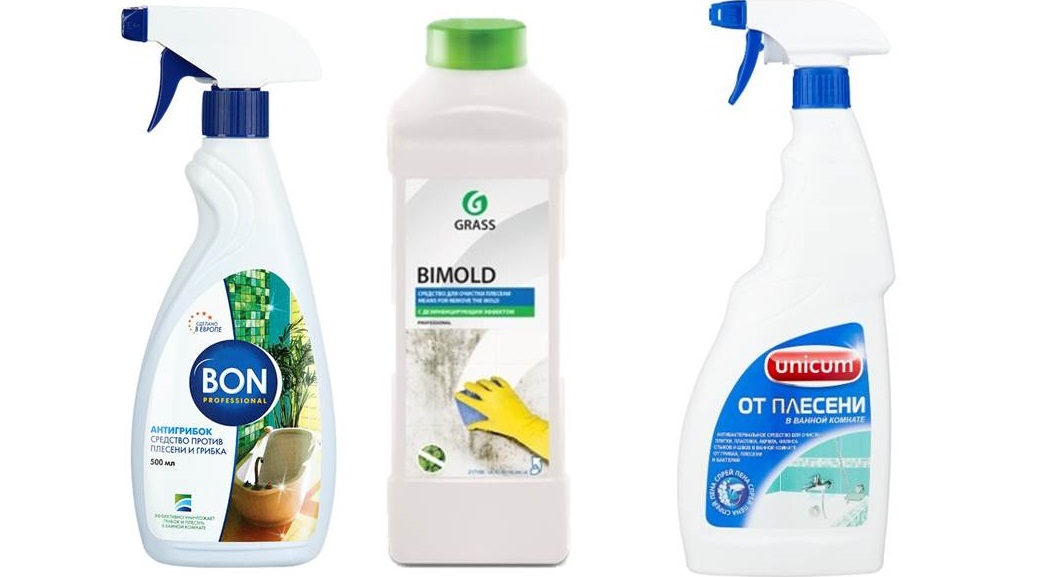
- BON offers a universal, extended-action spray. Its active antibacterial composition with nonionic surfactants removes not only odor and mold, but also limescale. Application is simple: spray from a distance of 20 cm and leave for at least 20 minutes. Afterward, clean the affected area with a brush or cloth, then rinse thoroughly and wipe dry. It costs about $5.
- Unicum is a universal spray that's effective against mold and mildew. It costs $2–$3, has antibacterial properties, and doesn't require mixing with other cleaners.
Removing the mold that has appeared is only half the battle. The second step is to identify and eliminate the cause of the overgrown fungus. We'll explore further where the colonies on the rubber band come from and what triggers their growth.
Where does mold come from?
The only way to prevent mold from spreading in your home is to deprive it of a favorable environment. Microscopic spores are always in the air, and when they enter damp and dark areas, they begin to grow and multiply. Several operational factors can make the washing machine's condition worse.
- Incorrect installation of the machine. When the machine is positioned at an angle, water drainage slows down, leaving most of the liquid in the pipes and increasing humidity inside the machine. As the water evaporates, some of the moisture settles on the seal and promotes mold growth.
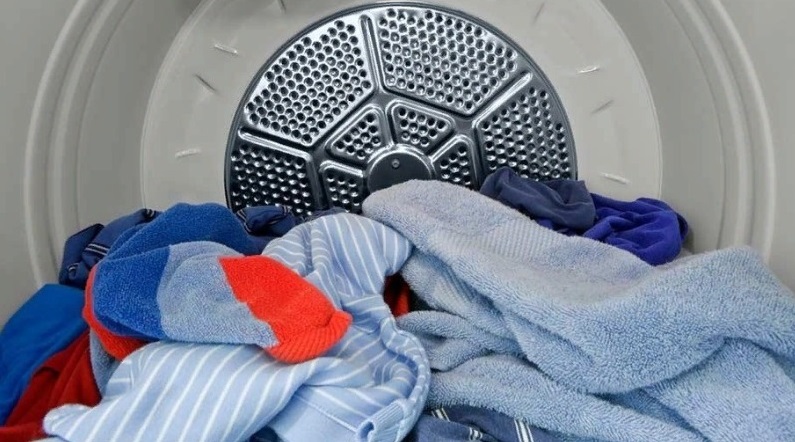
- Wash at low temperatures. Constantly using only the "quick wash" cycle prevents the machine from being disinfected with hot water.
- Closed door. After using the machine, wipe down the body, drum, and seal and open the door wide. Otherwise, any remaining water will attract spores.
After using the machine, leave the hatch door open!
- Storing laundry in the drum. Dirty clothes in the machine encourage mold growth.
- Incorrect use of fabric softeners. Many types of fabric softeners require a thorough double rinse. Otherwise, the oily residue isn't completely removed and instead encourages mold growth.
The main negative factor is the lack of preventative and comprehensive cleaning of the machine. The machine must be properly maintained, otherwise the mechanisms and hoses will become clogged, creating an ideal breeding ground for bacteria.
Cleaning technique
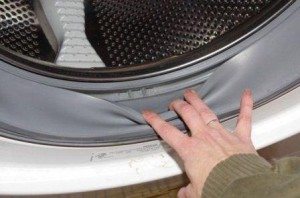
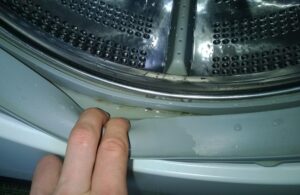
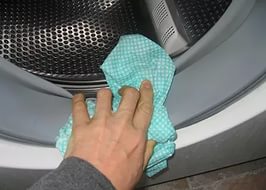
Mold's favorite place is the folds at the bottom of the cuff. To remove mold, use one hand to bend the edges of the seal to the side, and with the other, take a sponge or soft cloth soaked in cleaner and thoroughly treat the entire surface. Particular attention is paid to hard-to-reach areas.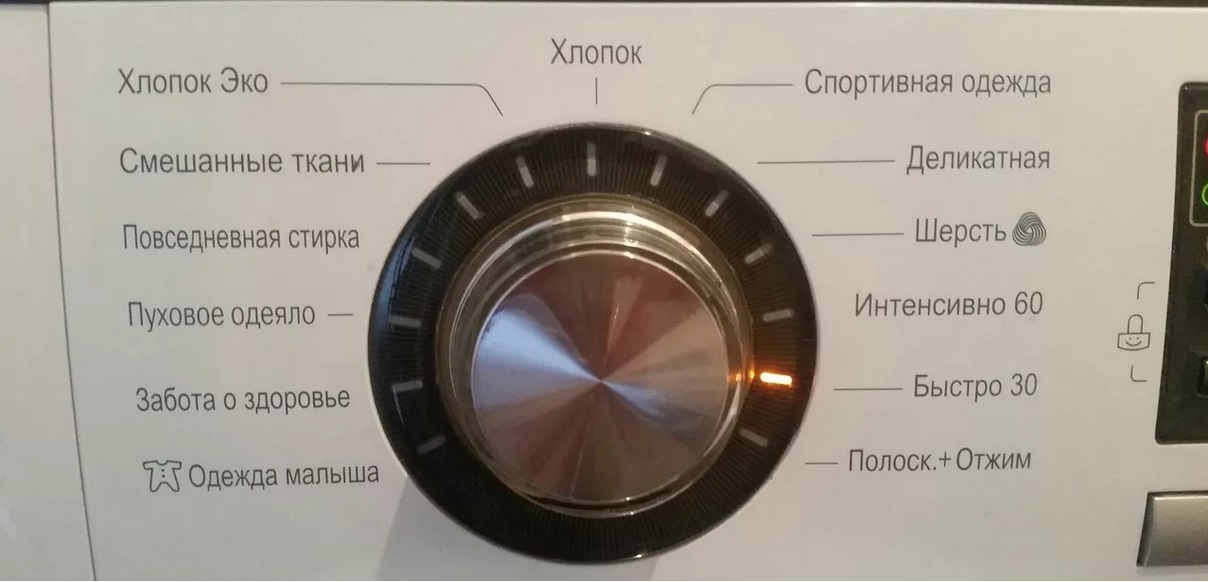
Don't rinse the product off the rubber band immediately. It's more effective to close the door and leave the treated cuff for 30-40 minutes. After half an hour, finish the process by rinsing the folds again and drying. To be on the safe side, run the "Quick" or "Cotton" cycle and then leave the drum open.
When cleaning the cuff, do not use caustic or aggressive acids. Such solutions can corrode the rubber seal, causing more harm than good.
Interesting:

Readers' comments
Headings
Washing machine repair




For buyers




For users


Dishwasher




Add a comment