
How to put rubber on a washing machine drum
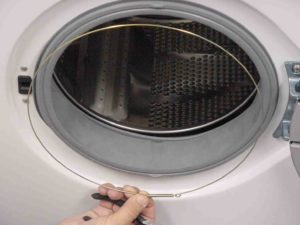 If you removed the drum seal for replacement or if the rubber seal has simply fallen off for some reason, you need to replace it. The drum seal ensures the hatch seal; if it moves even 5 mm, the hatch will start leaking, and this is absolutely unacceptable.
The seal needs to be perfectly seated, but it's not as easy as it seems. In this article, we'll explain in as much detail as possible how to install the seal on your washing machine drum as well as the factory technicians.
What materials and tools are needed?
To replace the drum seal on a washing machine, you'll only need two tools: pliers (preferably small ones) and a small flat-head screwdriver. The list of materials isn't extensive, but we'll discuss them in more detail.
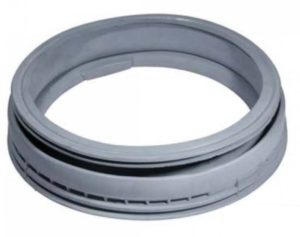
- Cuff. When purchasing a new cuff, make sure that it is identical to the old rubber band that was previously put on the drum or at least compatible with your washing machine model.
- Inner and outer clamps. If you have intact original clamps after removing the old seal, good. If the clamps are damaged, throw them away and buy a set of inexpensive plastic clamps for the door seal of a front-loading washing machine.
- Fine-grit sandpaper, soap, water, and a sponge. These materials will help prepare the seat for the rubber seal. Clean the metal edges of the hatch from any stubborn dirt and wash them with soapy water.
Using soap will not only clean the sealing area, but also act as a lubricant to help the rubber seal fit properly. Just be sure not to use WD-40 or machine oil as a lubricant—it will transfer to your items during washing.
Preparing the landing site
To make installing the washing machine's gasket easier, it's best to remove the front panel first. Doing this on purpose is tedious and time-consuming, but if, for example, you were repairing a part and the panel was removed, it's best to first install the door seal and then replace the panel. This article explains how to properly remove the front panel. Disassembling a washing machine, which is published on our website.
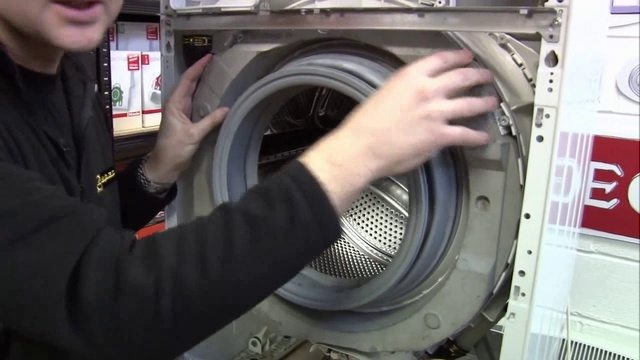
You can install the cuff without removing the front wall of the washing machine, but it will be a little more difficult. First, let's inspect the seal. After 3-4 years of washing machine use, a layer of limescale, detergent residue, and other debris accumulates under the seal. We try cleaning the seal with a sponge, soap, and water. After confirming that this method won't remove all the dirt, we grab some sandpaper. We scrape off the dirt, then rinse off the remaining residue with soap and water. The preparation is complete.
We stretch the cuff
The most important stage of the work begins: installing the sunroof rubber. Unpack the seal and clamps. Determine which clamp is outer and which is inner and set them aside for now. Next, proceed as follows.
- Rub the seat of the cuff with a bar of soap, paying special attention to the edges of the hatch.
- We lubricate the groove of the cuff with soap.
Don't get the entire sunroof rubber seal dirty with soap. A soapy seal will slip in your hands, and a slippery part will be impossible to "seat."
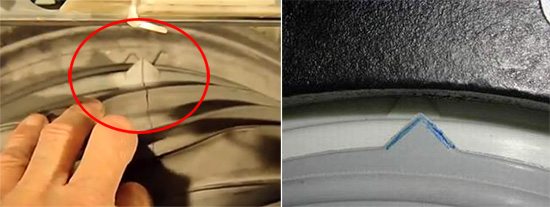
- We find a rubber protrusion in the shape of an arrow on the cuff; it needs to be aligned with the mark on the washing machine hatch.
- Now comes the most labor-intensive stage of the work: starting from the top edge of the hatch, we pull the cuff over the edges in a circle. This will require a fair amount of effort, so don't be afraid to stretch the cuff to its limit, but don't overdo it.
- Inspect the cuff. Make sure the rubber part fits snugly into its seat. Adjust the rubber if necessary.
- We're putting on the internal plastic clamp. This part is very easy to install; just insert the free end into the latch and tighten.
- We tuck the outer edges of the cuff onto the edge of the hatch and tighten them with the outer clamp in the same way.
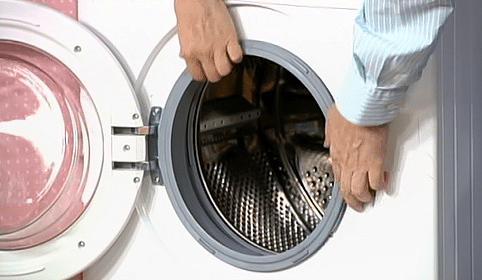
Installation is complete. Now we check how the door closes. If it doesn't close, the seal is installed incorrectly and will need to be reinstalled or at least the outer clamp removed and adjusted. If the door closes, we try running a wash cycle, carefully checking that no water leaks or drips from the door. The new seal should ensure a perfect seal.
Interesting:

Readers' comments
Headings
Washing machine repair




For buyers




For users


Dishwasher




Add a comment