
Error D02 in a Bosch washing machine
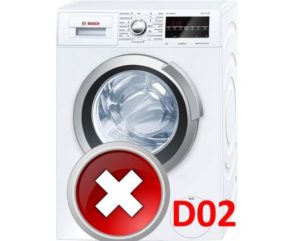 The self-diagnostic system found in modern Bosch washing machines immediately notifies the user of any malfunction. By interpreting the error code displayed on the display, you can determine why the machine is not working. If you encounter the D02 error code in your Bosch washing machine, don't be discouraged. In most cases, you can restore the washing machine to working order yourself with a few simple repairs.
Decryption required
First, you should understand what this symbol means. You can find out how the manufacturer interprets the error in the user manual. Code D02 informs that the waste water was not removed from the tank within the allotted time for draining. You'll have to find out what exactly is broken yourself. You should begin your diagnostics by checking the following washing machine components:
- Debris filter. The part is inspected for blockages. If the filter element becomes clogged, the rate of water removal from the tank is significantly reduced;
- Pump impeller. The part may have become blocked—in this case, debris gets wrapped around the impeller blades or a foreign object gets stuck between them. It becomes impossible for the impeller to rotate. It's also possible that the plastic has simply broken;
- Drain hose. If the drain hose is kinked or improperly connected, water may remain in the system instead of draining into the sewer;
- Sewer pipe. It's possible that the household pipes are clogged, preventing the liquid from draining from the washing machine tank. In this case, draining from the bathtub and sink will also be difficult;
- drain pump. The element has likely failed and is unable to fully pump out water.
To find the exact cause of error D02, you'll need to meticulously check each component of your Bosch washing machine. First, inspect the simplest parts—the debris filter, impeller, and drain hose. Only then should you disassemble the machine and test the pump.
Inspecting the filter element
In some cases, cleaning the drain filter can help correct the problem. It's a plastic spiral that traps dirt that gets into the machine. The filter element is located in the lower right corner of the washing machine, behind a small hatch or narrow false panel. To inspect and clean the element, follow these steps:
- de-energize the washing machine;
- disconnect the equipment from the water supply;
- open the hatch or false panel by releasing the fastening latches;
- Place dry rags or a bowl under the washing machine to collect water;
- remove the element from the housing by turning the cover from left to right.
Do not remove the filter immediately after the wash cycle is complete; the water in the system will not have time to cool down, and there will be a high risk of scalding.
Remove all debris from the removed plastic coil and clean it of any residue. Then rinse it under running warm water. If heavily soiled, it's recommended to soak the filter in water with citric acid for half an hour beforehand.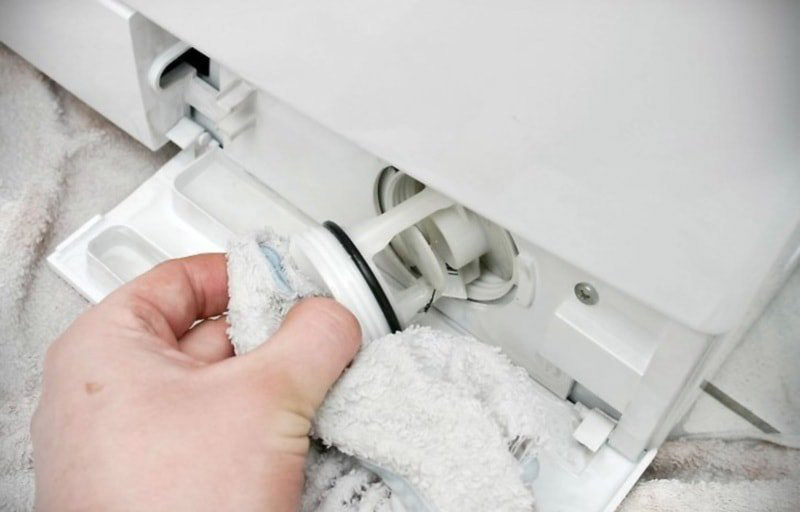
The hole revealed by removing the dust filter allows you to inspect the impeller. Shine a flashlight inside the machine. If you notice hair or other debris tangled around the impeller, be sure to clean it. Insert a screwdriver or other long, thin object into the hole and watch the impeller rotate. Ideally, you should feel a slight resistance as it rotates.
Let's check the drain hose
Next, pay attention to the drain hose, which carries waste liquid into the sewer. Inspect the hose; it's likely kinked somewhere. If a visual inspection reveals no problems, disconnect the hose from the sewer pipe and inspect it for any blockages.
A drain hose correctly connected to the washing machine will have a bend designed to prevent a siphon effect.
If your washing machine is connected to an extended hose, the drain pump of your Bosch machine experiences a significant load. The optimal hose length from the pump to the drain outlet is between one and a half and three meters. If the drain hose is longer, the risk of premature drain pump failure increases significantly.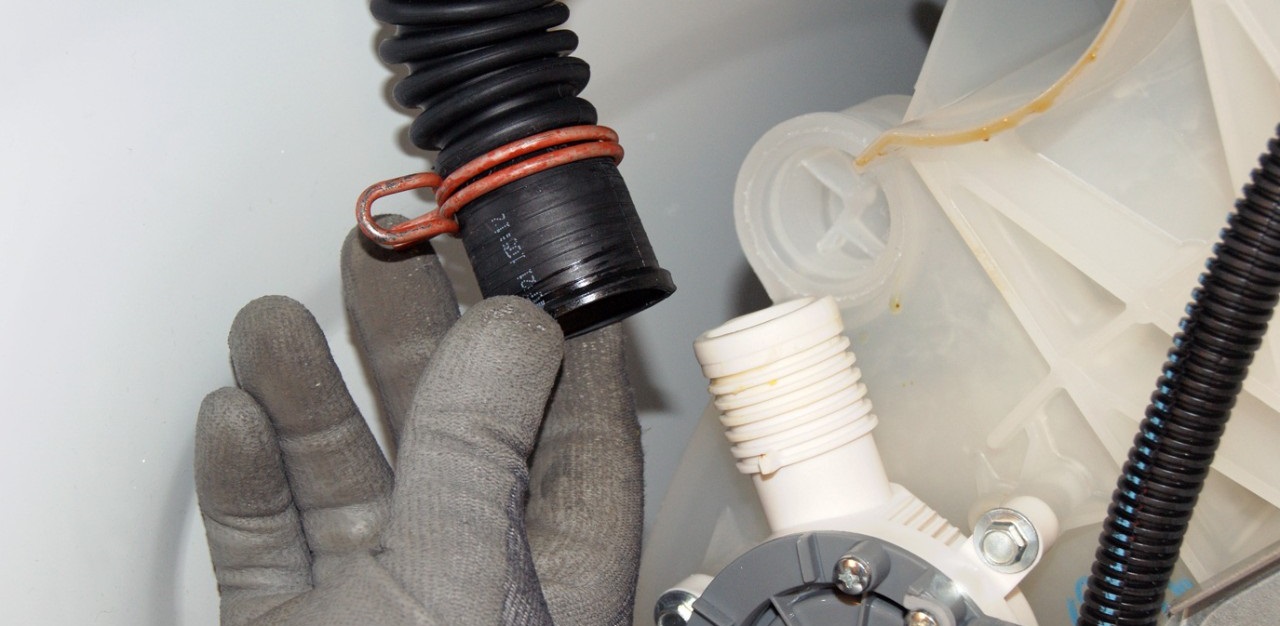
We check the pump in detail
If you still can't find the cause of the D02 code displayed, you'll need to check the pump. To access the drain pump, lay the washing machine on its back. Before turning the machine over, make sure there's no water in the dispenser or tub. Here's the procedure for diagnosing the pump using the first method:
- disconnect the washing machine from the network and communications;
- Place the washing machine on the floor and look inside through the missing bottom;
- remove the connectors or terminals from the pump;
- connect the terminals from the conductor with a plug, which must be prepared in advance, to the drain pump;
- make sure the connection is secure and there are no foreign contacts;
- plug the conductor into the socket;
- Check the pump's functionality. If it starts working and draining water, the drainage system is fine. The cause of the failure to drain water from the tank will need to be looked for in the main control module or pressure switch.
The second method is to test the pump with a multimeter. Set the tester to resistance mode and place its probes across the pump contacts. If the multimeter shows a resistance value in the range of 150 to 260 ohms, then the drain pump is working properly. A "0" reading on the device's display indicates a short circuit. If the standard value is exceeded, it indicates a stator winding break.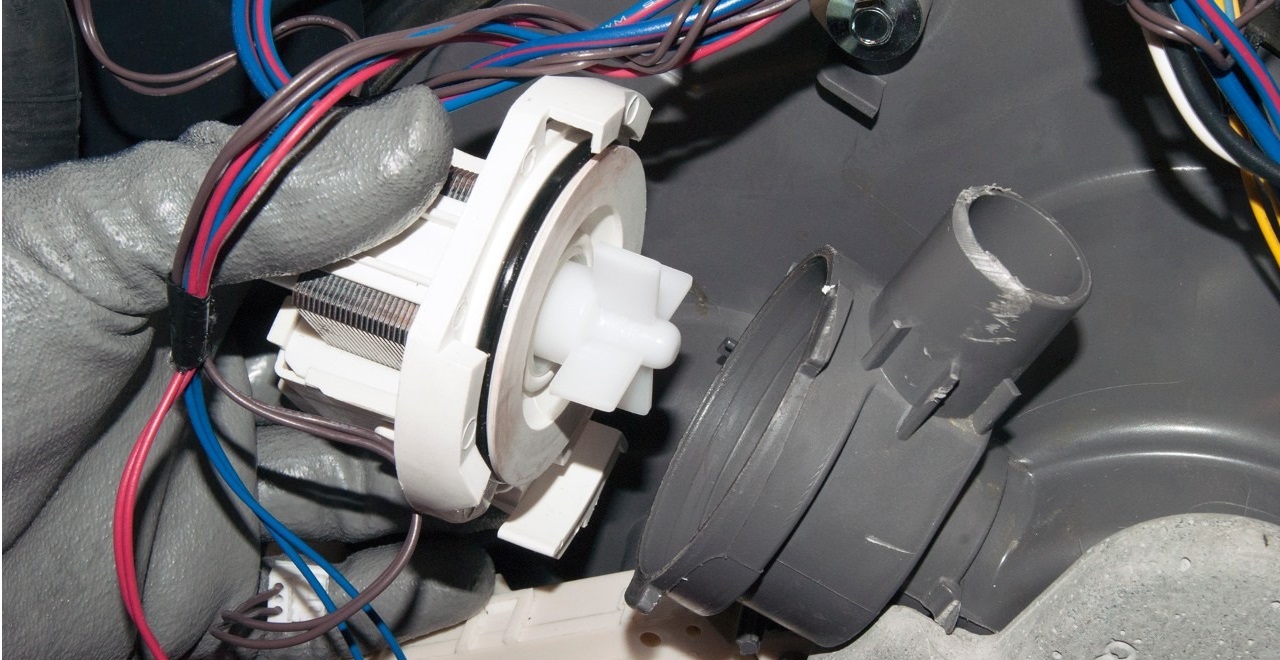
Once you've identified any resistance deviations and diagnosed the problem, you must remove the failed pump and install a new one. Repairing the old component yourself is impractical, and sometimes simply impossible. A mechanical inspection of the drain pump is also possible. To diagnose the pump this way, you must:
- remove the snail;
- Turn the impeller. Ideally, the rotation should be intermittent;
- Rock the impeller left and right across the axis. If you notice even a slight play, the pump is faulty and needs to be replaced;
- Plug the pump into a power outlet and connect the power cord. The motor should operate properly and make no noise.
A replacement drain pump is selected based on its serial number. Ideally, it is best to purchase original components, but it is also possible to install an equivalent with similar characteristics.
It's important that the pump you purchase is of similar capacity and matches the mounting location. If the problem persists after testing, the main control unit is likely the culprit. It's best to entrust board repair to an experienced technician.
Interesting:
Readers' comments
Headings
Washing machine repair




For buyers




For users


Dishwasher




Add a comment