
Error E02 on a Beko dishwasher
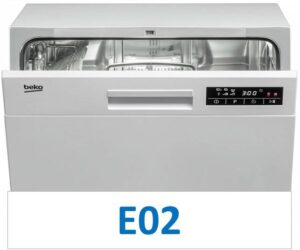 A very common error message, E02, displayed on a Beko dishwasher indicates a problem with the water supply. The cause of the problem can be external (water supply outage) or internal (sensor failure). We'll explain why your machine won't fill and what parts to check first.
The Aqua Safe system was activated
Often, the E02 error message displayed on a Beko dishwasher indicates that the leak protection system has been activated. Therefore, it's important to check the "Aqua Safe" system, which functions similarly to the more familiar Aquastop. If the dishwasher detects a leak, it will stop filling with water and initiate an emergency drain.
First, inspect the sensor on your Beko dishwasher's inlet hose. If the indicator turns red, the Aqua Safe alarm has been triggered. To reset the error, simply replace the hose.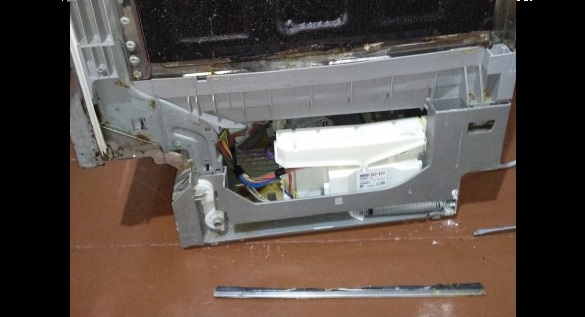
Next, check the Beko dishwasher's tray. If a leak occurs inside the dishwasher, that's where the water collects. The float switch rises, and Aqua Safe blocks the dishwasher, stopping the water intake and activating an emergency drain. To reset the error, you'll need to find the source of the leak and fix the problem.
The inlet filter element is clogged
A Beko dishwasher often fails to fill due to a clogged inlet filter. Tap water quality in most Russian regions remains poor. It flows through rusty pipes, resulting in water containing various impurities entering homes.
To minimize the negative impact of dirty and hard tap water on dishwashers, manufacturers install special filters. The mesh protects the appliance from impurities contained in the liquid. Over time, the filter element becomes clogged, and cleaning it helps solve the problem.
To clean the inlet filter of your Beko dishwasher:
- de-energize the equipment;
- disconnect the machine from the water supply and sewerage system;
- Disconnect the inlet hose from the dishwasher;
- find the filter, it is located in the hose, in the place where water enters the machine;
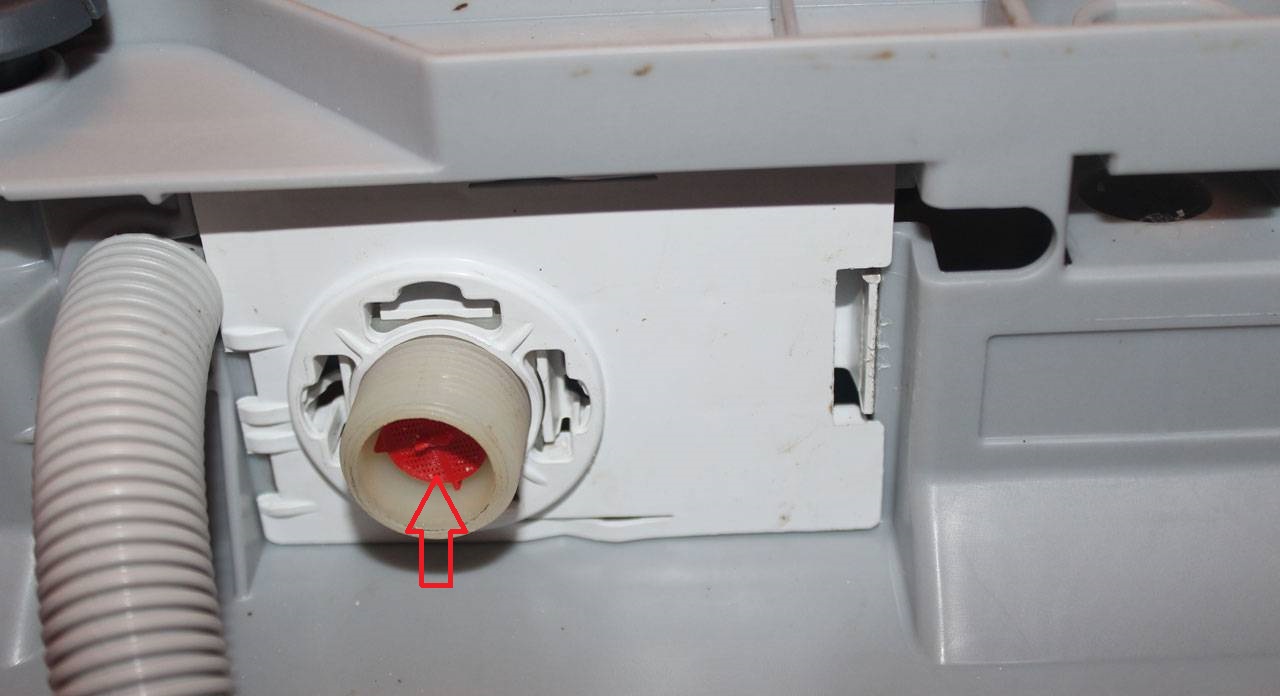
- remove the mesh and rinse it in warm water (if necessary, clean the filter with a brush);
- Place the mesh back into the inlet hose;
- screw the inlet hose to the dishwasher body;
- make sure the connection is tight;
- Run a test cycle and observe the operation of the dishwasher.
It is necessary to clean the dishwasher's inlet filter regularly, at least once every six months.
Cleaning the Beko dishwasher's inlet filter is very simple; any homemaker can handle it. The process itself takes no more than 10 minutes. If the filter is clean, you'll need to check the dishwasher's inlet valve.
The valve stopped opening
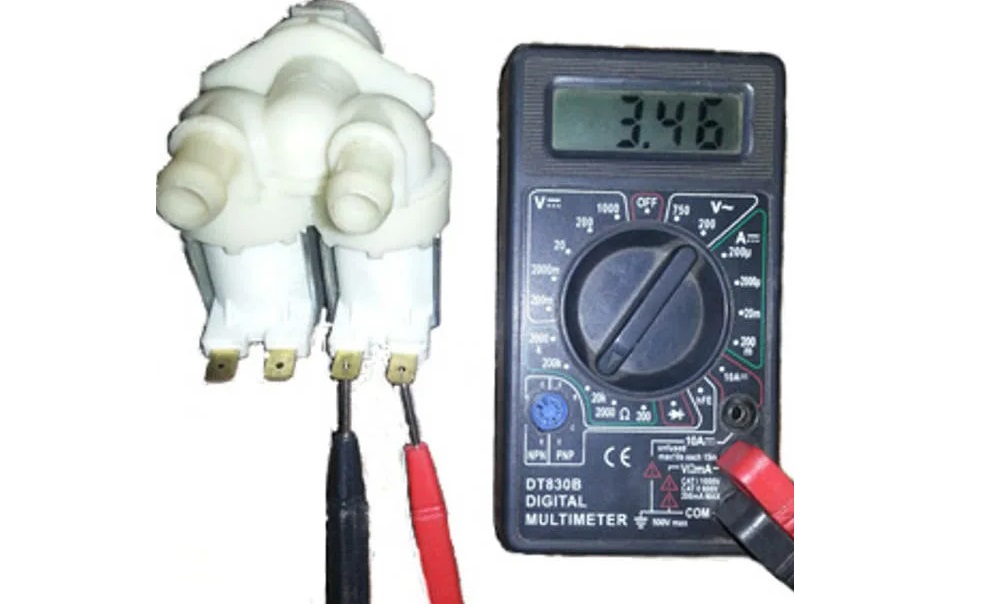
Another possible cause of the E02 error is a faulty fill valve. A multimeter can be used to determine its malfunction. If the tester shows that the solenoid valve is damaged, it will have to be replaced – the element cannot be repaired.
Replacing the intake valve is easy. The procedure is as follows:
- Turn off the power to the Beko dishwasher and disconnect it from the water supply and sewerage system;
- Unscrew the screws securing the outer door panel and remove it;
- disconnect the wires from the control panel;
- remove the dashboard;
- Disconnect the water supply line from the inlet valve (using a wrench);
- Use pliers to remove the mounting clamp from the solenoid valve;
- disconnect the wiring and remove the valve from the dishwasher body;
- Place the new valve in place and connect the wires and pipes to it.
You must purchase components specifically for your Beko dishwasher model. Better yet, remove the damaged valve and bring it to the store so a sales associate can select a similar part. After the repair, test the dishwasher by running a test cycle.
The pressure switch is not working properly.
This error code can also be triggered by a malfunctioning pressure switch. Therefore, it's next in line for inspection. The water level sensor begins transmitting false information to the control module, causing the dishwasher to stop filling. Cleaning or replacing the element resolves the issue.
An incorrectly functioning level sensor will indicate that there is enough water in the dishwasher even when the machine is empty, and the "brain" will not give the command to fill it with liquid.
Sometimes the pressure switch's pressure hose becomes clogged, causing the sensor to transmit erroneous information. The fitting can be cleaned. If this doesn't help, the element will need to be replaced. The procedure is as follows:
- disconnect the dishwasher from all utilities;
- open the dishwasher door and remove the dish baskets from the working chamber;
- remove the debris filter, wipe away any water remaining in the hole;
- lay the dishwasher on its side;
- remove the dishwasher tray and find the water level sensor (it is a small plastic box with a tube attached to it);
- unscrew the bolts securing the pressure switch;
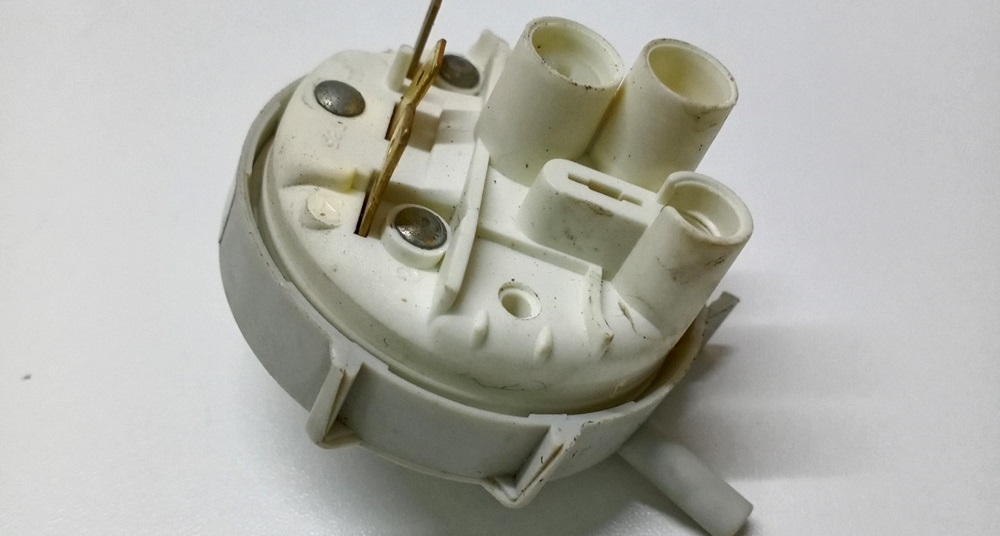
- disconnect the wires and pipe from the water level sensor;
- remove the old pressure switch and install a new water level sensor in its place;
- secure the part with bolts;
- Connect the pipe and wiring to the new pressure switch.
After assembling the case, a test wash cycle is typically run. But what if this doesn't clear the code? The dishwasher's electronic module is next to be checked.
The control module coordinates the operation of all dishwasher components. If it is damaged, the dishwasher may display any error code, including E02. It's best to entrust diagnostics of the electronic unit to specialists; without experience and knowledge in this area, detecting the fault and repairing this component will be difficult.
Interesting:
1 reader comment
Add a comment
Headings
Washing machine repair




For buyers




For users


Dishwasher




Good afternoon. When I got the E02 error, I replaced the water supply hose. After the replacement, the machine worked properly for one cycle, but when I turned it back on, it returned the E02 error.