
Error E06 in a Hansa washing machine
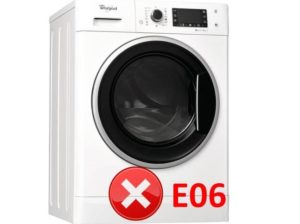
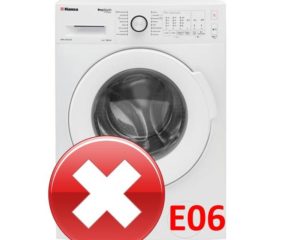 The E06 error displayed by the Hansa washing machine indicates a problem draining the waste water from the drum. The code's interpretation is rather vague; to determine the source of the problem, a diagnostic is required. Experienced technicians can pinpoint the cause of the E06 error in a Hansa washing machine in just a few minutes. If you want to restore the machine's functionality yourself, you'll have to spend more time, partially disassembling the machine, and inspecting each element of the drainage system. Let's figure out how.
The meaning of the cipher
The self-diagnostic system of Hansa automatic machines automatically displays a fault code on the display when a malfunction is detected. Error E06 indicates that the water was not drained from the tank into the sewer system within the allotted time. The draining process is too slow or doesn't start at all. The machine, having failed to drain the water the first time, will initiate a second drain cycle. If the system is not fully drained within this time, the machine will display the E06 code. Draining may be obstructed due to:
- failure of the pump or its severe clogging;
- clogged drain filter;
- break in the pump power supply wiring;
- pressure switch failure;
- clogging of the drain hose or its improper connection;
- malfunctions of the main control unit.
To eliminate error E06, it is necessary to check all elements of the washing machine that can cause this code.
You should try to fix the problem from the simplest point: first, check the debris filter and the drain hose, then move on to diagnosing the drain pump and level sensor. It's best not to attempt repairs to the control board without experience working with electronics. Incorrect steps can permanently damage the control module.
The drainage system is clogged
Checking the condition of the waste filter is very easy. Even a housewife can do it herself. The filter is a plastic spiral whose surface collects waste that has entered the drainage system. The filter element is located at the bottom of the washing machine, in the right corner, behind a small door. To remove the waste filter from the housing, follow these steps:
- de-energize the machine;
- disconnect the equipment from the house communications;
- Using a thin screwdriver, pry up the door, release the locking latches and open it;
- cover the floor under the washing machine with rags or place a container to collect water;
- holding the protruding part of the filter, start unscrewing the part from left to right.
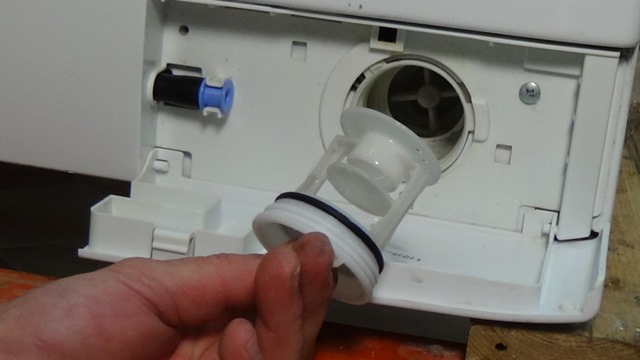
What should you do with the element once you've got it? Clean off any dirt, remove any tangled hair, and rinse the coil under running water. If the element is heavily soiled, it's best to pre-soak the filter element in water with citric acid.
After cleaning the debris filter, it's a good idea to inspect the opening where it's inserted. Remove any residue from the walls. Then, use a flashlight and shine it into the cavity. Carefully inspect the pump impeller. Hair often gets caught in it, preventing it from rotating and triggering the E06 code. It's also a good idea to inspect the drain hose. It may be kinked or clogged. Clearing the drain hose may help.
Let's look at the pump
If cleaning the debris filter doesn't help reset the E06 error, you'll have to dig deeper. In some cases, the reason why it is impossible to remove water from the washing machine tank is a faulty drain pump or a broken pump wiring. You can inspect the drain pump of your Hansa washing machine through the missing bottom. To do this:
- disconnect the machine from the power supply and communications;
- cover the floor with rags;
- place the machine on its back wall;
Before placing the washing machine on the floor, make sure there is no water in the drum and dispenser, otherwise a leak will occur.
- Disconnect the wiring from the drain pump;
- connect a pre-prepared conductor with a plug to the pump;
- make sure the connection you have created is secure;
- plug the cord directly into an electrical outlet;
- Monitor the situation. If the pump operates, there are no drainage issues, and the cause will need to be looked for elsewhere—the control board or the pressure switch.
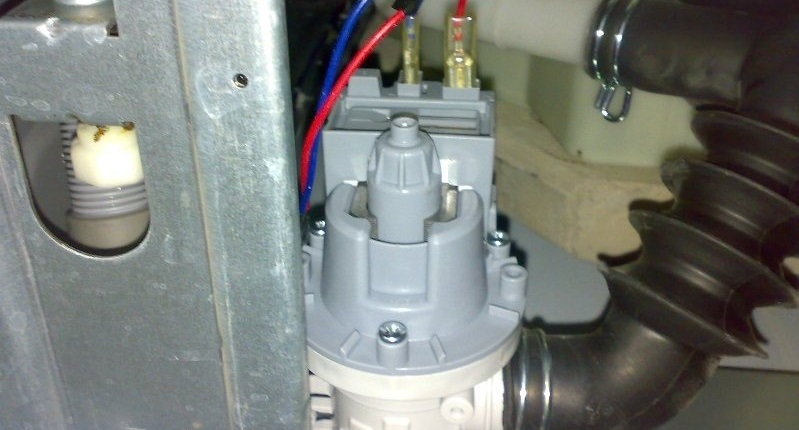
You can also diagnose the pump using a multimeter. The tester's probes are placed across the pump's terminals. The device should be set to resistance measurement mode. If the multimeter displays a value between 150 and 260 ohms, the component is functioning properly. A zero reading indicates a short circuit. If the device displays a value higher than the specified value, the stator winding has broken. Repairing the drain pump is not advisable; it's best to purchase a new pump and replace the component.
There's another way to manually check the drain pump. Here's how to diagnose it:
- remove the snail;
- Use your finger to turn the impeller; it should rotate intermittently, as the magnetic rotor moves in jerks;
- Try rocking the impeller left and right across the axis. If any play is detected, the drain pump needs to be replaced;
- Plug the motor into the power outlet using the power cord. A properly functioning motor will begin operating without making any extraneous noise.
You can purchase a replacement drain pump at specialized stores or order it online from reputable suppliers. Select the pump based on its serial number. It's best to purchase components directly from the washing machine manufacturer, but you can also buy an alternative with similar specifications, the same power, and the same mounting location.
We look at the water level sensor tube
If the situation persists after a full inspection of the drainage system, it is recommended to inspect the pressure switch. The water level sensor sends signals to the machine's "brain" indicating the tank's fullness during filling and draining.
If the pressure switch tube becomes clogged, contact with the control module is lost, and the machine displays the familiar E06 code.
You can check the level sensor like this:
- turn off the power to the washing machine and disconnect it from the utilities;
- remove the top cover of the unit by unscrewing the bolts that secure it;
- find the pressure switch - it is a small round box attached to the edge;
- disconnect the wires leading to the sensor, remove the element from the housing;
- Check the box and tube for defects or blockages.
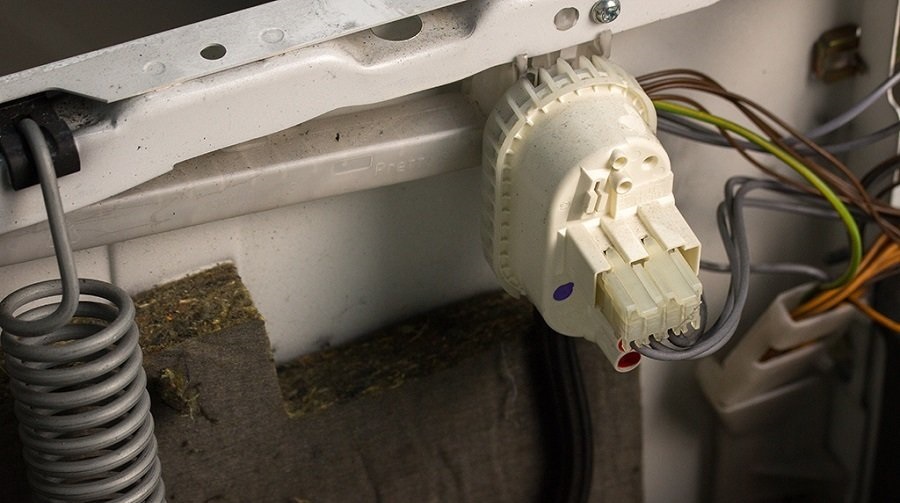
To diagnose the sensor, prepare a tube with a diameter similar to the pressure switch fitting. Connect it to the pressure hose. Next, blow into the tube. Two or three distinctive clicks will indicate that the contacts are working, meaning the water level sensor is working properly. If the pressure switch makes no sound, the part will need to be replaced; repairs won't help in this case.
If, after checking the pressure switch and cleaning the drainage system components, the washing machine still displays the E06 error, the control board is likely damaged. It's best to call a technician to diagnose and repair the main control module.
Interesting:
Readers' comments
Headings
Washing machine repair




For buyers




For users


Dishwasher




Add a comment