
Error E1 on a Midea dishwasher
 Every homemaker wants their appliances to always function perfectly, without the slightest glitch, but this is impossible due to the natural wear and tear of parts. Therefore, you should always be prepared for an error code to appear on the display during the cycle, which will interfere with the wash cycle. One of the most common malfunctions is the E1 error, which is associated with difficulty filling with water or no water at all. We'll explain why this happens and how to fix it.
List of possible malfunctions
When any error code appears, you first need to carry out a manual diagnosis to determine the cause of the malfunction and then, if possible, fix it. During the initial inspection, a partial disassembly of the Midea "home assistant" is not necessary, since it is necessary to first study the supporting factors. What to do during the initial steps?
- Check the water pressure in the pipes to see if there's any. Perhaps there was a water outage, which is why the machine can't fill with water. Open any faucet in the house to test this theory.
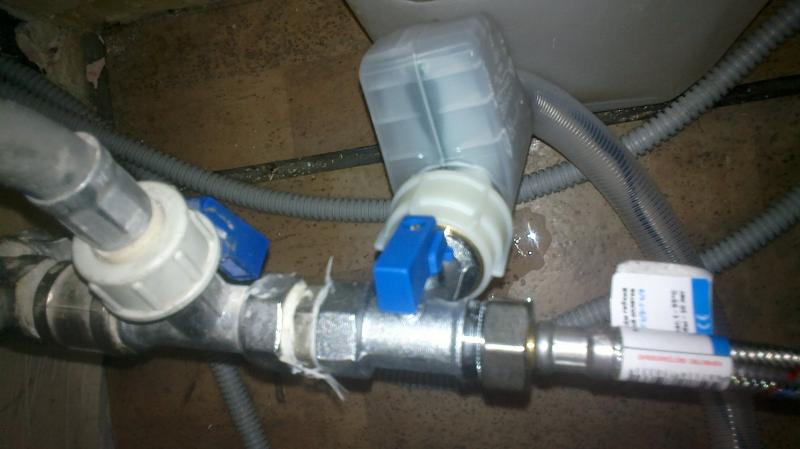
- Check the shut-off valve before the tee tap, which may be closed, preventing water from flowing into the Midea dishwasher.
- Check that the machine door is closed completely. If the door to the washing chamber is not closed completely, the control unit will not operate, and the machine will not begin to fill with water.
- Assess the condition of the inlet hose, which could have been accidentally damaged, kinked, or pinched by the dishwasher itself, which could have crushed it.
If none of the above applies, the problem may lie within the machine itself. In this case, the E1 error could be caused by the following:
- clogged flow filter;
- clogged coarse filter;
- the Aquastop system has been activated, which protects equipment from leaks;
- A broken door locking device. If the door locking device on a Midea dishwasher is faulty, the door will not lock and the control board will not receive a signal that the system is completely sealed, which then triggers the water intake;
- a non-functioning inlet valve, which could have stopped functioning due to a simple blockage or damage from water hammer;
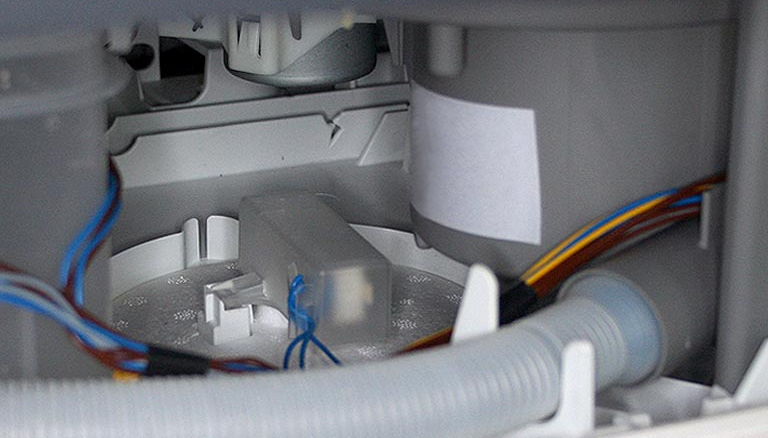
- A damaged water level sensor that transmits incorrect water level data or fails to transmit information at all. If this occurs, the equipment will not be able to start the operating cycle;
- faulty dishwasher control board.
You can clean clogged filters and replace a faulty water level sensor, inlet valve, or door lock yourself if you carefully follow our instructions. However, before attempting any repairs, make sure your appliance is still under warranty. If it's still under warranty, it's best to contact a service center, where they'll inspect and repair your machine for free. If your appliance was purchased a while ago, you can handle the repairs yourself.
Mesh in the valve
In Russia, the E1 error often appears due to poor quality tap water. This is due to the fact that tap water contains too many harmful impurities, which can damage the internal components of the Midea dishwasher. To prevent this from happening, the device is equipped with a mesh filter that keeps out contaminants. However, it sometimes gets clogged, so it needs to be cleaned at least once a year. What should you do about it?
- Disconnect the equipment from all communications.
- Disconnect the inlet hose and drain all the water from it.
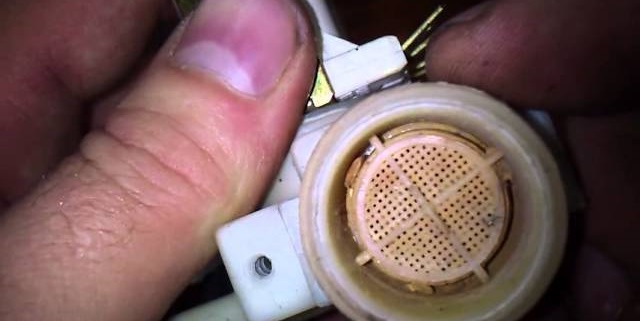
- Remove the debris filter and clean it thoroughly using a stiff brush and a strong stream of hot tap water.
If the filter is too heavily contaminated, you can soak it in a citric acid solution for about an hour.
- Install the filter element in its place.
To reduce clogging of the debris filter, you can also install a flow-through filter in front of the Midea dishwasher's inlet hose to prevent any contaminants from the water supply from reaching your dishwasher. Don't forget to clean the additional filter regularly, too.
The valve does not open normally
If the lack of water intake wasn't caused by the debris filter, the next step is to check the solenoid valve, which may have failed. This component is located at the top of the dishwasher, where the inlet hose is connected. The element can withstand pressure up to 1 MPa, but due to water hammer, the pressure can increase significantly, causing damage to the component.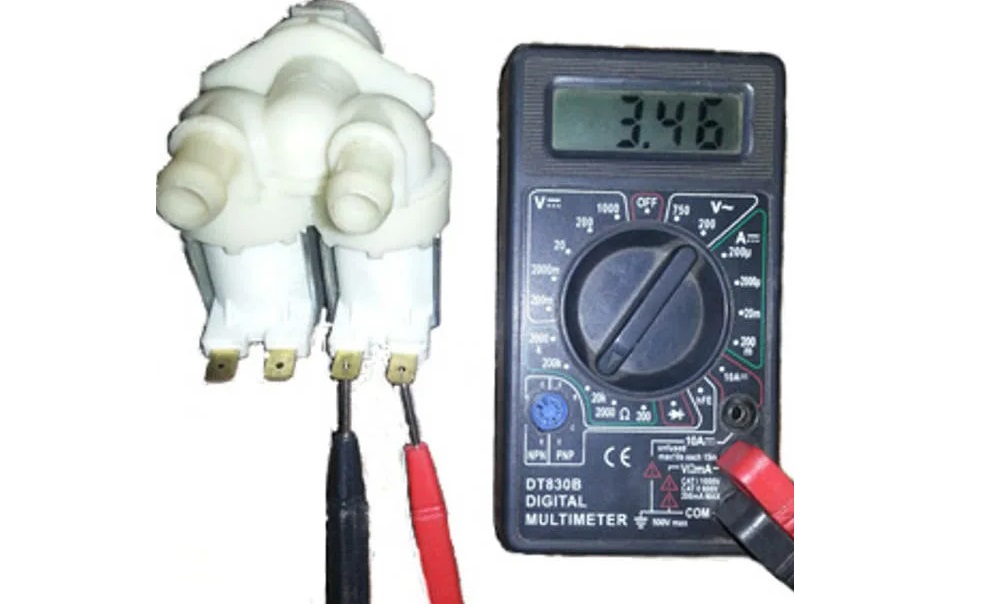
Additionally, the valve may stop working properly due to a broken circuit. If this is the problem, a lengthy inspection of the wiring and contacts is necessary. This will restore the solenoid valve's connection to the Midea dishwasher's control board and restore the normal liquid supply for the operating cycle.
The solenoid valve can also become clogged with various debris, which will interfere with its operation. In this case, simply remove it from its mounting location and clean it.
Finally, you need to check for a break in the valve coil. If this happens, it's best not to try to repair the element; instead, buy a new one to save time and effort, and avoid risking the functionality of your Midea dishwasher.
Incorrect data from the pressure switch
The final reason worth paying attention to is the failure of the water level sensor. If the pressure switch stops sending data about the current water level, or begins transmitting incorrect information, the control board will simply stop filling the system with water to prevent flooding. This is because the dishwasher's control module can't determine what to do in this situation, so it will simply take the prescribed precautions. In this case, partially disassembling the appliance and checking the pressure switch with a standard multimeter will help reset the error code.
- Disconnect the equipment from the water supply and electrical network.
- Place the Midea dishwasher on its side.
- Remove the bottom of the unit to provide free access to the key components of the unit.
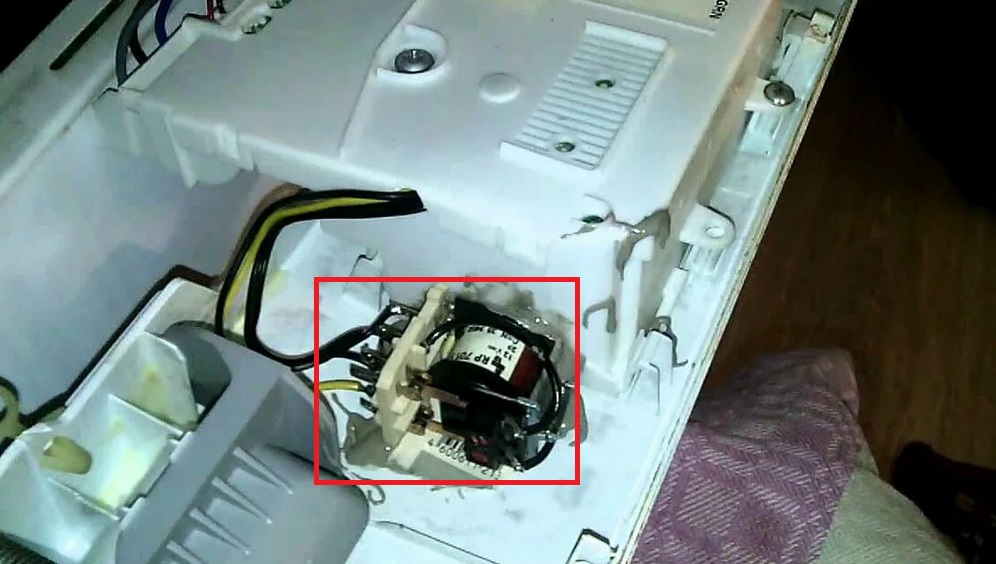
- Locate the pressure switch, which looks like a plastic washer.
- Carefully remove the tube from the water level sensor.
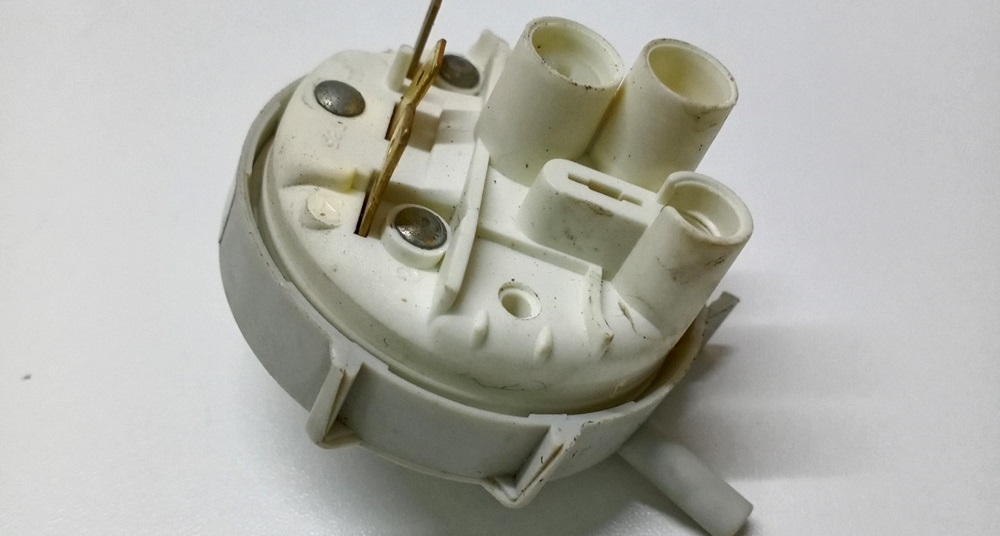
- Then disconnect the element fasteners, disconnect the wiring and the sensor itself.
Just in case, take a photo of the correct connection of the wires to the pressure switch so that you can use the example during reassembly.
At this point, all that remains is to switch the multimeter to ohmmeter mode, connect its probes to the sensor contacts, and measure the resistance. If the results are abnormal, do not attempt to repair the pressure switch; it's best to replace it with a working part to reliably reset the E1 error code.
The brain of the dishwasher
If all previous troubleshooting steps have proven futile, the only thing left to fix is the Midea dishwasher's control board, known as the "brain" of the entire system. Unfortunately, unlike previous dishwasher components, repairing the electronic module yourself is impossible, as it requires not only experience and training, but also specialized equipment. Furthermore, if the board fails, further use of the appliance becomes impossible, making this a particularly frustrating problem for users. If this happens, the only thing you can do at home is inspect the component and determine whether it needs repair.
- Disconnect the machine from the power supply.
- Open the door of the device.
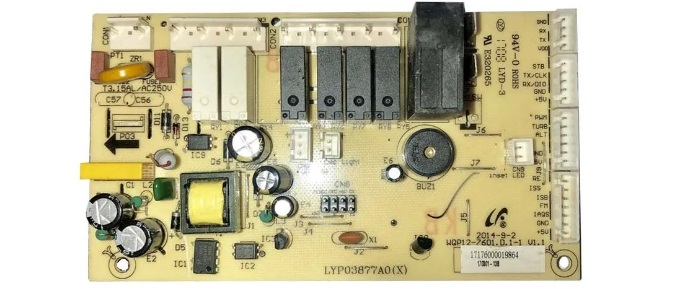
- Remove all fasteners from the door.
- Find the control board of the Midea dishwasher.
- Carefully examine the appearance of the electronic component.
If you find burnt wiring or circuits, the problem is definitely in the dishwasher's "brain." A service center specialist can repair it, so don't delay repairs to get your dishwasher back in working order as soon as possible. If the damage isn't visible to the naked eye, call a repair technician for a thorough diagnosis.
Interesting:
1 reader comment
Add a comment
Headings
Washing machine repair




For buyers




For users


Dishwasher




The water drains and E1 comes out. I reset it, and the tap comes out. I fill it with water again, turn it on, and only after the fifth time does it turn on. Tell me, what am I doing wrong? After every wash, I wipe it down, blow it out, and it still acts up.