
Error E10 in a Hansa washing machine
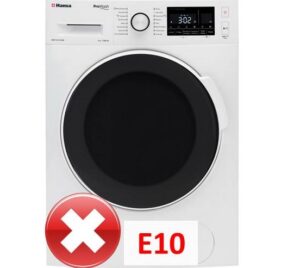 Modern washing machines are equipped with a self-diagnostic system for detecting any problems. They constantly monitor the status of their components and sensors, recording any suspicious changes in their operation, and display an error message if a malfunction occurs. Hansa washing machines also perform self-diagnosis. The Hansa database contains dozens of different error codes, one of which is "E10." We suggest taking a closer look at this code, discovering the causes of the error, and how to resolve it.
Moments when the error appears
The peculiarity of the E10 error code on a Hansa washing machine is that it can appear at different stages of the cycle. The cause of the failure depends on the moment the self-diagnostic system is triggered. Thus, the machine can report a malfunction at four stages of the equipment’s operation.
- When starting a cycle. In this case, Hansa displays error E10 immediately after the electronic hatch lock is activated and the "Start" button is pressed.
- After filling with water. The second option is that the error appears as soon as the machine has completely filled the tank.
The "E10" error code on Hansa washing machines appears when starting a cycle, after filling with water, starting heating, or spinning.
- When heating begins. Shortly after the wash cycle begins, the heating element begins to heat up, causing the washing machine to display "E10" and terminate the cycle. Interestingly, the machine does not display an error message when the low-temperature program is selected.
- When switching to the spin cycle, the washing machine attempts to spin the drum after the rinse cycle, but only reaches 600-800 rpm, then abruptly stops and displays "E10."
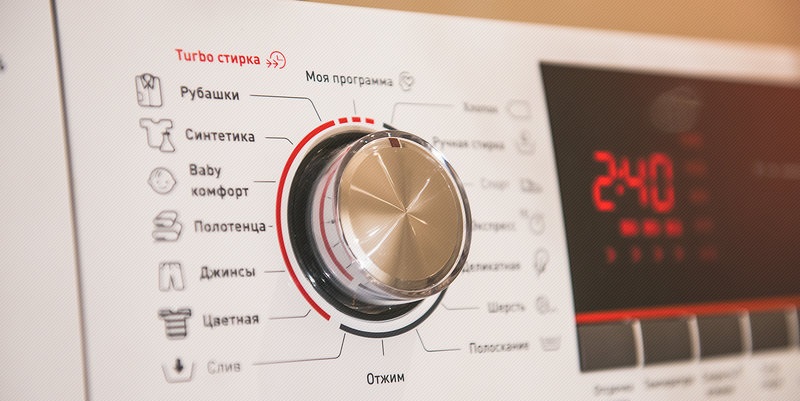
The further diagnostic procedure and repair process depend on when the code appeared. The easiest time to resolve the issue is when the error appears at the very beginning of the cycle. It's more difficult if the washing machine has already filled the drum, which means you'll have to manually drain the water first. In any case, it's important to understand the meaning of "E10" and the causes of its occurrence.
Let's decipher the error
According to the Hansa factory manual, the "E10" code stands for "power supply problems." Simply put, the system's specially designed sensors have detected a sudden drop or increase in voltage in the electrical network. Sensitive to surges, the electronics "respond" to the interference by shutting off the power supply for safety reasons.
The error code "E10" indicates problems with the power supply, external or internal.
The "E10" code is more common on modern Hansa washing machines. Previously, more stable machines were produced that washed normally at voltages ranging from 175V to 270V. Even with sudden voltage fluctuations, the machines continued washing without stopping the system.
For the past 5-7 years, washing machines have been equipped with surge protectors that are quite vulnerable to power surges, causing them to frequently shut down and freeze. Modern washing machines, which are more sensitive to power surges, occasionally "delight" users with the "E10" warning, especially when used in sparsely populated areas.
Possible causes of the error
How to fix the "E10" error depends on the cause. Most often, the problem is caused by a power outage, either short-term or long-term. Power supply problems can occur if:
- the socket is faulty (burned out, contacts melted);
- a sharp voltage surge was recorded;
- the voltage in the power grid remains critically low or high for a long time;
- the extension cord used for connection broke or could not handle the load;
- The voltage control system in the control board failed.
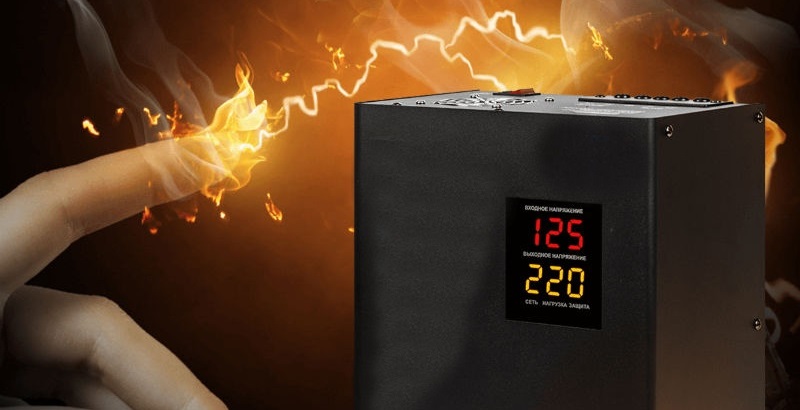
By the way, manufacturers of washing machines, including Hansa, recommend not using extension cords and multiple sockets. It is safer to allocate a separate power outlet of appropriate power for the machine in order to eliminate “middlemen”. Experts also advise connecting the machine through special stabilizer – with it, the unit will always operate in the appropriate range of the electrical network.
While power supply problems can be short-lived and resolve without user intervention, a faulty outlet, a broken circuit board, or an unsuitable extension cord presents more complex problems. This is especially true if the control module fails. This is rare and difficult to diagnose: sometimes just a single microelement shorts out. Ignoring such a failure can lead to more serious damage, such as a burnt-out track or triac, or even the entire unit itself.
How to get rid of the problem?
Don't assume the worst right away. Control board failures are extremely rare; more often, the "E10" error is much easier to fix. In most cases, the cause of the failure is issues that can be resolved without repairs or lengthy diagnostics. To diagnose and begin treatment of your Hansa, you'll need to check all possible faults sequentially, starting with the most basic.
First, we check to see if the error occurs a second time. It's possible that a temporary technical glitch occurred. To diagnose this, simply reboot the machine and assess the condition of the equipment. Here's what to do:
- turn off Hansa by pressing the corresponding button;
- we pull the power cord out of the socket;
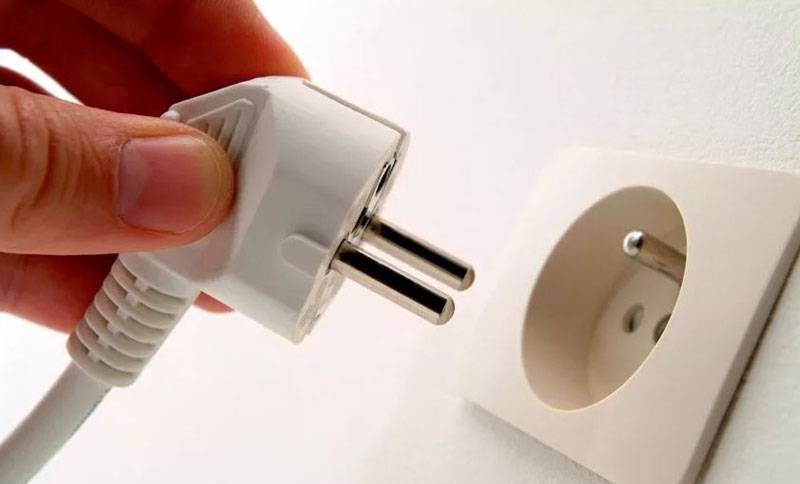
- wait 10-15 minutes;
- reconnect the washing machine to the power supply by inserting the cord into the socket and pressing “On”;
- we start a quick wash;
- We look at the behavior of the machine.
If Hansa doesn't return an error at the same point in the cycle after rebooting, the failure was short-lived and doesn't require further diagnostics. Otherwise, you'll need to immediately determine the cause of the E10 error. Continuing to reset the code is not recommended, as it could worsen the situation, even lead to a fatal outcome.
The second step is to check the electrical network. Ideally, you should call a qualified electrician, but if you have experience, you can do it yourself. The most important thing is to observe safety precautions and exercise extreme caution. If the power supply to your home is unstable and voltage surges are constant, it's best to install a voltage stabilizer.
The third step is checking the outlet and extension cord. Signs of failure will be obvious: burnt wiring, melted insulation, a burning smell, and dark spots. If there are no suspicious symptoms, we move on to practical troubleshooting: connect a working appliance to the power supply or remove the extension cord from the circuit. Does it work? Then the problem has been found. If checking the power supply reveals no problems, then the problem is internal—the control board has failed. Doing anything yourself is dangerous; you should contact a service center for professional diagnostics and repairs.
Interesting:
1 reader comment
Add a comment
Headings
Washing machine repair




For buyers




For users


Dishwasher




Hansa's 6 kg washing machine has finished washing. It's time to move on to the spin cycle. The drum isn't spinning. And then it starts washing again.