
Error E16 on a Bosch dishwasher
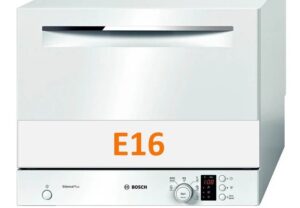 The Bosch dishwasher manual interprets the E16 error as a faulty inlet valve. However, during diagnostics, experts recommend checking all components that supply water to the dishwasher, from the water supply pipe to the recirculation pump. Let's look at how to troubleshoot the problem.
PMM diagnostic plan
If you notice an E16 error message on your dishwasher's display, don't rush to call a technician. Your dishwasher doesn't always need repairs; sometimes, the problem isn't even a breakdown. The inspection process progresses from the simplest to the most complex, eliminating one possible fault after another.
What should you do first? Make sure the water supply to your home isn't shut off. To do this, open a faucet in the bathroom or kitchen. If water flows, check the water pressure. Next, check to see if the shutoff valve on the water pipe is closed—this could be why the dishwasher isn't filling.
Next, inspect the inlet hose. It may be kinked or pinched. Make sure that the leak protection system has not been activated (in this case, the indicator on the hose block will change color).
The problem could also be a leak in the system's seal. Therefore, check that the Bosch dishwasher door closes tightly. Large dishes may be blocking the door, preventing the door from locking. In this case, slightly unloading the dishwasher may be sufficient.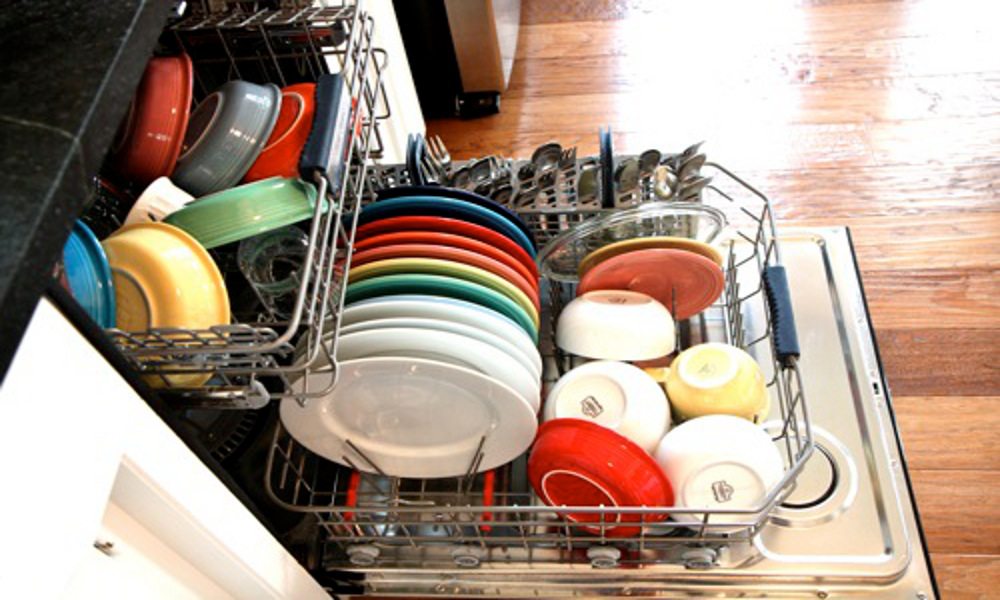
If none of these guesses are confirmed, you'll have to look for a fault inside the machine. Error E16 can be caused by:
- faulty inlet solenoid valve (in this case, the sensor membrane remains closed and water cannot enter the dishwasher);
- broken door lock (the lock does not work, the system remains leaky, the module does not give the command to fill with water);
- a faulty pressure switch (the level sensor transmits information about the filling of the washing chamber, and if it breaks, it can “lie”, reporting that there is enough water inside, while the machine is empty);
- damaged control module (the electronic unit controls the operation of all dishwasher components, and its failure can trigger any error code).
Most problems can be resolved at home. Let's look at how to troubleshoot each issue and reset the E16 error that's slowing down your dishwasher.
The water supply hose is kinked
A kinked inlet hose is a fairly common problem. The hose is usually kinked accidentally when moving the appliance. For example, if the hose gets caught under the dishwasher's foot, water will definitely not flow through it.
Alternatively, the hose may be pinched by another appliance or furniture. In any case, the obstruction must be removed as soon as possible.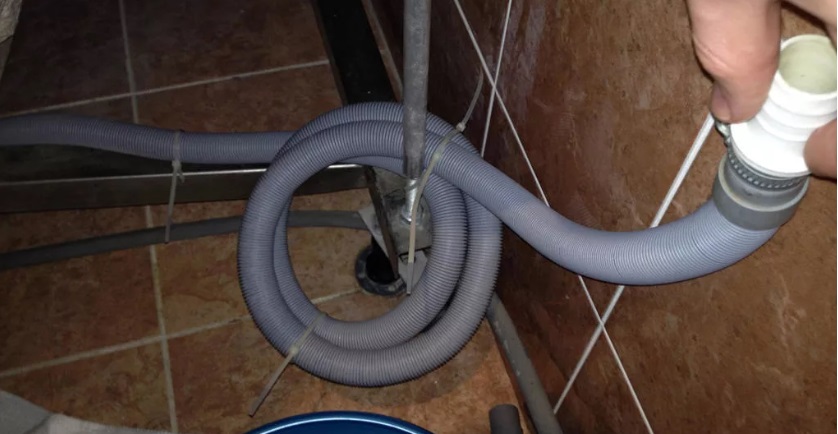
In this situation, the inlet hose can even burst, flooding the surrounding floor. Therefore, it's crucial to monitor the hose's condition. When the E16 error occurs, the corrugated hose is the first thing to check.
“They turned their heads” on the tee valve
Typically, a tee valve is installed on the pipe before entering the washing machine or dishwasher. This allows you to shut off the water supply to the dishwasher without blocking the water supply to the kitchen sink. This valve can sometimes fail.
Sometimes the cause of the E16 error is trivial – a closed tee valve, so make sure that the valve is open.
Some faucets are flimsy and easily damaged during use. Subsequently, the handle of such a valve will turn while the valve remains closed. Consequently, water will not flow into the machine.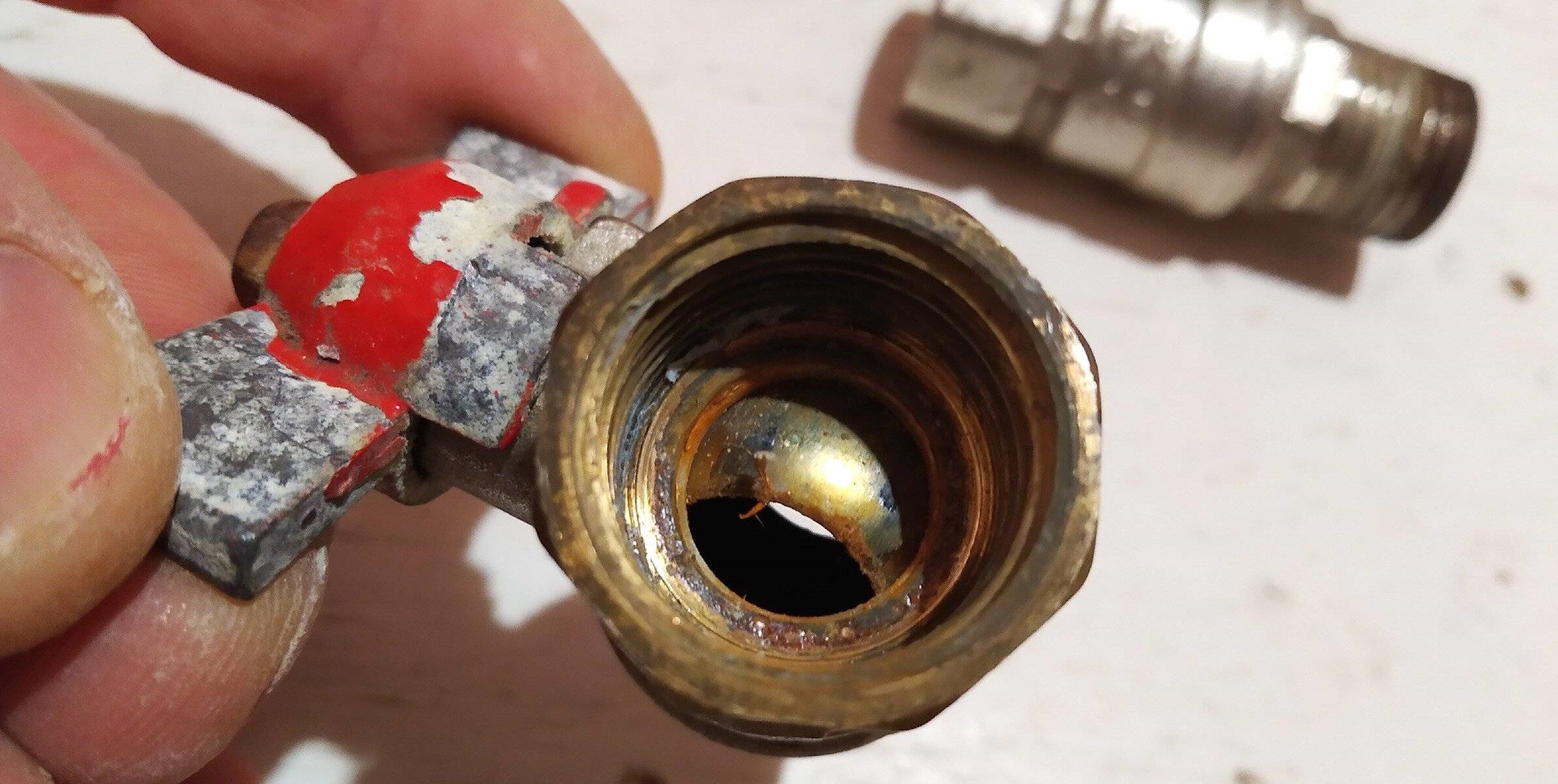
In this situation, it might seem like the faucet isn't the problem, as the handle still turns. However, plumbers often encounter this problem. Therefore, it's important not to rule out the possibility of a faulty shutoff valve.
The problem is hidden between the valve and the hose
Another reason a Bosch dishwasher won't fill is a clogged mesh filter. This element is installed at the dishwasher's inlet, before the inlet valve. Its job is to trap impurities in the tap water, preventing them from entering the dishwasher.
If you don't clean the filter, the mesh holes will become clogged over time, preventing water from flowing into the machine. As a result, the dishwasher will display an error code. To fix the problem, you need to clean the element. Here's how:
- de-energize the dishwasher;
- Use the shut-off valve to shut off the water supply to the machine;
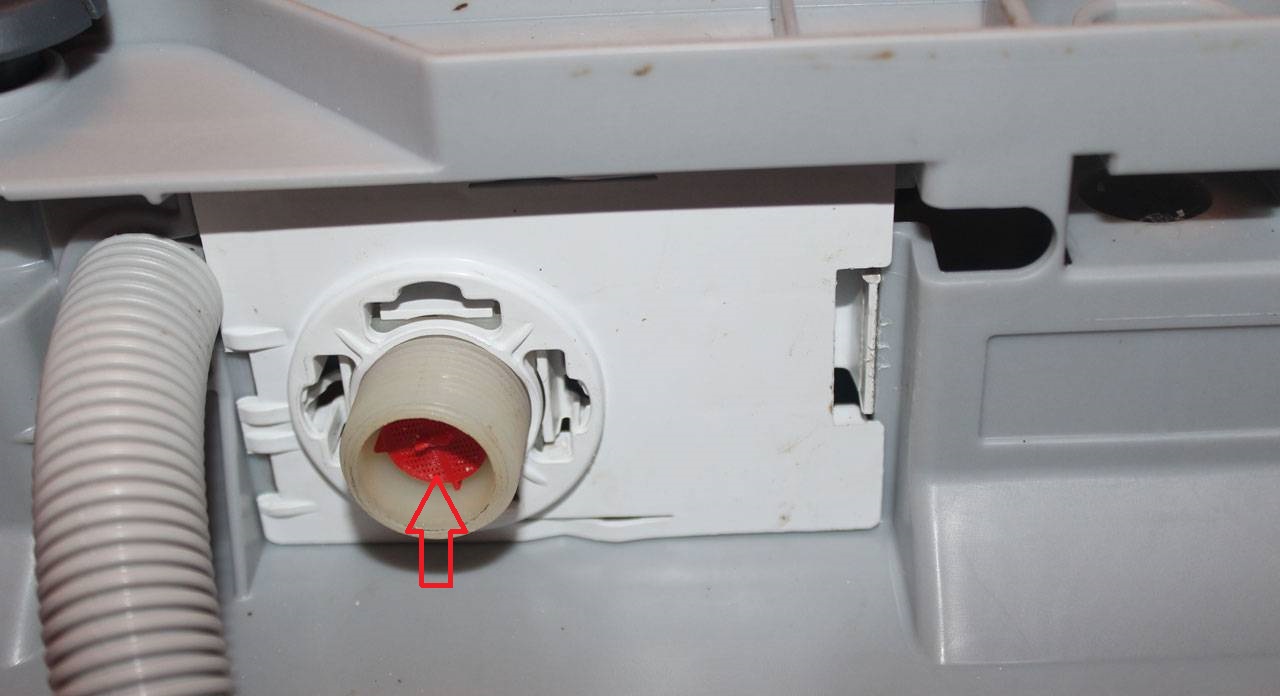
- unscrew the filler hose from the body;
- Find the mesh filter – it is located where the hose and the machine connect;
- Remove the filter and rinse it in warm water.
If the contamination is minor, simply cleaning the mesh with a needle and then holding it under running tap water will be sufficient. If the film on the filter has hardened, soak the part in a citric acid solution for several hours, then rinse the element in warm water.
Does the door closing sensor work?
The dishwasher won't fill with water if the door isn't closed tightly. The dishwasher's "brain" won't trigger the fill command unless it receives a signal that the system is sealed. Therefore, check:
- the integrity of the door sealing rubber (are there any cracks, is the gasket coming away from the body);
- does the dishware create an obstacle for the blocker to operate;
- is the latch of the locking mechanism damaged (after starting the cycle, there should be a click, which will indicate that the lock is activated);
- whether the machine is level (this can be checked using a building level).
Sometimes, large dishes are the ones that prevent the door from closing. In this case, resetting the error is very simple: simply rearrange the cutlery or lighten the load a bit. If the dishwasher isn't level, adjust the feet.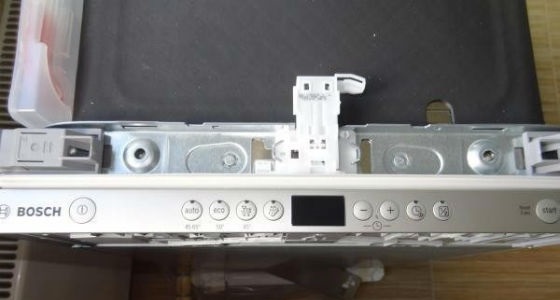
If the problem is with the damaged seal, you will have to change the rubber. You can try to repair a broken lock, but it’s easier to install a new blocker. The cost of the locking mechanism is low.
The procedure for replacing a lock will be as follows:
- open the dishwasher door;
- remove the screws located on the inside of the door and on the ends;
- remove the top part of the door;
- Take a photo of the wiring diagram for the lock;
- disconnect the wires from the locking mechanism;
- Once you have dealt with the fasteners, remove the blocker;
- install a new lock, secure it, and reconnect the previously removed wiring;
- put the door part back in place and secure the panel with screws.
After this, run a short test cycle and ensure the lock works. If the problem was a leak in the system, the error will disappear.
The valve stopped functioning
The inlet valve is the element responsible for filling the Bosch dishwasher. The electronic module opens the sensor membrane, allowing water to flow into the chamber. If the solenoid valve fails, the dishwasher stops working.
First, inspect the element for damage. Next, check the intake valve with a multimeter. The tester measures the resistance produced by the component. If the resistance is missing, the sensor cannot be repaired; it will have to be replaced with a new one. The procedure is as follows:
- disconnect the wiring from the solenoid valve;
- unscrew the bolts securing the part;
- remove the sensor;
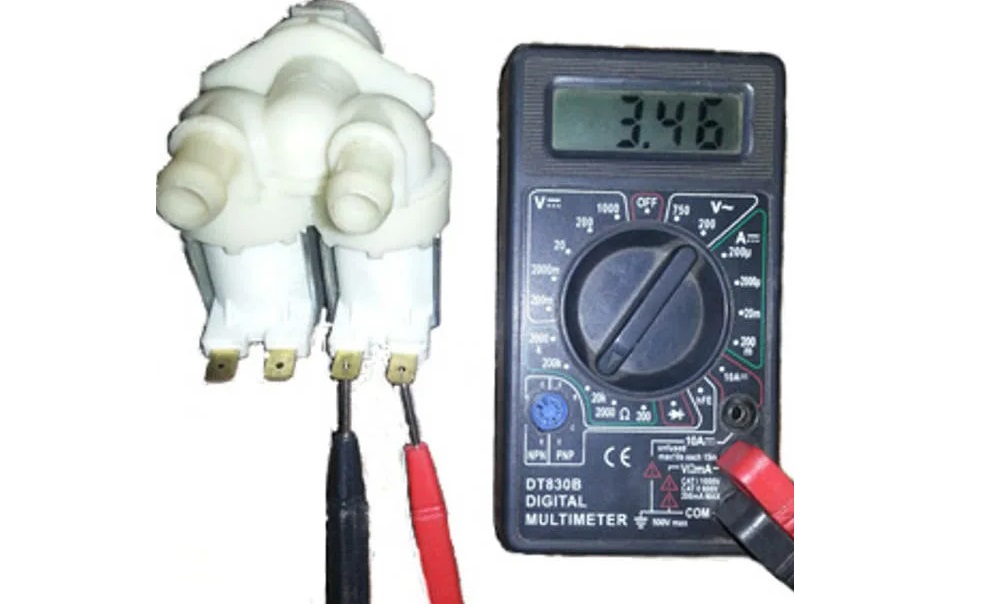
- put the new valve in its original place and secure it with screws;
- connect the wiring.
When repairing your Bosch dishwasher, purchase only original spare parts to ensure that replacement parts do not affect the dishwasher's performance.
After connecting the inlet hose to the dishwasher, open the shutoff valve and plug in the dishwasher. Then run a test wash. Replacing the inlet valve should clear the error code and restore the dishwasher to working order.
Inspect the water level sensor
If the pressure switch fails, water may not flow into the dishwasher. In this case, the machine will display error E16. A faulty water level sensor may tell the control module that the wash chamber is full, when in fact it is empty. Consequently, the control module will not issue the command to fill the dishwasher.
To access the pressure switch, you'll have to partially disassemble the dishwasher. The level sensor is attached to the recirculation pump housing. It's a small round box with a tube running to it.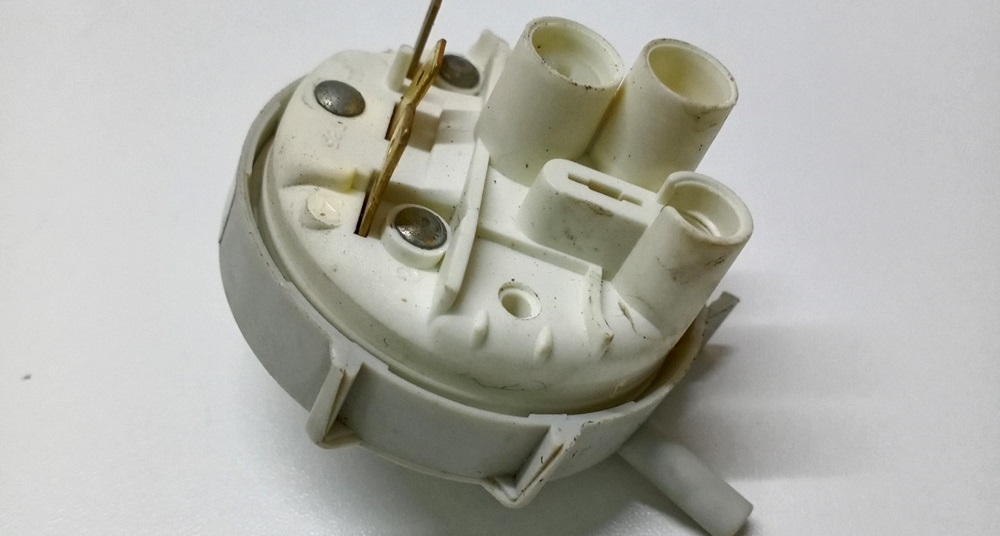
To check the pressure switch's functionality, you can blow into the pressure tube. If you hear a characteristic clicking sound, the unit is working properly. The absence of sound indicates a malfunction. The water level sensor cannot be repaired; it will need to be replaced.
You can replace the pressure switch yourself. The key is to purchase components that are specifically designed for your Bosch dishwasher. The level sensor is installed in place of the old one, then the machine body is reassembled and a test cycle is run.
Interesting:
Readers' comments
Headings
Washing machine repair




For buyers




For users


Dishwasher




Add a comment