
Error E2 in a Bosch washing machine
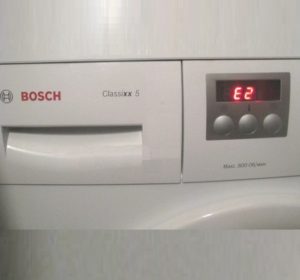 The self-diagnostic system may display an E2 error code on a Bosch washing machine (or an E02 error code, depending on the model). The machine's manual will help you decipher this code. We'll explain how to repair the equipment and what kind of malfunction the code indicates.
First Aid and its interpretation
What should you do if your washing machine stops working and displays an error message? You need to try to fix the problem and figure out what the machine is hinting at. Code E2 (E02) informs about problems with the commutator motor.
Error E2 is considered critical; if the fault is not corrected, the electrical wiring may be damaged or the engine may burn out.
Equipment repair isn't always necessary; you can try resetting the error code without interfering with the machine's mechanism. Be sure to check the power supply to see if it's insufficient to operate the machine. If the power supply is weak, call an electrician.
The E2 error may be caused by a temporary failure of the control module caused by a power surge. Try unplugging the washing machine for 20 minutes, then plugging it back in. On some Bosch models, the code may need to be reset by performing the following steps: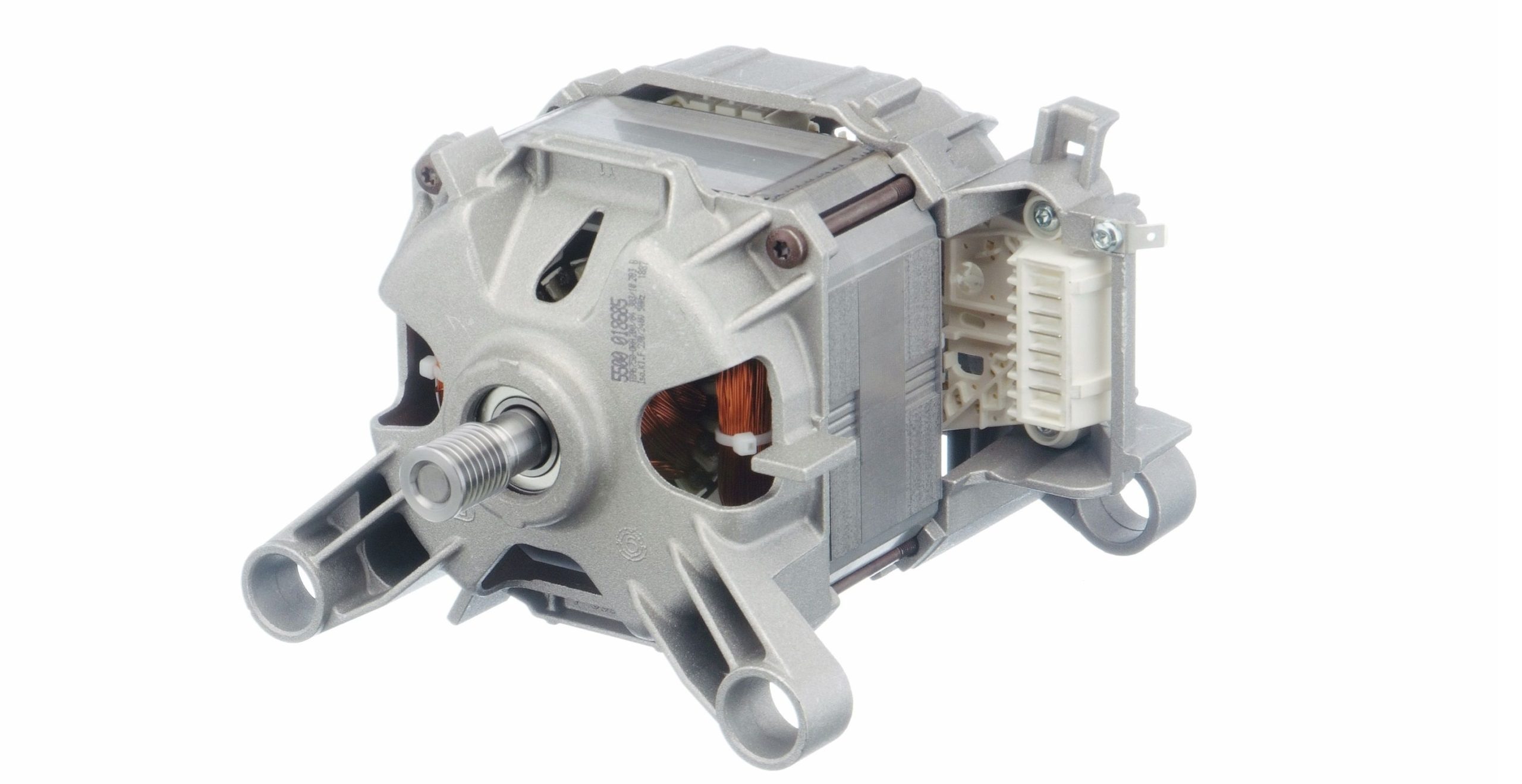
- press and hold the Power key;
- Turn the programmer from the standard position ("off") two clicks to the left. While doing this, hold down the "On" button;
- Wait a couple of seconds and release the Power key.
After this procedure, the Bosch washing machine will display the cycle time for the program selected by the selector knob. Machines without a display should also flash the indicator on the control panel.
If these steps don't clear the error code, there's a real problem. The washing machine's motor needs to be diagnosed and repaired.
We'll pull out and check the engine.
What should I do if I see the E2 code on my washing machine's display? As mentioned earlier, this error indicates a problem with the washing machine's electric motor. How does this component work?
Bosch machines are equipped with a brushed motor. The motor is small but powerful. Rotation is driven by a drive belt that connects the drum pulley to the motor.
The Bosch washing machine collector consists of a rotor, a stator and a pair of electric brushes.
A Hall sensor is also mounted on top of the motor. This device regulates the motor speed. The machine may also fail to start washing due to problems with the tachometer.
Technicians diagnose the machine's "heart" in several ways. However, in any case, the motor will have to be removed from the housing. The procedure is as follows: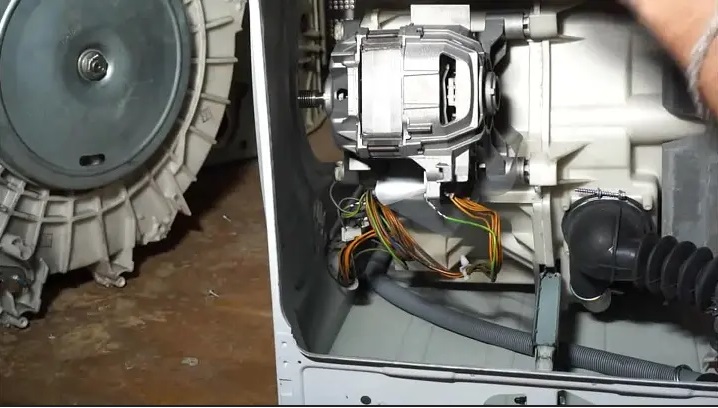
- Unscrew the bolts securing the back wall of the machine and move the panel to the side;
- by rotating the drum “wheel”, loosen and remove the drive belt;
- disconnect the wires going to the motor;
- unscrew the screws securing the engine to the housing;
- carefully remove the element by rocking it in different directions.
It is recommended to take a photo of the wiring diagram for the engine so that you can install the part correctly later.
Now that the motor is removed, we can begin diagnosing it. First, connect the stator and rotor winding wires. Then apply 220 volts to them. If rotation is observed, the problem is not with the electric motor, as it is functioning properly.
The main drawback of this diagnostic is that it will be incomplete. A washing machine typically operates on various programs, each with a different spin speed and drum rotation smoothness. However, this procedure only tests one mode. Another drawback is that the motor can overheat due to direct connection to the power supply, causing a short circuit. Therefore, before applying voltage to the stator and rotor, it's best to connect a "ballast" (a heating element) to the circuit to help protect the motor.
The brushes are worn out
In most cases, replacing the commutator brushes helps resolve the E2 error code. The carbon rods are located on the sides of the motor. The brushes have a wire that carries electricity and a spring that presses them against the fins. The parts are easy to find—they're unmistakable.
To reinstall the components, they must be removed from the engine. Even if only one brush is worn out, it is essential to change the pair. Let's figure out how to remove worn parts from an engine. The procedure is as follows: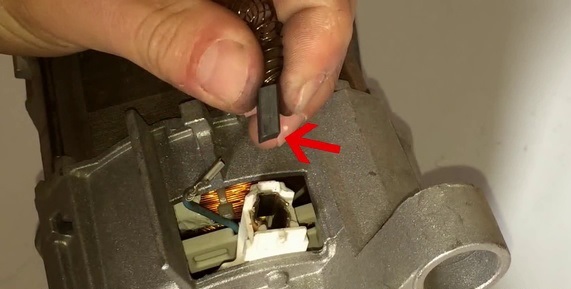
- Using a flat-head screwdriver, gently pry up the wire terminal and remove the cable;
- move the electric brush contact away from the wiring;
- Very carefully pull the terminal upward. The spring-loaded carbon rod will pop out and can be removed.
When removing the electric brush, be sure to remember which edge it was on so that you can later insert the part in the same way.
After both brushes are removed, inspect them. If the parts are severely worn, they will need to be replaced. You can purchase new parts at any specialty store by providing the model and serial number of your Bosch washing machine.
The installation is as follows:
- insert the brushes into the motor crosspieces as they were before;
- push the spring in there too;
- Insert the terminals into the clamps at the top of the crossbars and slide them toward the wire. This will secure the brushes in the motor.
After this, all that remains is to connect the power supply connector to the terminals. Once both brushes are installed in the motor, check the tightness of all connections. The repair is complete, and you can reassemble the Bosch washing machine in reverse order.
If these steps don't resolve the E2 error, it's best to contact a professional. More complex repairs or even a motor replacement are likely required. The problem may lie in the washing machine's "brain," requiring a control module diagnostic.
Interesting:
Readers' comments
Headings
Washing machine repair




For buyers




For users


Dishwasher




Add a comment