
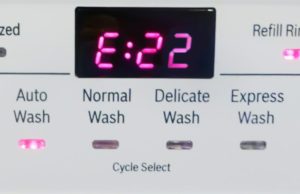
Kaiser washing machine displays error code E22
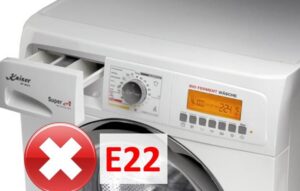 If your Kaiser washing machine displays the E22 error code, we recommend checking the laundry in the drum. It's likely clumped and causing an imbalance in the machine. You should straighten the items, add more items, or remove some. If the error code reoccurs after restarting the cycle, the problem is more serious: the tachogenerator and control board are suspect. It's best to entrust diagnostics and repair of the control module to a service center, but you can check and repair the tachogenerator yourself. Step-by-step instructions and advice from experienced technicians will help.
Secondary signs of sensor failure
You can suspect incorrect operation of the tachogenerator or speed sensor not only by the E22 error. Much more often, the breakdown manifests itself earlier – the “behavior” of the washing machine changes for the worse. Typically, the "symptoms" relate to the drum spinning:
- Kaiser shifts gears sharply, accelerates and brakes with lightning speed;
- the drum acceleration speed exceeds the set mark (both set by the user and the maximum number of revolutions of the machine);
- the drum does not spin up to the set speed or remains motionless;
- items are not wrung out or washed at the end of the cycle.
The E22 code means that Kaiser has a problem with the tachogenerator or control board.
Before figuring out why your Kaiser washer is displaying a code, it's important to rule out a technical glitch. Simply turn the machine off and restart it after 15-20 minutes. During this time, the system will reset to its previous settings and reboot. This could be a temporary glitch or an accidental spin cycle.
If rebooting and resetting the E22 error doesn't help, you can't wait any longer. You need to interrupt the running program and begin a comprehensive diagnostic. Ignoring the problem isn't a good idea, as it could worsen the situation: the motor could burn out or the control board could fail. It's best to avoid risks and get repairs done immediately.
Let's find the element
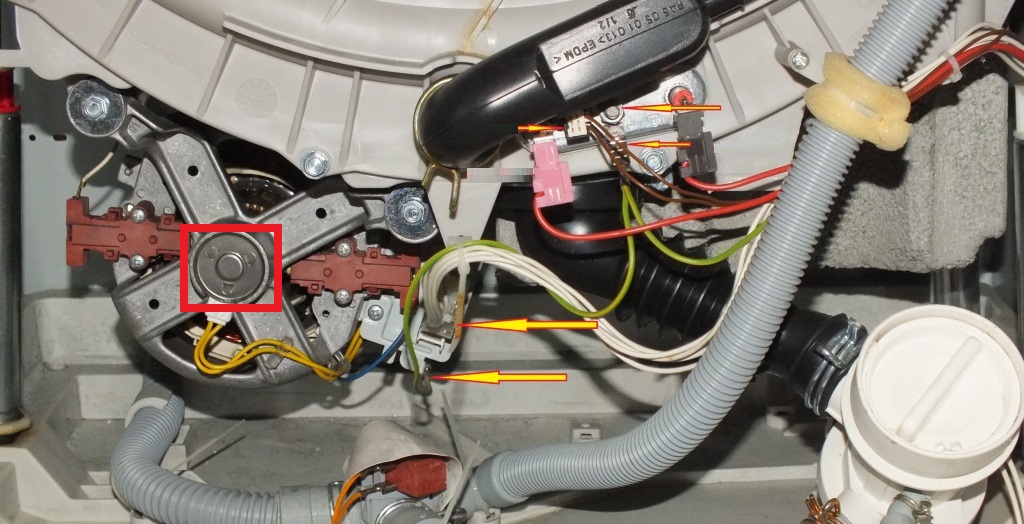
To determine the cause of the malfunction, you need to check the RPM sensor for proper operation. But first, you need to find it. This shouldn't be difficult: the tachogenerator, regardless of the brand and model of the washing machine, is located in the same place – on the motor shaft. All that remains is to access the motor. Here are the instructions:
- disconnect Kaiser from communications;
- remove the back panel of the case;
- we tighten the drive belt;
- We find the motor under the washing tank.
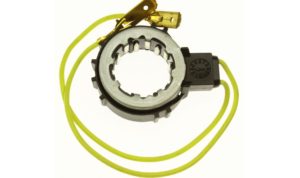
Once we've seen the engine, we turn our attention to its shaft. There's a small metal ring here—the tachogenerator. However, you can't remove the sensor at this stage: the entire motor must be removed first. Only after removing the engine can we begin diagnostics and determine the cause of the failure. It's important to understand that repairing such key components yourself requires a certain amount of experience. Without knowledge and experience, it's best not to mess around with electronics—there's a high risk of aggravating the situation, even leading to a fatal failure of the equipment.
Testing the part
You can check and repair the motor yourself, as long as you follow the instructions strictly. Taking a photo or marking the wiring on the motor is a must. It's important to mark the terminals or photograph their locations before disconnecting the wires. This trick will help avoid mistakes when reassembling the washing machine. Now let's begin disassembling:
- loosen the screws that secure the engine;
- we shake the engine in both directions;
- We pull it sharply towards ourselves, removing it from the grooves.
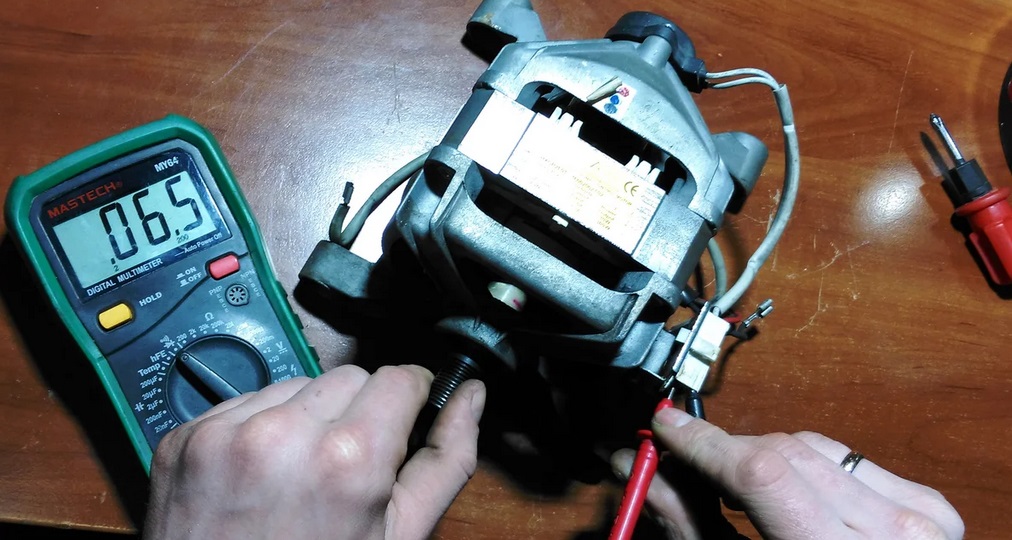
After removing the engine, we begin inspecting the sensor. First, we check the wires connected to it to make sure the contacts are secure and the insulation is intact. It is possible that the sudden rotation of the drum affected the electronics - the connection was lost, the tachogenerator stopped working, and the E22 error appeared. In this case, repairs will be limited to stripping the wires and tightening the terminals. A seemingly "normal" appearance does not mean the tachogenerator is working properly. Diagnostics also include testing the sensor with a multimeter. It's best to test the sensor in two ways:
- through an ohmmeter (when applying the probes to the sensor contacts, about 60-70 Ohm should appear);
- through a voltmeter (turn on the “Voltage” mode, apply the probes while simultaneously accelerating the engine, and look at the display: the norm is 0.2 Volts).
If the values shown by the multimeter are abnormal, then the E22 error is not random – the sensor is faulty. The tachogenerator cannot be repaired; you will have to buy a new one and install it in its place. Experience shows that the RPM sensor rarely fails. More often, erratic drum rotation is caused by faults in the electronics and the circuit board. In this case, the only way to fix the problem is to contact a service center for professional assistance. Checking the module yourself, testing the microcircuits and contacts, is not recommended – there is a high risk of permanently damaging the unit.
Interesting:
1 reader comment
Add a comment
Headings
Washing machine repair




For buyers




For users


Dishwasher




The same error e22 (or 0 60°) can occur simply due to poor contact between the brush and the motor armature. This can occur due to either worn brushes or a brush jamming in its housing due, for example, to corrosion of its metal housing (my situation).
In this case, sparking can be heard when the electric motor is running and the machine drum does not reach the required speed.