
Siemens Washing Machine Error Code E23
 Siemens washing machines have a fairly complex diagnostic system, equipped with a significant number of error codes. However, not all users bother to study these codes, and in vain. Correctly interpreting them will help identify the problem and fix the issue. In this article, we'll explore the meaning of error E23 in a washing machine.
Let's try to decipher it
Let's start with the fact that the E23 code is responsible for leaks. The electronic module is connected to a special sensor that detects water ingress. This component is located in the oil pan.
How does this system work? A sensor in the sump is connected to a special float. When water begins to seep into the sump, the float moves, triggering the sensor. Because it's connected to the control module, the machine immediately displays a corresponding error code on the display. The most common causes of leaks are easy to identify.
- The surface of the washing tub has become worn and worn over time, causing small holes to form.
- The drain pipe, the tube that connects the drain pump and the washing machine tank, has cracked.
- The inlet hose is leaking due to damage or because it is not screwed on properly.
- The detergent container is either not inserted or is leaking.
However It is important to keep in mind that the control module, like any other electronic device, can sometimes fail.And the error doesn't necessarily have to be objective. Siemens washing machine error codes can appear completely unfounded. We'll explain how this can happen and what to do in such a case with an example.
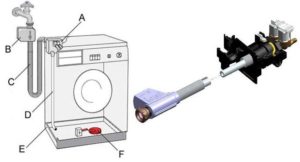 On a website dedicated to this issue, a washing machine repair technician wrote about receiving a call from a customer complaining about the E23 error code on their Siemens washing machine's display. The customer asked the technician to first discuss the issue verbally. Naturally, the technician began explaining the Aquastop system, which uses a float and sensor, as well as the drain pan and possible leaks. However, the customer stopped him and pointed out that his machine wasn't equipped with such systems and didn't even have a drain pan.
Genuinely surprised and not entirely believing the client's words, the technician offered to personally inspect the washing machine and check whether the error code had indeed appeared accidentally, without any compelling reason.
After inspecting the unit, it turned out that there was no Aquastop system at all, and the E23 code was only a formality in the diagnostic system. What caused the error? The mechanic concluded that there was a short circuit somewhere in the vehicle's contacts. However, clearing the code wasn't so simple. Ultimately, the problem was only resolved by reprogramming the electronic module. That's why Remember that any error code may not only indicate a corresponding problem, but may also simply be a glitch in the electronic system..
Let's start by checking the sensor in the pan
In this section, we'll explain why it's important to check the sensor, even if you're confident and have confirmed there are no leaks. As mentioned above, the sensor is triggered by the rising of the float, which can be lifted not only by water but also by debris or foreign objects lodged in the pan.
Sometimes, when people transport washing machines from one place to another, a small piece of plastic can break off and hit the float, causing it to lift. In such cases, it's simply a matter of diagnosing the problem and removing all foreign objects from the tray. Quicker In total, after the float is lowered, the E23 code will disappear on its own.
Caution! Debris can also cause the sensor to malfunction. After all, it's a piece of equipment, and any irritating component can slow it down.
Ultimately, the code may be triggered by a short circuit, which burns out the sensor or breaks the contacts connected to it. This often happens during DIY repairs, or simply as a result of a power surge.
We've discussed situations that trigger errors unrelated to leaks. These are even more common than the corresponding error codes. In any case, you should first inspect the oil pan before attempting to fix the problem.
We repair equipment ourselves
Now let's consider the case where water actually forms in the tray. It's important to keep in mind that in this case, you need to look for the cause of the liquid entering the tray, rather than pumping it out and hoping that the error will disappear. Although, to begin with, the water will indeed need to be removed (some do this with an enema, others by tilting the body; the methods vary widely).
Once the water drains out of the tray, the washing machine should be disassembled to check the most leak-prone components for leaks. These include: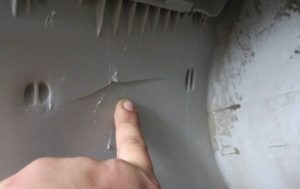
- pipes, hoses, as well as places where they connect to other parts;
- drain pump;
- powder container;
- tank.
If a crack or hole is discovered in one of the components, the damage can be repaired by sealing the hole with cold welding or sealant. However, experienced mechanics prefer and recommend replacing the entire component, as this is a more reliable way to avoid problems. After all, the crack may appear in another location within two days, requiring the repair to be repeated.
On the other hand, replacing the entire tank just because of a tiny crack is a lot of trouble and expense. So, the decision is yours alone. Each user has their own perspective on the problem, and so each will have their own solution.
If the Aquastop sensor is faulty, you'll have to replace it! Buy a new part and replace the broken one. To do this, carefully remove it from the pan and then disconnect the component from all the latches and wires holding it in place. Install the new sensor in the same way as the old one and replace the pan!
Interesting:
Readers' comments
Headings
Washing machine repair




For buyers




For users


Dishwasher




Add a comment