
Gorenje washing machine error E3
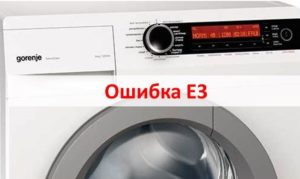 Modern Gorenje models are capable of self-diagnosing the system and alerting the owner if a malfunction occurs. The warning appears on the digital display as a code, making it easy to identify the cause of the malfunction. Gorenje machine users often encounter the E3 error code, which indicates a problem with the water supply. This could be caused by anything from a simple water outage to a serious malfunction in the module. We'll explain in detail below what exactly is wrong and how to fix the E3 error code.
Reasons for this code to appear
The E3 error code indicates that the washing machine doesn't have enough water to complete the selected program. The machine first tries to replenish the water level for a long time, and then stops operation. A number of Gorenje washing machine malfunctions can cause this situation.
- Water intake problems. Low water pressure, a closed tap, a clogged inlet hose, filter screen, or water inlet pipe. Other obstructions to the drum's flow can also occur, such as kinked or pinched hoses, or hoses disconnected from the feeder pipe.
- Drainage system problems. If the drain is connected incorrectly, all the water entering the machine will immediately flow down the drain, and the required level for starting a wash will never be reached. In this case, filling takes a long time and is accompanied by the characteristic sound of liquid draining. The amount of water lost can exceed several hundred liters, and if the apartment does not have a water meter, it will be difficult to notice the problem.
- Leak. This one is pretty straightforward—as soon as the system detects a leak, the cycle ends. The easiest way to spot this is to pay attention to the floor near the washing machine.
- The pressure switch is faulty. This is a water level sensor, and if it's not working properly, the control module doesn't receive water level data. The machine doesn't know how much liquid is in the tank or whether it's enough to start the cycle, so it doesn't signal the start of the wash.
- Control board failure. This is the opposite of the previous situation. The module cannot receive information about the water level, so it blocks the circuit to prevent leaks and short circuits.
Most of the above malfunctions can manifest themselves at any stage of the washing cycle, but the E3 error most often appears at the very beginning. Another characteristic sign of impending trouble is a slow water fill, causing the machine to wash longer than usual. To accurately diagnose the source of the problem, you'll need to check each possible cause one by one.
There is no water or it does not flow
Despite the impressive list of possible malfunctions, there's no need to panic and call a technician. Almost everything can be fixed yourself in just a few minutes. First, check for water in the water supply—water shutoffs often occur without warning. Next, inspect the faucet or water outlet to ensure there's no obstruction to the water supply.
Next, pay attention to the filter mesh, which is located on the inlet valve and often becomes clogged. Clogs are cleared as follows:
- unplug the machine from the power supply and turn off the water;
- unscrew the inlet hose and disconnect it from the body, loosening the clamps;
Important! Have a rag handy, as residual water may spill onto the floor.
- we clamp the filter with pliers or flat-nose pliers and pull it towards ourselves;
- Clean the mesh with tweezers and finally rinse it under high-pressure water. If there is heavy scale buildup, it's best to perform a more intensive cleaning: soak the item in a solution of warm water and citric acid for 30-60 minutes;
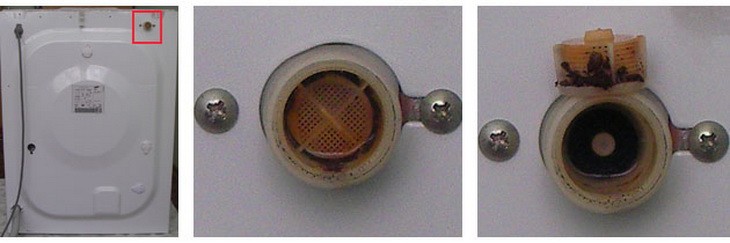 we return the filter and hose to their place.
All that remains is to check whether the situation has been corrected - run an express wash on the washing machine. To prevent further blockages, it is necessary to regularly clean the mesh and install an intermediate filter.Remember that even clean tap water contains various impurities that settle on the machine's parts. If cleaning doesn't help, continue the repair and address other possible issues.
The intake valve is broken
Next up is checking the inlet valve, which is also easy to do yourself. Locate it under the top panel of the machine near the rear wall. There's no mistake – it's easily identified by the connected inlet hose and the pipes connected to the detergent drawer. Next, follow these steps:
- set the multimeter to measure ohms;
- we apply probes to each winding;
- We evaluate the result; if the value shown is not close to 3 kOhm, the part is faulty.
What to do with a faulty valve? The only solution is to replace it with a new one. Photograph the location of the wires and cords, disconnect them, then unscrew the retaining bolt and remove the part.
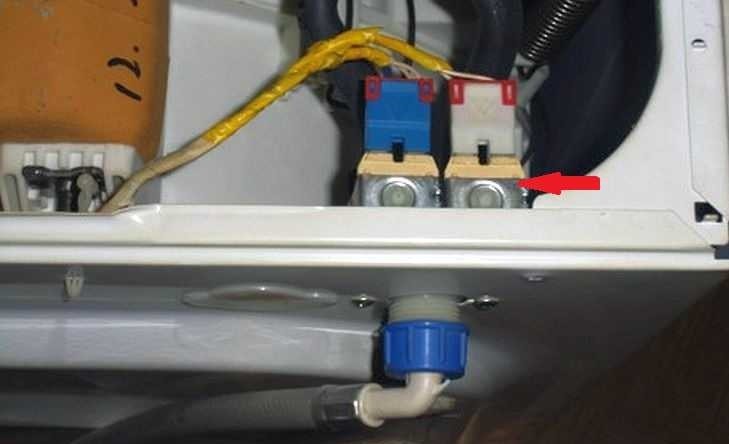
We purchase a similar unit and connect it to the washing machine: we screw it to the wall with the main screw and, using the photograph taken earlier as a guide, connect all the wiring and the appropriate pipes. We secure it securely with clamps and replace the removed mesh and the existing hose.
Don't forget to check the quality of the water intake by running a quick wash or rinse cycle.
Problems with electronics
If the E3 error hasn't been detected before, the problem is electronic. The pressure switch is most likely to blame, as it's not correctly detecting the water level in the tank. We'll check its functionality.
- We remove the top panel.
- We find a small disk with a long tube attached that extends deep into the tank. This element monitors the water level in the machine—as it fills, the air pressure changes, and a signal is transmitted to the control board.
- We disconnect the part.
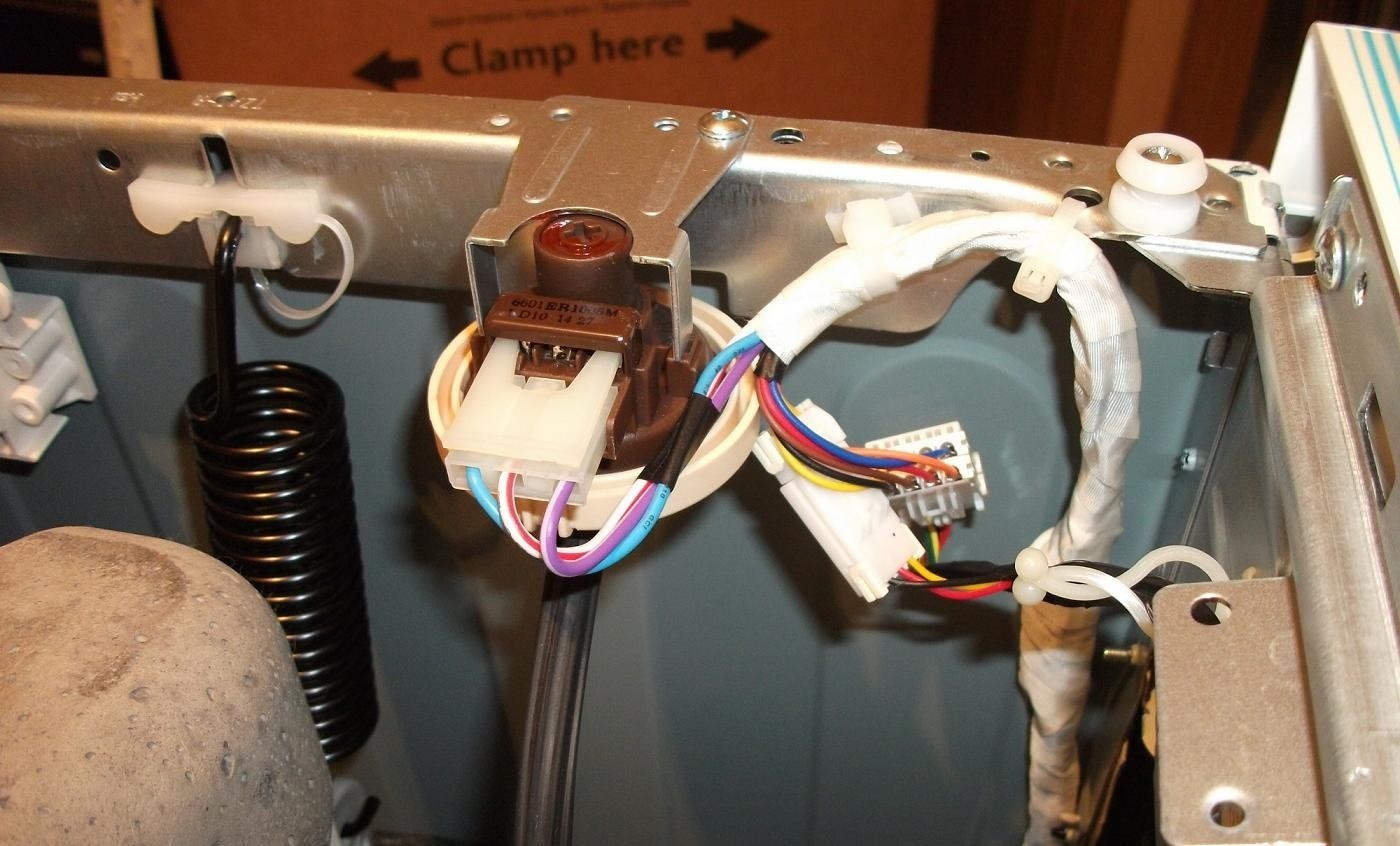
- Blow through the tube. Find a tube the same diameter as the fitting and insert it into the connector. Blow gently and listen. The contacts will click a few times. If they don't click, it's a sign of a problem.
- We test all the contacts. Turn on the resistance mode and connect the probes to the contacts. Ideally, the values on the multimeter display should fluctuate.
A negative result requires replacing the faulty element with a new one. It's inexpensive and very easy to install. Simply unscrew the retaining screws and install the working unit in the same manner.
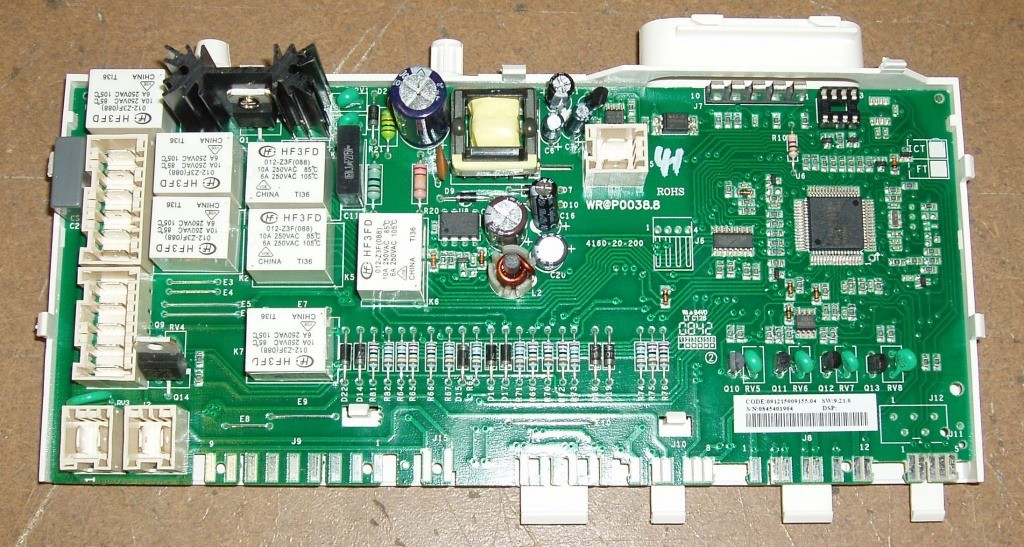
Once all the previous components and sensors have passed the test, we can confidently conclude that the problem lies with the control board. It's likely that a faulty triac has occurred, preventing the module from receiving water level information and starting the wash cycle. Trying to repair the washing machine's "electronic brain" yourself is strictly prohibited—even the slightest mistake will worsen the situation and cost several times more.
The best option is to contact a service center immediately. Specialists will conduct a comprehensive investigation, starting with a visual inspection, testing all contacts, and ending with reprogramming the board.
Interesting:
9 reader comments
Add a comment
Headings
Washing machine repair




For buyers




For users


Dishwasher




Good afternoon, thank you for explaining everything very competently and clearly.
Gorenje is the worst washing machine ever. As soon as we bought it, we removed the bolts, leveled it on all surfaces, started washing, and then started spinning like crazy. It bounced around the entire bathroom.
Rakhmet. Everything is very clear and understandable. Complete clarity.
We also regretted getting the Gorenje. We had to rebuild half the car to make it work :S
I lubricated the lower dampers of the tank and the jumping stopped.
Thank you, it worked, I lifted the drain hose and the water started to fill up!
Our first Gorenje machine lasted almost 11 years. It worked flawlessly for the first four and a half years. Then a bearing failed. It worked fine for the remaining six years, but we had to replace the bearings about every eighteen months. We bought another Gorenje, and the old one would have worked, but the housing rusted and started to fall apart. We'll see how long the new one lasts.
It doesn't use water for rinsing, but it does for washing. Is it a brain problem?
Ours lasted 8 years, and then it started. I replaced the heating element and the pump. And today it gave me an E3. Good article, but definitely not for blondes 🙁