
Error E3 on a Midea dishwasher
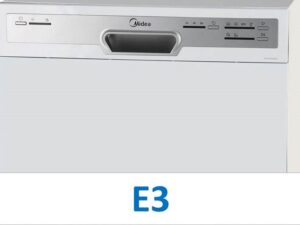 The E3 error message on my Midea dishwasher's display paralyzes the appliance. The dishwasher freezes and cannot complete the cycle. This error code can be caused by various issues, ranging from a broken pressure switch to a damaged control module. Where should I begin troubleshooting? What's the most common cause for dishwashers? Let's explore the nuances.
Decoding and list of malfunctions
What should you do if you find your Midea dishwasher frozen? First, decipher the error code by consulting the appliance's manual. E3 is displayed on the screen if the water temperature in the system does not reach the required temperature within 60 minutes.
For example, a program is running that requires washing at 65°C. If the water doesn't reach the set temperature within a certain amount of time, the machine will display an E3 error. Why might this happen?
Most often, error E3 indicates a malfunction of the dishwasher's heating element.
Other possible causes of the error code: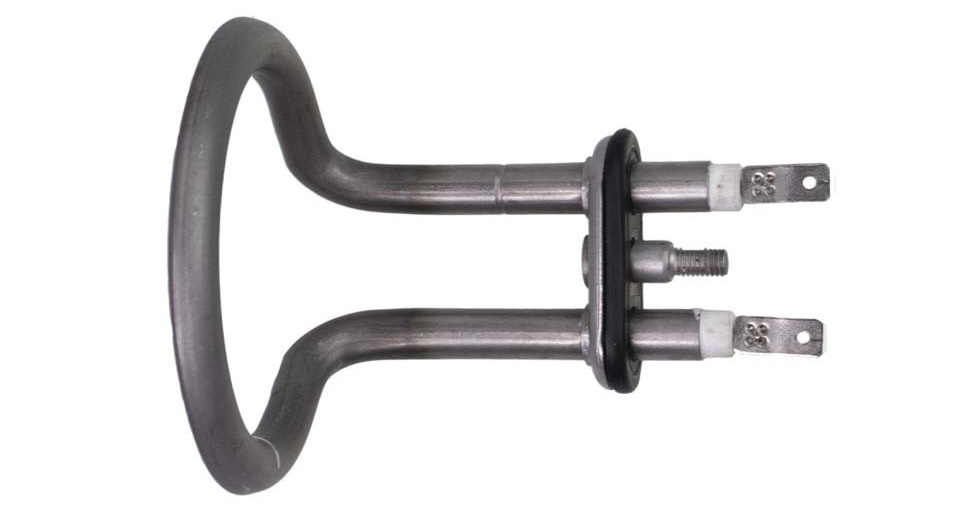
- damaged temperature sensor (the water is hot, but the thermistor sends incorrect information to the “brain”, causing the dishwasher to stop working);
- a broken pressure switch (in this case, the machine may draw in more water than required by the program, and the heating element simply won’t have time to heat it up);
- a break in the control circuit of the heating element (possibly the wires have come loose or the contacts have oxidized);
- incorrectly functioning control module.
According to statistics, in 85% of cases, the E3 error is caused by a faulty heating element. The quality of tap water in many regions of Russia leaves much to be desired. Scale buildup on the heating element causes it to fail. Temperature sensor failure is much less common, occurring in approximately 6% of cases.
Checking and replacing the heating element
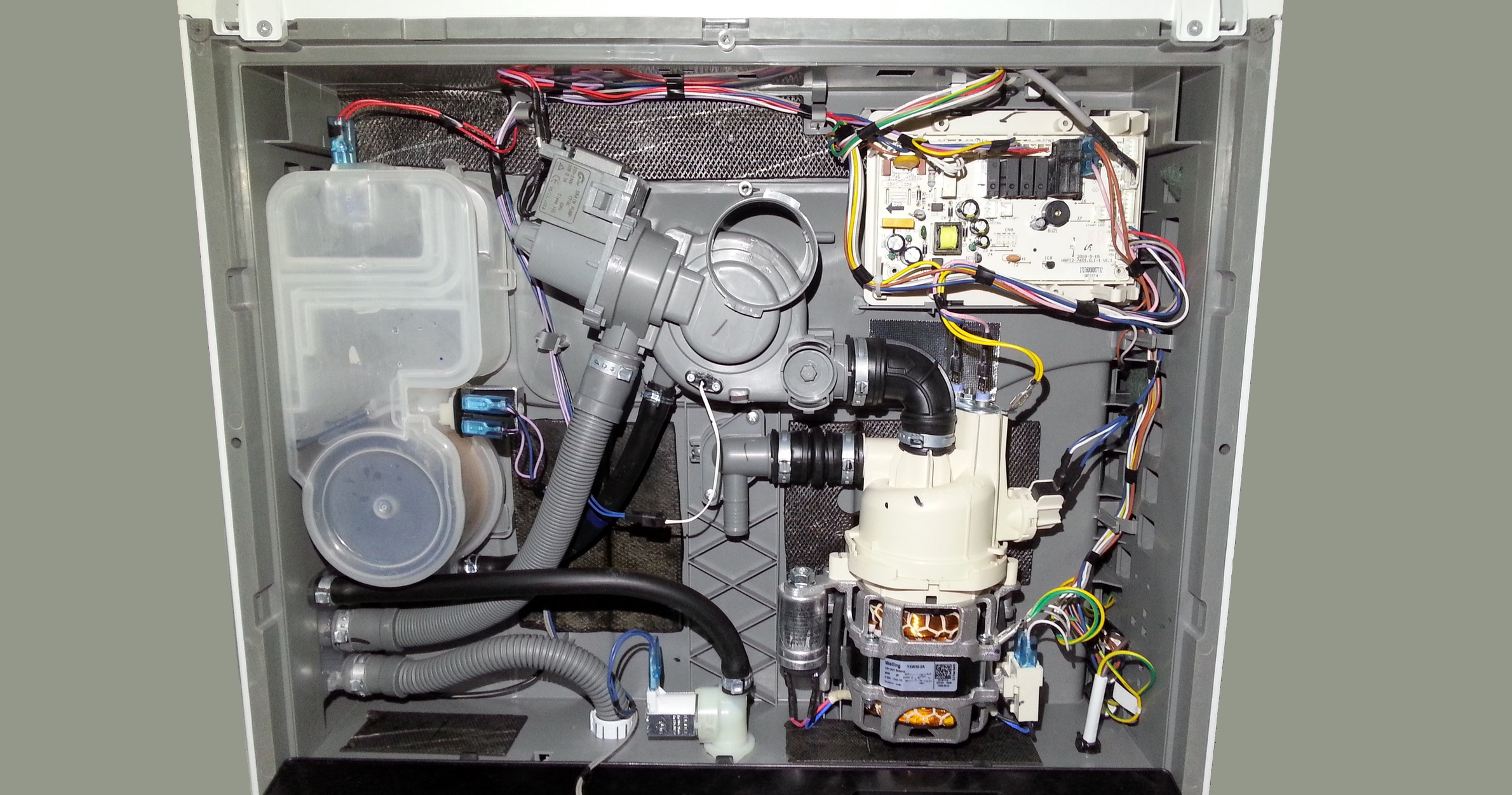
If your Midea dishwasher isn't heating the water, you'll need to check the heating element. The heating element is located at the bottom of the dishwasher. Accessing it requires partial disassembly of the dishwasher.
The algorithm of actions will be as follows:
- de-energize the appliance by unplugging the power cord from the socket;
- turn off the tap that supplies water to the machine;
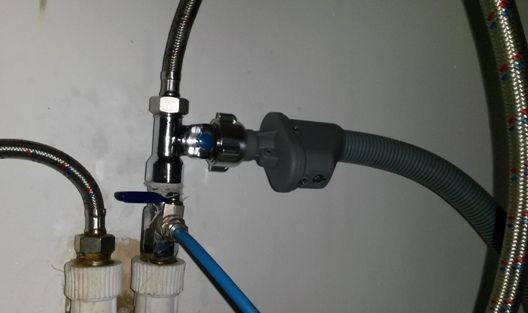
- detach the drain and inlet hoses from the machine;
- open the door and remove the dish baskets from the working chamber;
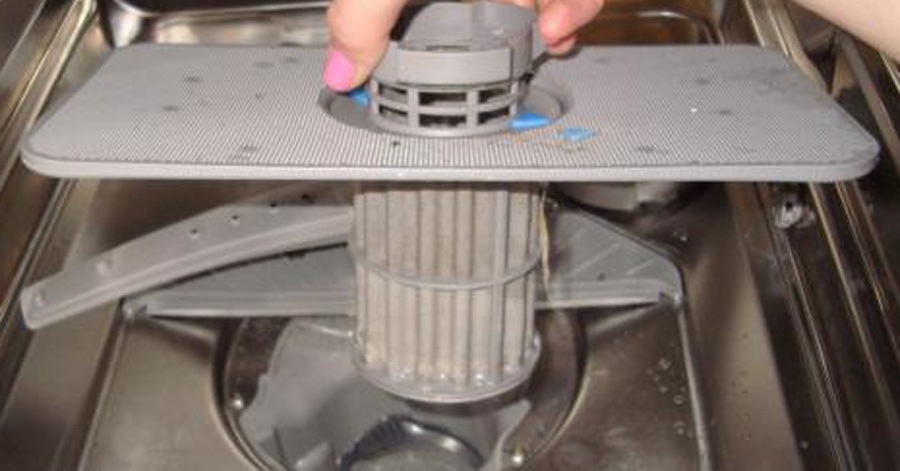
- remove the debris filter;
- lay the dishwasher on its side;
- Having dealt with the latches, remove the tray of the Midea dishwasher;
- disconnect the power supply wire from the heating element;
- set the multimeter to resistance measurement mode;
- Place the multimeter probes against the heating element contacts;
- evaluate the readings on the tester screen.
Normally, the heating element should display a resistance of 21-23 ohms. If the element is faulty, the multimeter will show either 0, 1, or a value approaching infinity. A burnt-out heater cannot be repaired and will need to be replaced.
The heating element in dishwashers is housed in the same housing as the recirculation pump. To replace the heating element, the assembly must be removed from the dishwasher housing. The unit is secured with a bracket on one side and screwed to the water inlet on the other.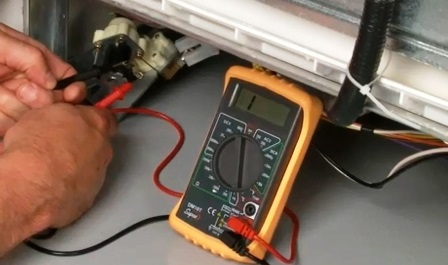
Next, remove the plastic housing, dismantle the damaged heating element, and install the new one. During assembly, ensure the rubber seal is properly seated, otherwise leaks are inevitable.
Once finished, install the recirculation pump and heating element back in place. Connect the hoses and tighten them with clamps. Connect the power supply wiring.
After this, replace the dishwasher tray and turn the machine upright. Then run a test cycle without any dishes in the chamber. If the E3 reset succeeds, the repair is complete.
Sometimes, the heating element is found to be working properly during testing. In that case, pay attention to its circuit. Perhaps repairing the wiring or cleaning the corroded contacts will be enough. Then, you won't have to replace the heater.
A faulty temperature sensor is rarely the cause of the E3 error. In this case, the water in the chamber heats up—you can check this by carefully inserting your hand into the tank. The thermistor cannot be repaired; the element will need to be replaced.
The control module has failed
If the electronic unit fails, a Midea dishwasher may display any error code, including E3. Not everyone can diagnose the control module—this requires specific knowledge and skills. You can inspect the circuit board yourself—sometimes defects are visible to the naked eye.
The electronic module controls the operation of all components of the Midea dishwasher.
The control unit commands the filling, heating, and draining of liquid. The module receives information about the water level and temperature in the tank. When a semiconductor on the circuit board fails, the dishwasher stops working. Replacing the damaged component usually clears the error.
To inspect the microcontroller, you need to: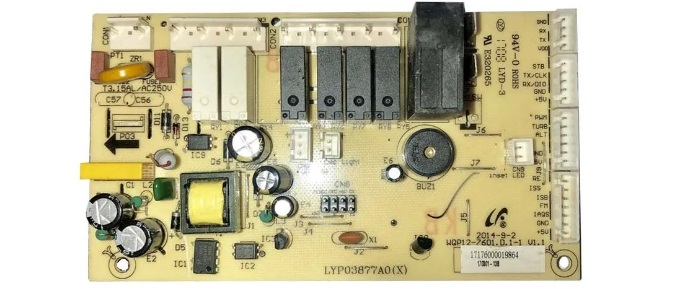
- de-energize the Midea dishwasher;
- close the shut-off valve;
- open the dishwasher door;
- unscrew the screws located around the perimeter of the door;
- remove the top part of the door.
After removing the dishwasher door, you'll see the control board. Carefully inspect the module for any defects, such as burns, rust, or bulges. If the unit appears functional, a more in-depth diagnostic will be required—checking each semiconductor with a multimeter.
If the damage is minor, repairing the module can resolve the error. Typically, either the damaged semiconductor is replaced, the oxidized contacts are cleaned, or the tracks are repaired. In severe cases, a complete replacement of the electronic unit is required.
You won't be able to use a dishwasher with the E3 error—it will continue to freeze mid-cycle. Replacing the heating element usually helps reset the code. However, before buying new parts, run a diagnostic. A faulty thermistor or damaged control module may be the cause.
Interesting:


Readers' comments
Headings
Washing machine repair




For buyers




For users


Dishwasher




Add a comment