
Error E4 on a Hansa dishwasher
 The Hansa brand produces dishwashers that are quite affordable and high-quality. But, as we all know, any appliance can break down. In our case, the E4 error code popped up unexpectedly and completely stopped the dishwasher from working. Why did it appear, and how can we restore our beloved dishwasher to working order? We'll answer these questions in this article.
Decoding the code
A look at the Hansa dishwasher's operating instructions reveals how poorly the manufacturer interprets the E4 error code. It literally reads: "water overflow." What kind of water overflow is this? Where could it have overflowed? It seems like the operating instructions for these machines are written by employees of authorized service centers. So what if the user reads the instructions, understands nothing, and turns to repairmen who are happy to try to rip off the poor user for a few large bills.
Repairing a Hansa dishwasher malfunction associated with the E4 error can cost $150-200, including the cost of the spare part and the technician's labor.
Of course, this is just a joke on our part, and no one is deliberately trying to squeeze money out of users, but the problem still exists and needs to be addressed. What do we have? Here's the E4 error, here's some kind of overflow mentioned in the manual, and there's no other information.
According to experts, the E4 error code was caused by water filling the Hansa dishwasher's tray, which triggered the Aqua-Stop protection system, which in turn blocked the appliance's operation. Now, without fixing the problem, or at least draining the water, the machine will not start.
Possible causes of the error
Based on the detailed explanation of the E4 error provided by specialists, this problem occurs because a component, tube, or pipe inside the Hansa dishwasher has started to leak. The dishwasher's drip tray is not very large. About a liter of water is enough to raise the Aqua-Stop float, activate the sensor, and stop the machine.
The pump, circulation system pipes, inlet hose or branch pipe may be leaking.
The list could go on and on until you open the case and find out exactly what's leaking. However, one of our clients encountered this error code for the following reason. Let's start from the beginning.
A couple of years ago, a regular customer of ours contacted us with a problem. His Hansa washing machine wasn't working. It wasn't just refusing to work, it was displaying the E4 error code. He figured out that there was water in the machine's tray, and that was why the error was appearing. He drained the water and started the machine, but after three minutes, it stopped again, and the same error code appeared on the display.
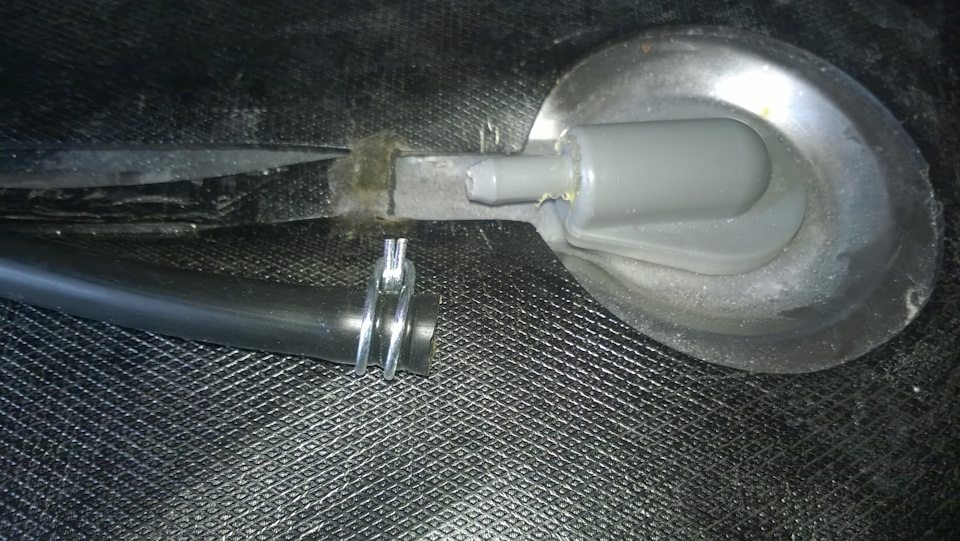
Our technicians arrived and immediately disassembled the dishwasher. It turned out the problem was a broken hose in the circulation system. The factory clamp had come loose, and the hose had slipped, allowing water to flow freely into the tray. However, that's not what's interesting. The fact that the hose had slipped under pressure isn't particularly noteworthy, but what caused the excess pressure?
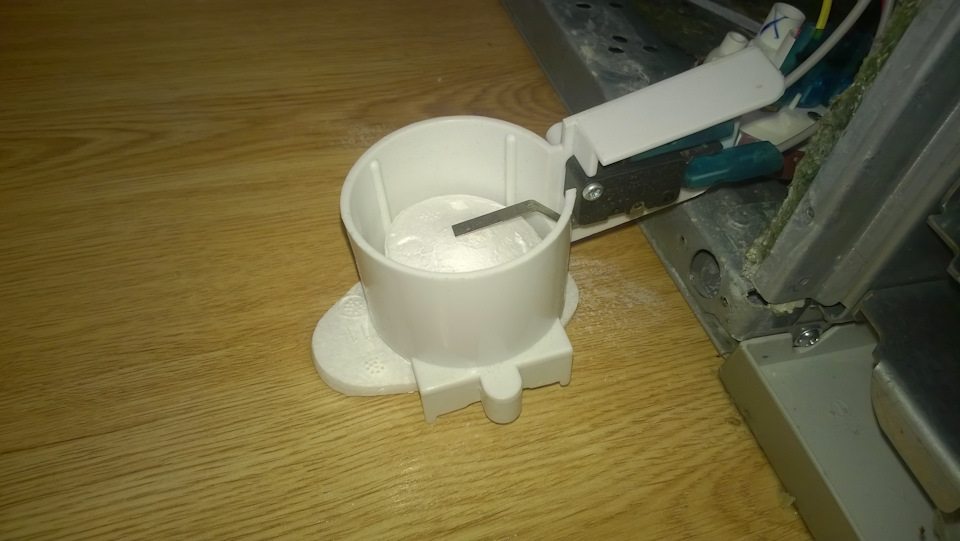
Here again, a bit of background is indispensable. Our client, upon purchasing a dishwasher, immediately decided to start saving money and, instead of special dishwasher salt, used regular "Extra" table salt for several years. This resulted in some of the salt in the reservoir turning into a thick salt slurry, which obstructed the water flow and created excess pressure.
Ultimately, if the pipe hadn't come off and our technicians hadn't paid attention, the client would have eventually been faced with costly repairs. After all, excess pressure puts stress on the circulation pump, which will break down much faster. Overall, everything ended relatively well. The moral of this story is: don't skimp on dishwasher salt and the above-described problem will not happen to your car.
How to find the cause?
Now let's talk about how to fix the E4 error, or more precisely, the cause that causes this code. But first, we need to identify the cause, and to do that, the Hansa dishwasher must be disassembled. What should we do?
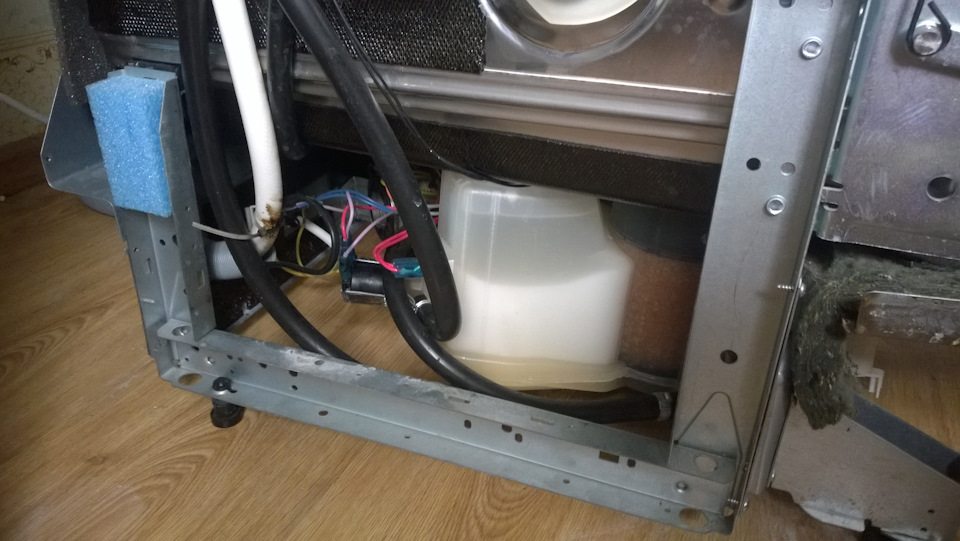
- We unscrew the screws and remove the top cover, back wall and tray.
- Unscrew the Aqua-stop.
- We put the unscrewed sensor aside and, in principle, the disassembly can be considered complete, since we have all the necessary parts that need to be checked at hand.
So, the dishwasher is disassembled, now all we have to do is check where the water is leaking from and fix it. It's strongly recommended not to seal any holes in the pipes or hoses with duct tape or sealant. Any damaged part must be replaced, otherwise the dishwasher risks again ending with the E4 error. We fix the leak and reassemble the machine in reverse order.
Finally, let's note that the Hansa dishwasher displays the E4 error code when the Aqua-Stop system is activated. This means there's a leak somewhere and it needs to be fixed to get your "home helper" working again. Simply draining the water isn't worth it; repairs are needed. Good luck!
Interesting:

7 reader comments
Add a comment
Headings
Washing machine repair




For buyers




For users


Dishwasher




When I run the program, the machine drains the water and stops. It takes a long time to process and eventually returns an E4 error. An analysis revealed no overflow.
Check the contacts on the overflow sensor located on the bottom of the machine. If they are OK, remove the sensor and test it with a tester. The outer contacts should be closed when there is no overflow and open when there is.
During the first few seconds of draining, the pressure in the drain system forces water into a reservoir with a rectangular opening at the bottom, from there into the tray and to the sensor. After two or three cycles, the sensor is triggered. Why? The drain hose isn't pinched or kinked, and the machine had been idle for a long time, but it was still connected…
Don't be idiots, you hapless smart mechanics, an obstruction at the pump outlet doesn't create any load on the pump, it works easier in this case, since it's centrifugal.
It's giving an E4 error. It refuses to wash the dishes. What should I do? Any advice? My wife is nagging me about it.
I don't know about your customer, where the hose came off, but when I took mine apart, the hose was too short, so I had to heat it with a hair dryer to tighten it. Can't you just make it a little longer? The temperature difference—that's what causes it to come off!
The problem isn't likely a clog, but rather that over time, the long hose leading to the top sprayer shortens by several centimeters due to aging. Due to a design error, the hose is installed too tightly and has no room for expansion—so it stretches and breaks, especially under the influence of vibration and pressure.
Accordingly, it may tear off again, so it is best to extend it by adding a piece of similar hose 5-10 centimeters long.