
Error E4 on Candy dishwasher
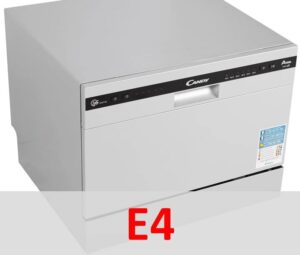 Modern dishwashers automatically notify users of system malfunctions. Error E4 indicates that the Aquastop system has been activated. How can this be resolved? Is it necessary to call a technician, or can you reset the code yourself? Let's explore the details.
What should we do when the E4 code appears?
Candy dishwashers notify you of the Aquastop system's activation in different ways. Some display an error code on the display. Models without a digital display light up certain LEDs on the control panel. The indicator on the dishwasher's inlet hose also changes color, taking on a reddish tint.
Please review the instructions for your Candy dishwasher to understand how the appliance notifies you when Aquastop is activated.
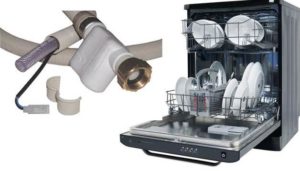
What should I do to reset the E4 error? I need to determine the source of the leak. First, inspect the dishwasher's inlet hose. If the indicator on it turns red, the corrugated hose will most likely need to be replaced.
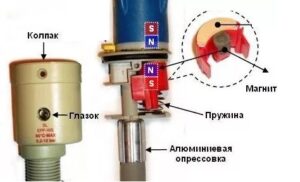
Aquastop system sensors vary. If your dishwasher has a mechanical one, you don't need to replace the hose. Simply loosen the spring and push the device's membrane inward.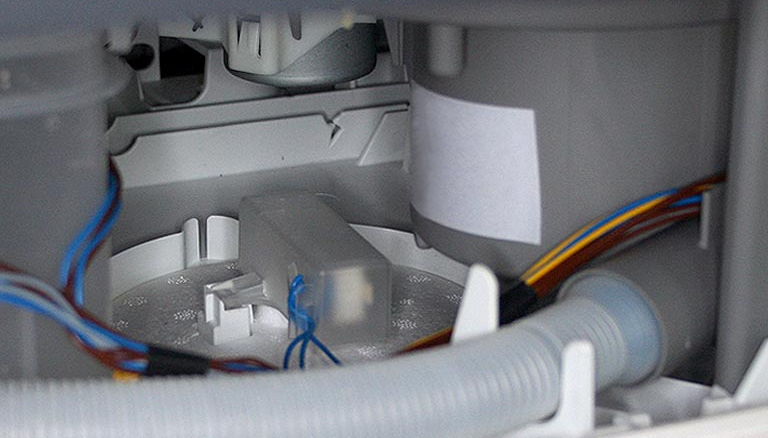
The inlet hoses of modern Candy dishwashers cannot be reused after the Aquastop system has been activated. In this case, the hose will need to be replaced. Therefore, everything depends on the type of leak protection sensor.
Replacing your dishwasher's inlet hose is very simple. Just follow these steps:
- de-energize the dishwasher;
- turn off the tap that supplies water to the machine;
- unscrew the old hose first from the dishwasher, then from the connection point to the water supply;
- connect a new hose.
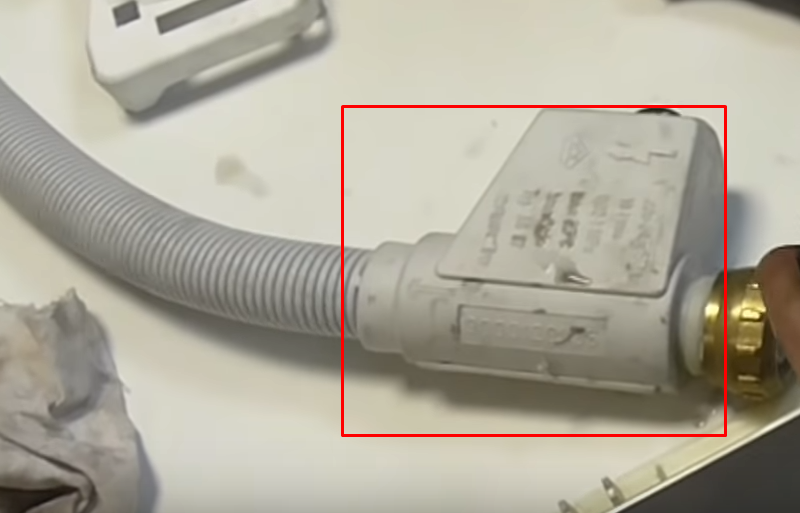
If your Candy dishwasher is equipped with electromagnetic protection, you'll also need to connect a cable to a special leak detection sensor. The slot for connecting the cable is located near the dishwasher's inlet valve.
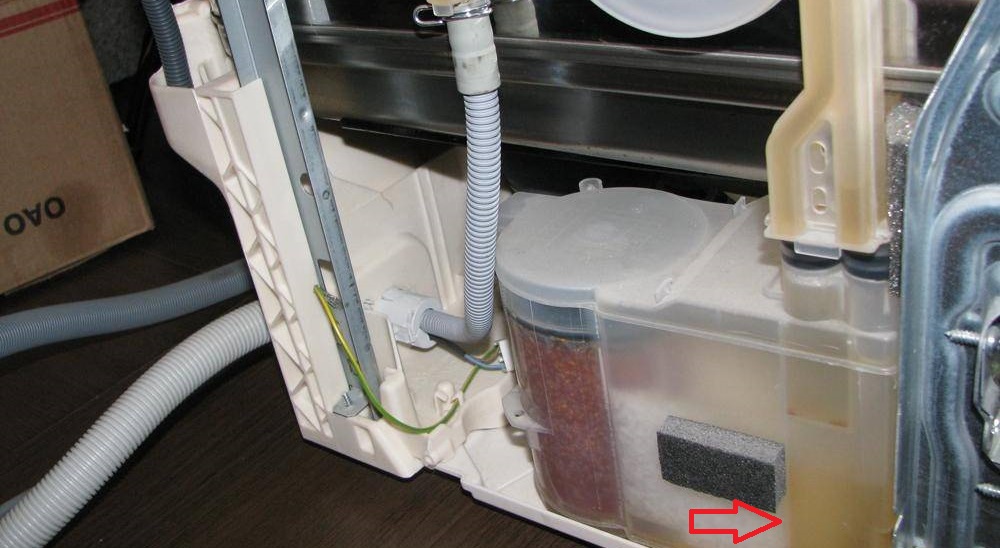
Sometimes, the E4 error is caused by water in the dishwasher's drip tray. In this case, repairs are more complex. The machine will need to be disassembled to determine the source of the leak. This work is best left to a professional.
How did the liquid get into the pan?
What should you do if your Candy dishwasher detects a leak? First, wait for the machine to pump water from the dishwasher chamber into the drain. After that, unplug the appliance, close the shutoff valve, and begin troubleshooting. We'll explain what the problem might be.
- External leak. Sometimes the E4 error occurs due to accidental water entering the dishwasher tray. For example, if a family member spills tea near the machine. Check for leaks in the pipes near the dishwasher. This could trigger the Aquastop system.
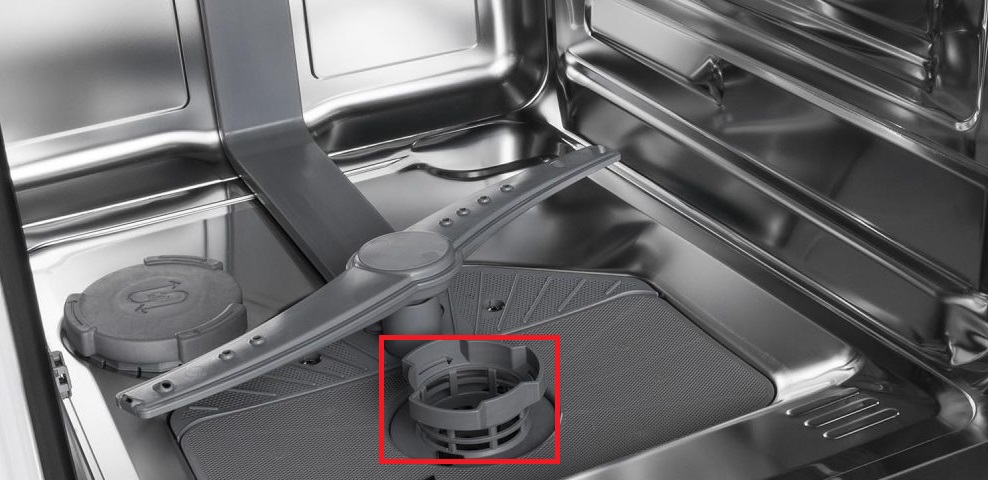
- Clogged filters. In this case, the water circulation inside the dishwasher is disrupted. This leads to drainage problems and overflowing. As a result, water ends up in the tray. The float rises, triggering the leak protection system. The solution is to clean the filter assembly and dry the dishwasher.
Candy recommends cleaning the dishwasher's filter unit at least once a week and removing large debris after each use.
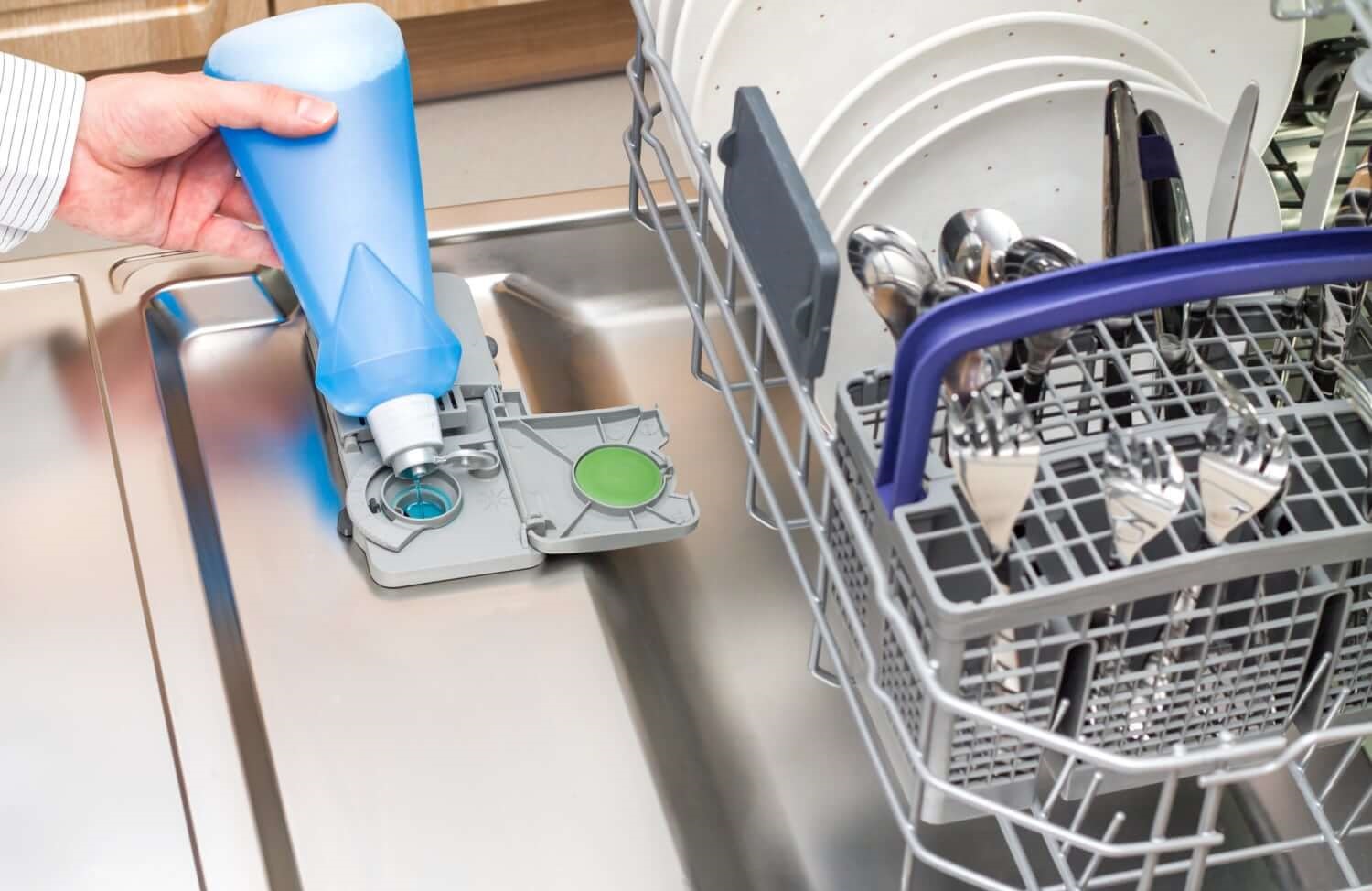
- Using the wrong dishwashing detergent. Some housewives use regular gel detergent, such as Fairy, in the dispenser. It produces excessive foam, which is unsuitable for Candy dishwashers. Bubbles leak through the dishwasher door and into the tray, causing the E error. In this situation, you should immediately turn off the machine and let it air dry for a few days. The use of household chemicals for hand washing is fraught with not only the risk of Aquastop, but also damage to the electronic module of the device.
- Incorrect detergent dosage. Even when using special household detergents for dishwashers, it's possible to overload the machine, which will also lead to excessive foaming. The foam will end up in the tray, and the machine will display an error code E. The solution is similar: leave the dishwasher for 2-3 days to dry.
- Wastewater backing up from the sewer. This is a relatively rare problem, but it shouldn't be ruled out. This only happens to dishwashers connected to a siphon. Wastewater flows from the pipe into the machine, causing the machine to display an error code E. The solution is to clean the elbow and install a check valve to prevent wastewater backing up into the dishwasher.
To prevent wastewater from backing up into the dishwasher, the drain hose should be positioned properly—at sink level, with a loop. Alternatively, you can connect the corrugated hose directly to the pipe rather than to the trap. Another option is to install an elbow with a check valve.
To drain the water from the dishwasher's tray, simply tilt the appliance backwards. Some models require removing the side panel of the dishwasher before draining the liquid. Alternatively, open the dishwasher door and leave it alone for 2-3 days, allowing the dishwasher to dry naturally.
Where is a leak usually found?
Simple problems that can be easily fixed on your own aren't always the cause. Sometimes, you'll need a professional's help. When is it best to call a technician?
- Leak inside the dishwasher. Candy dishwashers often leak internal hoses and water circulation lines. A specialist will diagnose the problem, replace rubber seals, tighten clamps, and install new hoses. This type of work is inexpensive.
- The seal on the tray cup in the washing chamber is damaged. This is a common problem with machines that have been in use for more than 5 years. The seal wears out, cracks, and begins to leak. A technician will fix the problem using a repair kit.
- The seal in the dishwasher chamber is broken. This is caused by corrosion. This type of failure is extremely rare, and typically occurs in machines that have been in use for more than ten years. The stamping at the base of the bin, near the glass, is rotted. The damage is minor and can be temporarily sealed with a special sealant, which will extend the life of the dishwasher for a few more months. In the future, the entire dishwasher chamber will need to be replaced.
- Damage to the salt flask or heat exchanger tank. A dishwasher always contains water, so if you leave it in a cold room, the liquid will freeze, causing plastic parts to rupture. A technician will identify the defects and replace the components.
- The leak protection system sensor may be faulty. Sometimes the device may become stuck and falsely report a problem. In this case, replacing the Aquastop inlet hose may be sufficient. In this case, you can simply pay for the diagnostics and then perform the replacement yourself.
You should no longer use a dishwasher displaying the E4 error code. This can lead not only to flooding but also to a short circuit. Therefore, be sure to fix the problem, reset the code, and only then use the machine.
Interesting:
Readers' comments
Headings
Washing machine repair




For buyers




For users


Dishwasher




Add a comment